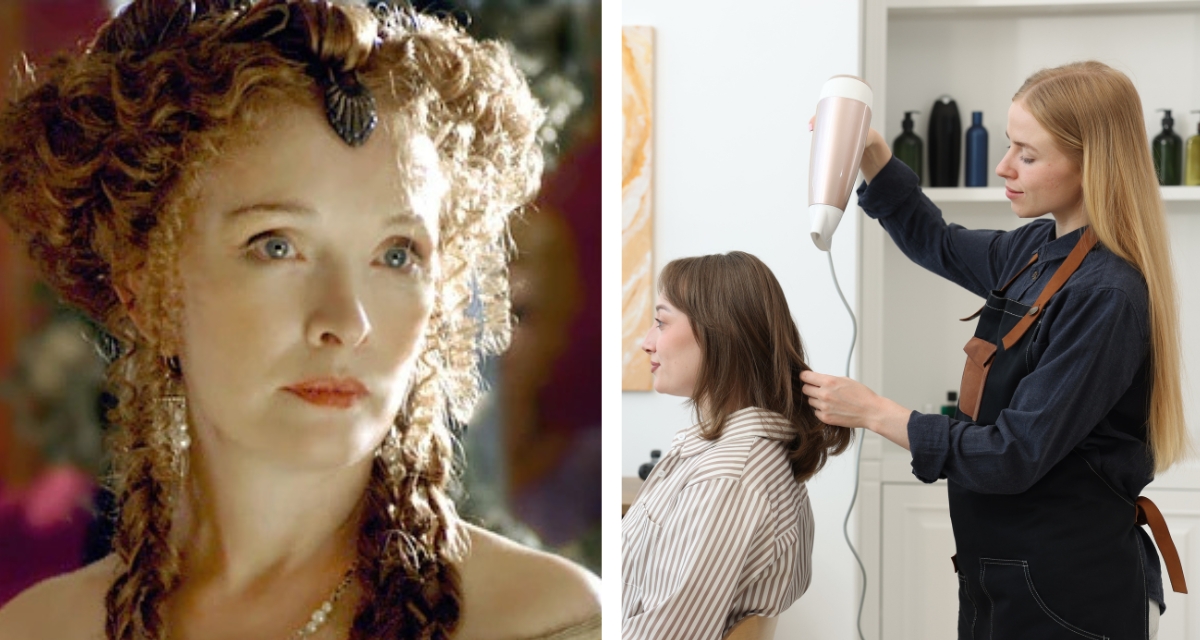
For centuries, scholars believed that the intricately braided, gravity-defying updos synonymous with Roman hairstyling were achieved with wigs. Then a professional hairdresser turned bona fide “hair archaeology” specialist proved them wrong.
Baltimore-based Janet Stephens had been fascinated with hair her entire life. But in 2001, she became particularly interested in ancient hairdressing.
A day at the museum turned into a years-long mission
While visiting The Walters Art Museum, Stephens viewed a collection of Roman busts displayed from all angles, rather than with their backs against a wall, as was customary.
Being able to circle the busts helped Stephens understand the “logic” behind certain hairstyles, leading her to believe that, contrary to scholarly consensus, they weren’t the result of wigs at all but of ingenuity.
At home, Stephens at first tried—and failed—to recreate the ancient styles on practice dummies, despite having access to modern styling tools. Yet as she consulted academic articles on Roman fashion and beauty for insight, she realized the authors didn’t have a practical grasp of hair dynamics.
Determined to solve the mystery, Stephens committed herself to years of both hands-on experimentation and historical research. The latter was far outside her wheelhouse, especially when it came to deciphering historical texts. Still, she pushed through, using Google Translate to work through line after line of Latin until, in 2005, she spotted a clue no one had noticed before.
A single word unlocked the mystery
The Latin term acus has several meanings, including “single-prong hairpin” and “needle and thread.” In the context of ancient Roman hairdressing, translators had long interpreted acus to mean “single-prong hairpin.” Which, to be fair, makes sense. Single-prong hairpins couldn’t have held up these elaborate hairstyles, but they are commonly used to secure wigs. That all checks out.
However, Stephens entertained the possibility that maybe, just maybe, the Romans were actually referring to the “needle and thread” meaning of acus. Sure enough, she was able to recreate these hairstyles by sewing the braids into place with a needle and thread.
Just like that, a Baltimore hairstylist with zero experience in archaeology made a groundbreaking archaeological discovery. Her findings were published in the Journal of Roman Archaeology. In 2012, her video “Julia Domna: forensic hairdressing” was presented at the Archaeological Institute of America. In 2013, she became the first person to recreate the hairstyle of the Roman Vestal Virgins. Today, her YouTube channel features historical hair recreations alongside demonstrations of more modern techniques.
New answers come to those who are able to ask different questions
There’s so much to glean from this story. But perhaps the biggest takeaway is that to truly understand history, we need to view it through both an academic and a practical lens. It’s also a wonderful example of how our own life experiences can give us unique insight into seemingly unrelated subjects in surprising ways.