Most people can spot a French or Spanish loanword in English. But there are dozens of words woven into everyday conversation that trace back to an even older source, one that many English speakers would never think to guess: Farsi.
Farsi is, after all, one of the oldest living languages in the world, surviving 3,000 years of conquests, regime changes, and cultural upheavals. It originated in the southwestern Iranian region of Parsa (modern-day Fars), which gave the language—and formerly the country—its name.
Not only are English and Farsi linguistic cousins, but during the Middle Ages, Persian words also traveled alongside goods, cultural exchanges, and scientific advancements on trade routes into Europe. Particularly, words for exotic fruits, spices, and luxury items were picked up by Arab traders, adopted into Old Spanish and Latin, and eventually translated into English. Then later, when the British Empire colonized India, many more Persian words were brought back to England.
That long journey left an unmistakable mark on the English language. Chances are you’ve used several of these words without ever realizing they first began in Farsi.
Surprising English words that trace their roots back to Farsi
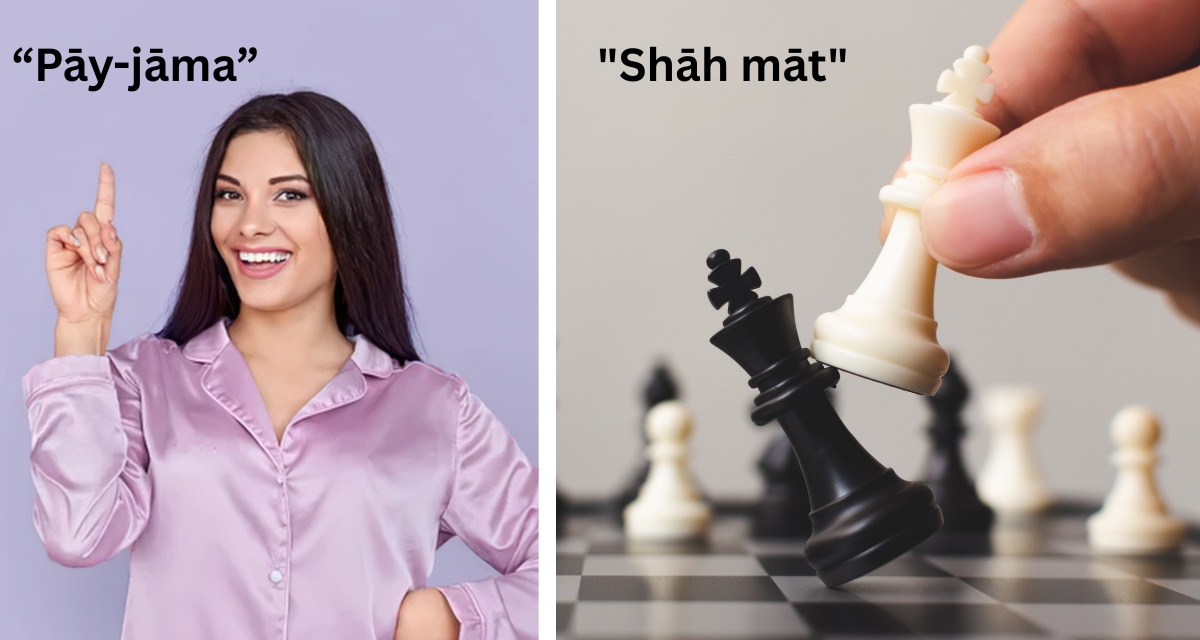
Pajamas
Pajamas originated in South East Asia as loose, unisex drawstring trousers worn outside, in public during the day. The word, however, comes from the Persian phrase pāy-jāma, meaning “leg garment,” and was absorbed into Hindi and Urdu during the Mughal era in India.
British colonists adopted them as leisurewear in the 1870s. Though it would still be some time before they were seen as sleepwear. And even longer before they were accepted in women’s fashion.
That changed with the golden age of Hollywood, which ignited a massive cultural trend that made pajamas both practical and glamorous for everyday women. And today, they remain a global bedroom staple.
Paradise
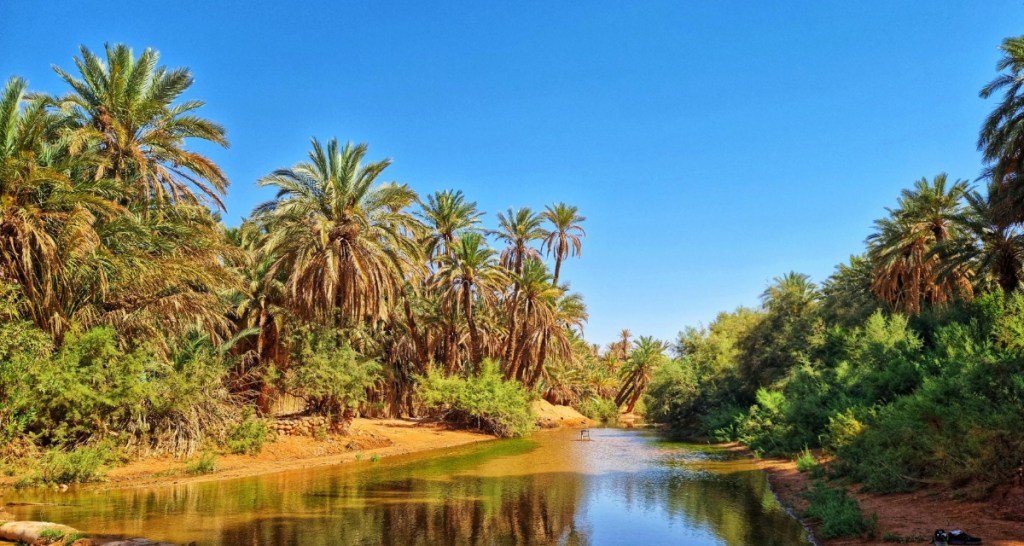
Paradise traces its roots back to the Old Persian word “pairidaēza,” which literally means “walled enclosure”. In ancient Persia, the word was used to describe the lavish, protected royal parks and orchards where Persian kings and nobles hunted and relaxed in the desert.
The Greek historian Xenophon visited Persia and adopted the word as paradeisos, translating it to mean a large, beautiful, enclosed park. That word was then used to describe the Garden of Eden in the Bible. This gave it both a theological meaning (the afterlife or Heaven) and a general definition of any blissful, idyllic place by the 12th century and on.
Bazaar
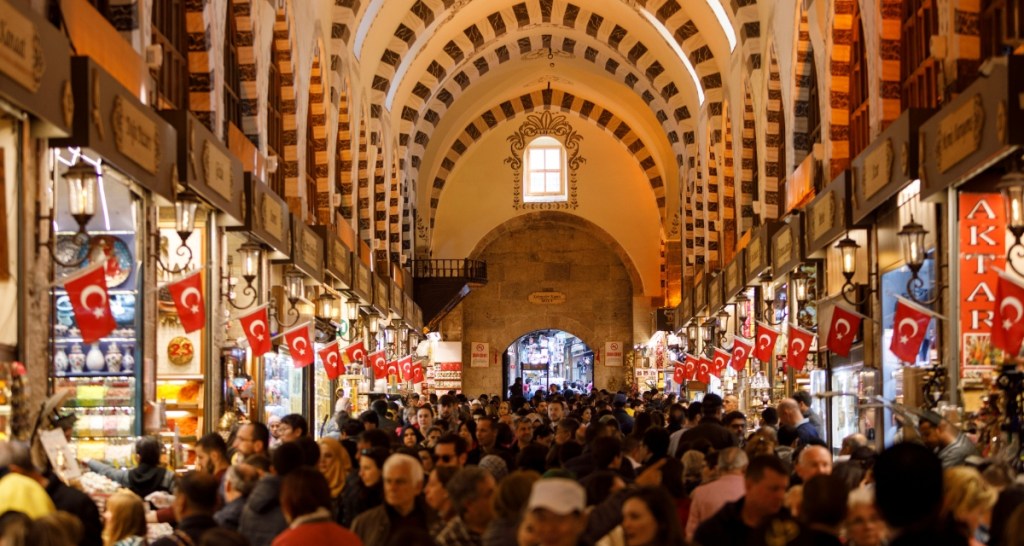
“Bāzār” derives from the Middle Persian (Pahlavi) term baha-char, meaning “the place of prices.” Historically, it describes a permanent, multi-vendor marketplace or commercial district. It eventually made its way into English around the 15th and 16th centuries, retaining its meaning of a marketplace.
In modern English usage, “bazaar” still conjures up images of a bustling hub of various goods for sale. Only now, it can also refer to temporary events, often held for charity.
Interestingly, the French clung onto the more chaotic essence of the word, and use it to describe a mess.
Checkmate
As the game of chess spread from China to Persia around the 14th century, the phrase“Shāh māt“ ( meaning “the king is helpless, stunned, shocked, etc.”) was used to declare the ultimate game-winning position, where the king cannot escape capture.
When chess spread westward from Persia, it passed through the Arabic-speaking world, where the phrase “Shāh Māt” means “the king is dead.” Slightly different connotation, but overall same meaning.
By the mid-14th century, this French phrase entered Middle English as “checkmate.” And despite some minor linguistic evolutions, this word has remarkably held onto its meaning since its origin.
Caravan
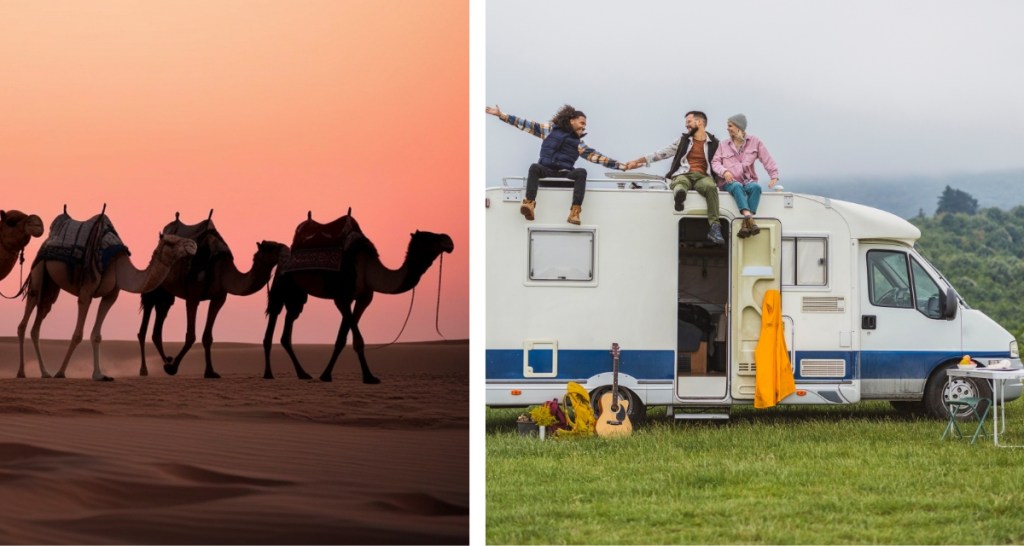
It certainly makes sense that a word describing a group of desert travelers journeying together for safety would originate from a place abundant with them. “Kārawān” (stemming from kar meaning “people” or “army”) entered English in the late 16th century by way of French and Italian, but its meaning shifted alongside changing transportation methods.
By the late 19th and early 20th centuries, as leisure travel grew in popularity, the definition evolved to encompass “houses on wheels.” Today, the definition encompasses everything from lines of vehicles and transport trucks to recreational camper trailers.
Khaki
Khaki comes from the word khāk (خاک), which means “dust,” “dirt,” or “soil.” The word, and style of pants, came to the Western world through the British Indian army in the 1800s, replacing their conspicuous, impractical, and heat-trapping white trousers. In fact, they dyed their pajama pants (which we know also came from Frasi) this dirt color and called them khakis. Throughout the years, they became a go-to military staple.
Nowadays, perhaps especially in American culture, khakis are associated with bland, drab corporate fashion, more akin to Walmart than warfare. However, even if the color itself is unassuming, the etymology is rich and complex.
Lemon
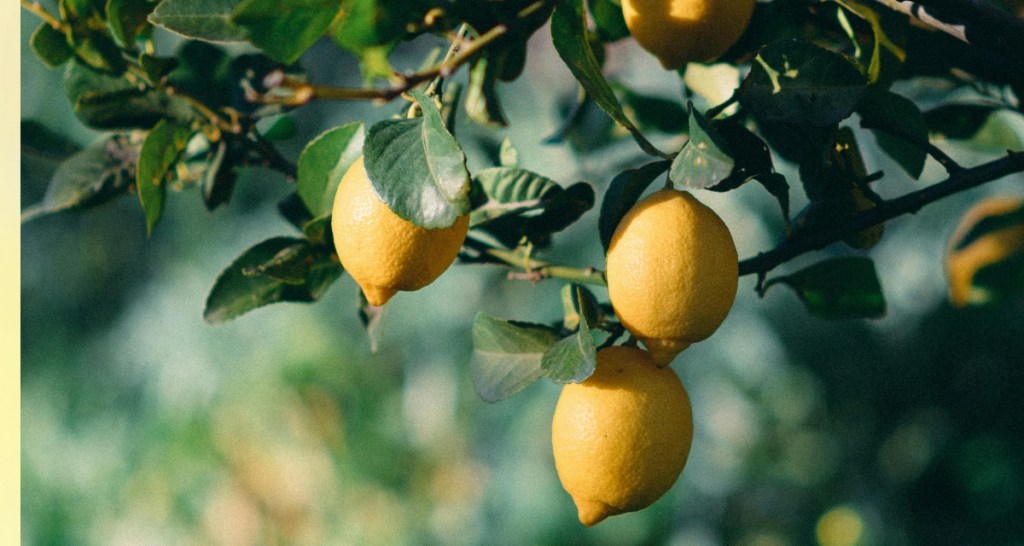
This traces back to the Farsi word līmū, which is more of a generic term for citrus fruit. As for how it became English slang for something worthless, there are a few theories, one being that it came from American crime slang, which referred to a “lemon” as a simpleton or loser who could be easily squeezed. Another is that, much like a lemon can leave an unpleasantly tart taste in your mouth, so too can a defective product be seen as a disappointing, soured experience.
Though the term probably was already used to describe a defective car, it’s generally accepted that an iconic ad Volkswagen ran in the 1960s immortalized the connection. It also serves as a brilliant example of reverse psychology in marketing.
The ad was simple: a photo of a seemingly flawless Volkswagen Beetle and the caption: “lemon.” A very bold and unconventional move for an automobile company, to be sure.
But the bottom copy would go on to describe a minor blemish on the glove box inside the car, making it unsellable by Volkswagen standards. This spoke to the elite quality level the company aimed for with each of their cars.
Tiger
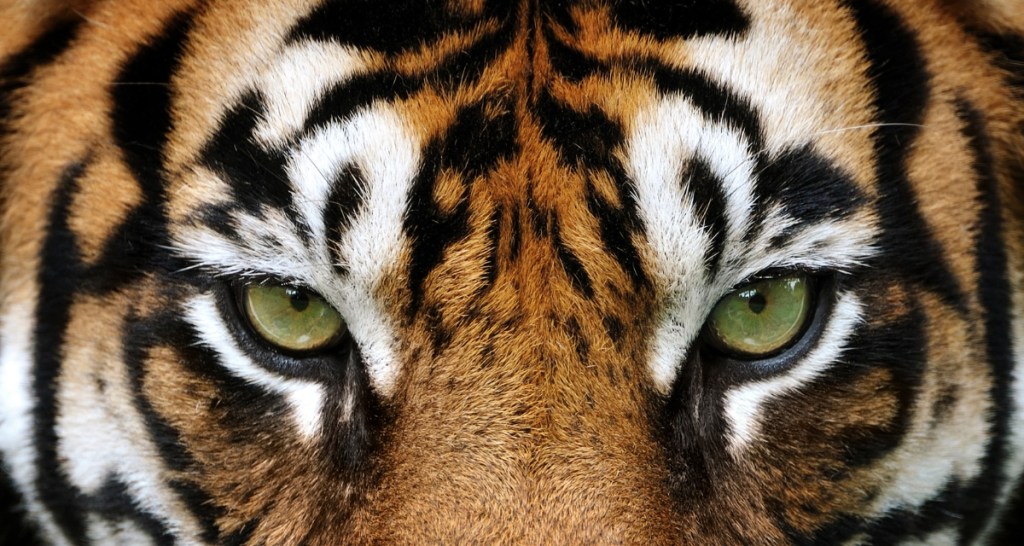
“Tiger” was borrowed into English from the Greek “tigris.” But the Greeks got that word from which originally took it from an old Iranian/Farsi word meaning “arrow” (referring to the animal’s speed).
Persians had their own word for the beast, called “Babr.” In a famous quirk of Russian history, this linguistic root resulted in the creation of a legendary half-tiger, half-beaver creature that serves as the official mascot and coat-of-arms emblem for the Siberian city of Irkutsk.
Cognates
Examples include mother (mādar), brother (barādar), daughter (dokhtar), and name (nām).
So, the next time you zip up your pajamas, stroll through a bazaar, or hear someone say “checkmate,” you’ll know those words carry a history stretching back thousands of years. Languages are constantly borrowing from one another, and Farsi’s lasting influence is a fascinating reminder of just how connected our shared vocabulary really is.