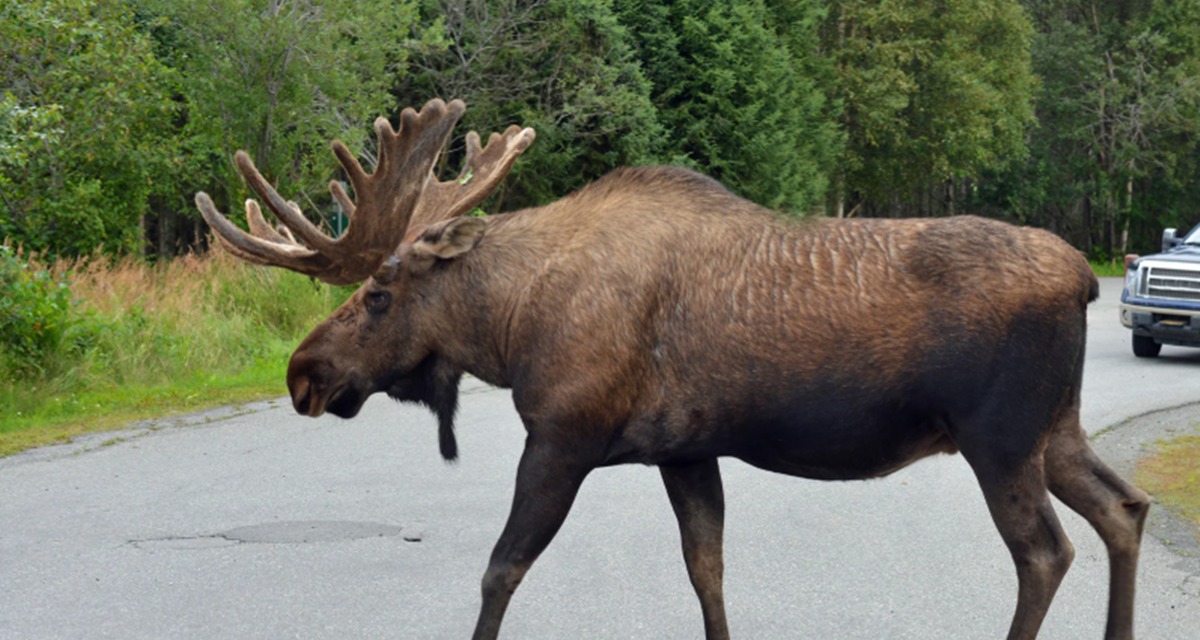
Colliding with a moose on the road is disastrous for all involved. An adult moose can weigh up to 1500 pounds, and, given their spindly legs, they are often thrown into a car’s windshield, which can be extremely dangerous for its passengers. Collisions are also costly for motorists and insurers. The average cost of a collision between a moose and a car in the U.S. is $17,000.
Collisions are also terrible for the poor moose and often lead to death. They can also take an environmental toll by disrupting the natural ecology. Given that Finland has tens of thousands of moose, collisions are a major problem in the country, with over 1600 happening every year. This led them to experiment with a new crossing that is showing early signs of tremendous success.
For some clarity, a Finnish elk is the same animal that’s known as a moose (Alces alces) in the United States. What Americans know as an elk (Cervus canadensis) is a different species in the deer family, which is also known as a wapiti.
New safety measures
The video below shows a moose safely crossing the road by using the new “pedestrian” crossing.
The new pedestrian crossing near the town of Naantali opened on June 23, 2026, providing a clear path for moose while alerting motorists to their presence. A wildlife fence runs alongside the road, with a gap right before the crossing. When a moose approaches the crossing, lights along the side of the road warn motorists to slow down or stop.
“A radar detects an animal approaching the road, which triggers the warning lights to start flashing,” Jaakko Klang, traffic safety engineer at the Southwest Finland Centre for Economic Development, Transport and the Environment, told YLE, the Finnish Broadcasting Company.
After a crossing was installed earlier in a town called Nousiainen, there were two recorded deaths. However, that was before the warning lights were installed, after which the number of collisions was reduced to zero. A major reason is that people slow down as they approach the crossing. “In darkness and poor weather, drivers reduced their speed by more than 10 kilometers per hour,” Klang added.
The crossings preserve a legacy
The systems don’t just prevent deadly collisions with moose; they can also detect smaller animals such as foxes and raccoon dogs, a relative of the fox with a large, puffy coat.
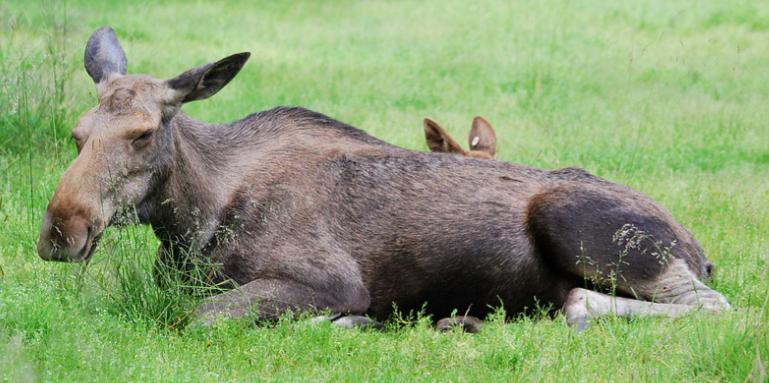
Moose have been in Finland ever since the Mesolithic era (10,000 BCE to 4,000 BCE). But they’ve experienced a huge population increase over the past 100 years. In 1933, there were an estimated 3,500 moose in the country, but that number has exploded to around 77,000 (after hunting season). The big reason is that modern forestry practices have made food more available, and hunting practices have protected breeding females.
Providing a safe crossing for moose and drivers is a big win for everyone involved. If these crossings continue to be successful, they can be placed in areas where collisions are common or along well-established moose migration paths. “They have been the same from year to year, decade to decade, and even century to century. Often, these are grooves formed after the Ice Age, along which there is plenty of food,” Jani Hotanen, operations manager of the Mikkeli Game Management Association, told YLE.