Warning: Mild spoilers inside.
Great horror films often play upon our fears of venturing into the unknown. Whether it’s the trepidation of going back in the water after a shark attack in Jaws, the shadowy threats in the woods in The Blair Witch Project, or the unoccupied corridors of a hotel in The Shining.
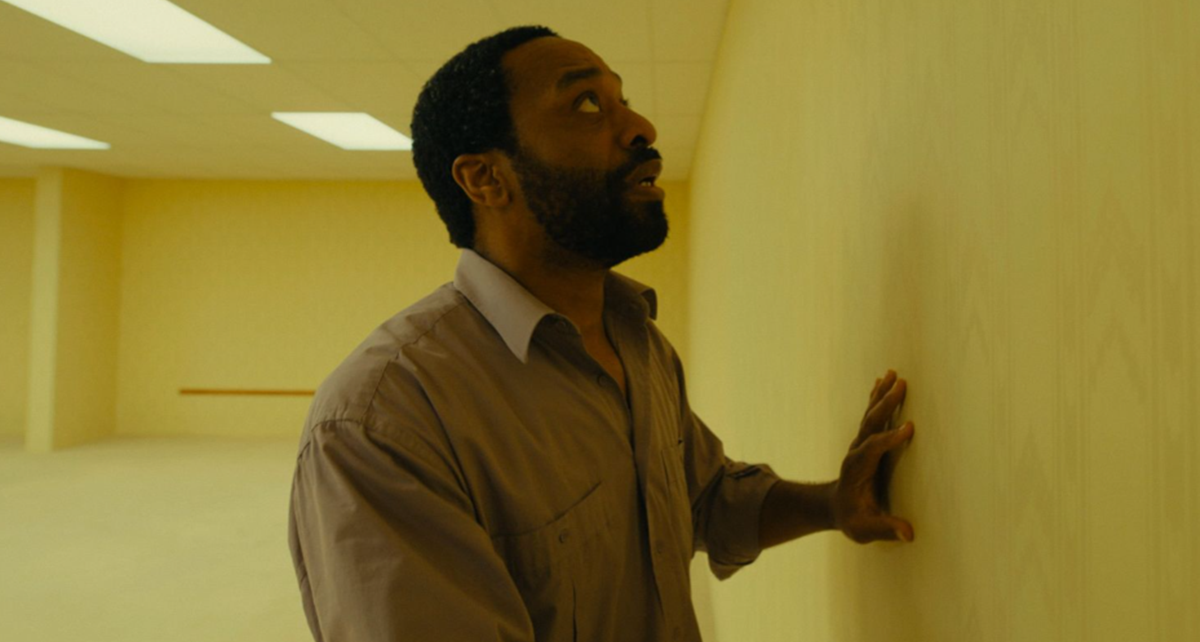
Backrooms, 2026’s runaway summer horror hit, plays on a new type of fear: liminal spaces. The concept leapt into public consciousness in 2019 after a creepy 4Chan post about an empty room in a Wisconsin building that just felt “off.” The post perfectly exposed a fear many have but didn’t know how to express.
Backrooms follows Clark (Chiwetel Ejiofor), a failed architect turned furniture-store owner, who drinks too much and was kicked out of his home by his wife. Clark seeks help coping with his failed relationship by seeing Mary (Renate Reinsve), a therapist struggling with her traumatic upbringing. Clark eventually discovers his furniture store is a gateway to an extradimensional liminal space that is as confusing as it is perilous.
Solid performance, masterful set design
Ejiofor turns in a deft performance that keeps us pulling for Clark, even though his motives are often unclear. As does Reinsve, who convincingly plays a therapist whose poker face is challenged by trauma and self-doubt. The set direction is superb, magically turning the intentionally sparse backrooms into a visual feast as they roll on into oblivion. As an audience, we are asked to spend a lot of time in these rooms, and the art director’s sleight of hand keeps them intriguing by cleverly reinventing recurring spatial themes.
The liminal staging is superb, but the film is about more than just creepy, flickering fluorescent lights, stacks of hunter-green padded chairs, and the beings that scuttle in the shadows. Backrooms taps into a deeper trepidation that resides in all of us: the fear of change. Just like the constantly unfolding backrooms, the film posits that when we don’t confront our inner demons, they multiply and reproduce to diminishing returns.
Clark, creator of his own backrooms
The tragedy of Clark’s character is his inability to take responsibility for his problems, which banished him to the backrooms indefinitely. “Nothing’s ever your fault, is it? You drink too much? Blame your job. You hate your job? Blame the world. You get kicked out of the house? Blame your wife,” Mary shouts at him in the depths of their backroom despair.
Psychologist Carl Jung once said that “what you resist not only persists, but will grow in size,” an idea that plays out in Backrooms’ dramatic climax. The concept was later expounded upon by psychologists in the ‘80s, who developed Acceptance and Commitment Therapy, which states that when you go out of your way to avoid a feeling, it becomes a bigger problem than the feeling itself. For Clark, being stuck in the backrooms is a much bigger problem than those he avoids, but he refuses to admit it.
The lesson of Backrooms is not to avoid the creepy, unpopulated areas in retail spaces, but to confront our issues before they become insurmountable and trap us into a world where nothing seems to change. Also, if you do have to go into the backroom of a creepy ‘90s furniture store, be sure to have your personal problems straightened out beforehand, or you may not make it out alive.