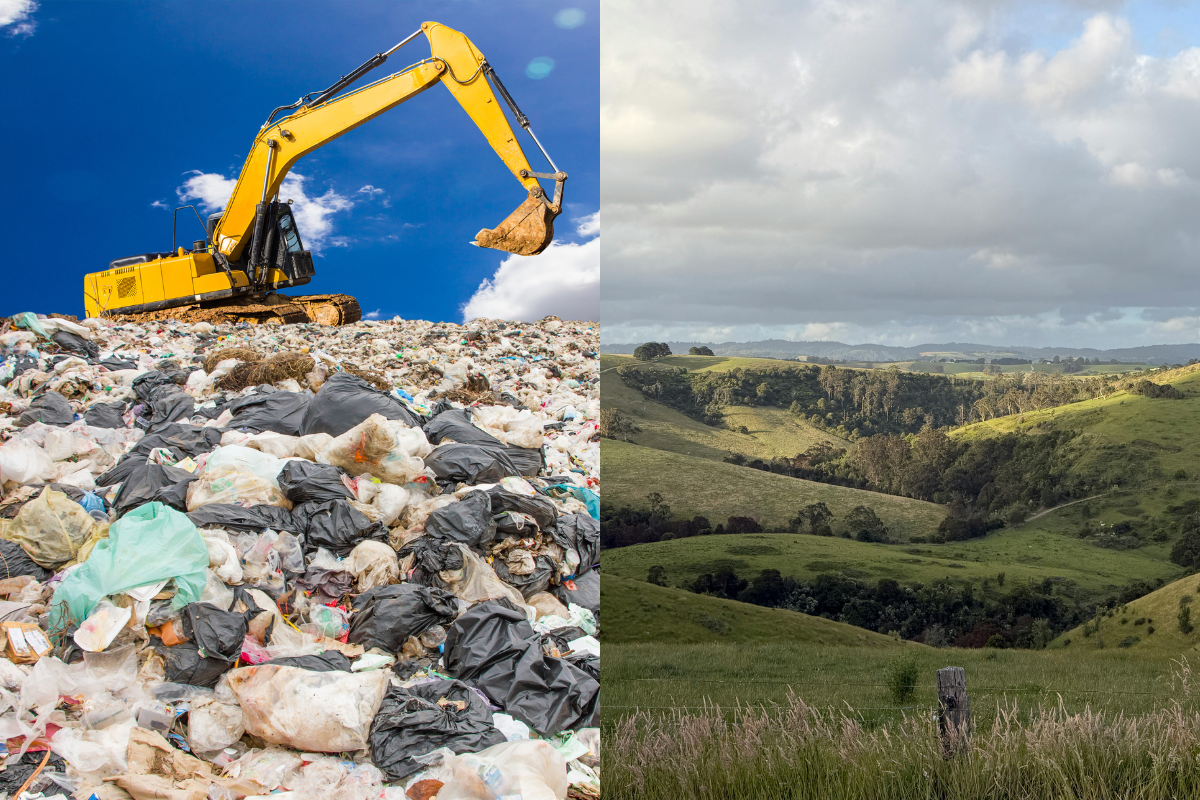
It’s not fun to think about landfills. When we drag our trash out to the curb or chuck it into a dumpster, it’s far easier to adopt an out of sight, out of mind mentality and never think about it again.
But the reality is, the trash has to go somewhere. In other words, despite how important conservation, reducing waste, and recycling are, there will always be a need for landfills. Sometimes we’re so focused on reducing our own environmental footprint that we overlook the hard work that goes into safely storing all that garbage.
Engineer breaks down ‘hidden’ science of landfills
There’s more to it than just dumping trash in a big hole in the ground.
“You probably don’t think much about where you trash goes, and that’s kind of the point of the solid waste industry,” says Grady Hillhouse, an author, civil engineer, and science communicator. He’s also the man behind the wildly popular YouTube channel Practical Engineering. “To make sure you have the ability to throw something away without it having a serious negative consequence on the environment or public health.”
Early landfills, prior to the 1970s, basically were holes in the ground. But Hillhouse explains that federal regulations in the ’70s and ’80s sought to clean things up, which resulted in some pretty amazing science.
He breaks it all down in extraordinary detail in this video with over 11 million views:
Landfills involve archaeology, geometry, geology, politics, public relations, biology, and more
Hillhouse jokes, “If you can get a college degree in it, it’s probably going to come into play when siting a landfill.”
By siting, he’s referring to the complex process of locating just where to put a landfill. A landfill site needs to be large and out of the way, but also accessible. It needs certain geographical elements that make it more practical to dig, but can’t be too rocky or too close to the water table. Just picking a spot in which to dump trash is a job in and of itself.
“But once you have your landfill,” he cautions, “you can’t just start dumping trash.”
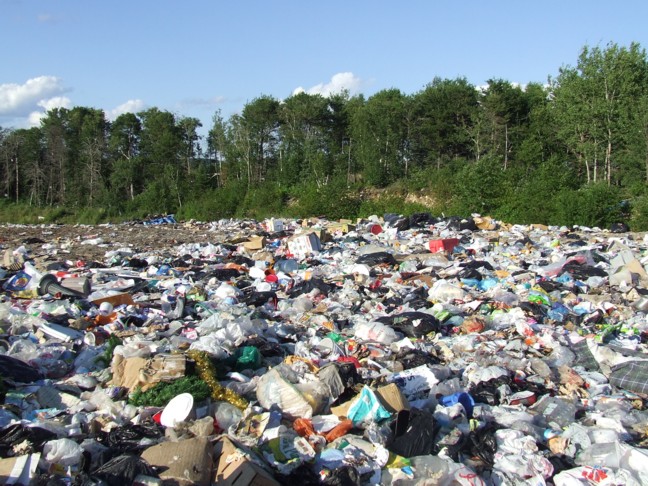
How landfills protect the environment
In a homemade demonstration, Hillhouse shows how water filtered through trash will leak directly into the ground.
“It might go without saying…but we really don’t want garbage juice percolating into our soils. Mainly because it can contaminate sources of groundwater, but also because it can migrate well beyond the limits of the landfill, causing all sorts of environmental troubles.”
So, landfills must use liner systems that form an impermeable membrane, stopping contaminated water (or leachate) from filtering through.
But this creates a new problem that engineers must solve: landfills filling up with rainwater and creating “garbage swamps.” Landfill operators need a way to remove that leachate without allowing it to drain into the soil.
That leachate, once removed, must be properly treated and disposed of so that it doesn’t harm the environment. Complex chemical, biological, and physical processes help strip pollutants out of the leachate before it can be released back into the environment.
Some landfills even recirculate the “garbage juice” back into the landfill in order to accelerate the decomposition of the garbage inside.
With all that information, Hillhouse isn’t even halfway through his video. He goes on to discuss how engineers find ways to cover the garbage layers at the end of each working day to keep pests, wind, fires, and more at bay.
Closing a landfill for good
Once a landfill is completely full and reaches into the airspace, it must be closed and sealed. Hillhouse says this is not an easy task.
The cover of a closed landfill, he says, has to keep water out and all the garbage, smells, pests, and chemicals inside…basically forever.
Even still, the decomposition process of the garbage inside creates gasses, which have the potential to explode. So engineers, when closing a landfill, must design systems of pipes that collect gasses from inside the sealed tomb of garbage and properly remove it: usually through flaring, or combusting it. It can even be converted into electricity and used to power homes in the surrounding town, which is an amazing green innovation that helps reduce greenhouse gas emissions.
Some landfills even get a second life long after they’re closed.
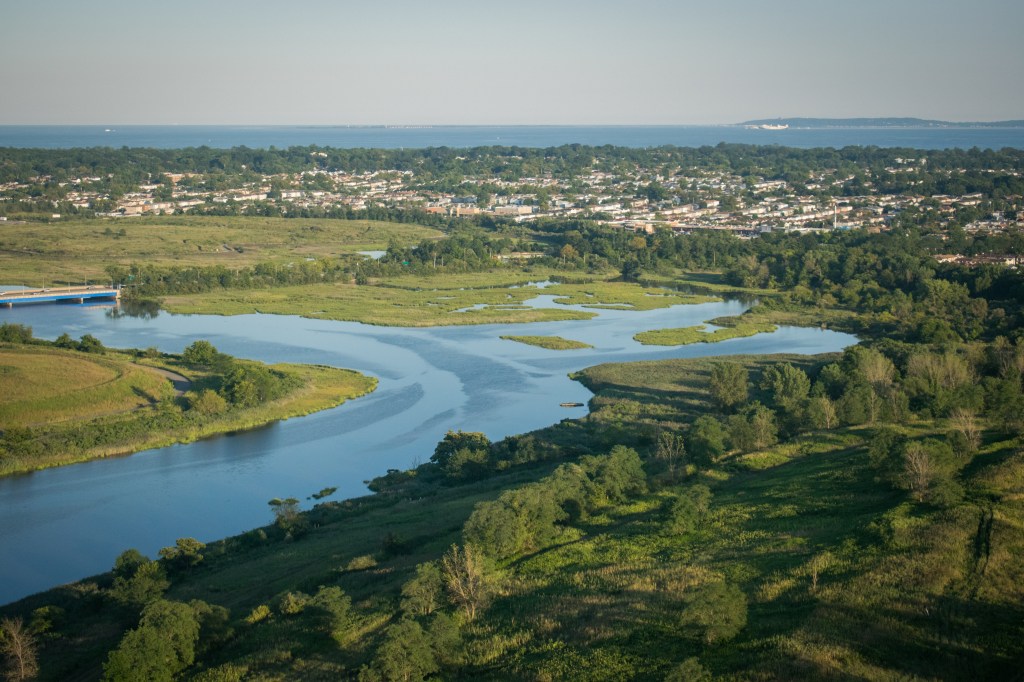
Hillhouse explains that sealed landfills undergo decades of monitoring; testing of soil and air quality to make sure there are no leaks. If all’s good, some are turned into public green spaces, like parks.
Freshkills Park in New York is one such example.
There are still vital conversations to be had about the amount of man-generated waste and how to potentially reduce that volume. Yet, there’s something reassuring about the complex and rigorous science that goes into landfills and all the ways they’re required to protect the world around them.
Hillhouse says, “Landfills are a surprisingly low impact way of dealing with solid waste in many cases.”
“I hope the future is a utopia,” he concludes, wishing for a world where we don’t have to throw away so much stuff. “But in the meantime, I’m thankful for the sanitation engineers and other professions involved in safely and economically dealing with our trash—so we don’t have to.”