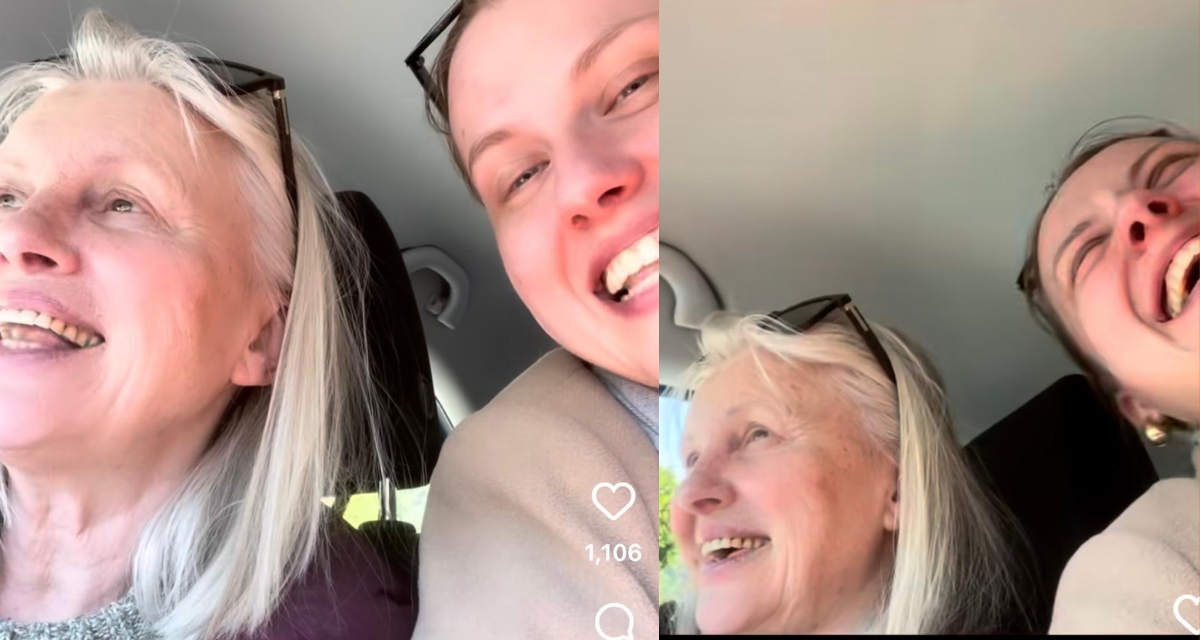
Like for many of us, having connected moments with her mother are timeless and special for musician Ester Wiesnerova. She’s incredibly vulnerable about her mom (whose real name is Maria but is mostly referred to as Marina) and her Alzheimer’s diagnosis. The disease moves bit by bit, fading her memory and ability to find words. But in a silver-lined twist, Wiesnerova found that she and mother are still able to bond through music.
In clips making the rounds on social media, Wiesnerova shares moments where she is able to harmonize with her mom through various songs. At the top of one of her videos, she notes, “The power of music is incredible.” One look at these clips, and it’s clear that’s true.
In an Instagram Reel posted on Mother’s Day, we see the pair joyfully singing in a car. The chyron across the clip reads, “Alzheimer’s took her words. But she still sings a full chorus – by heart in her second language in harmony with me.” As they lean in, each with sunglasses atop their heads, they smile while crooning “Guantanamera” in Spanish. (The song, with lyrics by Cuban poet José Martí, is a patriotic folk tune celebrating the “people.”)
Wiesnerova comments, “Music is how I communicate with my mom these days. I’ve never been more grateful for it.” So many in the comment section agree, with one even claiming, “This is the most beautiful video ever.” Another notes how Marina seems lit up by the music: “Her eyes are sparkling.”
In a second Instagram clip marked “Part 2,” Wiesnerova ups the ante. The chyron reads, “Alzheimer’s took my mom’s words. But she still sings. In harmony. In a foreign language.” This time the two sing the traditional Hebrew song “Hava Nagila.” She writes, “I’m starting a song. Will she join in?”
After just a few seconds, a text pops up on the video: “It worked! Wait to hear her sing gorgeous harmonies. So nice to hear her voice again.” She then asks Marina if “she wants to harmonize.” Indeed, she does. Wiesnerova gives her mother the starting pitch, and once again, pure glee spreads across both of their faces. She writes, “Finding a way to connect with her and smile means so much.”
Neuropsychology researchers continue to find the special link between dementia and music. In a piece posted to the Northwestern Medicine site, they quote neurologist Borna Bonakdarpour, MD, who they state “combines his love of music with research on how musical intervention affects the brain of people with dementia.”
Bonakdarpour shares, “When we use musical intervention, we’re looking for areas and networks in the brain that are intact to serve as bridges and help the areas that are not working well. Singing, for example, can be a bridge to communicating better through language. The rhythmic nature of music can help people walk better.”
This can be equally beneficial for caregivers and family members. He states, “People with Alzheimer’s may come alive again when they hear music. Some start dancing alone or with their caregivers, which is a very big deal. Caregivers find the person lost to them in the context of music.”
Anna Maria Matziorinis and Stefan Koelsch of the Department of Biological and Medical Psychology, University of Bergen in Bergen, Norway, co-authored a 2022 study entitled, “The Promise of Music Therapy for Alzheimer’s Disease.” In it, they also note how important music can be for these patients, writing, “Musical memory is partially spared in patients with AD, despite severe deficits in episodic (and partly semantic) memory. AD patients can learn new songs, encode novel verbal information, and react emotionally to music.”
Upworthy had the chance to chat with Wiesnerova about the lovely bond she maintains with her mom. She shares that it was in early 2023 when she got her diagnosis. “Singing and playing the piano together is something that was always very natural for us—that’s what we did together. She was a piano teacher and songwriter her whole life, I’m a singer and composer. When she got diagnosed, we just kept doing what we always did together. First she would play and I would sing.”
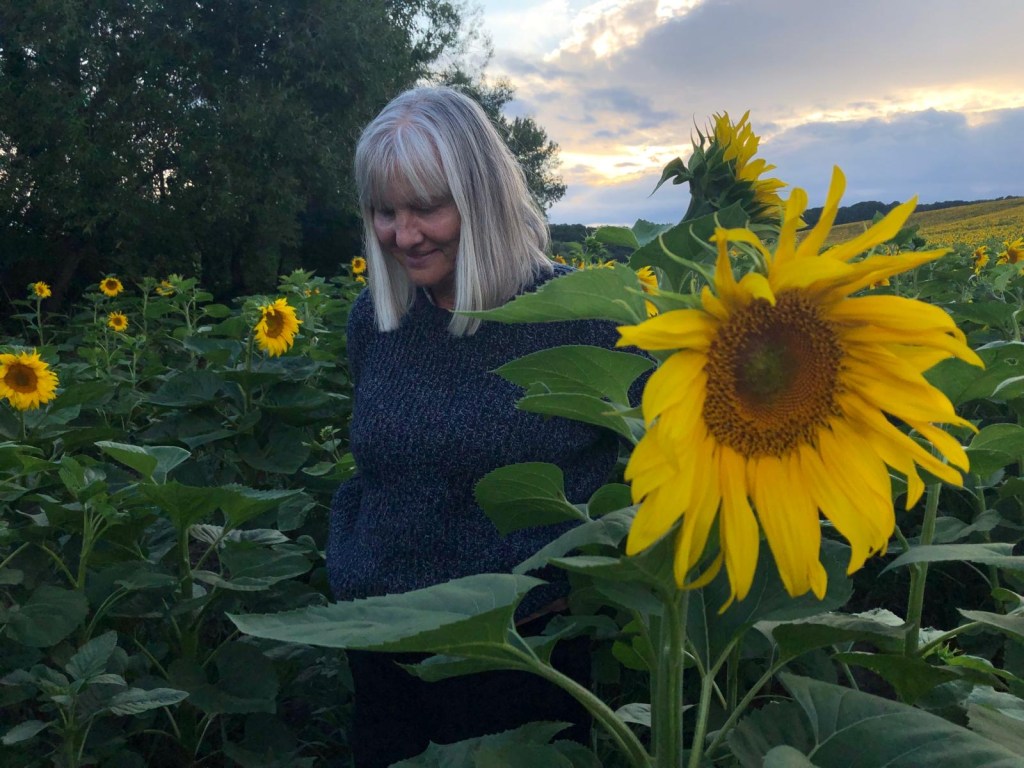
She explained that even as Marina’s ability to speak was fading, she still maintains the power of music. “Even as her capacity to speak and understand language was going down, her musical abilities very much stayed. She even responds to verbal cues as long as they’re music-related. Like if I say, sing quieter, articulate more, or harmonize with me, she usually does it. But then if I ask her where she is right now or what my name is, she doesn’t respond. It’s fascinating.”
As for their relationship, they’ve always been close. “My whole life we’ve been very close—true best friends. We shared everything. She was also the only person in my family who encouraged my music career. Slowly losing her to the illness has been very difficult, as I was slowly adjusting to this new version of her and learning to love who she is now. And learning to find my ground when the person who grounded me is slowly disappearing. I am writing an album about this process to be released next year.”