upworthy
Add Upworthy to your Google News feed.
Google News Button
Education

Turns out, the hamburger is as rich in history as it is in flavor

Savor these juicy facts about one of the world's most iconic foods.

history, food, hamburger, inventors, community
Canva

Delicious history.

True
Red Robin

It's something so simple, yet something so good — two tasty buns around mouthwatering meat.

Yes, it's true: Hamburgers are wonderful. But what exactly makes them so wonderful? With so many parts and so many variations, it’s hard to know precisely why this dietary delight has become such an iconic part of our culture.

Over the centuries — yes, centuries — the hamburger has evolved from an umami underdog to a ubiquitous food staple all across the globe. And at the center of that strange journey is some surprising insight into humanity itself (and also a tasty meat patty).

Here are seven fascinating facts from across the years and continents that will make you appreciate the burger for more than just its taste.


1. The hamburger was invented in New Haven, Connecticut.

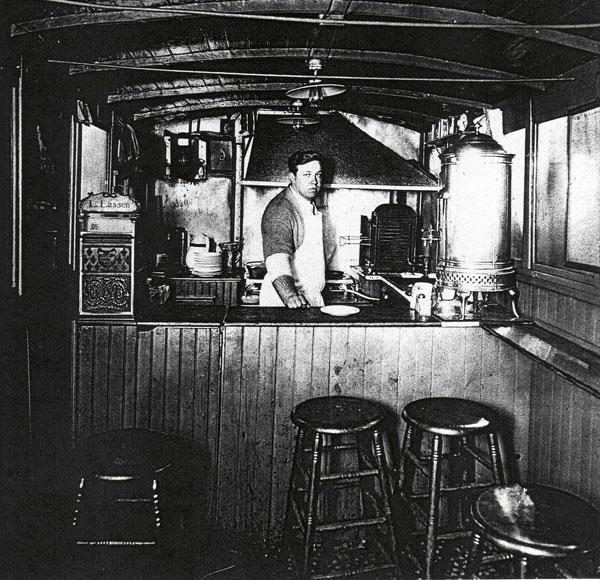
It was 1900 when Danish immigrant Louis Lassen first took the trimmings from his trademark steak sandwiches (which he also helped pioneer), packed them into patties, and placed them between two slices of toast from his sandwich wagon. The family still runs Louis’ Lunch Shop on Crown Street today and still serves the sandwiches on toast with no option for ketchup.

As someone who was born and raised in New Haven, I can assure you that this is 100% unequivocal truth. Even the U.S. Library of Congress has it on record!
sandwich, trademark, mobile food, health

Louis Lassen stands at the counter of the Lunch Wagon in New Haven, Connecticut.

Image via Wikimedia Commons.

2. Unless it was not invented in New Haven at all.

Perhaps it was Fletcher Davis of Athens, Texas, that actually invented it. He supposedly started cookin’ up those patties in the late 1880s, then brought his treat to the 1904 World’s Fair in St. Louis, where it gained global attention.

Or it could have been Charles and Frank Menches of Hamburg, New York, who ran out of sausage at a fair in 1885, so they packed together ground beef with coffee, brown sugar, and other brown spices to mask what was otherwise considered “lower class” meat.

Some people even give credit to Charlie Nagreen of Seymour, Wisconsin, who began serving flattened meatballs on bread in 1885, even though that’s pretty clearly a “meatball sandwich” and not a “hamburger.”

Maybe it all began at root beer-maker Oscar Weber Bilby’s Fourth of July party in 1891, right in Oklahoma — the heartland of America.

As you can see, there's some question as to which of the 50 states can actually claim credit for this distinctly American delicacy. Unfortunately, people didn’t keep very clear records of these things back then, so it’s kind of hard to determine which one was the real pioneer.
national landmarks, state law, America, culinary

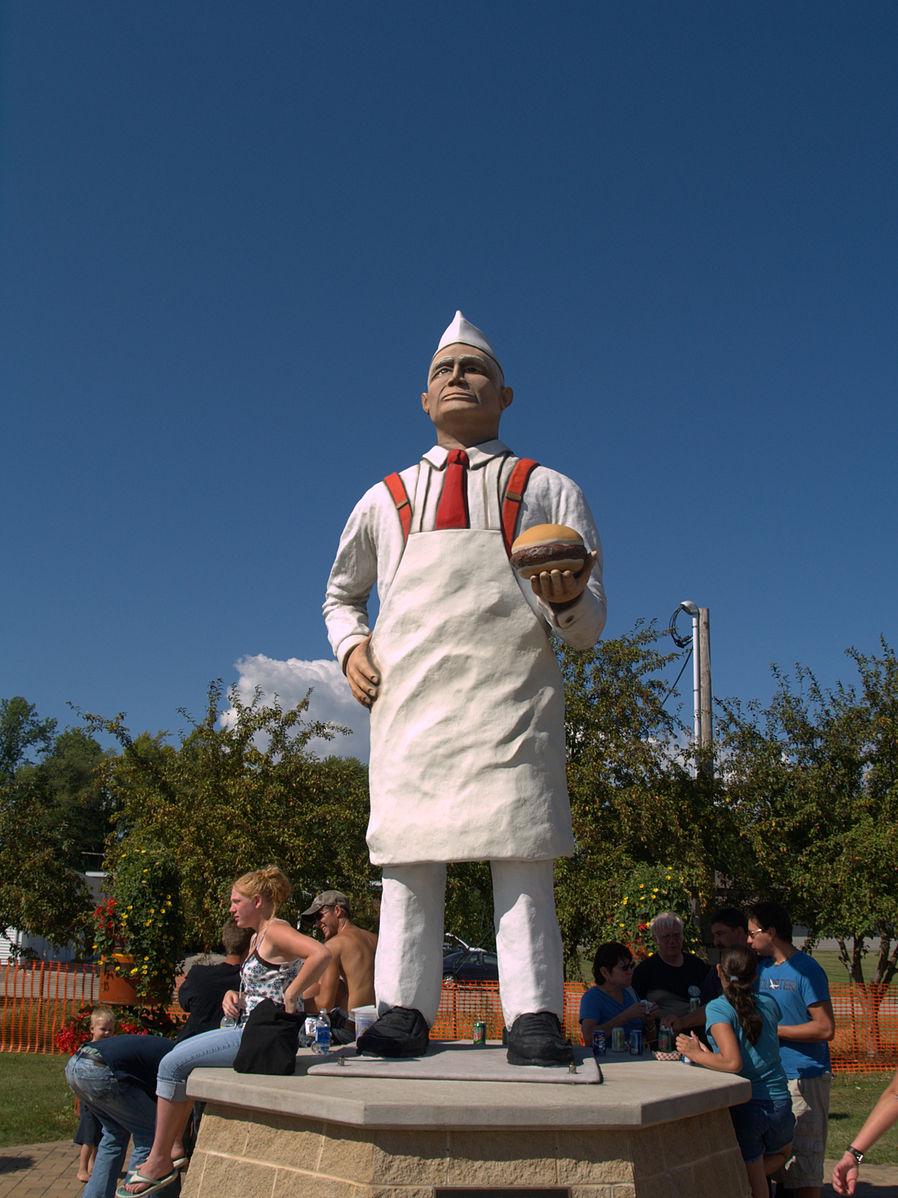
A large statue commemorates the lover for a burger.

Photo (cropped) by WIMHARTER/Wikimedia Commons.

3. But we do know that the first record of a hamburger-like recipe was from 1758.

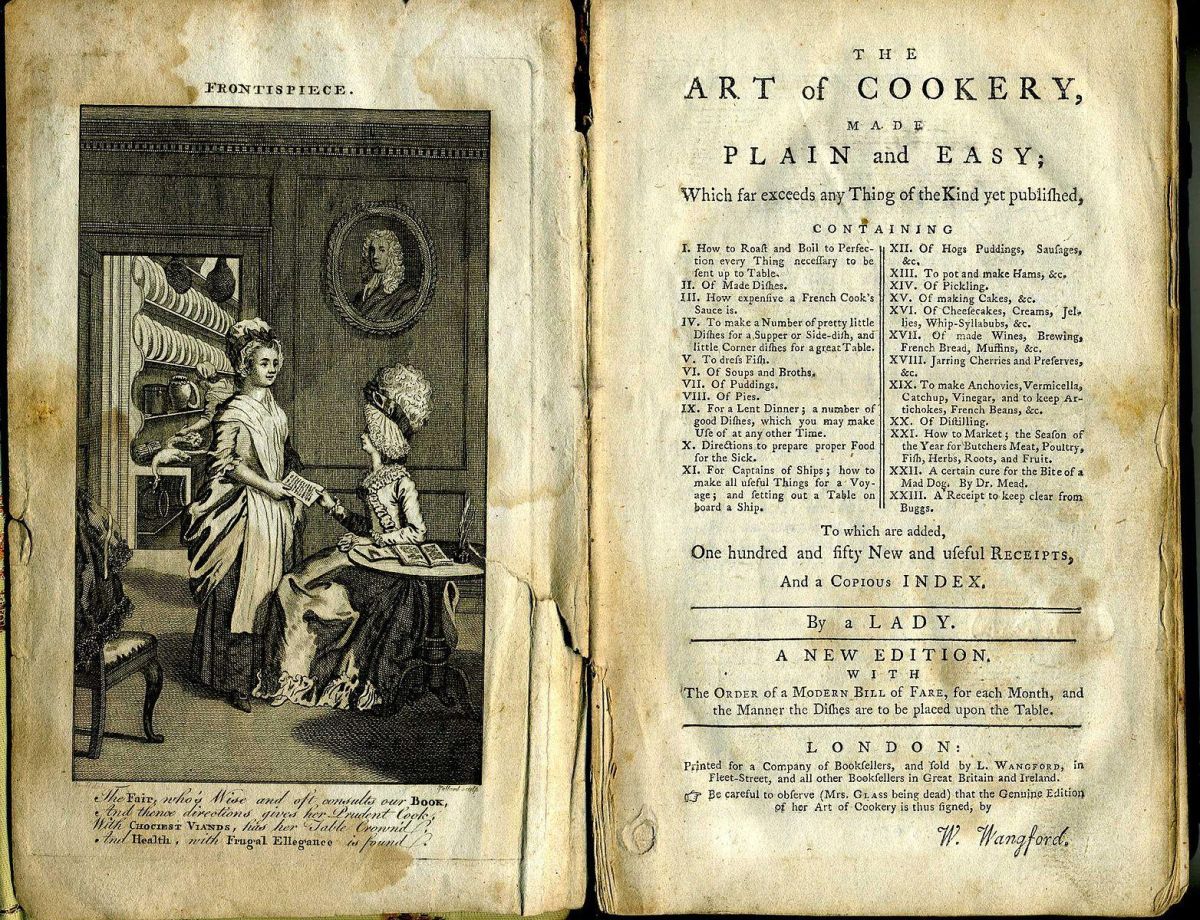
"The Art of Cookery made Plain and Easy" by Hannah Glasse — the most popular cookbook in England for more than a century — was well-known in the American colonies too.

The cookbook was updated many times after its initial publication in 1747, but it was the 1758 edition that first made mention of a “hamburg sausage” — a combination of ground beef and spices that was cured and then served roasted on a single piece of toast.
recipe, hamburgers, history, documents

Everybody benefits with a cookbook.

Image (cropped) via W. Wangford/Wikimedia Commons.

4. The hamburg sausage wan't quite a sandwich. But neither was the "hamburg steak," another cousin of the burger.

Obviously, the question of “what defines a sandwich” has resulted in much debate. But one thing we can all agree on is that it requires some kind of casing in order to qualify as a “sandwich” ... right?

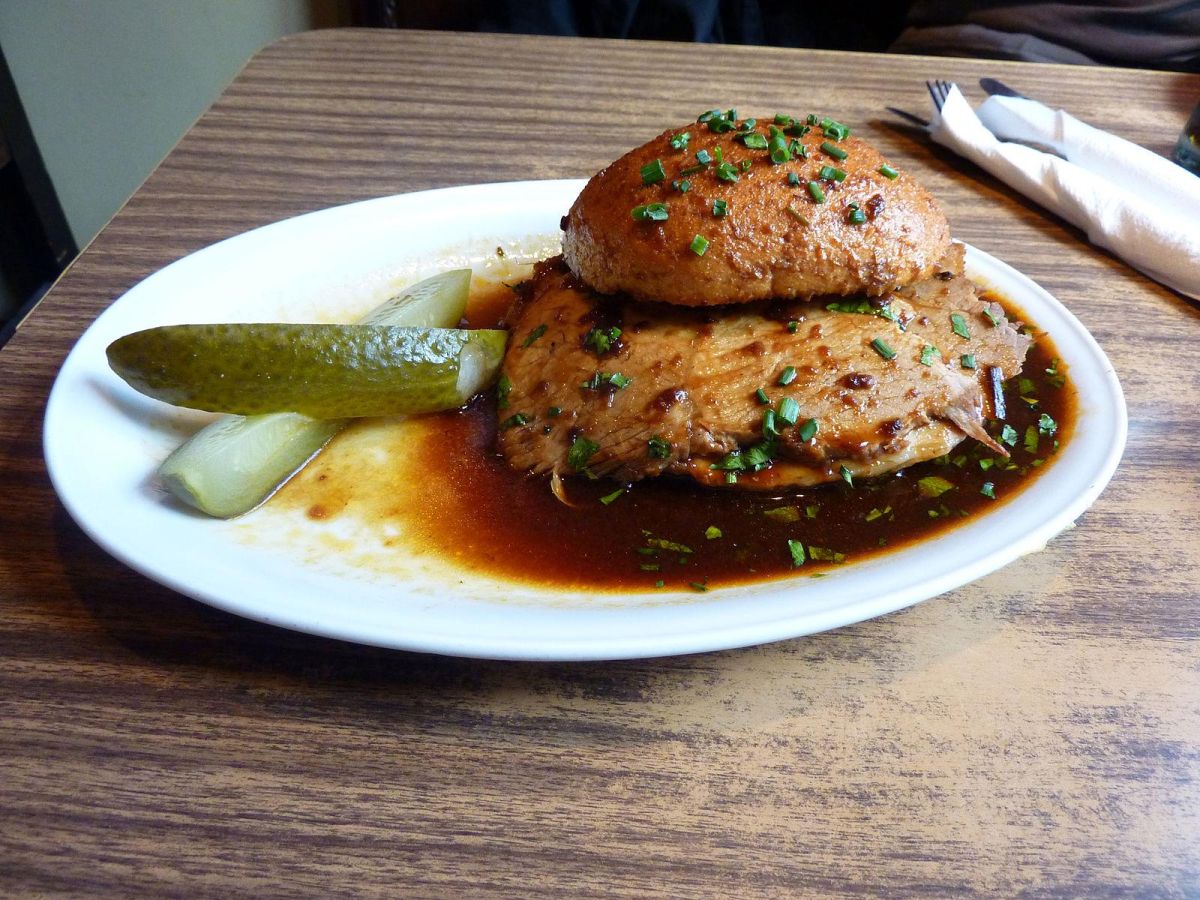
While Glasse’s hamburg sausage could have arguably been an open-faced sandwich, the popular hamburg steak was definitely not a sandwich. The German dish gained popularity in the 18th century and comprised of, um, well, a patty of ground beef packed together — sometimes with spices or onions or egg — and then cooked and served. Which, come to think of it, does sound a lot like a hamburger without the bun.

(Some would argue that a hamburger without a bun is not technically a hamburger, but that's a philosophical discussion for another time.)
middle east, cuisine, world views, studies

That doesn't look like the burgers I know.

Photo (cropped) by 1971Marcus/Wikimedia Commons.

5. Come to think of it, no one’s really sure who invented the sandwich either.

This may not sound like an important part of hamburger history, but bear with me. You’ll see how it connects.

Credit often goes to John Montagu, the fourth Earl of Sandwich, who allegedly needed some way to contain his food so that he could continue playing cards with his friends without making a mess or needing utensils.

But he was hardly the first to think of such a thing — Hillel the Elder was known for eating flatbread sandwiches as far back as the first century, and of course, many Middle Eastern and Eurasian cultures made use of the pita to contain all kinds of tasty treats, including — wait for it — minced meats.

Now do you see where this is going?

art, food, historical data, research, marketing

There are many components to this flatbread burger.

Image via Pixabay.

6. That’s right: The hamburger goes all the way back to Genghis Khan. (Sort of.)

Look, there’s a lot of world to conquer, OK? And when you were part of Khan’s Golden Horde, you didn’t have a lot of time to stop and eat between invading 2/3 of the planet. Khan’s soldiers would sometimes stay on horseback for days at a time, which wasn’t really conducive to eating soup either.

They found a way around the problem by thinly slicing meat and packing it together into portable patties that could be taken on the road and eaten as needed. Sometimes they were boiled, sometimes cured ahead of time, and more often than not, they were just eaten raw (but, contrary to popular belief, they were not placed under their saddles and cooked by butt-heat friction).

historical figures, art, Mongolia, war

A statue for the likeness of the historical Genhis Khan.

Image from Pixabay.

In one part of the world, this minced meat may have evolved into kebabs, which of course were then contained in the aforementioned pitas. Genghis’s grandson Kublai Khan is believed to have passed this raw meaty snack on to the Russians, who called it “steak tartare,” reportedly after their name for the Turco-Mongol peoples.

It would only be a matter of time before Russians shared the recipe with Germans, who gave it a twist of their own and turned it into hamburg steaks.

7. But the absolute oldest reference to a burger-like food comes from fourth-century Rome.

The ancient Roman Empire contributed a great many things to the modern world — including, believe it or not, fast food in the form of the ready-to-go thermopholia markets (literally “a place where something hot is sold”). According to a fourth-century cookbook, some of these thermopholia sold a packed patty known as Isica Omentata, which was made from minced meat, pine nuts, fish sauce, wine, and other spices. You can even find some modernized recipes and make your own Roman patties the next time you’re in the mood for a gladiator match!

cookbooks, Roman Empire, history, nutrition

The Roman Empire created some unique architecture.

Photo by Jebulon/Wikimedia Commons.

The hamburger’s globe-trotting history shows us exactly why people around the world love those meaty buns.

(Besides the fact they’re delicious, I mean.)

The real power of the burger is much more primal than that. Bread and meat are dietary staples of every culture since pretty much the dawn of civilization as we know it. It only makes sense to bring them together in such a simple way. And as technologies continued to evolve, of course we’d use them to perfect this quintessential combination, which would, in turn, give rise to the modern burger as we know it.

sculpture, diets, fast food, farming

A representation of a hamburger with cheese.

Image via Pixabay.

That’s why the hamburger’s winding journey from Rome to Mongolia to Russia to Germany and, finally, to the United States is such a telling story: It shows how separate cultures have so much in common across time and space. In that regard, it almost doesn't matter who was first to slap that patty on a bun or what inspired them do it — because the impulse was intrinsically human. Which means, yes, the hamburger has the power to unite us all, no matter where we come from, like one big global barbecue.

But also, they're delicious.

This article originally appeared on 03.22.18

discussion, debate, disagreement, conversation, communication, curiosity

How do you get someone to open their minds to another perspective?

The diversity of humanity means people won't always see eye to eye, and psychology tells us that people tend to double down when their views are challenged. When people are so deeply entrenched in their own perspectives they're refusing to entertain other viewpoints, what do we do?

Frequently, what we do falls into the "understandable but ineffective" category. When we disagree with someone because their opinion is based on falsehoods or inaccurate information, we may try to pound them with facts and statistics. Unfortunately, research shows that generally doesn't work. We might try to find different ways to explain our stance using logic and reasoning, but that rarely makes a dent, either. So often, we're left wondering how on Earth this person arrived at their perspective, especially if they reject facts and logic.


According to Stanford researchers, turning that wondering into an actual question might be the key.

discussion, debate, disagreement, conversation, communication, curiosity Questions are more effective than facts when it comes to disagreements.Photo credit: Canva

The power of "Tell me more."

Two studies examined how expressing interest in someone's view and asking them to elaborate on why they hold their opinion affected both parties engaged in a debate. They found that asking questions like, "Could you tell me more about that?” and ‘‘Why do you think that?" made the other person "view their debate counterpart more positively, behave more open-mindedly, and form more favorable inferences about other proponents of the counterpart’s views." Additionally, adding an expression of interest, such as, ‘‘But I was interested in what you’re saying. Can you tell me more about how come you think that?” not only made the counterpart more open to other viewpoints, but the questioner themselves developed more favorable attitudes toward the opposing viewpoint.

In other words, genuinely striving to understand another person's perspective by being curious and asking them to say more about how they came to their conclusions may help bridge seemingly insurmountable divides.

discussion, debate, disagreement, conversation, communication, curiosity Asking people to elaborate leads to more open-mindedness.Photo credit: Canva

Stanford isn't alone in these findings. A series of studies at the University of Haifa also found that high-quality listening helped lower people's prejudices, and that when people perceive a listener to be responsive, they tend to be more open-minded. Additionally, the perception that their attitude is the correct and valid one is reduced.

Why curiosity works

In some sense, these results may seem counterintuitive. We may assume that asking someone to elaborate on what they believe and why they believe it might just further entrench them in their views and opinions. But that's not what the research shows.

Dartmouth cognitive scientist Thalia Wheatley studies the role of curiosity in relationships and has found that being curious can help create consensus where there wasn't any before.

“[Curiosity] really creates common ground across brains, just by virtue of having the intellectual humility to say, ‘OK, I thought it was like this, but what do you think?’ And being willing to change your mind,” she said, according to the John Templeton Foundation.

discussion, debate, disagreement, conversation, communication, curiosity Curiosity can help people get closer to consensus. Photo credit: Canva

Of course, there may be certain opinions and perspectives that are too abhorrent or inhumane to entertain with curious questions, so it's not like "tell me more" is always the solution to an intractable divide. But even those with whom we vehemently disagree or those whose views we find offensive may respond to curiosity with more open-mindedness and willingness to change their view than if we simply argue with them. And isn't that the whole point?

Sometimes what's effective doesn't always line up with our emotional reactions to a disagreement, so engaging with curiosity might take some practice. It may also require us to rethink what formats for public discourse are the most impactful. Is ranting in a TikTok video or a tweet conducive to this shift in how we engage others? Is one-on-one or small group, in-person discussion a better forum for curious engagement? These are important things to consider if our goal is not to merely state our case and make our voice heard but to actually help open people's minds and remain open-minded in our own lives as well.

Shitsuke, Japanese parenting, parenting, Japan, discipline. learning
Photo credit: Canva

Parents watch as their child uses a toothbrush.

When it comes to parenting, sometimes the simplest reframing of how you discipline can make all the difference. In a YouTube video, pediatric occupational therapist Emma Hubbard shares a tip she describes as the "Japanese rule that changes everything."

It's a method called "Shitsuke," which she explains literally translates to "discipline." She claims it's the "one simple rule that Japanese parents follow that helps create calm, respectful, and obedient children."


Hubbard makes it clear from the jump that although the word translates to "discipline," it doesn't carry the same meaning it does in Western culture. Instead, it's about getting ahead of behavioral issues rather than responding to them.

"It's really easy to fall into a cycle that looks something like this," she says. "We wait for our kids to act out, then we punish, lecture, or bargain with them. Shitsuke flips this completely."

- YouTube www.youtube.com

She goes on to explain that Shitsuke strongly urges parents to nurture their children by modeling good behavior and giving clear, consistent instruction.

"It's based on the belief that children develop good manners and courtesy through instruction and practice, not through punishment or hoping they'll just figure it out," she says. "Instead of constantly putting out fires, Japanese parents prevent them by actively teaching the exact behaviors they want to see."

Hubbard shares three main principles of this method:

1. Model the behavior you want to see

It's actually quite simple. Hubbard explains, "Japanese parents understand that kids are observational learners. If you want a calm child, you must be calm. If you want a respectful child, you must be respectful, especially when you're frustrated. And if you don't want your child to scream when they're angry, then you should also try not to scream when you're angry."

2. Be consistent with clear rules

Studies show that children are less anxious when given clear instructions and predictable routines.

"The truth is, rules don't make children unhappy," Hubbard says. "In fact, having no clear rules is what makes them anxious and stressed. Think about it like this. Imagine if you went to work and your boss never told you what time to arrive, what your job was, or even when team meetings started. You'd be anxious, stressed, and confused all day. And that's exactly how your child feels without clear rules."

In an article for Psychology Today, Jenalee Doom, PhD, points out that "both children's and adults' brains love predictability. We can still get pleasure from unpredictable things like surprises, but in general, we feel safe and secure when we have predictable routines, and we find unpredictability to be highly stressful." She goes on to offer suggestions for helping children feel safe, such as keeping regular bedtimes and having meals together.

3. Learn to reframe "naughty" behavior into a learning experience

This is the game changer for many parents, and what Hubbard calls the most important part of the concept.

"This is the most important part of Shitsuke that completely changes everything," she says. "Instead of just saying 'Don't do that' or 'Stop being naughty,' Shitsuke teaches parents to ask one crucial question: 'What skill does my child need to learn here?'"

The clear genius behind this principle is that it takes mistakes (which are going to happen) and turns them into lessons.

"This shift in thinking changes everything because instead of punishing the behavior you don't want, you start actively teaching the skill that they're missing," she adds. "And that's when you see real, lasting obedience because your child actually knows how to behave well."

children, discipline, shitsuke, Japanese method of learning, lessons A young girl has a tantrum. Photo credit: Vinh Thang on Unsplash

Hubbard's YouTube video has nearly one million views and over one thousand comments, many of which add insightful thoughts to the conversation.

One commenter stressed the importance of being respectful:

"Something I will add: growing up in Japan, polite behavior was acknowledged and positively reinforced by nearly every adult I interacted with. Not just my teachers, but my pediatrician, my neighbors, the old lady who ran the corner tobacco store, my barber, etc. Saying 'good morning!' or 'thank you!' felt fantastic, because here you are a tiny child being respectfully greeted by big adults. As an adult, I now acknowledge kind American children I encounter with comments like 'thank you, that was very considerate' to pass it on, and I see them smile. I do not have children of my own, but I encourage everyone to notice the children who are trying their best and to thank them for it."

Another commenter backs up the claim that children often thrive when they have set rules:

"Rules don't make children unhappy. 100%. As a teacher, they're the ones who expect me to follow the rules and enforce the consequences all the time. Predictability makes kids happy."

This commenter discusses the value of the words parents use:

"Framing of messages are so important. For example, instead of saying, 'Don't forget…,' rather say, 'please remember.' Or, 'Don't pull the kitty's tail,' instead say, 'Please pet it gently.' Reframe the message from communicating with negatively charged words to positively charged words by telling them what you want them to do, not what you don't want them to do."

Science

Her groundbreaking theory on the origin of life was rejected 15 times. Then biology proved her right.

Lynn Margulis had the audacity to challenge Darwin. And we're lucky she did.

lynn margulis, lynn margulis symbiosis, biology, scientific breakthroughs, darwin, darwinism, women in science
Facts That Will Blow Your Mind/Facebook

A photo of Lynn Margulis.

Throughout her prolific and distinguished career, biologist Lynn Margulis made several groundbreaking contributions to science that we take for granted as common knowledge today. For example, she championed James E. Lovelock’s “Gaia concept,” which posited that the Earth self-regulates to maintain conditions for life.

But by far, her most notable theory was symbiogenesis. While it was first written off as “strange” and “aesthetically pleasing” but “not compelling,” it would ultimately prevail, and completely rewrite how we viewed the origin of life itself.


In the late 1960s, Margulis wrote a paper titled "On the Origin of Mitosing Cells," that was quite avant-garde. In it, she proposed a theory: that life evolved through organisms merging together to become inseparable.

In essence, cooperation is the driver of life, not competition and domination. This directly went against Darwin’s “survival of the fittest” principle that was considered gospel in scientific circles. Margulis’ paper was rejected by fifteen journals before getting accepted into the Journal of Theoretical Biology.

- YouTube www.youtube.com

Time would be on Margulis’ side, however. By the late ‘70s and early ‘80s, research proved that the two major building blocks of plants and animals, chloroplasts and mitochondria were at one time independent bacteria. This solidified the fact that on a biological level, connection trumps autonomy for longevity. And now that fact is written in textbooks, with no real story of the adversity it overcame to get there.

While it is customary for most new scientific theories to be met with criticism, especially those that completely shift the current narrative, many have noted that sexism played a key part in Margulis’ initial lack of acceptance. On more than one occasion, she herself had hinted that women were seen as mothers and wives first, and scientists second. She recalled that while married to fellow scientist Carl Sagan that “Carl would finish his sentence, unperturbed” while she was expected to “handle all the duties of a 1950s housewife, from washing dishes to paying the household bills.”

And yet, Margulis would have other ideas that were controversial that had nothing to do with her gender. Most famously, she did not believe that AIDS was caused by HIV, and instead believed it was cause by a syphilis-causing type of bacteria, despite there already being decades of research proving otherwise. That view was seen as an endorsement of AIDS denialism, which undermined prevention and treatment effort. Then later in life, Margulis became a vocal proponent of 9/11 conspiracy theories suggesting government involvement the in Twin Towers attacks.

And yet, perhaps this is one of those “you gotta take the good with the bad” situations. Margulis’ inherent contrarian nature gave us both these unfounded, even harmful stances, in addition to entirely new paradigms that altered our understanding of life itself.

And if nothing else, it illuminated the need for science to include multiple points of view in order to unlock the truth. It seems life is, after all, about coming together.

comedian, comedy, jimmy carr, standup, philosophy, parenting, dads, fatherhood, family, kids

Comedian Jimmy Carr put the jokes aside and delivered a brilliant nugget of parenting advice mid-show.

Jimmy Carr is best known as a comedian, but he also has dyslexia and had extreme trouble reading and writing into his early teen years. Years later, he'd go on to graduate from Gonville and Caius College, Cambridge with degrees in social and political science and first class honors.

It's safe to say that, jokes aside, he's a pretty smart guy. And in Carr's standup routines, he's not afraid to set aside the gags for a few minutes and get serious about topics that he feels deserve proper attention.


At a recent show, Carr was performing crowd work—asking questions and bantering with the audience—when an audience member called out a poignant question.

"What's your advice for parents with toddlers?" a woman yelled out.

"Well, I mean, practical advice? You can half-ass it. Get an iPad, a Netflix subscription, and you're off to the...races. They'll be very... happy," he said. The crowd roared with laughter. But Carr wasn't done. "You want serious advice?" he asked the woman.

Seamlessly, he launched into his philosophy on parenting.

"Hard choices now, easy life later," he said to a round of applause from the crowd. "I bet you fucking love your kids, but you've also got to love who they could be. So it's kindness, isn't it? You want to be really kind to your children, but not just kind in the moment. In the moment, what do kids want? They want to watch TV, not read books. They want to eat junk food, not vegetables. If you give in to that, if you're kind in the moment, you've got fat, stupid kids. That's no good. You've got to be a little bit mean in the moment."

He then joked that this clip would become his own "famous last words," so to speak when his own kids get older and reveal what a terrible father he turned out to be.

- YouTube www.youtube.com

Carr taps into a common debate in his performance here: When does gentle parenting become so gentle that it does kids a disservice?

Millennial and even Gen Z parents are "breaking generational cycles of harshness and emotional distance," writes Motherly. Baby Boomers were notoriously distant, often as a result of their own upbringing, and some experts say Millennials have perhaps overcorrected.

Gentle parenting preaches connection over correction and validating a child's feelings frequently. Research generally suggests this is a good approach, but it's a high-wire act that requires careful calibration. Otherwise, as Carr points out, you wind up letting kids do whatever they want in an effort to be kind and avoid hurting their feelings—an approach called permissive parenting. That ultimately doesn't serve them in the long-run.

He doesn't shy away from the fact that being "meaner" is hard, and far easier said than done. It's a good thing to care about your kid's happiness, which is why Carr's reframe of the approach is so brilliant. You're being kind to the person your child will one day be, by being a little bit "meaner" right now.

comedian, comedy, jimmy carr, standup, philosophy, parenting, dads, fatherhood, family, kids Jimmy Carr became a dad in 2019.Albin Olsson/Wikimedia Commons

Carr is often all jokes, but he's been known to get serious when it comes to parenting. Reports say that Carr has one son, Rockefeller, who was born in 2019.

At another recent show, a woman called out wondering how she should deal with the kids who were bullying her 11-year-old son. After several minutes of non-stop, chaotic, ridiculously silly jokes, Carr turned on a dime.

"Speaking as a parent... you cannot helicopter parent. You cannot pave the jungle. You can just teach him to get through it. It's a very tough thing. On the upside, your kid is being bullied. That's terrible, I imagine heartbreaking for you...But at least he's not the bully. Tell him from me, you can't have an easy life and a great character. You can't have both. It'll make him stronger and better and more compassionate in the future," Carr said.

- YouTube www.youtube.com

Carr's parenting advice videos have gone mega viral across social media and commenters can't believe how skillfully he can transition from jokes to solid gold words of wisdom.

"Jimmy can turn things on a sixpence from humour to compassion. He is a remarkable person."

"Just a brilliant intelligent empathetic chap."

"I do like how Jimmy can flip from the most savage come backs possible into full on philosopher in the most natural way."

"I love how this applies to essentially everything in life. Hard choices now. Easy life later. So simple, so true"

It shouldn't be a surprise that a comedian like Carr has such thoughtful takes on everything from mortality to parenting to life itself and happiness. Comedy is ultimately rooted in fundamental truths about the world. What's special about Carr is how he can turn off the funny filter and deliver that truth in its purest, most potent form when needed.

Parenting

Instead of a 'Sweet 16,' mom hosts 'Coming of Age Brunch' with adult mentors for her teen daughter

She calls it a "birthday tradition that will change your teenager's life."

sweet sixteen, birthday, birthday brunch, coming of age, young adulthood, parenting, parenting tip, parenting teens

A group of women raising glasses (left) A happy teen girl (right)

Turning sixteen is considered a milestone. It symbolizes the beginning of the transition from childhood to young adulthood, and the start of new privileges, responsibilities, and identities.

Many families celebrate this new chapter with some kind of “Sweet 16” ritual. Depending on one’s culture, it might go by a different name, such as a bar/bat mitzvah (when a boy/girl turns 13 in Jewish culture) or a quinceañera,, (when a girl turns 15 in Latin American culture). Each celebration involves slightly different traditions, but generally have the same intention of commemorating a child’s newfound maturity.


A mom who posts parenting tips under the handle of @simplyonpurpose recently shared her unique take on a “Sweet 16,” which she hails as “a birthday tradition that will change your teenager’s life.”

She calls it the “Coming of Age Brunch.”

Rather than having a birthday party with friends, this mom has her child choose a select group of adult mentors who have played a “special part” in the child’s life. These guests are asked to bring letters conveying, in their own words, “what it means to be a strong woman” and sharing special praise for the teen.

The reason is simple: “Children need a village during their adolescent years more than at any other time in their lives,” @simlyonpurpose wrote in her caption. This was a tradition that began with her eldest daughter, who is now 22. Doing it for now the third time, @simplyonpurpose feels confident that “every teenager needs this- a room full of adults that you admire praising you.”

It sounds lovely. Imagine if every girl had this kind of support as they entered an undeniably turbulent stage of life. Sure, maybe the hormonal fluctuations, body image issues, changing friend groups, relationship dramas, and social media challenges would still be there, but perhaps they wouldn’t be quite so all-consuming.

sweet sixteen, birthday, birthday brunch, coming of age, young adulthood, parenting, parenting tip, parenting teens A teen girl getting a hug.Photo credit: Canva

And to be clear, the OP clarified that this was not strictly a girls-only ritual, though she would tweak it slightly for a boy, featuring a “fire pit with roasted hotdogs and marshmallows” and male mentors to share words of wisdom and love.

This is great to hear as well, considering there have been a lot of conversations centered around how a lack of healthy mentors has led many young men to getting “red pilled,” or influenced by misogynistic and radicalized online forums that target lonely or vulnerable boys by offering a sense of belonging.

sweet sixteen, birthday, birthday brunch, coming of age, young adulthood, parenting, parenting tip, parenting teens A teen boy wearing headphones while looking at his phone. Photo credit: Canva

By and large, other parents were totally on board with a “Coming of Age Brunch.” Quite a few were excited to try it out for their own teens.

“This really resonates. 💗 I want to do something similar for my daughter as she turns 17," one person wrote.

"Teens don’t need more preaching. Instead they need trusted adults who model strong values, healthy boundaries, and long-term thinking. That kind of guidance sticks,” added another.

Another added, “I cannot even think of anything that could possibly be a better gift - you just cemented her village. How incredible!”

The proverb “It takes a village” is an extremely popular saying found in many cultures across the world, but it's lately accompanied with the lament that villages are not so easy to come by in the modern world. Maybe by creating new traditions like this, we are able to reclaim that sense of much-needed community. At the very least, young folks don’t have to feel so alone, and that in itself is a great thing.