upworthy
Add Upworthy to your Google News feed.
Google News Button
Pop Culture

From delivery bootcamps to no left turns: 12 things you didn't know about UPS drivers

There's a lot that happens before a package arrives at your doorstep.

UPS driver, UPS jobs, applying for UPS, become UPS driver, UPS driver paycheck
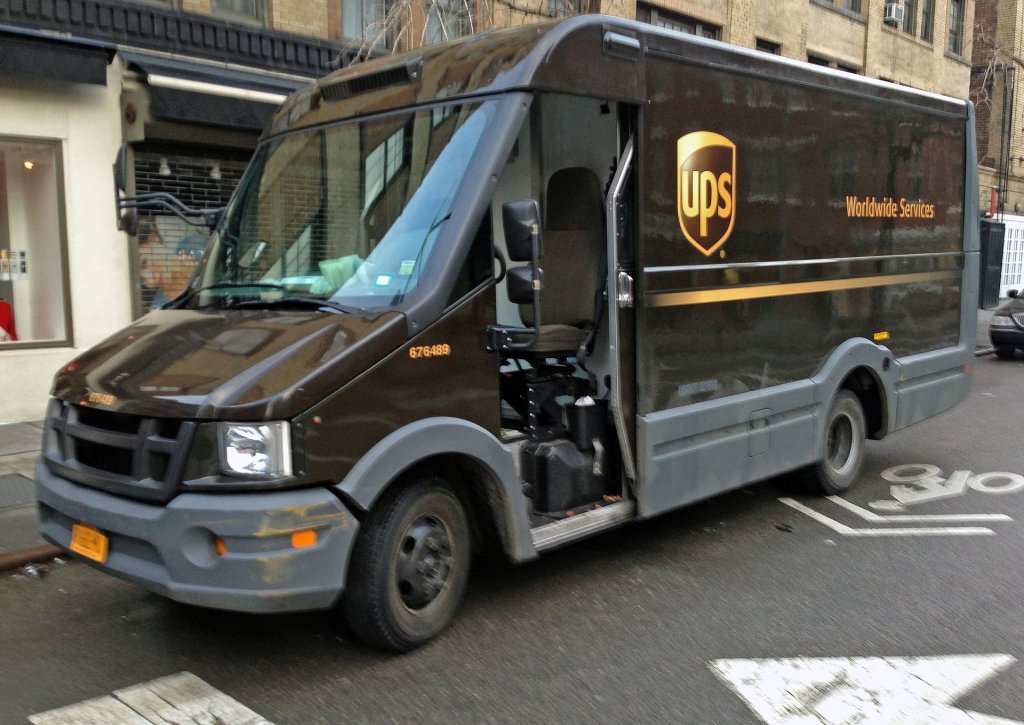
Photo by Mr. choppers /Wikipedia

There's a lot more to working for UPs than you might think

Recently, UPS driver Skyler Stutzman shocked millions of viewers by revealing how much he made in a week. But besides the hefty paycheck, there might be a few other things about the job that could surprise you.

As explained by an article in Tough Nickel, the company began in Seattle, Washington in 1907, where it was first named The American Messenger Company and focused primarily on delivering to retail stores, not individuals, via bikes or motorcycles.

That is until 1913, when a Model T ford became the company’s first delivery truck. Only six years later, it would begin expanding deliveries to California (and change its name to UPS).

Business would keep growing until it became the company we know today. And now, every day, around 330,000 UPS drivers are responsible for delivering 24.3 million packages around the world. Rain or shine.

As you can imagine, a lot must happen on those routes. Here are a few lesser known facts about what it’s like to don the all brown uniform and drive the matching truck. Or as UPs exclusively calls it…the “package car.”

1. Know those little handheld computer drivers carry around? That’s to monitor their every move.

In 2014, Jack Levis, UPS's director of process management, told NPR that “one minute per driver per day over the course of a year adds up to $14.5 million,” and “one minute of idle per driver per day is worth $500,000 of fuel at the end of the year.”

In other words, time is money, and UPS doesn’t want to waste even a fraction of it. So the DIADs (short for Delivery Information Acquisition Devices) drivers carry around don’t just scan barcodes and collect signatures—they track their productivity as well.

But that’s not all. The trucks also track every mile driven, and are constantly making sure that employees are as efficient as possible as they deliver hundreds of packages each day. You’d be hard pressed to find a job that hasn’t been changed by technology, I suppose.

2. One does not simply become a UPS driver overnight. They must go to bootcamp.

Integrad,” is a mandatory safety-focused class which teaches hopeful drivers how to handle heavy boxes, start the truck with one hand while buckling up with the other to save time (again, UPS is all about efficiency) and how to walk on ice and other slippery surfaces with their special “slip and fall” machine…which actually sounds kind of fun.

3. You’ll rarely see a UPS vehicle turn left or go in reverse.
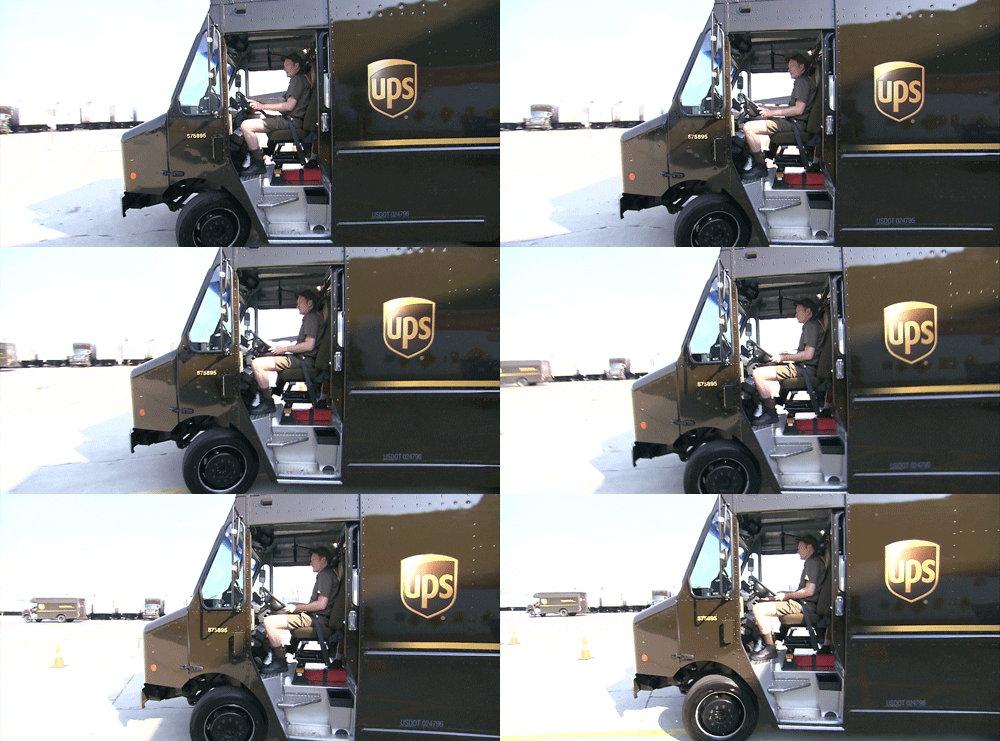
media.giphy.com

This is all for safety reasons. And…you guessed it…efficiency.

When it comes to left turns, UPS encourages drivers to not use them, since it leaves them sitting in traffic longer. The theory must be somewhat sound as it’s helped the company save more than 10 million gallons of fuel over the past decade. Plus left turns are more likely to result in dangerous crashes. ( Harvard Business Review)

As for reversing, drivers are told not to do it unless it’s to back up into a loading dock, as any type of reverse coming from a windowless box-type truck can result in damage.

4. UPS drivers have to supply their own system if they want to listen to music.

UPS package cars don’t come with radios, since it’s technically an unnecessary cost and the company tries to keep bells and whistles to a minimum (however it defies that logic by wanting to install surveillance cameras, but that’s another conversation).

So, drivers have to find their own way to listen to some jams. Or maybe they simply enjoy the silence.

5. Zero accidents gets you a pretty sweet bomber jacket.

UPS “Circle of Honor” inducts drivers with 25 years of accident-free driving, awarding them a special patch and a bomber jacket. No easy feat for anyone in this distraction filled world.

6. Extremely hot vehicles were a well known hazard of the job. Until now.

Over the span of just four years, over 100 UPS workers were treated for heat-related illnesses, according to NBC News. And in July 2022, a 24-year-old UPS driver in California died last summer from suspected dehydration or heat stroke.

Many workers began criticizing the company for not protecting their drivers against the dangerously high temperatures, even sharing the scorching heat readings in their trucks. And after a threat to strike, the teamsters secured air conditioning in all UPS vehicles after January 1, 2024.

7. Pee breaks are a pain.

Remember the time-tracking DIADs? According to The Nation, drivers will be accused of "stealing time” if the track drivers for taking too long at stops. This includes potty breaks. Not to mention it explains why they never get into conversations.


This leaves many UPS drivers with no choice other than to piggyback bathroom time onto other pit stops like getting gas. Or, in more desperate costumes, they must get more creative. As one driver shared with Tampa Bay Times, he and others often urinate in the truck, using makeshift containers like cups and bottles. Fun.

10. Meeting your UPS driver halfway could make their whole day.

via GIPHY

In a 2012 Reddit thread, one driver shared, “if you see them pulling up and you aren’t in the middle of something, meet them half way, or walk up to their truck.…I would get home 10–15 minutes earlier and actually get to spend time with my family.”

11. Beards used to be a no-no.

UPS was a little behind the times when it came to its strict facial hair policies up until 2020. Thankfully, the new rules allow beards, as well as longer hair and natural Black hairstyles like Afros, braids, locs, twists and knots.

12. Many really do love their job…especially the people they deliver to.

As one driver anonymously shared with Business Insider, One of the nice things about my job is getting to know the people on my route…If you take the time to say hello to people and parents can trust you to drive safely and slowly in their neighborhoods, they're very kind.Sometimes, there will be kids waiting for me on my route because they know I'm coming and they just want to say hi.”
Once a refugee seeking safety in the U.S., Anita Omary is using what she learned to help others thrive.
Pictured here: Anita Omary; her son, Osman; and Omary’s close friends
True

In March 2023, after months of preparation and paperwork, Anita Omary arrived in the United States from her native Afghanistan to build a better life. Once she arrived in Connecticut, however, the experience was anything but easy.

“When I first arrived, everything felt so strange—the weather, the environment, the people,” Omary recalled. Omary had not only left behind her extended family and friends in Afghanistan, she left her career managing child protective cases and supporting refugee communities behind as well. Even more challenging, Anita was five months pregnant at the time, and because her husband was unable to obtain a travel visa, she found herself having to navigate a new language, a different culture, and an unfamiliar country entirely on her own.


“I went through a period of deep disappointment and depression, where I wasn’t able to do much for myself,” Omary said.

Then something incredible happened: Omary met a woman who would become her close friend, offering support that would change her experience as a refugee—and ultimately the trajectory of her entire life.

Understanding the journey

Like Anita Omary, tens of thousands of people come to the United States each year seeking safety from war, political violence, religious persecution, and other threats. Yet escaping danger, unfortunately, is only the first challenge. Once here, immigrant and refugee families must deal with the loss of displacement, while at the same time facing language barriers, adapting to a new culture, and sometimes even facing social stigma and anti-immigrant biases.

Welcoming immigrant and refugee neighbors strengthens the nation and benefits everyone—and according to Anita Omary, small, simple acts of human kindness can make the greatest difference in helping them feel safe, valued, and truly at home.

A warm welcome

Dee and Omary's son, Osman

Anita Omary was receiving prenatal checkups at a woman’s health center in West Haven when she met Dee, a nurse.

“She immediately recognized that I was new, and that I was struggling,” Omary said. “From that moment on, she became my support system.”
Dee started checking in on Omary throughout her pregnancy, both inside the clinic and out.

“She would call me and ask am I okay, am I eating, am I healthy,” Omary said. “She helped me with things I didn’t even realize I needed, like getting an air conditioner for my small, hot room.”

Soon, Dee was helping Omary apply for jobs and taking her on driving lessons every weekend. With her help, Omary landed a job, passed her road test on the first attempt, and even enrolled at the University of New Haven to pursue her master’s degree. Dee and Omary became like family. After Omary’s son, Osman, was born, Dee spent five days in the hospital at her side, bringing her halal food and brushing her hair in the same way Omary’s mother used to. When Omary’s postpartum pain became too great for her to lift Osman’s car seat, Dee accompanied her to his doctor’s appointments and carried the baby for her.

“Her support truly changed my life,” Omary said. “Her motivation, compassion, and support gave me hope. It gave me a sense of stability and confidence. I didn’t feel alone, because of her.”

More than that, the experience gave Omary a new resolve to help other people.

“That experience has deeply shaped the way I give back,” she said. “I want to be that source of encouragement and support for others that my friend was for me.”

Extending the welcome

Omary and Dee at the Martin Luther King, Jr. Vision Awards ceremony at the University of New Haven.

Omary is now flourishing. She currently works as a career development specialist as she continues her Master’s degree. She also, as a member of the Refugee Storytellers Collective, helps advocate for refugee and immigrant families by connecting them with resources—and teaches local communities how to best welcome newcomers.

“Welcoming new families today has many challenges,” Omary said. “One major barrier is access to English classes. Many newcomers, especially those who have just arrived, often put their names on long wait lists and for months there are no available spots.” For women with children, the lack of available childcare makes attending English classes, or working outside the home, especially difficult.

Omary stresses that sometimes small, everyday acts of kindness can make the biggest difference to immigrant and refugee families.

“Welcome is not about big gestures, but about small, consistent acts of care that remind you that you belong,” Omary said. Receiving a compliment on her dress or her son from a stranger in the grocery store was incredibly uplifting during her early days as a newcomer, and Omary remembers how even the smallest gestures of kindness gave her hope that she could thrive and build a new life here.

“I built my new life, but I didn’t do it alone,” Omary said. “Community and kindness were my greatest strengths.”

Are you in? Click here to join the Refugee Advocacy Lab and sign the #WeWillWelcome pledge and complete one small act of welcome in your community. Together, with small, meaningful steps, we can build communities where everyone feels safe.

This article is part of Upworthy’s “The Threads Between U.S.” series that highlights what we have in common thanks to the generous support from the Levi Strauss Foundation, whose grantmaking is committed to creating a culture of belonging.

Joy

Thomas Jefferson coined a hip and funny phrase for abrupt goodbyes that still holds up today

A great phrase for when you've just gotta leave without explanation.

thomas jefferson, goodbye, name is haines, woman waving, us history

Thomas Jefferson and a woman waving.

"Irish goodbye" is a term for when someone slips out of an event without telling anyone, avoiding the awkwardness of announcing their departure. (Though the Irish didn't necessarily invent the phenomenon.) But what do we call it when someone decides to turn tail and leave a situation immediately, without any explanation at all? These days, there doesn't seem to be a name for a sudden, unexpected exit. Back in the 1800s, however, there was one, courtesy of the third president, Thomas Jefferson.

The phrase: "My name is Haines."


This may sound a bit strange, but it all stems from an unusual interaction Jefferson had while in office with a member of the opposition party. According to Monticello.org, The Weekly Picayune originally published the story in New Orleans on February 17, 1840.

The story behind "My name is Haines"

In 1805, during his second term as president, Jefferson was riding near Monticello, his Virginia residence, when he struck up a conversation with another man on the road. Amusingly, the man had no idea who he was speaking to, and as a rank-and-file member of the Federalist Party, which opposed Jefferson's Democratic-Republican Party, he had plenty of harsh words for the president.

monticello, thomas jefferson, jefferson house, virginia, famous houses Thomas Jefferson's Monticello.via Martin Falbisoner/Wikimedia Commons

The Weekly Picayune wrote:

"Haines took particular pains to abuse Mr. Jefferson; called him all kinds of hard names, ran down every measure of his administration, poked the non-intercourse and embargo acts at him as most outrageous and ruinous, ridiculed his gun-boat system as preposterous and nonsensical, opposed his purchase of Louisiana as a wild scheme — in short, took up every leading feature of the politics of the day, and descanted upon them and their originator with the greatest bitterness."

Jefferson simply listened, neither in the mood to argue nor to reveal his identity. When the two arrived at Jefferson's home, the president invited the man inside for refreshments. At one point, the visitor asked the president for his name. Here is how it was reported in The Weekly Picayune:

"Jefferson," said the President, blandly.

"The [devil]! What, Thomas Jefferson?"

"Yes sir, Thomas Jefferson."

"President Thomas Jefferson?" continued the astonished Federalist.

"The same," rejoined Mr. Jefferson.

"Well, my name is Haines!" and putting spurs to his horse, he was out of hearing instantly.

jefferson memorial, tidal basin, washington d.c., historical monuments, american history The Jefferson Memorial in Washington, D.C.via Joe Ravi/Wikimedia Commons

Why did Haines ride off so quickly?

There are many reasons Haines may have decided to bail on the president so abruptly. He was likely embarrassed after bad-mouthing the president to his face and may not have wanted to risk any reprisal for his harsh words. And as someone who harbored deep ill will toward the president, he probably had no interest in entertaining his company. Regardless, "My name is Haines" became a popular phrase after appearing in The Weekly Picayune , and it was used whenever someone wanted to leave a situation suddenly and without explanation.

The phrase would be used until around the Civil War, but by the beginning of the 20th century, it, too, had said goodbye. It faded away rather than vanishing in an instant, as Mr. Haines famously did.

gentle parenting, mom and daughter, heart to heart, good parenting, happy family

A mother and daughter having a conversation.

The biggest difference between Baby Boomers and Millennials as parents is the older generation preferred a tough-love approach to raising their kids. In contrast, Millennials are more likely to choose gentleness. There are many reasons for this shift—some say it's a way for Millennials to heal their inner child, promote greater emotional intelligence, and break intergenerational trauma cycles.

A recent study by Lurie Children’s Hospital of Chicago found that 74% of Millennial parents prefer gentle parenting, whereas Boomers generally used a mix of authoritarian and authoritative styles. This means that when Millennials became parents, they had to set aside certain methods their parents used. One of the big ones was letting go of Boomer parenting one-liners and comebacks that, these days, can be seen as incredibly negative.


mom and daughter, mom, daughter, offended daughter, daughter won't listen A mom motions to her young daughter.via Canva/Photos

Popular Boomer parenting phrases:

"I’ll give you something to cry about.”

"I brought you into this world, and I can take you out of it.”

"As long as you live under my roof, you’ll obey my rules.”

“Because I said so…”

“If your friends jumped off a bridge, would you?”

“Back in my day, we had to…”

“Stop being so sensitive.”

“Wait until your father gets home.”

“Do as I say, and not as I do.”

“I love you, but I don’t like you right now.”

A great example of how parent-child relationships have evolved across generations is an Instagram post by Mariela De La Mora (@mariela.delamora), a leadership and business coach. In the video, the 44-year-old mom asked her 9-year-old daughter how a parent would finish a series of sentences that Millennials and Gen Xers heard growing up.

"I’ll give you something…" De La Mora asked her daughter, who responded, “to clean your room?"

"I brought you into this world and…” her mother asked, and the daughter responded, “I love you.”

"As long as you live under my roof…" the mother asked, and her daughter responded, “You’re safe."

The daughter’s answers were telling because she didn’t expect a parent to say something snarky and authoritative to their child. Instead, she assumed a parent would say something loving and affirmational. It really shows how gentle parenting has changed the mindsets of the younger generation. De La Mora believes that by stopping the use of these toxic phrases, children carry less burdens than previous generations.

“Sometimes you don't realize how far you've come until you look around and realize who is walking around this earth more ‘unburdened,’ because of you,” she wrote on the post. “Children or not, there is someone who is more unburdened because of how hard you had to work to reparent yourself. Let this be your reminder.”

gentle parenting, mom and daughter, heart to heart, good parenting, happy family A mother and daughter having a close conversation. via Canva/Photos

“Okay, we millennials are obviously not perfect parents, but I feel that as a generation we have collectively decided to attempt and raise our children in the safest, most self-aware and emotionally intelligent homes,” one person wrote in the comments. “I never realized how traumatic and heartbreaking these phrases were. Until hearing them end differently,” another added.

There is much debate over whether authoritative or gentle parenting styles are best for raising children. The simple takeaway is that children raised by authoritative parents tend to be more independent and free-thinking, whereas those raised under gentle parenting tend to have higher emotional intelligence. But what De La Mora’s video proves is that, even though there may be good debates over which parenting styles are better, we can probably all agree that some parenting phrases are best left in the past.

baby names, dog names, golden retriever, name shame, cvs, funny, funny tiktok, funny dog videos, names
@sarahwithscrubs/TikTok, used with permission

Honestly, most of us would have reacted this way.

It started like any ordinary pharmacy errand. A Michigan woman named Sarah was waiting at CVS to pick up a prescription for her “son.” When another woman waiting in line overheard the name of her “son,” she apparently couldn’t help but let out an unsolicited opinion.

“You’ll really name your son anything, huh?” the woman said with a sigh.


The name in question? Whiskey.

baby names, dog names, golden retriever, name shame, cvs, funny, funny tiktok, funny dog videos, names At least it wasn't Bubbles. Photo credit: Canva

Now, if you’re picturing a tiny human in a onesie named after your dad’s favorite Friday-night drink, and feeling a little baffled in the process, don’t worry. So was everyone else.

Except Whiskey isn’t a little boy. He’s a red golden retriever.

Yep. Sarah’s “son” is of the four-legged variety, currently undergoing cancer treatments and racking up a pharmacy bill that could rival a small country’s GDP. She and her husband get his prescriptions filled at their local CVS because (fun fact) many human and animal meds are the same, just at different doses.

baby names, dog names, golden retriever, name shame, cvs, funny, funny tiktok, funny dog videos, names You just know there's a person named Whiskey out there getting a kick out of this. media4.giphy.com

As Sarah explained to Newsweek, this strategy saves them a few bucks, but can certainly lead to some incredible misunderstandings.

In her TikTok video, which has now been watched over 3 million times, Sarah retold this CVS name-shaming incident, and viewers collectively lost it.

@sarahwithscrubs I should’ve thrown in I was picking up his cancer meds too lol 🤭😂 #fyp #foryoupage #storytime #dogs #smallcreator ♬ original sound - sarah renee

One commenter shared, “I was shaming you too until you said dog!” Another wrote, “I mean, Whiskey is a horrible name for a child 😂 But for a dog? Okay lol.”

However, a few folks came to Sarah’s defense. One person noted, “There are women named Brandi—what’s wrong with Whiskey?” Another admitted, “in my 49 years I didn't know CVS filled pet meds!"

It’s the kind of mix-up that reminds us how funny life can be when the human and animal worlds collide. Because let’s face it: Whiskey the dog? Adorable. Whiskey the toddler? Maybe… less so. It might be a mostly unspoken rule, but a rule nonetheless.

As for what became of that misunderstanding, Sarah shared that when the other woman called Whiskey a "horrible" name for a child to grow up with that could lead to getting bullied in school, Sarah quipped back with "Well, he's a dog. So I don't think so." Upon that realization, Sarah told Newsweek that she “apologized very nicely” once she learned that Whiskey was, in fact, a dog.

As Sarah put it, the stranger “just left in a hurry, probably to think about her actions later.”

Meanwhile, TikTok is still chuckling, and celebrating one very good boy with a name that fits him perfectly.

Moral of the story: some names are meant for baby humans, like Zach or Emma. Others are for the fur babies who greet you at the door with a wagging tail and oodles of love…like Whiskey. 🐾🥃

This article originally appeared last year

hospice, icu dying, passing away, final moments, afterlife

A man who is ready to pass away.

When people in the healthcare world experience death on a regular basis, they begin to see patterns in the timing of when patients pass away. Hospice workers say that when people are in their final days, they begin to see their departed loved ones surrounding their hospital bed. They will also share many of the same regrets and have frequent hallucinations.

Kirstie Robb, a TikToker who has worked as an ICU nurse for the past four years, has noticed a trend in people who are about to pass away. She says that when she hears a specific phrase from those who are brought in, regardless of the reason, they will be gone very soon: "Every single person who passes away says the same thing," she explained in her TikTok. "They say…'Can you please tell my family I love them? I don't feel good. I know I'm gonna die.'"


Somehow, people know when they are ready to die

@kirstierobbb

those who are meant to see this will see it.

Death is such a mysterious process that Robb can’t believe that so many people she’s seen know when the moment is upon them. We’re never trained to sense our death. Why is it that these people have such a clear understanding it's upon them? Robb says it is due to an internal, spiritual shift that defies medical understanding. "You guys, people know when they're gonna die," she says.

“There's a shift that happens that's spiritual, that nobody can explain, right? Their vitals may be stable. Their condition may be the exact same way it was when they came in. There's nothing inherently dangerous,” she continued. “Yet in every single circumstance, no matter what brought them in initially, no matter how many hours it is from the last time that they said that, they always die. Always.”


hands, holding hands, hospice, hospital bed, death, final days, Holding a hospice patient's hand. via via Canva/Photos


Lessons from being among the dying

Robb’s experience with the dying led her to remind everyone how important our lives are and to focus on what truly matters, rather than chasing material possessions. “Life is not meant to be an endless pursuit of things. Life is meant to be enjoyed. Life is meant to be appreciated. Life is meant to be explored. Why are you actually here?” Robb asks.

There is no research-based reason for this shift that occurs in people when they know they are going to pass, but David Casarett, M.D. explained his experience with it in Psychology Today.

afterlife, going to the light, bright light, death, final days, hallucination, heaven A man walking towards the light.via via Canva/Photos

“What they tell me is that they feel—something. Something different, or changing, or new. One young man dying of a sarcoma told me he felt free. Another middle-aged woman dying of liver cancer said she felt like she was falling out of a plane. Both had been correct to sense something amiss, and both died within the hour,” Dr. Casarett wrote. “I don't know how we could possibly foresee our own deaths. I'm not saying it's impossible; it's just beyond my power to explain.”

While there is a lot of mystery surrounding death, Robb and Dr. Casarett’s experience with it shows that those who are ready to pass away seem to be at peace and accepting of their final journey home, wherever that may be. It should give all of us a feeling of relief that our final hours may be the most peaceful we ever experienced.

Health

Acclaimed leadership expert shares a simple hack that turns self-doubt into a huge asset

The "spotlight effect" stops people in their tracks, but it doesn't have to.

spotlight effect, imposter syndrome, shade zahrai, behaviorial therapy, mind hack

A woman sits at a desk, overwhelmed and frustrated.

Quite often, people receive a promotion, praise, or a new assignment at work and feel imposter syndrome when the stakes suddenly rise. They may feel like frauds or flukes, even though their past accomplishments are exactly what got them there. There is a feeling of being seen, paired with a fear of being "found out." If this sounds familiar, a leadership and behavioral expert has a tip to "take the spotlight off yourself and turn it into a flashlight."

Dr. Shadé Zahrai went on TikTok to advise people experiencing imposter syndrome through what's known as the "spotlight effect." To put it briefly, the spotlight effect is a mental bias that causes people to vastly overestimate how much others notice, judge, or remember them. It can make someone feel as if they are under a spotlight, anxious that others are watching closely and ready to call them out.


The truth, according to Zahrai and other experts, is that most people are too preoccupied with their own lives to notice, remember, or care enough to audit someone else. While that realization can be a relief, it still may not be enough on its own to offset imposter syndrome.

@shadezahrai

If you feel like a fraud and imposter, this is why – and what to do about it. My book is out in just three days! If you order it now you get thousands of dollars of bonuses - but you have to order it before Jan 20!

Zahrai said people can flip the thought and energy of the spotlight away from their identity and aim it like a flashlight at the problem itself to find a solution. The internal narrative of "I don't know what I'm doing and I'm going to be exposed" becomes "This is the issue I'm concerned about. What do I need to do or learn to address it?" It takes "I'm a fraud" and flips it into "Why do I feel like a fraud?"

"Confidence doesn't require you to know everything in advance,” said Zahrai. "It just requires you to trust yourself enough to stay in the room, ask the question, and figure things out as you go."

@aliabdaal

Have you ever heard of the spotlight effect?

Behavioral specialists weigh in

Other behavioral experts and therapists who spoke to Upworthy shared what they would recommend to someone experiencing the spotlight effect.

"So much of anxiety is perception of how others perceive you and what they're thinking about you," said licensed therapist Cristina Billingsley. "Being that [the spotlight effect] is a common occurrence for people, I remind clients there's comfort in knowing you're not alone. Reminding ourselves that this theory has been tested and research shows that people overestimate how much people are actually thinking about or noticing them. Next time you're spiraling about this, ask yourself 'Yeah....and?' Does it matter in the long run...today, tomorrow, next week? Does this person's opinion truly matter to me? Would I judge someone or be this critical about them?"

@wellwithraele

Remember this for your next social interaction or conversation 💬 #wellwithraele #socialskills #perspective

Some experts agreed that the spotlight effect pivot Zahrai recommended could be used to one's personal advantage.

"Reframe the spotlight effect as a flashlight moment, turning the fear of failure and making mistakes into an opportunity to showcase your zone of genius so that others can learn from you," said Dr. Angela Chen, a clinical psychologist. "Take repeated action, as it will allow your brain to rewire the spotlight effect through exposure and extinction learning. Consistent and repeated exposure through taking steps toward what matters to you and what kind of person you strive to be allows your brain to create and strengthen new, non-threatening neural pathways."

Other experts did not think Zahrai's flashlight pivot was an effective way to eliminate the spotlight effect altogether.

"The approach of turning a spotlight into a flashlight treats the issue as attention-based instead of deep-rooted," said licensed psychotherapist Doriel Jacov. "This might work in the short-term but it doesn't address the cause of the anxiety. Many with imposter syndrome have internalized a harsh inner critic. If you simply redirect your attention, it doesn't get rid of that internalization. It might offer some temporary relief, but the inner critic will find its way back to you."

Jacov added, "Second, since the spotlight effect is fueled by negative self-perception, when you turn it into a flashlight, you might turn that negative perception outward. This leaves you judgmental and highly critical of others, which can have negative relational impacts. You may find yourself consciously or unconsciously devaluing others."

Jacov did agree with Chen that frequent exposure can help people navigate their emotions and offset the impact of the spotlight effect.

"The biggest advice I have is to put yourself in situations that elicit the spotlight," concluded Jacov. "The more you expose yourself to those feelings and that type of environment, the more you'll be able to learn that you're emotionally safe. You'll learn that no one thinks of you in the way you think of yourself."