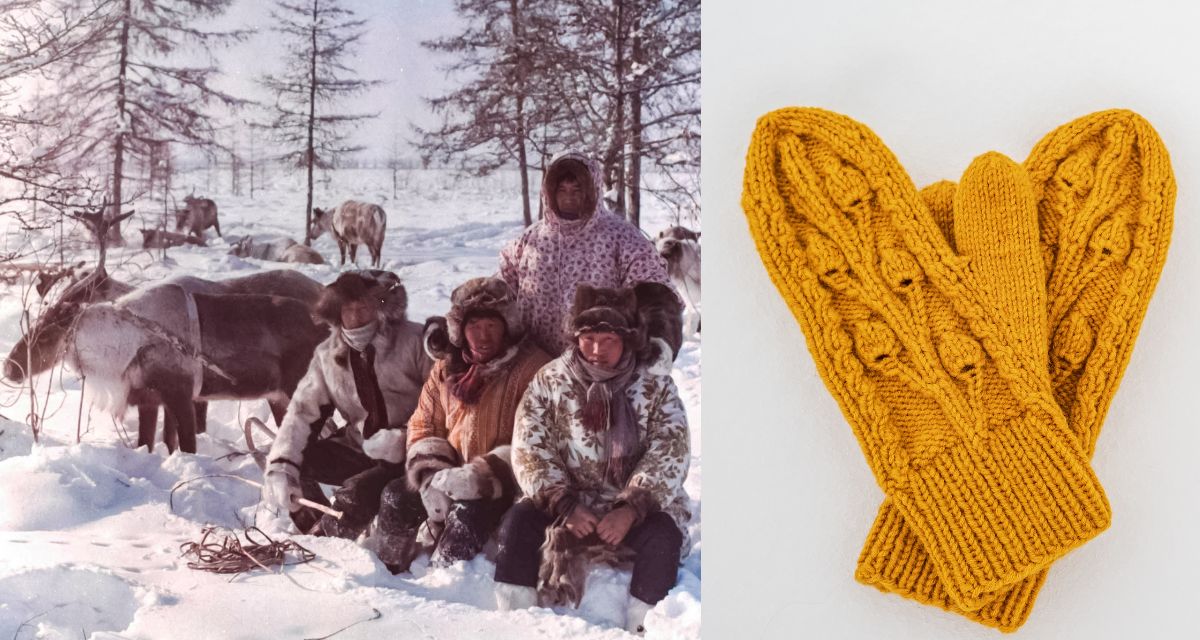
When it comes to mittens, one color reigns supreme: yellow. If you grew up in snowier regions—like Minnesota, Wisconsin, South Dakota, Maine, Canada—it was pretty much common knowledge that yellow mittens, otherwise known as “Choppers,” were the champions of winter wear.
But what makes these sunshine-colored accessories superior isn’t really their color. Well, it is. But also it isn’t. Keep reading.
The Arctic origins of the yellow mitten
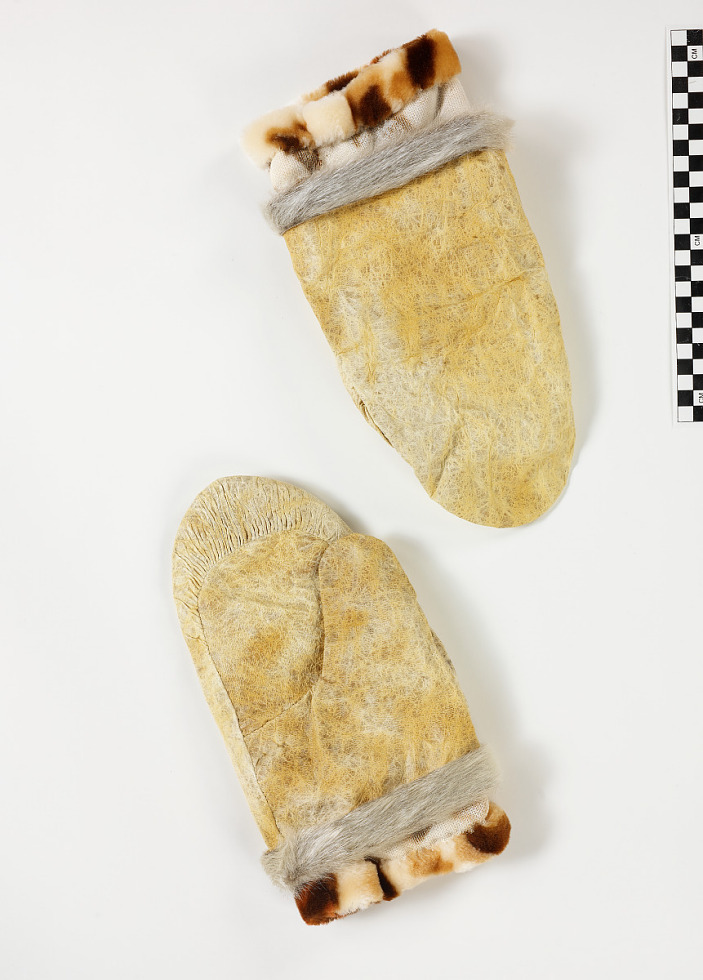
Long before they were called choppers, Inuit tribes made double-layered, fur-lined mittens called “pualuuk” designed to withstand harsh Arctic temperatures while remaining movable and breathable for everyday use. Traditionally, they were constructed using sealskin on the outside for water resistance, and caribou hide on the inside for insulation.
Various tribes would use different animal skin combinations: deer, beaver, moose, elk, etc. Buckskin was particularly beneficial since its ultra-soft texture made for silent hunting and easy repairs.
But no matter what skin was used, it would be slowly tanned over smoke, giving the mittens their signature yellow color.
Another variation included double-thumbed mittens, often used by kayakers. If the thumb wore out or got wet, the mitten could be simply flipped around to use the other side. You just know that the women making these gloves got tired of being asked to make replacements.
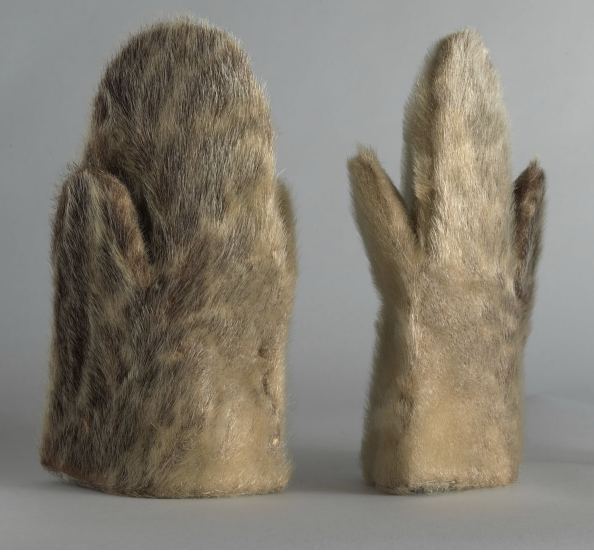
In short, these mittens were the product of generations of practical knowledge. Every material served a purpose, from keeping moisture out to trapping warmth close to the skin. The result was a piece of winter gear capable of handling some of the most unforgiving climates on Earth.
Presumably, as more and more people began buying mittens in stores, yellow became associated with quality craftsmanship. Manufacturers eventually began dyeing products the same shade, hoping to capitalize on that reputation.
From Indigenous innovation to logging camps
During the massive logging boom in the American Northeast, Midwest, and Canada in the 1800s, outdoor workers required rugged, windproof hand protection. They essentially took the design of the pualuuk and added an additional mitten (or glove) made of sheep wool. This two-layer system allowed workers to swing axes comfortably while keeping their hands warm in bitter winter conditions.
The combination proved especially useful for people spending long days outdoors. The leather shell blocked wind and moisture, while the wool liner added warmth and could be removed to dry out when needed. That practicality helped the design spread far beyond logging camps.
And thus they were called “choppers,” named after the wood choppers who used them.
A design that stood the test of time
By the 1950s, the design was standardized by the U.S. Military (like the Navy’s N-3 work gloves) for cold-weather deck duty and outdoor base work.
Military adoption further cemented the mitten’s reputation for durability. When equipment is expected to perform in demanding environments, simplicity often wins out, and choppers offered exactly that. Their design was easy to manufacture, easy to repair, and exceptionally effective at keeping hands functional in freezing temperatures.
While other innovations have taken place over the years, the basic formula for the perfect glove was figured out over three centuries ago.
Modern winter gear may feature advanced fabrics and high-tech insulation, but the enduring popularity of yellow choppers speaks for itself. What many people see as a classic cold-weather mitten is actually the continuation of Indigenous ingenuity, refined through generations and adapted by workers, soldiers, and outdoor enthusiasts alike.
Special thanks to The Iron Snail, whose video (below) inspired this article.