“Spasketti,” is a word that may sound silly or wrong to the ears of someone outside of my family. This is a word that my siblings and I grew up hearing regularly, thanks to the remnants of my stepdad’s childhood stutter. Turns out, the term for “in-house” terms like that is “familect,” and every family has one. Georgetown University linguist Cynthia Gordon spent decades studying this phenomenon.
This private language isn’t something that is passed down intentionally. Earth J Jacket, a TikTok page, explains in a post, “It might be a child’s mispronunciation that everyone kept, or a name for the TV remote no outsider would recognize.” They go on to share that Gordon “found that every family builds its own private dialect. Words rise from ordinary days, get repeated, and eventually become permanent.”
Like states, families have dialects
Just like every state has its own dialect, families do as well. This was discovered after Gordon spent 25 years having families record themselves doing daily activities like chores, eating dinner, or going on a grocery run. It quickly became evident that each family had its own secret language of sorts, one with inside jokes, made-up words that only mean something to them, and purposely mispronounced words.
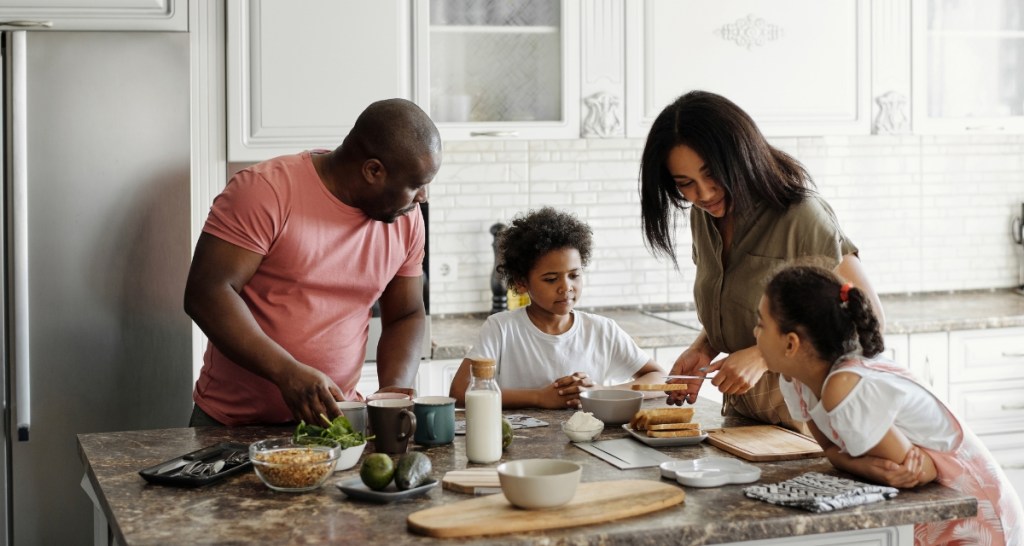
Photo Credit: Canva
Gordon tells National Geographic, “Each of these families was really its own little unique social world, and that world was being constructed through language.”
According to National Geographic, experts say the private dialect helps families bond and create a cohesive unit. “Language is a resource that human beings use to tie themselves to other people—and in familect’s case, to bind themselves into a family,” Gordon tells the outlet. It also helps repair relationships after an argument because it helps to reaffirm the connection.

Photo Credit: Canva
It’s all about connection
In an article for the Substack newsletter Why is This Interesting, contributing writer Steph Balzer wrote about her own experience witnessing her sister’s familect. Balzer explains that on a recent visit to her sister’s house, she noticed that her sister’s family had a shared dialect. She writes, “I recently spent a week in Tucson with my sister and her family. I’d never noticed it before, but on this visit, I picked up on their shared dialect, and the slang words they all use that no one else does.”
“My brother-in-law said ‘de do’ instead of ‘thank you’ when speaking to one of his daughters. My sister kept calling their cats ‘mishmouths.’ Then, one evening, she informed me she was making ‘Kwaj Dinner,” she shares. When Balzer inquired what ‘Kwaj Dinner’ was, her sister explained that she had to cook more when they lived on Kwajalein, likely referring to the Army base Garrison-Kwajalein. While living there, she created a pasta salad that consisted of broccoli, pasta, Polish sausage, and Parmesan cheese. Since moving, the dish has stuck around and adopted the name of the location where it was created.
Photo Credit: Canva
Familects can also contain regional words that developed from one or both parents’ country, state, or city of origin. For example, a family from North Carolina may now live in California but refer to a pack of sandwich crackers as “Nabs” instead of crackers. “Nabs” is short for Nabisco.
It can be fun to take inventory of the words that are unique to your family. A familect is a living dialect. It changes as people age, and, in some instances, certain words die when people do. No familect is the same, but they all serve the same purpose: connection.