So much about a person’s inner world can be revealed without them having to say a single word. Even the smallest gestures can offer clues to their deeper emotions, coping mechanisms, and how they navigate the world.
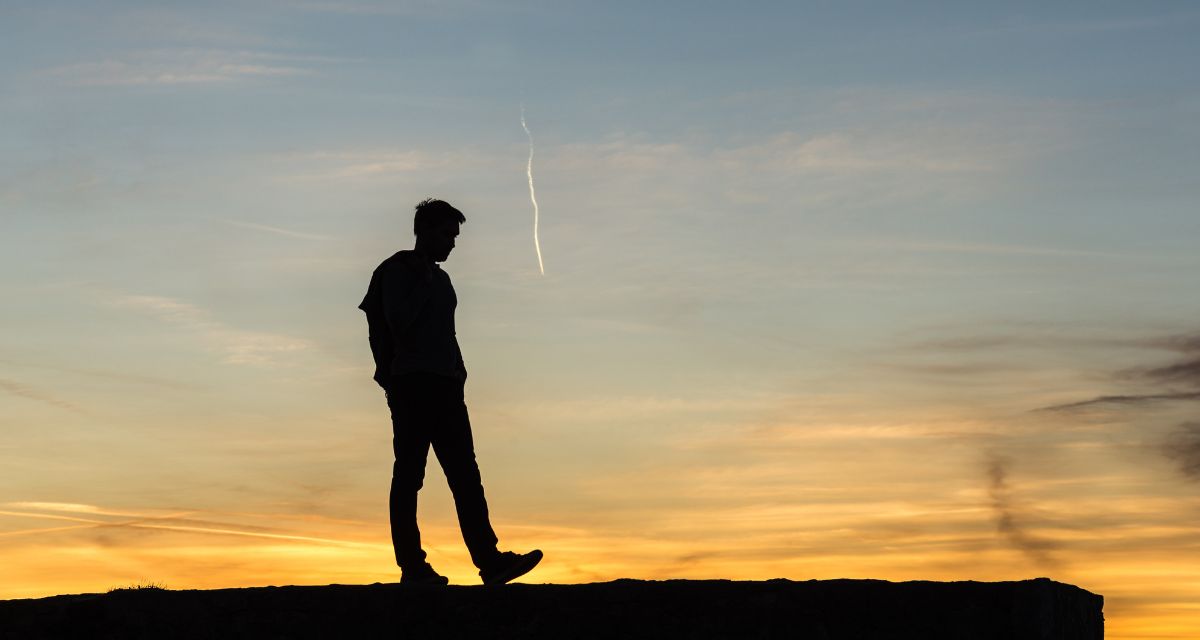
For instance, you may have noticed people who keep their eyes on the ground while walking. You might even be one of them yourself. Experts suggest that even this tells a psychological story—but not necessarily the one you might be thinking.
Walking with one’s eyes down is commonly associated with shyness, depression, social anxiety, and low self-esteem. There does appear to be some science to support this.
For example, researchers have found that people experiencing social anxiety are more likely to avert others’ gaze, often looking toward the ground rather than making eye contact. Some studies suggest this behavior may stem from a fear of being judged or negatively evaluated, making eye contact feel uncomfortable or even threatening.
At the same time, psychologists caution against making quick assumptions. Human behavior is rarely driven by a single cause, and the same outward action can reflect very different internal states. In fact, looking down while walking can serve multiple purposes, many of which have little to do with anxiety or emotional distress.
Cultural context, for instance, is another important factor. In some cultures, lowering one’s gaze is considered a sign of respect, humility, or politeness, especially when encountering elders or authority figures. What might be interpreted as insecurity in one setting could actually be a learned social norm in another.
There is also a cognitive explanation. Many people use walking as a time to think, process, or problem-solve. Looking down can reduce visual distractions, allowing the brain to focus more fully on internal thoughts. This kind of inward attention may be especially common among creative thinkers or those working through complex ideas.
Another factor is more practical and straightforward: balance and navigation. Researchers at the University of Rochester found that people instinctively spend more time looking at the ground when it’s uneven in an effort to avoid tripping. This behavior is particularly noticeable in unfamiliar environments or places with obstacles where visual attention shifts downward to maintain stability and prevent falls.
Expanding on this, age can also play a role. Older adults, for example, may be more likely to watch their steps carefully to reduce the risk of injury. Similarly, people recovering from injuries or dealing with mobility challenges might rely more on visual cues from the ground.
Lastly, we live in a smartphone-dominated world. Many, if not most, of us regularly look down at our devices while walking. Over time, this habit can carry over even when a phone is not in hand. The posture becomes automatic, shaped by repetition rather than emotion.
Taken together, these perspectives suggest that a downward gaze is not a one-size-fits-all signal. It can reflect anxiety, yes, but it can also point to cultural norms, deep thought, environmental awareness, or simple habit. Like many aspects of human behavior, its meaning depends heavily on context.