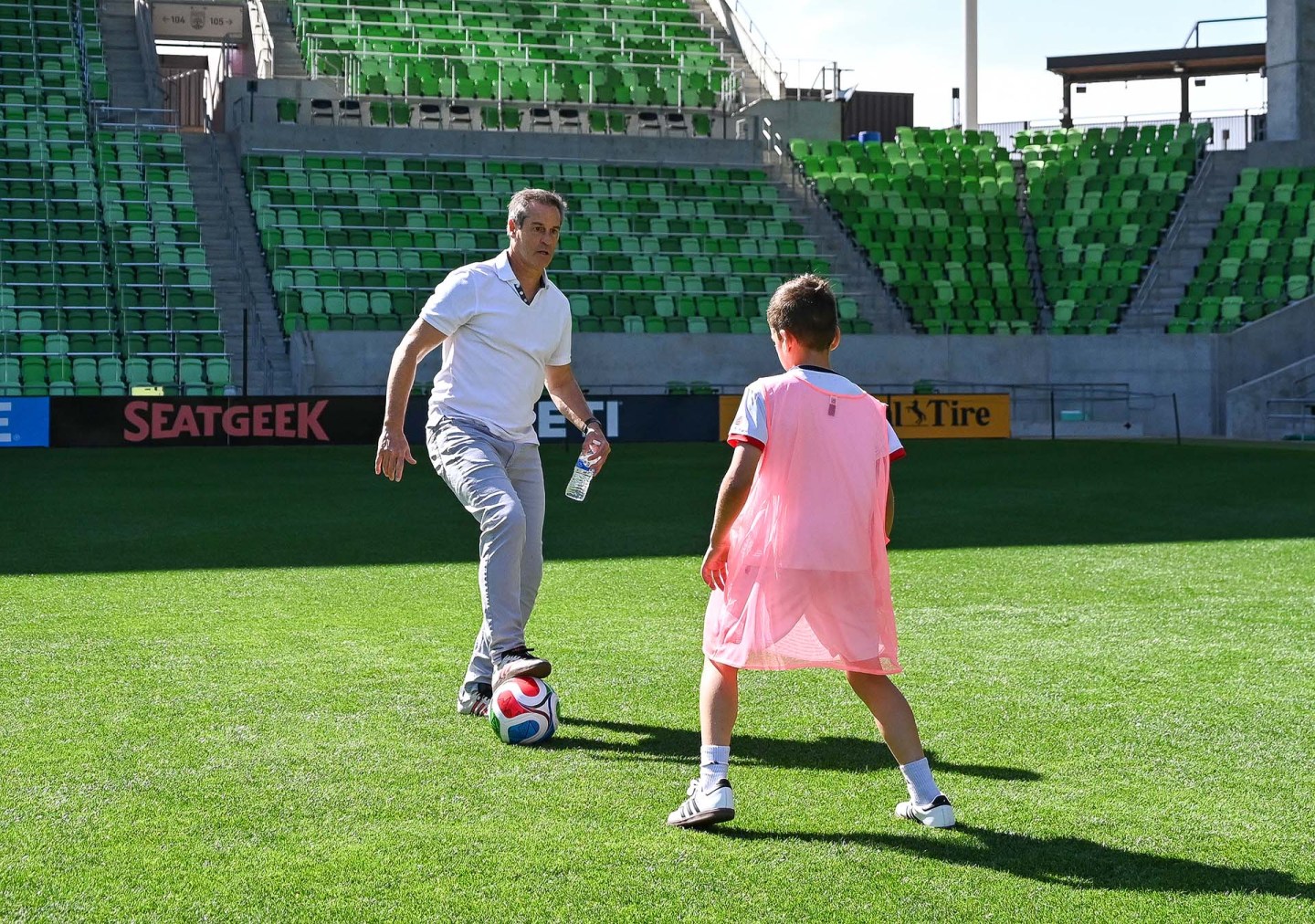
Twelve miles from the ocean and two years away from the World Cup, Bora Milutinović materialized in Mission Viejo, California, unceremoniously, to build a soccer team out of a group of men most Americans had never heard of. The training site and structure weren’t even ready, and thanks to the El Niño season of nonstop rain, the grassy swamp that was to be their field wasn’t ready either. But Bora was. “We have a beach,” he said.
For months, a group of players who had fought their way into a training camp for one of twenty-two spots, would run miles and miles along the Pacific Ocean, every single day. “I think Bora understood,” said Alexi Lalas, defender for the 1994 U.S. Men’s National Team, “I’m only gonna get so much out of them as soccer players. But they can run. And they can run hard. And they can run forever.” It was a test of mental fortitude, disguised as an endurance drill, designed to filter out who could handle the doubt of the unknown and who would crumble under the weight of uncertainty.
The U.S. Men’s National Team was starting from scratch, handed to a Serbian-born coach who had already guided Mexico and Costa Rica to surprising World Cup runs. The 1994 World Cup would be the first ever hosted on American soil, and professional soccer as we know it today didn’t yet exist. This was a unique problem that required a miracle, and Bora’s earned nickname “The Miracle Worker” seemed to qualify him for the job. Summer of ’94, directed by Dave LaMattina and Chad Walker, captures the unlikely magic of what happens when the grit and preparation of a team collide with the vision of a coach nobody could quite decode.
Where other coaches ruled by dominance, demanding and bullying players into shape, Bora chose stillness. He spoke in questions more than answers. Captain John Harkes recalls him turning any inquiry he made back to him, before Harkes could even finish asking it. When the filmmakers tracked Bora down and sat across from him, they left still trying to decode his riddling explanations, wondering if he’d answered anything at all. “Coach Bora to this day is still a complete enigma,” said co-director Chad Walker. “He’s telling you in the most poetic way, in a way that kind of challenges you to think outside the box.”
A modern day Laozi, influencing others by subtlety and paradox. Defender Paul Caligiuri thinks that was part of his technique. “Coach Bora was mysterious,” he said. “He basically wanted you to figure it out and believe in yourself to bring out the best in you.”
And he did bring out the best in everyone.
The players of what would become the 1994 U.S. Men’s National Team had no professional league to play in. So Bora gave them the next best thing: the world. Having been orphaned at a young age and raised by it himself, he knew what it could do to, and for, a person. He took them across the globe, playing anyone, anywhere, sleeping in airports, just for a chance to compete. If the World Cup was coming to America, his players needed to meet the world first. “If you don’t play against the best,” Bora said, “you don’t have a chance to grow.”
As is the way with all great teachers whose lessons border on mythical, the results aren’t witnessed during the teaching moments, they’re revealed in them. Socrates and Yoda paved the way by pushing their disciples through discomfort; Bora shepherded his players toward greatness through a deeper understanding of themselves. “I look at him as, to a degree, that father figure,” said winger Cobi Jones. “We all had to live under his wing for a two-year period.”
Whatever Bora’s mysterious musings awakened in those men stayed alive long after their World Cup run. Of the 22 players on that roster, 14 went on to become coaches themselves. It’s a striking idea – that a coach can do more than develop athletic skills, but also unlock their players’ potential beyond the field. That concept inspired Yes, Coach!, a national initiative supported by U.S. Soccer Foundation, Imagine Entertainment, and Stand Together among others, supporting America’s youth sports coaches with free tools and resources not in the rules of the game, but in how to show up for their players as mentors in life.
He saw something in them, and somehow made them believe it too. “Mr. Harkes, I need you to stand up and be a leader when you come home,” he told captain John Harkes.
Harkes understood exactly what that meant, even in its cryptic delivery: “There is an end game and it’s the ’94 World Cup. When we get to that point, we need to be something special.” Other players understood the lessons on a more personal level. “I’m standing here today because of Bora,” said Alexi Lalas, “and what he did to me in terms of challenging me, but also having faith in me.” There’s a reason great talent is magnetized towards steady leaders. “You need a champion in life,” Lalas relayed, “and it could be a parent, it could be a teacher, it could be a coach. Those of us lucky enough to have had one know exactly what he means.”
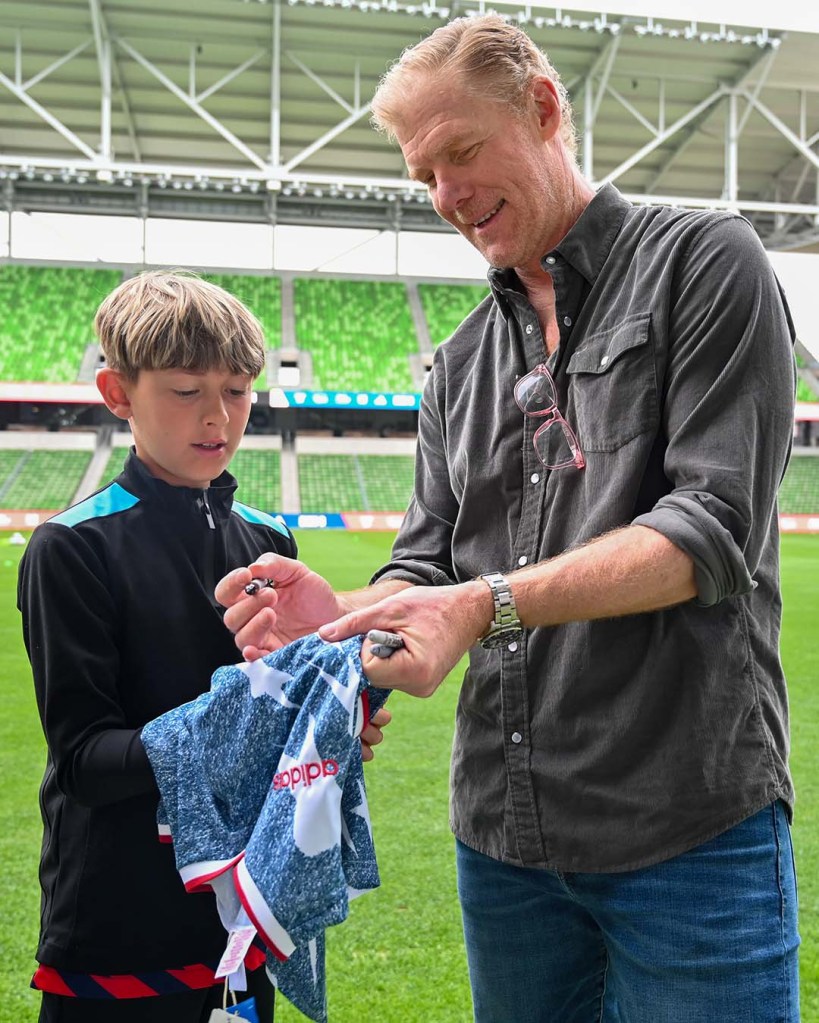
“He taught me about how sports oftentimes parallels life,” Lalas continued, “and again, mentorship and giving me the tools to then go on and do the things that I’ve done later in life.”
It was a sentiment echoed by the other players. “Bora was the catalyst of me becoming a better version of myself,” said Wynalda.
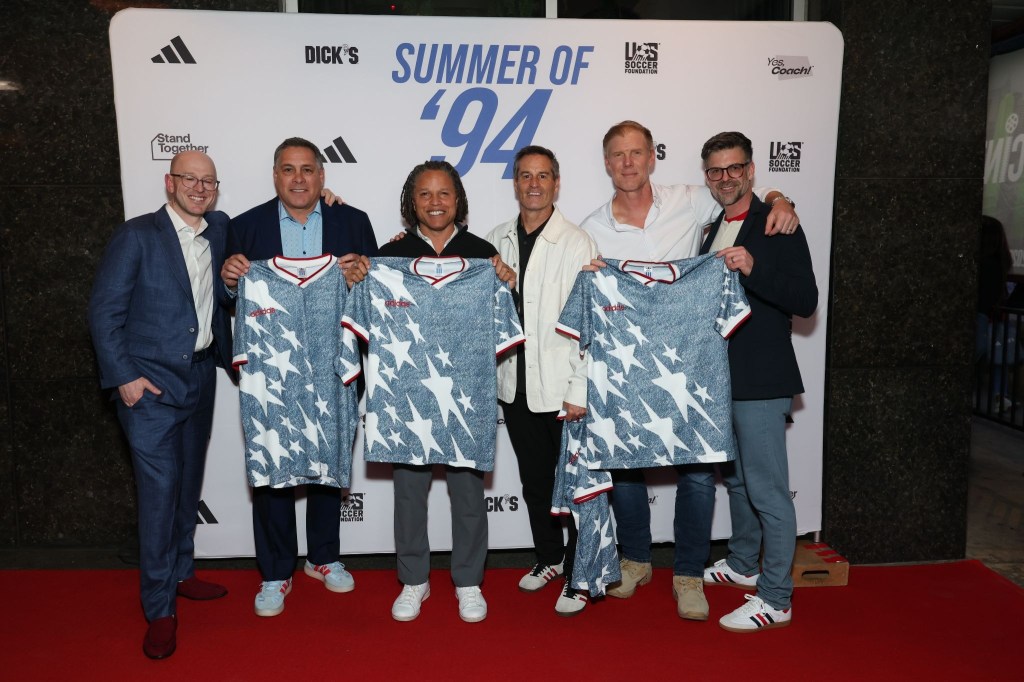
What Bora built that summer wasn’t just a soccer team. He conjured something more potent, turning a group of disparate men into a single force, aligning them so completely that the team became greater than the sum of its parts. He put them on a pitch, and he gave them a path. Ed Foster-Simeon, President and CEO of the U.S. Soccer Foundation, recalls: “1994, in many ways, introduced soccer as a unifying force in this country. It was the first time that we really all got behind the game.” Now, as the 2026 World Cup returns to American soil this June, Imagine Entertainment and Stand Together are activating around Summer of ’94 to bring the power of coaching back into the national conversation, because what Bora started in Mission Viejo is still very much alive.
Was Bora Milutinović a true sorcerer of soccer, or simply a man with a mysterious disposition and an uncanny ability to see what people couldn’t yet see in themselves? His players are still trying to understand how he did it. “I’ve told it to my kids a lot,” said Cobi Jones, “and they don’t get it.” Like any good magician will tell you, some things are better experienced than explained.
Witness the magic of Summer of ’94 on FOX, May 23rd, and streaming on Fox One and Tubi starting May 26th. And if you’ve ever had a Bora in your life, or want to be one, learn more at Yes, Coach.