Tom Colicchio

  • A mom noticed her dog acting strange around her son for days. His explanation left her speechless.
    A young boy plays with his dogPhoto credit: Canva

    Annie noticed her dog acting strange on a Saturday and spent the better part of the weekend trying to figure out what was wrong with him.

    The dog had become completely fixated on her son, following him from room to room, nudging him, hovering nearby. “Like Velcro,” as Annie, who posts on Threads as @annie.wade00, put it. She ran through the usual checklist: was he limping? Off his food? Showing any signs of pain? Nothing. He seemed physically fine. He just wouldn’t leave her son alone. “I thought the dog was sick or something was wrong with him,” she wrote in a post that has since racked up more than 21,000 likes, comments and shares.

    After a few days of watching the behavior continue, she finally asked her son if he had noticed the dog “acting weird.” That’s when the real story came out.

    Young child walking the dog. Photo credit: Canva

    Her son told her he had been under serious stress about an upcoming school presentation. He’d been losing sleep, replaying worst-case scenarios, dreading the moment he’d have to stand up in front of his classmates. He hadn’t said much about it to anyone. The dog, it turned out, had been responding to something her son had been quietly carrying for days.

    “Now my son says having the dog nearby actually helps him feel calmer,” Annie wrote. “Animals pick up on things we don’t talk about. Sometimes they’re better at checking in than I am.”

    A frollicking dog running with its rope toy. Photo credit: Canva

    The story landed because so many people recognized it. In the comments, readers shared their own versions. One person described how their dog, Snoopy, grabbed a sock and hid under the bed the morning they were scheduled for cancer surgery. He had never stolen a sock before, and never did it again. “He knew I was anxious that morning and was trying to keep me home,” they wrote.

    As Newsweek reported, animal behavior expert Kate LaSala said none of this is really surprising from a scientific standpoint. “Dogs are also very attuned to routines and our own emotions,” LaSala said. “They have evolved to be especially good at reading our body language, much better than we are at reading theirs.” Stress and disrupted sleep both alter a person’s scent, their body language, and their daily patterns, and dogs register all of it. Research published in the journal Biology Letters backs this up, finding that dogs can integrate visual and auditory cues to identify emotional states in both humans and other dogs, an ability researchers described as previously known only in humans.

    This article originally appeared earlier this year.

  • Experts explain exactly how, and when, to tactfully change the subject of a conversation
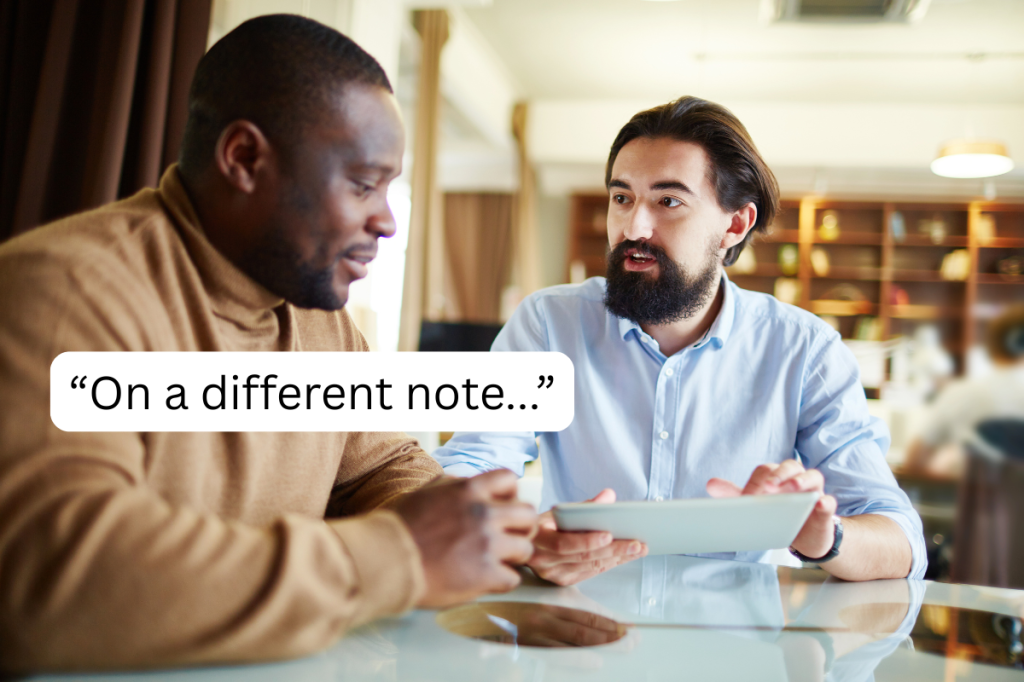
    How and when to politely change the subject of conversation.Photo credit: Canva
    ,

    Experts explain exactly how, and when, to tactfully change the subject of a conversation

    Should a conversation always be interesting and meaningful for both people?

    We’re all familiar with the feeling of being “trapped” in a conversation. It might be because the other person won’t stop talking long enough for you to get a word in edgewise. Or maybe the topic of conversation just bores us. Worse, perhaps it makes us uncomfortable, and we can’t figure out a good way to change the subject without coming off as rude.

    A massive debate on this topic recently unfolded on X. Some users argued that a good conversation should always be interesting and engaging to all parties, while others maintained that showing genuine interest in what others have to say (even if it doesn’t really interest you) is a key element of socializing.

    It’s possible that both sides are right. Experts say changing the subject doesn’t have to be curt or selfish.

    In fact, a great conversationalist understands that artfully pivoting is the key to maintaining an interaction that’s enjoyable for both parties. The key is understanding both when it’s time to “smile and nod,” and when and how to steer the conversation in a new direction.

    Why it feels scary or hard to change the subject

    psychology, social skills, change the subject, small talk, people skills, people pleasing, conversation, small talk tips, social etiquette
    Changing the subject can be harder for some people than for others. Photo credit: Canva

    Dr. Kelly Gonderman, a clinical director and licensed clinical psychologist at We Conquer Together, tells Upworthy that changing the subject is one of the social skills her clients struggle with most.

    “In my clinical work, the inability to redirect a conversation is rarely about rudeness or poor communication. It’s almost always about anxiety, people-pleasing, or a fear of conflict rooted in early relational experiences,” she says. “The nervous system registers social disapproval as threat, which means steering away from a painful or triggering topic can feel physiologically dangerous even when it’s entirely reasonable.”

    Unfortunately, people who have difficulty setting boundaries in conversation may also struggle to maintain boundaries in other areas of their lives.

    “They’ve learned that their discomfort is less important than keeping others comfortable,” she says.

    Experts give tips and scripts for how to tactfully change the subject

    One user on X sparked debate when they suggested a rather blunt and direct shifting of gears: “I’m sorry, it’s not really my thing, I don’t understand the importance of this and I can’t contribute to the conversation.”

    It’s a fair and reasonable boundary to hold, but it’s likely to alienate or deflate your conversation partner because it’s missing a few key elements of a great pivot.

    Amy Arias, senior lecturer of communications studies at the University of Nevada, Reno, tells Upworthy: “The key to changing the subject tactfully is to acknowledge what the person said before redirecting. People mainly want to feel heard, and once that happens, most conversations can move on naturally.”

    Here are a few scripts to try out:

    • “That’s a good point. It actually reminds me…”
    • “I hear what you’re saying. Speaking of that…”
    • “That sounds intense. On a lighter note…”

    In each of these instances, you’ve acknowledged the speaker and what they were saying in a positive way before attempting to move the conversation into new territory.

    @justaskjefferson

    or just try, “crazy weather we’re having.”

    ♬ original sound – Jefferson Fisher

    You could also try using humor to deflect the tension around your attempted pivot, with a segue that’s so jarring your conversation partner can’t help but laugh: “Speaking of politics, who’s hungry?”

    Arias adds that, no, a good conversation doesn’t always have to be interesting or engaging for both parties all the time. It’s more about reciprocity and making sure each person gets a turn to be heard.

    “Good conversation is more about reciprocity and turn-taking than constant fascination,” Arias says. “In healthy conversations, people take turns being the storyteller and the listener, but it’s also okay to redirect when a topic feels draining, awkward, or just not a great fit.”

    “Ultimately, changing the subject gracefully is really about reading the room and protecting the flow of the interaction,” she adds. “A thoughtful topic shift isn’t rude, it’s often what keeps conversations comfortable, inclusive, and enjoyable for everyone.”

    Why being a great conversationalist goes beyond the script

    Gonderman says that, though having a few canned lines up your sleeve can help, being able to confidently redirect a conversation may require deeper work.

    “The fix isn’t a script,” she says. “It’s building enough internal safety to trust that your need to redirect is valid.”

    That could require something as simple as some breathwork or grounding techniques, or more advanced interventions like therapy to get to the root issues of your social anxiety.

    There are a lot of reasons you might not be comfortable continuing a given line of conversation. It could be political, too personal, too taboo, or just plain uninteresting to you. It takes a person who’s quite sure of themselves to use a brief, direct pivot like “I want to shift gears,” “On a different note …,” or even “I’d rather not get into that right now.”

    It’s best to acknowledge and make the other person feel heard before pivoting, but some people, well, just won’t take a hint. That’s when more direct methods might be called for.

    Human conversations are an incredibly intricate dance. They’re an exchange of information, a building block of relationships, and an emotional back-and-forth all rolled into one. The finer aspects of navigating them tactfully don’t always come naturally to us and sometimes require preparation and practice.

  • Siblings rap version of ‘The Little Mermaid’ song has people hooked
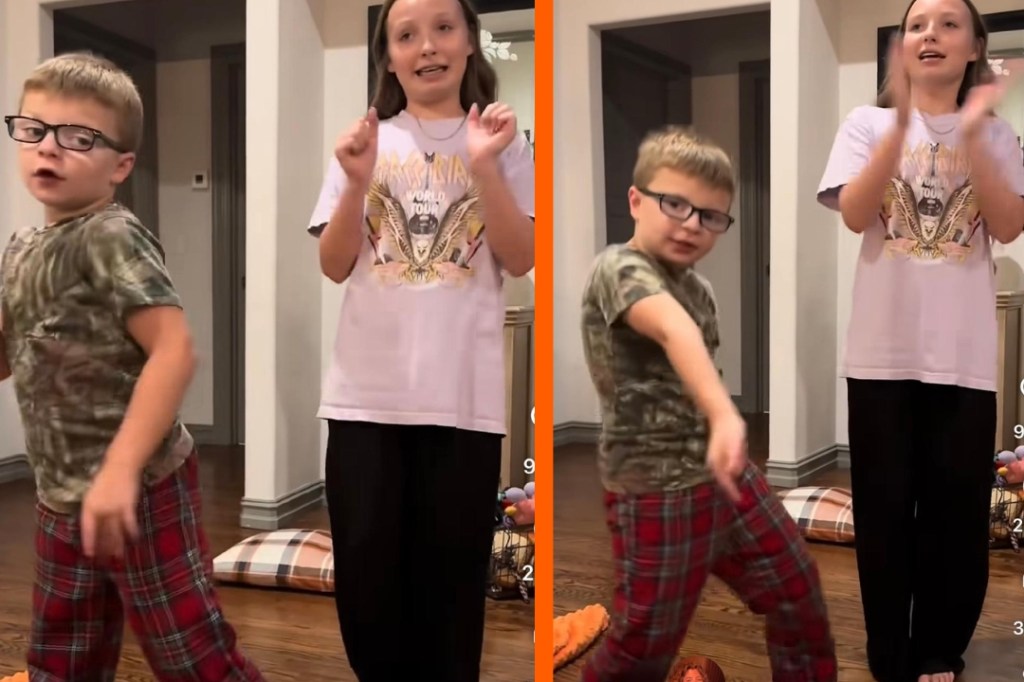
    Siblings perform their unique rap version of a song from "The Little Mermaid."Photo credit: Tara Annan/Instagram
    ,

    Siblings rap version of ‘The Little Mermaid’ song has people hooked

    “This is a Grammy-level performance in the world of ‘mom look at this!'”

    It was just an average Friday night for Tara Annan and her family of seven. Everyone was enjoying downtime in the living room when suddenly the two youngest kids created a unique spin on a Disney musical classic. The world took notice.

    Cohen, who goes by the nickname Buggy, stands casually next to his older sister, Joee (pronounced Joey). In a light purple shirt, Joee begins to set the beat while singing, “Look at this stuff, isn’t it neat? Wouldn’t you think my collection’s complete?”

    The Little Mermaid

    The song the kids are singing/rapping is “Part of Your World” from the hit movie The Little Mermaid. (Alan Menken composed the music, and Howard Ashman provided the lyrics.) It’s a beautiful, swooning ballad and a pivotal part of the musical. For those unaware, the story centers around a lovely redheaded mermaid named Ariel. She gets a glimpse of life on land, and she wants in.

    In the song, Ariel admits to herself that no matter how wonderful her world is under the sea, she wants more: “I’ve got gadgets and gizmos aplenty. I’ve got whosits and whatsits galore. Want thingamabobs? I’ve got twenty. But who cares? No big deal. I want more…”

    So of course the song deserves a hype man. That’s where Buggy comes in. Clad in his signature glasses and plaid pants, he begins his interpretive dance, adding in ridiculously hilarious sound effects and dance moves. The best part? The siblings just play off one another, as though they’re an old Vaudeville act that’s been doing it for ages.

    A musical family

    Upworthy had a chance to chat with Annan, a busy mom of five, who shared what her family’s typical weekends look like.

    “I didn’t cook that night so we all were hanging out in the living room after our DoorDash,” she says.

    She admits that having five kids creates a rather bustling energy:

    “We are a very loud bunch. We love music. Either my kids are making up their own beats or we have music on. We listen to all types of music. One thing I love is my home sets the tone for my kids to be themselves.”

    As for that particular song? “I just so happened to capture that little mix that night and the world loved it,” she says.

    The loving reaction

    This clip has over 850,000 likes on Instagram alone and more than 21,000 comments. One person jokingly writes that a “trap” version of the rendition would be done by rapper Lil Wayne—or, as they call him, “Lil Mermayne.”

    There are so many wholesome and funny comments pointing out the magic this family seems to have when creating together.

    “Imagine you tell your daughter to ‘go play with your little brother’ and 15 minutes later, they come down with this MASTERPIECE,” a commenter notes.

    Another commenter gives it the highest praise, writing, “This is a Grammy-level performance in the world of ‘mom look at this!’”

    Finally, this commenter shares that if they’d had these particular kids, they might have made different choices in life: “It’s embarrassing how many times I’ve watched this. If I knew this was guaranteed, I’d consider having kids.”

  • Doctors rush to reassure menopausal women about the female version of ‘shrinkage’
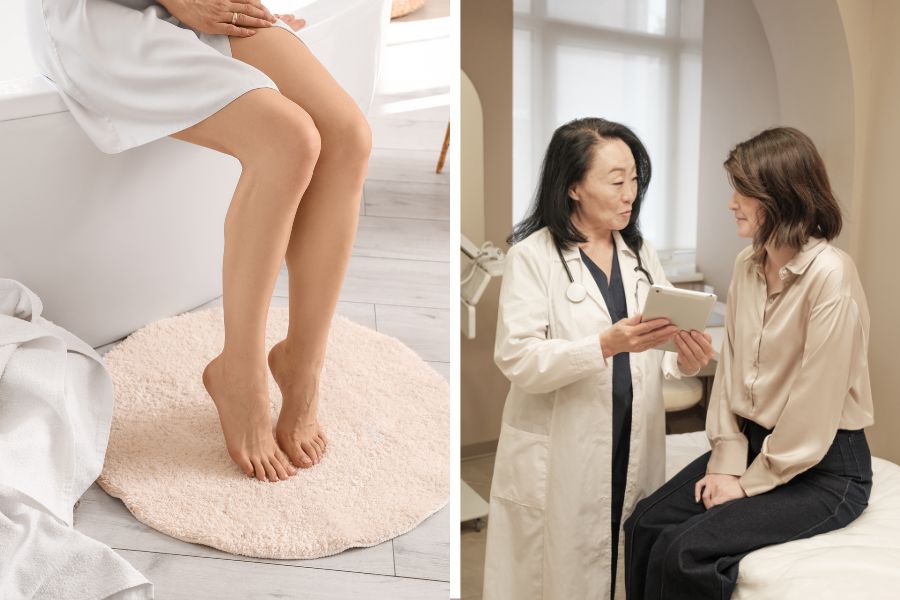
    Doctors reassure menopausal women about the female version of "shrinkage."Photo credit: Canva
    ,

    Doctors rush to reassure menopausal women about the female version of ‘shrinkage’

    So many women are surprised when parts start disappearing down there.

    In recent years, women have become more open about what happens leading up to and during menopause. As a result of this public sharing, younger women are learning about a shocking possible side effect of depleted estrogen: the shrinking, and in some cases the disappearance, of the labia.

    As our parents prepare us for adulthood, some things slip through the cracks. We learn about puberty, how babies are conceived, and then the conversation stops. One area with a large information-sharing gap is the process of menopause. This lack of information puts both women and the people who love them at a disadvantage. It can leave people confused and frustrated.

    menopause, shrinkage, hormones, gynecologist, perimenopause
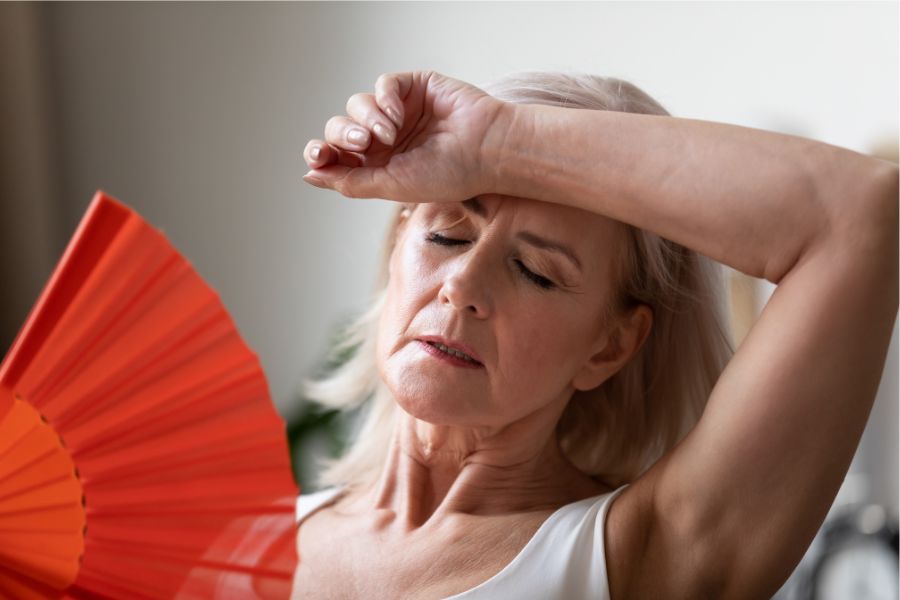
    A woman fans herself. Photo credit: Canva

    Perimenopause, which is the time leading up to menopause, is not a short process. Hormone levels can begin to fluctuate widely as early as a woman’s 30s. At the same time, the average age of menopause is about 51, though it can occur as late as 60, according to the American Medical Association.

    The Cleveland Clinic explains that “Menopause is a point in time when a person has gone 12 consecutive months without a menstrual period.” It is a natural part of the aging process for women, but for decades, if not centuries, the menopausal experience has been shrouded in coded language and silence. Not anymore.

    menopause, shrinkage, hormones, gynecologist, perimenopause
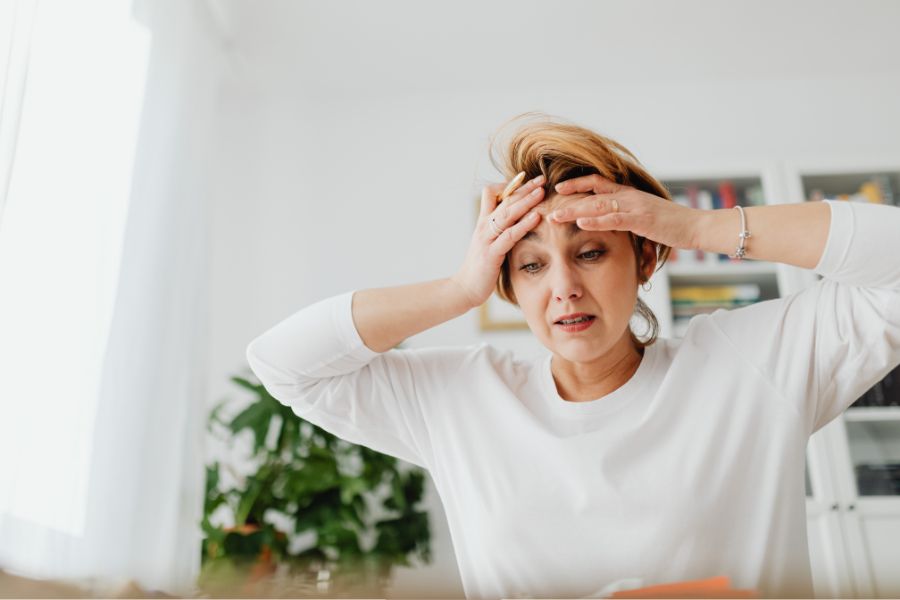
    A woman looks stressed. Photo credit: Canva

    The habit of Millennials seeking community in online spaces is opening the blackout curtains on the taboo subject. This has led to honest conversations about what happens when women go through “the change,” and the revelation about shrinking labia is causing a bit of panic.

    Labia are the outer visible anatomy of the female genitalia, consisting of the labia minora and labia majora. This tissue protects the urethra, vaginal opening, and other sensitive areas from infection and friction, Dr. Somi Javaid, OB-GYN and founder of HerMD, tells The Flow Space.

    So the idea of losing them due to a lack of estrogen has some women calling for a timeout as they try to process this previously unheard-of information. Several of these women took to social media to seek clarity and support.

    “So nobody was going to tell me that one day I could lose my coochie lips?” one woman asks in an Instagram video. “That one day, my bean could just decide to clock out for the rest of my life? Why aren’t the older women sharing with us? Why aren’t the elders sharing this with us, cause this lady got on here and said if you start your estrogen early when you first go through menopause, you can save your lips.”

    “I just saw this post of this doctor lady explaining that your labia minora grows during puberty, and then you lose it in menopause,” another concerned woman says in a TikTok video. “Come again? You’re telling me…is it…where does it go? Where is it gonna…does it just…I have so many questions. Does it just…one day I’m gonna wake up, and I’m gonna have no labias? Does it slowly disappear?”

    @rachelelizabethx0

    I swear we can’t have ANYTHING 😭😭😭 #onthisday

    ♬ original sound – Rachel Elizabeth

    These were not the only people concerned. Video after video showed women, and some men, flabbergasted and concerned about the mystery of the disappearing labia. Commenters were equally freaked out. All of this open confusion and fear created a perfect learning opportunity. OB-GYNs, urologists, and other medical professionals took to their own platforms to ease people’s stress about the process.

    Dr. Sally Doust, a women’s health specialist, explains:

    “So yes, the labia can shrink around menopause, and this is because estrogen levels are dropping, and this affects the tissues. The good thing is, you can prevent it. Start vaginal estrogen really early, as soon as you start to notice any of these changes, and it improves blood flow, elasticity, and lubrication, relieves dryness and soreness.”

    @womenofvoy

    Can your labia change around perimenopause and menopause? Yes and no one really talks about it!!! As oestrogen levels drop during perimenopause and menopause, vulval and vaginal tissues can become thinner, drier and lose elasticity. Some women even notice their labia shrinking, which can feel worrying if you’re not expecting it. The good news? Vaginal oestrogen can help. Used early, it supports blood flow, elasticity and lubrication, and can relieve dryness, soreness and discomfort. It’s a safe, local treatment and can be used long-term. If you notice changes, you don’t have to ignore them, support exists 💛 #perimenopause #menopause #HRT #womenshealth #hormones

    ♬ original sound – womenofvoy

    Doctors and nurses online continue to reassure viewers that, while it sounds scary, vaginal estrogen can prevent it. One urologist explains that after women go through menopause, their estrogen levels are lower than those of men. This drop in estrogen causes structural changes in the labia, which can also lead to adhesions and pain.

    “Let’s be clear: you do not lose your labia, but the tissues do undergo significant and visible changes,” says Dr. Mary Claire Haver, a menopause specialist. She adds, “The labia minora may shrink, flatten, or adhere to adjacent tissues. The labia majora can sag or retract due to tissue thinning.” She also says that prescription estrogen is the only way to prevent the issue.

  • Gen Z thinks capital letters are just ‘too intense.’ And a linguist agrees.
    Gen Z prefers typing in all lowercase.Photo credit: Canva

    Gen Z has developed many quirks that have come to define the generation. From “work minimalism” to “soft socializing” to their unique slang, they’re redefining their experience in the world.

    They’ve also adopted their own views on grammar and punctuation. Many Gen Zers claim that using periods in texts is “aggressive.” The generation has also seemingly done away with capital letters, arguing that it “feels too intense.”

    If you’ve ever texted with a Gen Zer, you may notice that they forgo capital letters and keep their typing all lowercase. But why?

    Linguist Tom Scott addresses it in a video about Gen Z’s unconventional views on grammar.

    Why Gen Z prefers lowercase letters

    According to Scott, for Gen Z, it’s deeper than just bucking a long-standing grammar rule. It comes down to their lived experience in the digital age.

    “We don’t speak to everyone in our lives in the exact same way,” he explains, noting that with bosses our speech becomes more formal, while with friends and family it becomes more casual. “We change our way of speaking depending on the identity that we’re trying to project.”

    He notes that our voices have different registers and intonations, and that different varieties of language—and the way our voices rise and fall in tone to convey meaning—are used in different situations. The same goes for the written word, aka text messages.

    In writing, capital letters simply indicate the beginning of a sentence and proper nouns, such as “A man named John traveled to London to see the Queen.”

    “While that might make a paragraph easier to read, we don’t flag that at all when we speak,” Scott explains. “So in informal conversations, those that feel like speaking, we don’t need capital letters.”

    @dylanjpalladino

    Can someone explain this to me? From the most recent podcast episode, we talk about Gen Z not using capitals letters and also how the terms millennial, boomer and Gen z were created by Johnson and Johnson to sell you more soap. #podcast #podcasts #comedy #genz #millennial

    ♬ original sound – Dylan J Palladino

    The digital influence on Gen Z’s lowercase typing

    In online communities, capital letters convey something else: tone.

    “All-caps became shouting [CAN YOU HEAR ME?]. So lowercase is calm, normal conversation,” says Scott. “Remove the capitalization and you get this sort of aloof, don’t-really-care tone that works well for dead pan humor and irony.”

    Scott adds that some people think all-lowercase typing is lazy, but intentionally typing in all lowercase requires changing settings and putting in extra effort to delete capitalized letters that get autocorrected, thus debunking that theory.

    All-lowercase is a stylistic effect that Gen Z has adopted and used consistently, which Scott emphasizes means it’s understood within the group.

    Gen Z responds

    On Reddit, many Gen Zers explained why they prefer typing in all lowercase:

    “We don’t type everything in lowercase. We know damn well how formal capitalization works. Can use periods too, thank you very much! The usage of no capitals is mainly a thing in informal contexts, and comes from when autocapitalization didn’t exist; when it was genuinely faster to type without them. It has developed into a social tool – along with rigid punctuation standards – to mark informal speech apart from formal.”

    “Because it makes the text messages overly serious. Many of my peers find it rude if you text the way I’m texting now with proper punctuation and capitalization.”

    “Because the boomers took the ALL UPPER CASE.”

    “i write in lowercase when it comes to keeping things casual but then switch to a more formalized sentence structure in situations where i have to be serious.”

  • People share things they didn’t realize until they lost weight, and it’s eye-opening
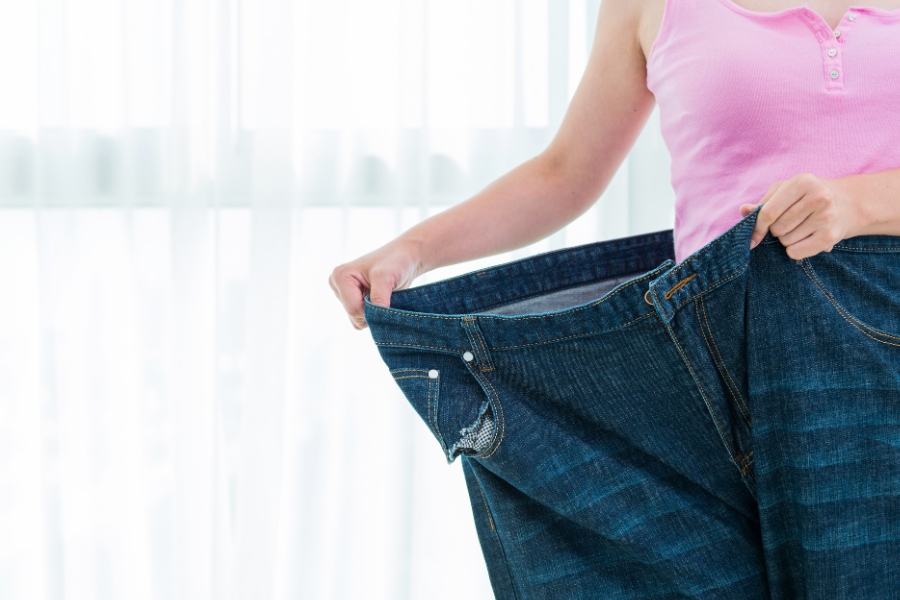
    Major weight loss comes with some surprises. Photo credit: Canva
    ,

    People share things they didn’t realize until they lost weight, and it’s eye-opening

    There are some unexpected learnings that come with a change in size.

    In an era when both obesity and “heroin chic” trends are growing concerns, weight loss can be a touchy topic. Society’s ever-changing views on body size are worthy of their own discussion, of course. But as the link between obesity and health risks has been well-established, the reality is that many adults want and need to lose weight for health reasons.

    People who are looking to lose weight know to expect certain things—an increased focus on nutrition and exercise, for example. Some weight loss journeys might include surgery or GLP-1 medications, which have exploded in recent years. But some parts of the journey can still take people by surprise, especially as they get closer to their goal.

    So when someone asked on Reddit “What is something you didn’t realize until you lost weight?” thousands of responses poured in. While everyone’s experience is unique, the common themes are eye-opening.

    Temperature tolerance changes

    Many people shared that they felt colder after losing weight. Body fat acts as an insulator, so losing it can make people more sensitive to cold temperatures. Changes in metabolism and hormones that accompany weight loss can also temporarily make you feel cold. However, nutritional deficiencies can cause similar symptoms, so it may be worth checking with your doctor if it becomes a concern.

    “How well the fat insulates heat. On the positive note, I can tolerate hot and humid weather much better now. But I have to wear a lot of extra layers when it is cold, and I don’t enjoy swimming in the sea anymore even in height of summer, because it is too cold all the time (I am in the UK).”

    “Oh man, so true, I’m still a big person but much smaller than I was and in winter I’m shaking like a Chihuahua, even with a lot of layers on.”

    “Absolutely correct! I get frustrated at how easily I get cold now. It was not something I anticipated.”

    “Same, I absolutely cannot tolerate the cold anymore. But warm weather is much easier to cope with, so it’s not a bad tradeoff.”

    “I lost 6 stone last year and this winter has been COLD but I’m looking forward to not being a gross sweaty mess this summer!”

    Armpits are pits

    Armpits are just arm pits, right? Not necessarily. When extra fat in that area fills in the hollow, it doesn’t appear as much of a “pit.” Losing weight revealed the actual pit feature for some folks.

    “That your armpits are actually pits, they’re not just called that. When you’re fat, you just have underarms.”

    “Just got here. Asked my wife why she was staring at me oddly, she said my pits were hollow.”

    “From my all time heaviest I am down 90 pounds to 279 as of this morning. For about a month I’ve really been feeling the pits come in…lol. The joy this brought was very surprising.”

    “Fair warning: now I have pits I absolutely cannot figure out the right angles to shave at anymore lmao. A blessing and a curse. A blurse.”

    “Yes!! I have to change how I shaved them.”

    Feeling your bones

    When you become accustomed to having a layer of cushion around your body, losing it can be disconcerting—especially when you start feeling hard, knobby things that you might mistake for growths of some kind.

    “I fairly recently lost 50 lbs. Imagine my surprise when I scheduled a doctors appointment thinking there was some sort of tumor in my chest only for them to tell me I have bones.”

    “I’ve lost 50kg. I panicked when I felt my sternum.”

    “Yes! I felt this with my chest. 😂😭 I thought I had some kind of chest cancer lump. This is the part of weight loss I did not expect.”

    “I was very muscular in high school. Then gained a bunch of weight in college. Then lost the weight (and a fair bit of muscle) a few years after that. One day I thought I felt a lump in my boob and panicked. Turns out it was a rib that had been previously covered in muscle or fat.”

    “I’m so glad I’m not the only one 🤣 I once went to the doctor thinking I had breast cancer. The doctor asked me if I had recently lost a lot of weight, then explained I was feeling my ribs.”

    “When I lost 100 lbs and all of a sudden I could feel like wtf there’s actually a spooky skeleton inside me I would just sit there grabbing bones in bewilderment and mild horror.”

    People treat you differently

    Perhaps the hardest realization people shared was how being overweight had made them invisible to so many. A lot of commenters said people became nicer to them after they lost weight. That’s food for thought for all of us.

    “How much nicer people are. As someone who’s lost and gained and lost again, it’s something I’ve noticed. People aren’t noticeably rude or dismissive to me as a bigger person, it’s more like they just don’t really acknowledge you. The world is just nicer when you’re smaller.”

    “I’m male. I lost 140 lb and got fit in my mid-40s after living all my late teen and adult years being 300+. That was almost a decade ago. I can honestly say that everything in this thread has been, to some degree, true for me as well, but the most startling has been the way people react to me. It’s unbelievable. Male or female, stranger or acquaintance or friend, passing or casual or business, I’m treated differently. It’s like stepping into another reality and also makes me sad for all those years. Sure, I was fat, but man, I was treated like a subspecies.”

    “Yes. I didn’t even realize how much being a fat woman over 40 negatively impacted me professionally until I lost 70 pounds right after Covid. My income more than doubled within a year. It has now nearly tripled. Is it partly because of increased confidence on my part? Probably. Does that explain it entirely? Probably not.”

    “My least favorite experience with significant weight loss was experiencing ‘pretty privilege’ for the first time, realizing how mean people had been all my life, and why.”

    “I’ve been losing weight and exercising regularly, and suddenly women are interested in me again. I knew logically that humans have a general preference for people of a healthy weight, but I feel like I’ve crossed some threshold of no longer being invisible to them. Wild.”

    “I was telling my dad how it blew my mind how differently I was treated and he almost couldn’t believe the difference I was describing.”

    Having energy

    Carrying excess weight is physically demanding and requires extra energy for everyday activities. Obesity and sleep problems are also linked, often leading to fatigue. Many people found that their exhaustion eased and that they felt much more energetic after losing weight.

    “That being tired all the time isn’t normal and I have a lot more energy to get things done than I thought.”

    “When people ask me what I feel like after losing 120lbs, the best explanation I can come up with is that I didn’t realize how sick and miserable I felt all the time until I didn’t feel sick and miserable all the time.

    The energy, the aches, the poor sleep, the brain fog…i frog boiled myself into that being my new normal, and now it’s all gone and I can’t believe that’s how I lived for so many years.”

    “It’s crazy how many people think constant exhaustion is just ‘normal life’ until they finally fix whatever’s causing it. Feels like getting a whole different version of your day back.”

    “It’s crazy how easy it is to assume that’s just your normal baseline. Then you lose weight and you find that you’ve been running on hard mode the entire time. And after losing weight I felt like I had superpowers…”

    These revelations are a good reminder of how much of a difference focusing on health can make in our own lives—and how much kindness can make a difference for others.

  • A hundred years ago, everyone wore hats. In 1960, they suddenly stopped. Here’s why.
    When did everyone stop wearing hats?Photo credit: via Warmbru Curiosity/YouTube
    , , , ,

    A hundred years ago, everyone wore hats. In 1960, they suddenly stopped. Here’s why.

    Old footage from the ’50s shows men, women, and children wearing hats everywhere they go.

    It was everywhere. Men, women, and even children did it every time they left the house. If you see old newsreel footage of men in the office or on commuter trains from the advent of the motion picture camera to the early ‘60s, nearly everyone is wearing a hat. Hats were just as common for women in that era. For a woman to go out without a hat in the first half of the 20th century was akin to going out without clothes.

    The funny thing is that everyone’s headgear is so similar in the old-timey footage that it makes previous generations look like big-time conformists. Then, in the early ‘60s, everything changed, and men and women started to go out in public with their hair exposed. Why did such a big aspect of fashion seem to change overnight?

    Warmbru Curiosity investigated the question recently in a popular YouTube video. Warmbru’s channel is a lighthearted look at some of the more unusual people and events from our history and how they have influenced the world in which we live.


    Why did people stop wearing hats?

    Warmbru says fashion changed dramatically after World War II, when people in developed countries began to care less about expressing their social status. “This was especially true among the younger generation the rise of youth culture in the 1950s and 1960s emphasized rebellion against traditional norms, including formal dress codes,” the YouTuber says.

    Mad Men, Don Draper, Jon Hamm, hats, mens fashion, men's hats, 1950s
    Don Draper from AMC’s Image via

    Another big reason for the change in fashion was technology. Cars became the preferred mode of transportation for many after World War II and indoor environments became more hospitable. “People spent far less time exposed to the elements as people increasingly moved to urban areas and started using cars,” Warmbru says. “The practicality of wearing hats diminishes. Hats can be cumbersome in cars and on public transport, improvements in heating and air conditioning reduce the need for hats to provide warmth.”

    Warmbru adds that President John F. Kennedy, elected in 1960, rarely wore a hat and his decision to go bareheaded became associated with modernity. Further, in 1963, the mop-topped Beatles proudly flaunted their hatless heads as they shook them while singing, “Wooooo.” Hat-wearing among women began to decline around the same time as the restrictive and complex headgear clashed with the burgeoning women’s liberation movement.

    Kennedy, John F. Kennedy, Jackie Kennedy, hats, men, men's fashion, 1960's, 1950's

    John F. Kennedy with his family Image via Wikicommons

    The decline in hat purchases meant that manufacturers closed and the headgear became harder to come by. This reduced availability further contributed to the decline in hat-wearing. As fewer people wore hats, there became a greater demand for high-quality hair products and services. “Why spend a fortune at the hairdressers or the barbers just to cover the end result with a hat?” Warmbru asks.

    Ultimately, there were many reasons why people stopped wearing hats. It appears that it was a combination of technology, influential people such as Kennedy and The Beatles, and the overwhelming mood of change that swept most of the Western world in the 1960s. But if one thing is true about fashion, it goes in cycles. So, it seems that hats may be ready for their big comeback.


    This article originally appeared two years ago. It has been updated.

  • One simple word makes children 30% more likely to cooperate. It works on adults, too.
    ,

    One simple word makes children 30% more likely to cooperate. It works on adults, too.

    Human psychology really isn’t that complicated, if you think about it.

    Human psychology really isn’t that complicated, if you think about it. Everybody wants to see themselves in a positive light. That’s the key to understanding Jonah Berger’s simple tactic that makes people 30% more likely to do what you ask. Berger is a marketing professor at the Wharton School of the University of Pennsylvania and the bestselling author of “Magic Words: What to Say to Get Your Way.”

    Berger explained the technique using a Stanford University study involving preschoolers. The researchers messed up a classroom and made two similar requests to groups of 5-year-olds to help clean up.

    One group was asked, “Can you help clean?” The other was asked, “Can you be a helper and clean up?” The kids who were asked if they wanted to be a “helper” were 30% more likely to want to clean the classroom. The children weren’t interested in cleaning but wanted to be known as “helpers.”


    Berger calls the reframing of the question as turning actions into identities.

    “It comes down to the difference between actions and identities. We all want to see ourselves as smart and competent and intelligent in a variety of different things,” Berger told Big Think. “But rather than describing someone as hardworking, describing them as a hard worker will make that trait seem more persistent and more likely to last. Rather than asking people to lead more, tell them, ‘Can you be a leader?’ Rather than asking them to innovate, can you ask them to ‘Be an innovator’? By turning actions into identities, you can make people a lot more likely to engage in those desired actions.”

    Berger says that learning to reframe requests to appeal to people’s identities will make you more persuasive.

    “Framing actions as opportunities to claim desired identities will make people more likely to do them,” Berger tells CNBC Make It. “If voting becomes an opportunity to show myself and others that I am a voter, I’m more likely to do it.”

    This technique doesn’t just work because people want to see themselves in a positive light. It also works for the opposite. People also want to avoid seeing themselves being portrayed negatively.

    “Cheating is bad, but being a cheater is worse. Losing is bad, being a loser is worse,” Berger says.

    The same tactic can also be used to persuade ourselves to change our self-concept. Saying you like to cook is one thing, but calling yourself a chef is an identity. “I’m a runner. I’m a straight-A student. We tell little kids, ‘You don’t just read, you’re a reader,’” Berger says. “You do these things because that’s the identity you hold.”

    Berger’s work shows how important it is to hone our communication skills. By simply changing one word, we can get people to comply with our requests more effectively. But, as Berger says, words are magic and we have to use them skillfully. “We think individual words don’t really matter that much. That’s a mistake,” says Berger. “You could have excellent ideas, but excellent ideas aren’t necessarily going to get people to listen to you.”


    This article originally appeared two years ago. It has been updated.

Health

People share things they didn’t realize until they lost weight, and it’s eye-opening

Nostalgia

A hundred years ago, everyone wore hats. In 1960, they suddenly stopped. Here’s why.

Education

One simple word makes children 30% more likely to cooperate. It works on adults, too.

Dads

A dad was camping with his kids when a fellow camper slipped him this handwritten note