Rafi Schwartz

  • Stylist has liberating response to ‘mid-forties ugly’ comment, and women are applauding
    A happy middle-aged woman.Photo credit: Canva
    ,

    Stylist has liberating response to ‘mid-forties ugly’ comment, and women are applauding

    “Nobody prepared me for how comfortable I would feel about my looks at this age.”

    Gen X stylist Jennine Jacob posts a lot of content encouraging women not to fall victim to ageism and instead find confidence in their self-expression. But in a recent video, she got candid about how freeing it’s been to reject society’s norms in her own life.

    In the clip, Jacob referenced a woman on Instagram who shared that “no one prepares you for mid-forties ugly.” The video appears to come from content creator Susie Trigg Tucker, who got candid about the natural “grieving process” that comes with “your physical beauty changing.”

    Addressing her own gray hair and textured skin, Tucker urged other women to “lean into acceptance” and “work on redefining what makes us beautiful.” 

    But for Jacob, the experience hasn’t been quite so painful. In fact, it’s been rather liberating.

    “No one prepared me for how little I would care about what people think about my looks,” she said. “Nobody prepared me for how comfortable I would feel about my looks at this age.”

    “And yes, I have wrinkles, I have thinning hair, I have gray hair…I have all of the things that are like conventionally bad, but I literally could not care less,” she added. 

    Her reason for this laissez-faire attitude is simple. “I did my time in the patriarchy, and my time is done,” she shared.

    “I have never felt more free being so ‘ugly’…I am so grateful for it,” Jacob concluded.

    Judging by the comments, she’s not the only one who has felt this way. 

    “100000000000%!!!! I feel the best ever!!!!❤️”

    “I couldn’t agree more! Aging out of the male gaze is the best part! Now there’s an inner peace like I have never known. I wish this gift for all women.”

    Granted, it seems that Jacob did spend some time, as Tucker put it, “redefining what beauty looks like.” In previous videos, she shared that when she first turned 40, she used Botox, face tape, and filters in hopes of looking younger. Now she doesn’t use any of those things and says she feels “1,000x better.”

    Really, these two women aren’t arguing two different points of view. It’s perfectly natural for women (or anyone, really) to grieve a physical way of being that no longer exists one moment, and the next appreciate the wisdom and confidence that come with growing older. That’s pretty much adult life in a nutshell.

    Their conversation arrives at a moment when aging, beauty standards, and cosmetic procedures are being talked about more openly than ever. Social media feeds are filled with discussions about Botox, fillers, preventative treatments, and whether embracing natural aging is empowering or simply another unrealistic expectation placed on women.

    For some people, cosmetic procedures feel like a form of self-expression and autonomy. For others, rejecting those options can feel equally empowering. Increasingly, women are speaking honestly about the complicated emotions that come with getting older in a culture that has long prioritized youth.

    What voices like Tucker’s and Jacob’s show is that there isn’t just one correct way to navigate that experience. Some people grieve the changes that come with age. Others feel an unexpected sense of freedom when they realize they no longer feel pressured to perform beauty for anyone else.

    And, sometimes, those two feelings can exist at the very same time.

    What matters most, as both women suggest in their own ways, is giving people the space to define beauty and self-worth on their own terms. For many women entering their 40s and beyond, that definition is finally becoming something they get to write themselves.

  • Middle-school teacher makes fake ‘inspirational’ posters out of the unhinged things her students say
    A woman pointing toward text overlaid on a mountain landscape photo.Photo credit: Canva

    Kids of all ages can be cruel, but middle schoolers have a particularly savage sense of humor. Unfortunately, teachers often end up on the receiving end of it.

    Thankfully, teachers are quite resilient and have their own sense of humor. 

    Insults turned inspo

    Take middle-school teacher Amy McKinzie, who decided to take some of the ahem, questionable things her students have said to her and make faux inspirational posters out of them.

    “What doesn’t kill you makes you humble,” quipped McKinzie in her Instagram caption. In the video, dreamy landscape photos serve as the backdrop for these gems:

    “You look like you cry watching Hallmark movies.”

    funny, middle school, teachers
    Screenshot

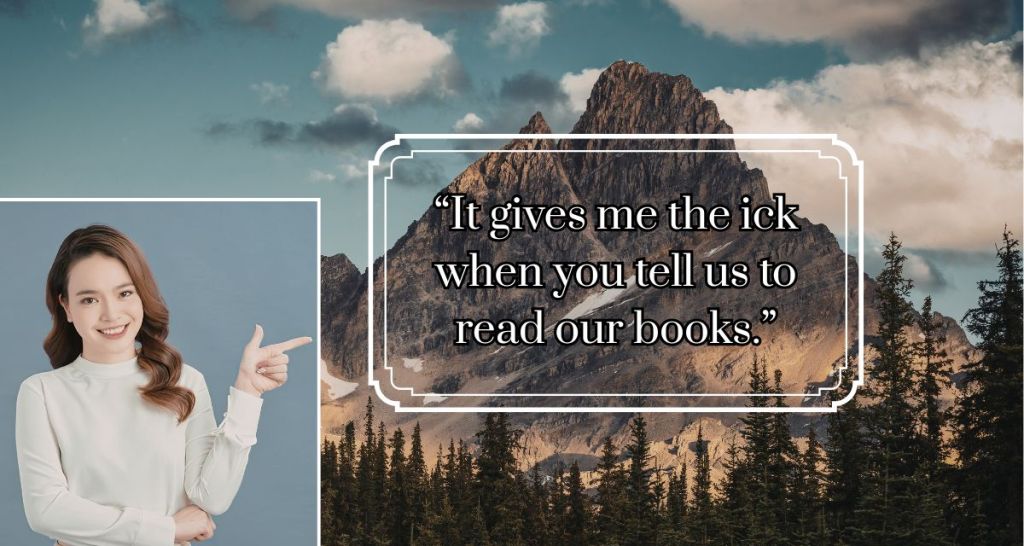
    “It gives me the ick when you tell us to read our books.”

    “You’re older than my grandma.”

    “Will there be any math problems on our English test?”

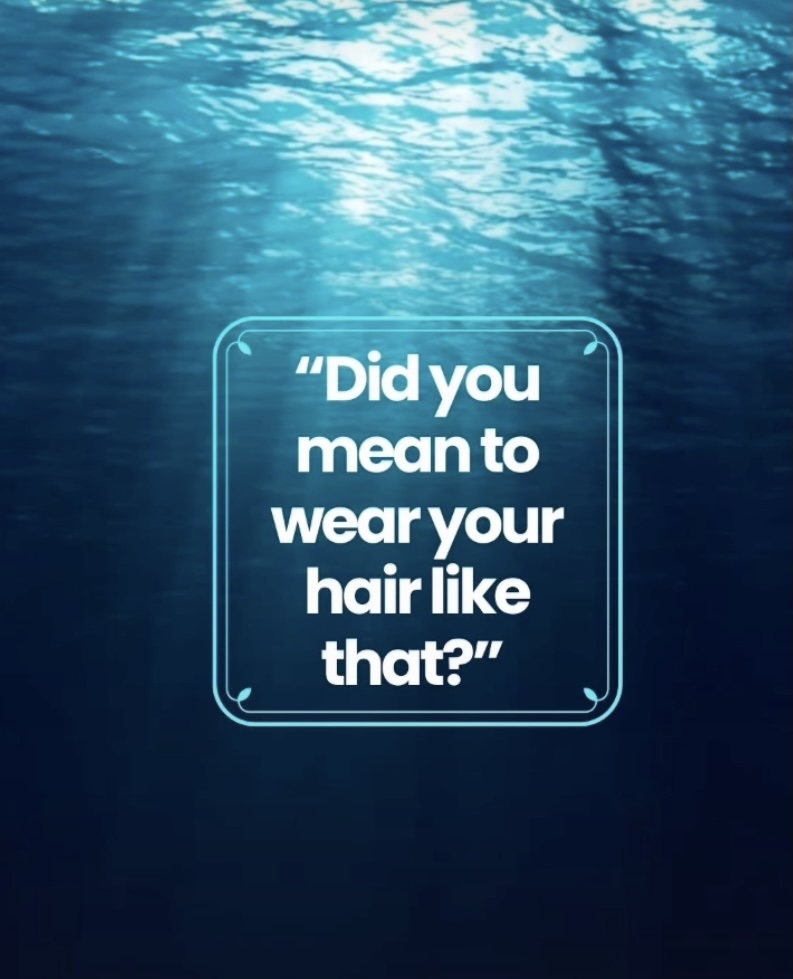
    “Did you mean to wear your hair like that?”

    funny, middle school, teachers
    Screenshot

    Ouch! 

    The format alone is comedy gold. Pairing brutally honest middle-school commentary with soft-focus sunsets and mountain vistas feels almost poetic. If you’ve ever spent time around 12- and 13-year-olds, you know that their observations come out fast, unfiltered, and usually with impeccable timing (not to mention zero mercy). Sometimes they mean it as a joke, but often they truly do not realize how devastating the comment might sound. Either way, the result is often unintentionally hilarious.

    And sure enough, tons of viewers could instantly clock the insults as distinctly middle-school shade-throwing:

    “Lol… my daughter is that age & i can totally hear her saying some of these to me! 😮😂” 

    “You teach middle school don’t you? Those kids are vicious hahaha.”

    It prompted many other teachers to share their favorite jokes hurled at them by their students:

    funny, middle school, teachers
    Screenshot

    “My favorite- were you alive during the attack at Pearl Harbor? I’m in my 30s.”

    “My favorite is, ‘frankly, don’t you think you’re a little old to be dating?’😮”

    “Brings back great memories teaching high school English. ‘It’s time to touch up your roots.’”

    “I wore a really cute blue and white horizontal shirt or so I thought .. the girls said ‘why do you have your pajamas on.’”

    “I had a student tell me ‘You look nice today. You just need to get that hair under control.’ Yeah, still trying to figure it (my hair) out. 🤷‍♀️”

    “After showing a photo of a telegraph: ‘Is this what you used?’”

    “‘Why do you look so tired today?’ on a day I didn’t wear makeup or mascara.”

    “What was it like watching black and white tv?”

    This proves once again that teachers are made of stronger stuff.

    Teachers, of course, develop a thick skin pretty quickly. When you spend your days with students who are still figuring out how the world works and where the line between observation and roast actually lies, you learn to laugh. And sometimes, the best way to survive the burn is to frame it—literally—and turn it into content. Because let’s face it, the burns are just gonna keep comin’.

  • How the simple 5:1 rule helps parents stop their kids’ rude behavior
    An angry girl and her mother.Photo credit: Canva
    ,

    How the simple 5:1 rule helps parents stop their kids’ rude behavior

    “A strong, nurturing relationship also reduces the need for children to act out to gain attention.”

    No child is perfect, and they are all bound to show some sass from time to time with a rude comment or by rolling their eyes when you speak to them. As parents, it’s our job to understand where those behaviors come from and stop them before they become ingrained parts of their personalities. A kid who’s rude at home may grow up to be the guy who gets fired for mouthing off at work.

    Experts say one of the most effective ways for parents to prevent kids from being rude is to inoculate them with positivity. It’s called the 5:1 method, originally developed by famed psychologist John Gottman for couples, and it’s been found to work well with kids, too. The tactic is pretty simple: For every negative comment you make about your child, say five positive things.

    parents, child, argument, rude child, coloring,
    A mother scolds her daughter. Photo credit: Canva

    What is the 5:1 method for raising children?

    Jennifer Wallace, author of Mattering: The Secret to a Life of Deep Connection and Purpose, explained the method on an episode of The Mel Robbins Podcast:

    “Criticism impacts our kids up to five times more than a compliment does. We are wired as parents to look for the negative and to try to help our kids overcome the negative. But really, what we need to do to have that kind of connection is we need to focus on the positive things that are inherent about them. What is it about them that’s unique? For every one criticism, I need to at least have five positive interactions with my kids.”

    @melrobbins

    “If you want to be closer with your kids, this one’s for you. In this eye-opening episode, Jennifer Wallace shares the 5 to 1 Parenting Rule and delves into the pressure of “toxic achievement” that can leave you feeling like you’re never doing enough 👇 “Never Enough: 7 Ways to Protect Yourself (and Your Kids) From Toxic Pressure” 🔗 in bio #melrobbins #changeyourlife #mindset #createabetterlife #takecontrol #motivation #melrobbinspodcast #podcast #podcastclips #parentingadvice parenting”

    ♬ original sound – Mel Robbins

    When kids feel safe and supported by positive interactions, they don’t feel the need to act out to get attention.

    “A strong, nurturing relationship also reduces the need for children to act out to gain attention,” Dr. Carla C. Allan, a clinical psychologist, told Parents. “When attention is offered freely and consistently, behavior is less likely to escalate into attempts to be noticed.”

    Constant positive attention can also improve how your child talks to themselves.

    “This commentary gets internalized as their inner voice,” Olivia Bergeron, a psychotherapist, told Parents. “If it’s consistently [empathetic], kids will develop resiliency and better weather the inevitable mistakes that happen.”

    parent, child, nurturing, hug, artwork, beads
    A mother hugs her daughter. Photo credit: Canva

    Five ways to practice the 5:1 method

    1. Point out positive behaviors

    If your child is struggling with their homework, you might say, “I saw how you hung in there and made it through your math, even though it was tough.”

    2. Create meaningful moments

    Take time out of your day to play a card game with your child or go out into the yard and play catch. Make sure to read together every day and spend time chatting when you can, undistracted by technology.

    3. Practice empathy

    Validate their emotions when they are frustrated or hurt. “I understand that you’re feeling upset right now” goes a lot further than “Brush it off.”

    4. Provide positive reinforcement

    Give your child immediate praise whenever they exhibit a positive behavior. Tell them things like, “Great job for remembering to close the bathroom door,” or “I like how you are cooperating with your sister.”

    5. Give physical affection

    Whenever you hold your child’s hand, hug them, or sit close to them, oxytocin—the bonding hormone—is released, bringing you closer together.

  • Margaret Hamilton cracked up a live audience sharing how she was cast as the Wicked Witch
    Margaret Hamilton played Almira Gulch and the Wicked Witch of the West in "The Wizard of Oz."Photo credit: Public domain
    ,

    Margaret Hamilton cracked up a live audience sharing how she was cast as the Wicked Witch

    Margaret Hamilton’s superb acting made the role iconic—but her nose helped, too.

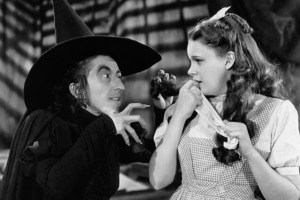
    As one of the first iconic villains to hit the big screen, the Wicked Witch of the West lives in our collective memory. Those who’ve seen the original 1939 film The Wizard of Oz can hear the witch’s high-pitched cackle. We can recite her menacing line: “I’ll get you, my pretty! And your little dog, too!”

    Margaret Hamilton played the role in the film when she was 35 years old. Even though she was only on screen for 12 minutes, her performance was unforgettable. While speaking to a live audience in her later years (exact time and place unknown), Hamilton shared the story of how she was cast, showcasing her delightful personality in the process.

    Hamilton said she had done about six pictures for MGM before the opportunity to appear in The Wizard of Oz came along. Then she shared the details of that conversation with the audience:

    “One day, my agent called and said, ‘Maggie, they’re really kind of interested in you for a part in The Wizard of Oz.’ And I said, ‘Oh gosh. Think of that,’ I said, ‘I loved that story from the time I was four years old. What is it?’ And he said, ‘Well, the Witch.’ And I said, ‘The Witch?!’ Then he said the final thing, he said, ‘Yes, what else?’”

    The audience burst out laughing.

    “I thought, ‘Well, that’s kind of an exciting part.’ But jeez, I had my, you know, my eyes on something else. I don’t know what it was exactly, but I didn’t think about the Witch. However, I ought to because I’d had that nose quite a long while.”

    The audience busted up again.

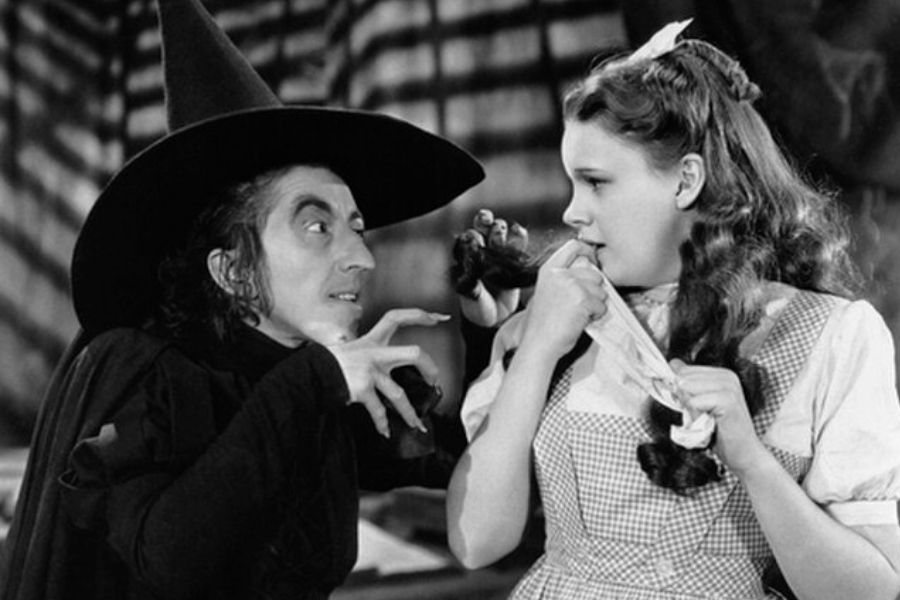
    A scene from the 1939 Wizard of Oz film with Glinda, Dorothy, and the Wicked Witch
    Margaret Hamilton wore a prosthetic nose tip and a prosthetic chin in the film. Photo credit: Public domain

    The fact that she totally owned her prominent nose, a signature feature few in Hollywood would embrace today, is so refreshing. It’s especially notable considering the Wicked Witch was originally conceived as a bit more glamorous and beautiful in the film. Producer Mervyn LeRoy said he didn’t want the character to be hideous, as he didn’t want to “scare children away from the theatre.”

    Hamilton is by no means hideous. But when LeRoy changed his mind about the character’s look, she fit it perfectly. When she tested for the role, she wore “the oldest, crummiest-looking clothes I could find, some dirty things that sort of hung on me like a Mother Hubbard, and then a little shawl.”

    “There was no witch’s hat,” she said, “and I really looked more like an old hag. And I cackled and screamed and said a few lines from the script.”

    The Wicked Witch of the West was born.

    And scare children she did. People in the comments shared how terrified they were of her when they were kids:

    “This woman scared the absolute s__t out of me when I was a child.”

    “Gave me nightmares. Her and those flying monkeys. Yow!”

    “Her witch scared the hell out of me as a child, and even as a man I still found her frightening.”

    “That scene in the tornado where she turns from Almira Gulch on the bicycle, into the witch on the broomstick was absolutely terrifying when I was 6 years old.”

    “She made the witch utterly terrifying! Job well done no doubt.”

    “She scared me so much as a little kid. I was amazed to discover later that she had been, of all things, a *kindergarten teacher*!”

    That’s right, this terrifying witch was a kindergarten teacher when she wasn’t acting.

    She frightened audiences for generations. In fact, Hamilton’s appearance as the Wicked Witch on Sesame Street in 1976 was prohibited from airing after parents complained that their children were frightened. (Though Hamilton’s appearance wasn’t nearly as scary as her character in the film, the Sesame Street audience was very young.)

    However, she also appeared on Mister Rogers’ Neighborhood as herself. Talking to Fred Rogers, she explained how she viewed the character of the Wicked Witch of the West:

    “Sometimes the children feel she’s a very mean witch, and she does seem that way. But I always think two things about her: She does enjoy everything she does, whether it’s good or bad, she does enjoy it. She also is what we sometimes refer to as ‘frustrated.’ She’s very unhappy because she never gets what she wants, Mr. Rogers. Most of us get something we want along the line, but as far as we know that witch has never got what she wanted…”

    She also dressed up as the Witch, but without the green makeup, showing kids that it was really just a nice lady in a costume all along.

    Despite the fear she evoked with her most famous role, people loved Hamilton’s real-life character. Patty Duke, who worked with her on The Patty Duke Show in the 1960s, called Hamilton “the gentlest soul you could ever meet” in her memoir.

    Folks in the comments on her casting story shared the same sentiment:

    “A friend of mine had the opportunity to meet and have lunch with Mrs. Hamilton in Manhattan in the mid – 70’s after she had retired. He told me she was one most humble, kind, and sweetest lady you could ever meet….and insisted on picking up the check for their meal.”

    “My mother met her in the late 60’s. She said she was nicest, sweetest person she had ever met.”

    “She was my mother’s kindergarten teacher.”

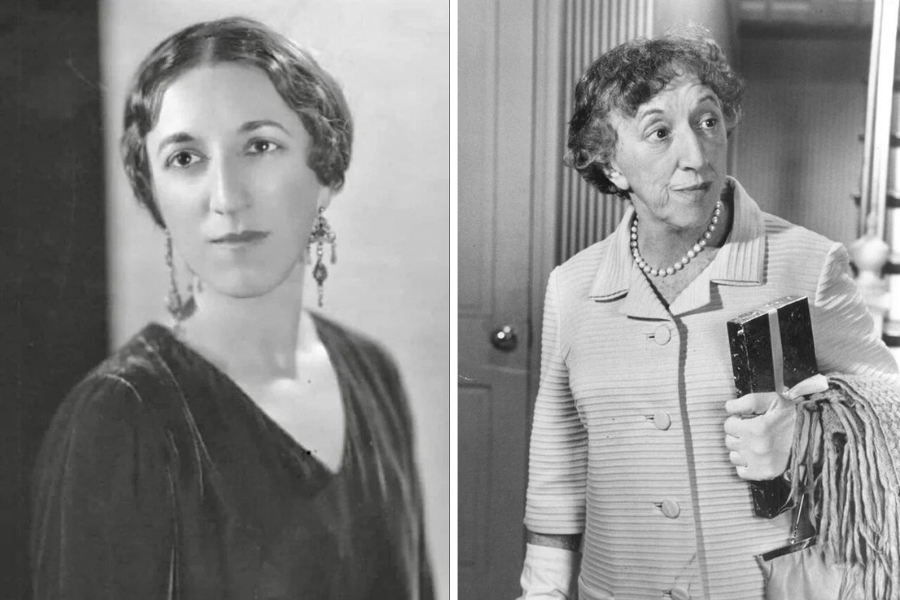
    Margaret Hamilton in 1929 (left) and in 1973 (right). Photo credit: Public domain

    “I met Margaret Hamilton while I was working at a drug store in Beverly Hills as a teenager in the early 1970s. The other young staff and I crouched down and marched around her chanting the Wicked Witch theme from the movie. Ms. Hamilton laughed and was so kind to us.”

    “She’s so naturally charismatic. Not even acting, just being herself and telling a story and I was captivated. No wonder her performance was so mesmerizing. She’s just an awesome lady.”

    “I remember her when I was a child and not just from the film. She was on Mr. Roger’s Neighborhood as herself to show everyone she was a nice person and that the witch was just a character she played. She seemed like such a kind person.”

    Hamilton died in 1985 at age 82. She is remembered today both for the characters she portrayed on screen and for the character she exemplified in real life.

  • People shared the ‘one question’ they’d ask God if they could, and the responses are profound
    People have questions for God.Photo credit: Canva
    ,

    People shared the ‘one question’ they’d ask God if they could, and the responses are profound

    Throughout human history, we have had a lot of gods, at least 18,000, to be specific. Most people believe in just one and forget about the other 17,999 that have fallen in and out of favor over the millennia. If we focus on the major god of the Abrahamic religions—Christianity, Judaism, and Islam—we, as mortal…

    Throughout human history, we have had a lot of gods, at least 18,000, to be specific. Most people believe in just one and forget about the other 17,999 that have fallen in and out of favor over the millennia. If we focus on the major god of the Abrahamic religions—Christianity, Judaism, and Islam—we, as mortal humans, still have many questions that remain unanswered in their holy books.

    For example:

    If you love us, why do you send a big percentage to hell?

    Why do you allow evil to happen?

    Who killed John F. Kennedy?

    Why do you only cure diseases that we can’t see? (And never cure amputees or burn victims?)

    Why do churches ask for money? Can’t you just make a bag of cash magically appear when the rent is due?

    Why is shellfish an abomination when it’s so damn tasty?

    lobster, lemon, lobster dinner, garnish, seafood, shellfish,
    A lobster ready to eat. Photo credit: Canva

    The problem is that humans can ask all the questions we like, and the big answer we usually get is: “God works in mysterious ways.”

    Well, a group of folks on Reddit wouldn’t accept that as an answer, so they got together and listed all the questions they would ask God if they had the chance. Many people questioned whether we truly have free will, while others wondered where God is when tragedies happen. It’s great food for thought, and just maybe God will one day pop into the comments section and sort things out.

    1. The question of evil

    “Are you willing to stop evil, but unable? Or are you able to stop evil, but unwilling?”

    2. Can I have a do-over?

    “Can I start all over again and retain my memories, please?”

    3. Where did you come from?

    “How were you created if you’re the creator?”

    This is a big question, and for many religious people the answer is simple: God is eternal and the “uncaused cause” of everything else. This rubs determinists the wrong way because they believe that everything must have a prior cause.

    4. The Fieri conundrum

    “Why did you allow Guy Fieri to create Donkey Sauce?”

    For the uninitiated, Donkey Sauce was popularized by Guy Fieri on his TV show Diners, Drive-Ins and Dives. Although it may have a bizarre name, it’s basically a mayo-and-garlic sauce that often features Dijon mustard, lemon juice, and Worcestershire sauce.

    5. The big three

    “I have no singular question, I have three that are combined…

    How can we have free will if you’re omniscient (all-knowing). You knew what colour my pajama pants were before I put them on tonight, yet I’m supposed to have made that decision myself with my own free will? That doesn’t make sense if you already knew.

    If you’re omnipotent (all powerful) then how could you make a stone so powerful that you couldn’t lift it… if you couldn’t, you’re not all powerful, if you can… then you’re not all powerful.

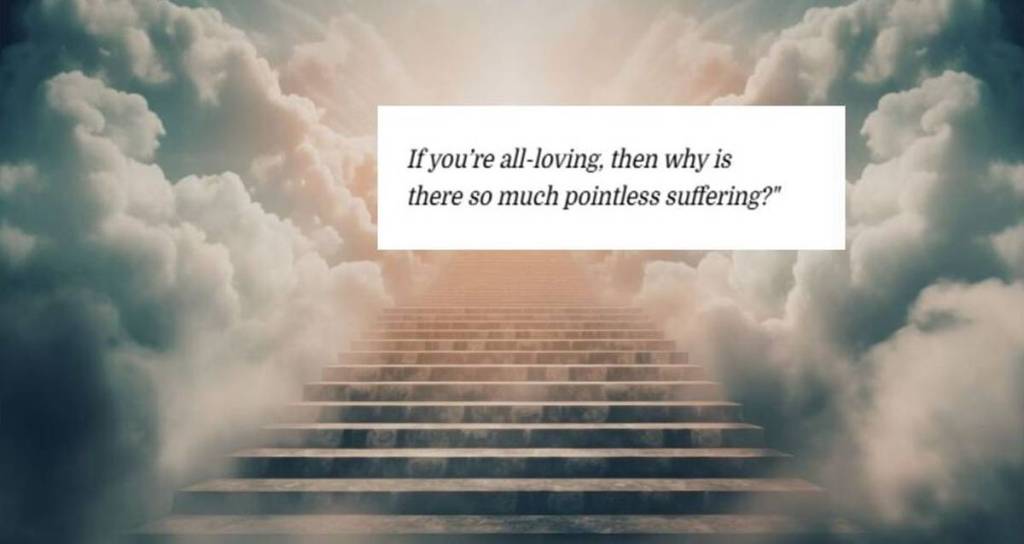
    If you’re all-loving then why is there so much pointless suffering?”

    6. Why such a poor communicator?

    “Why do you make yourself in a way that makes it so humanity has to follow a thousand-year-old book. Why can’t you just give us monthly updates or some sh*t via our phones. Seems a lot more effective.”

    7. The pizza predicament

    “Why is pizza such an unhealthy food? It should be something you consume all the time to stay in shape and fight cancer.”

    pizza, hot pizza, whole pizza, pizza sauce, cheesy pizza
    A whole pizza. Photo credit: Canva

    8. Yeah, really

    “Child cancer? WTF dude.”

    9. More evidence would be nice

    “Why don’t you just give us a clear evidence, before blaming us for not believing in you?”

    “If you have a plan for us and know everything that will ever happen, why do you blame us and condemn people to suffer forever for the crime of not doing what you wanted us to do when you already knew everyone who was going to was going to do that and counted on it?”

    10. A corgi question

    “Did you just put all the creation points in cuteness and herding skills when you made the corgi, or was there another plan for this dog?”

    @walnutthefluffycorgi

    Thinking about getting a corgi? Here are 3 potential cons of owning one! #corgi #fluffycorgi #pembrokewelshcorgi

    ♬ Fluffy Pancake – Oneul

    11. *taps watch*

    “Where have you been?”

    12. How hot?

    “Could you microwave a burrito so hot that you yourself could not eat it?”

    It seems that God would probably be able to eat a burrito cooked as hot as it can get, because that would only reach 212°F, the boiling point of water. Microwaves cook food by making water molecules vibrate, so once the temperature reaches the boiling point, the water turns into steam rather than getting any hotter.

    13. Why are we here?

    “It’s one of life’s great mysteries isn’t it? Why are we here? I mean, are we the product of some cosmic coincidence, or is there really a God watching everything? You know, with a plan for us and stuff. I don’t know, man, but it keeps me up at night.”

    14. Is it all about suffering?

    “The weird thing about this for me is wondering what I’d do next. like if god really answers ‘to suffer, it’s fun for me to watch you all be miserable’ do you just … go to work the next day”

    15. Reincarnation

    “What’s my soul’s goal so I can stop reincarnating already?”

    reincarnation, soul, spirit, death, afterlife, religion,
    Reincarnation. Photo credit: Canva

    16. The apple

    “All this over a piece of $&@%ing fruit?!?”

    17. The most important question

    “Are my cats and dog happy?”

  • Struggling to make friends as an adult? You may have fallen into the ‘liking gap.’
    Making friends as an adult can be hard. Photo credit: Canva
    ,

    Struggling to make friends as an adult? You may have fallen into the ‘liking gap.’

    Making friends isn’t always easy for kids, but it’s pretty straightforward. Kid friendships usually start with something like, “Hey, cool bike.” Or “Hey, want to run across the field with me?” Or “Hey, let’s pretend [fill in imaginary scenario].” If the other kid responds positively, boom, you’re friends. If only it were that simple for…

    Making friends isn’t always easy for kids, but it’s pretty straightforward. Kid friendships usually start with something like, “Hey, cool bike.” Or “Hey, want to run across the field with me?” Or “Hey, let’s pretend [fill in imaginary scenario].” If the other kid responds positively, boom, you’re friends.

    If only it were that simple for grown-ups. Making friends in adulthood can be tough, and for some it might feel impossible. There are several reasons for that, but let’s start with one that may be easier to change than you might think.

    The “liking gap”

    One reason it can be hard to make friends as an adult is that we fear feeling rejected. Are other adults even looking for new friends? Will they like us enough to want to become our friend?

    That fear may itself be the problem, or at least part of it. Researchers who studied people talking to strangers in various settings found that “following interactions, people systematically underestimated how much their conversation partners liked them and enjoyed their company.” In other words, people tend to be more likable than they think. The study’s authors called this illusion the “liking gap.”

    If you chat with someone and come away thinking they didn’t enjoy it, you may have fallen into the liking gap. “Our studies suggest that after people have conversations, they are liked more than they know,” the researchers wrote.

    What’s the solution? Another phenomenon known as the “acceptance prophecy,” which is based on research showing that when we believe others are going to like us, we tend to be more open and warm in our behavior toward them—thereby making them like us. The reverse is also true. When we think people won’t like us, we’re more closed off. It’s a self-fulfilling prophecy: when we think we’re likable, we behave in more likable ways, leading others to like us.

    Essentially, we close the liking gap by seeing ourselves as likable. That may be harder than it sounds in practice, but it’s a pretty simple fix. (If you can convince your brain to cooperate, of course.)

    But what about the harder problems to solve?

    The time and energy problem

    One of the biggest obstacles to making friends as an adult is simply time. Between work, family, keeping a home in order, taking care of our health, and everything else, grown-up life is busy. And yet, many adults yearn for more friend connections in the free time they do have.

    Then there’s the energy question. “After a long workday, the idea of a night out with friends may not sound as appealing as it once did,” wrote psychologist Loren Soeiro. “This energy shortage can also make it difficult for friends to sustain their bonds: When both people feel depleted, neither is likely to take the initiative.”

    How do we make or maintain friendships when we’re so often short on time and energy?

    Adult friendships are more complex

    What formed the basis of friendships in our childhood may not be sufficient to sustain a friendship in adulthood. Shared interests, or simply enjoying someone’s company, are often how friendships begin. But is that enough to overcome the time and energy constraints that make friendship harder?

    As Emma Barr, LPA, pointed out, they may not be: “What becomes more important are character traits like dependability, supportiveness, or loyalty. Those are things that aren’t immediately self-evident. That can make it hard to tell if this is a person you really want to be friends with.”

    We have fewer shared experiences baked into daily life

    When we’re young, much of our day is structured around group experiences like school and after-school activities. In adulthood, our work might be a group experience, but it might not be. Many people work from home, which makes forming friendships at work difficult. Some people belong to churches or religious groups and might be able to form friendships there. Beyond that, much of adult life is individually oriented. We simply don’t have as many structured social experiences as we did when we were young.

    How to be better at grown-up friendship

    Friendships can be complicated, but there are some ways to make and maintain them better:

    Be the one to reach out

    “Don’t wait for others to suggest socializing opportunities,” Soeiro wrote. “You may wish your old friends would reach out to you, but the odds are your friends harbor the same wishes, the same needs. Break the logjam by initiating plans yourself.”

    Be honest about wanting to keep friendships up

    As adults, sometimes the best bet is to refresh the friendships you already have, especially if they’ve begun to fade.

    “Because your friends probably also think their peers have more friends than they do, it makes sense to talk about the problem,” Soeiro wrote. “Letting them know you want your friendships to stay strong, or that you sometimes feel distant, can help normalize these feelings. (Remember, when you can share your vulnerability and feel accepted in return, relationships grow stronger.)”

    Adjust your expectations

    Therapist Kati Morton shared that as she’s gotten older, she’s felt like every friendship needs to be a deep, sisterly relationship.

    “That’s just not possible,” she said. “And so I have to almost recalibrate my own brain to be like, no, it’s okay to have different friends for different reasons. We can have a friend that is helpful at work. We can have a friend who is great for holding us accountable to go to our yoga class or go walking. We can have a friend as part of our book group.”

    Don’t let social media fool you

    It’s easy to see people posting pictures of friend hangouts and assume that everyone else is better at friendship than we are.

    Soeiro described findings from researcher Kristine Lehman, saying she “noted that on apps like Instagram, other people appear to have more friendships, and more satisfying ones, than we do. This perception can heighten a sense of FOMO, magnifying our feelings of shame and isolation.”

    Give it time

    As kids, forming a friendship may have been as simple as asking, “Want to be friends?” As adults, the process isn’t so cut and dried.

    “Allow the process to take time,” Barr wrote. “A friend is someone you trust, but trust takes time to build. You may find that there isn’t a moment where you went from not being friends to being friends; people tend to grow on us slowly.”

    Grown-up friendships may be trickier, but they are no less valuable than those we made as kids.

  • Musician reimagines Darth Vader’s iconic theme song if he’d ‘gone to therapy,’ and it’s strangely beautiful
    Avishai Darash swaps out the minor chords for major chords and transforms Darth Vader’s theme song.Photo credit: @avishaidarash/Instagram & Wikimedia Commons
    ,

    Musician reimagines Darth Vader’s iconic theme song if he’d ‘gone to therapy,’ and it’s strangely beautiful

    When it comes to villain songs, few are as instantly recognizable as “The Imperial March,” better known as Darth Vader’s theme from Star Wars. The G minor key, one of the darkest in classical music, plus the relentlessly steady rhythm, reminiscent of a military march…it’s all so bombastically, unapologetically evil-sounding. It also helps that composer…

    When it comes to villain songs, few are as instantly recognizable as “The Imperial March,” better known as Darth Vader’s theme from Star Wars. The G minor key, one of the darkest in classical music, plus the relentlessly steady rhythm, reminiscent of a military march…it’s all so bombastically, unapologetically evil-sounding.

    It also helps that composer John Williams used the Star Wars franchise to introduce the cinematic world to the Wagnerian leitmotif—a concept well known in opera, where recurring bits of music act as a character’s calling card. In Vader’s case, viewers would hear the tune whenever he slaughtered innocents and enforced the Empire’s tyranny, making it pretty much synonymous with bad guy behavior.

    But composer and pianist Avishai Darash wondered what that dastardly march might sound like if things had played out a little differently—namely, if Vader had, as Darash put it, “gone to therapy,” done away with his imperial ways, and been the dad Luke and Leia deserved.

    The result: a revamped theme song (using major keys, of course) that feels like it belongs more in the world of Jane Austen than sword fighting in space.

    Instead of dread and looming danger, the melody suddenly feels light, warm, and oddly wholesome, like something you might hear while strolling through a sunlit garden rather than watching a galactic conquest unfold.

    “Maybe Luke just wanted to hear ‘I’m proud of you, son,’” Darash quipped in the comments.

    Viewers react

    The clip, which racked up 92,000 views, inspired a ton of funny (and punny) comments from Star Wars fans:

    “Episode V: The empire loves you back.”

    “I bet this Vader knows how to French braid Leia’s hair.”

    “The love is strong with this one.”

    “It evokes images of Darth Vader skipping whimsically through a meadow.”

    “Luke, I am your caregiver 😶‍🌫️”

    “Well that’s a major plot twist 🍿”

    “You are not a Jedi yet… but your journey is valid and I admire the hard work- keep going, I’ll always have your back, Mom’s getting Starbucks, what’s your order?”

    “Luke, I am your emotionally and physically present father.”

    A specialty for Darash

    This isn’t the first time Darash has taken a well-known character song from a movie score and completely reimagined it. In fact, turning famous themes on their heads has become something of a specialty for him.

    For instance, in this video he imagines Clark Kent as just your average Joe, with no Superman alter ego. Suddenly his life feels far more grounded and ordinary.

    Or this one, where Vito Corleone “just ran a family restaurant” and “paid his taxes,” rather than being a mob boss, making him a “good father” instead of a “Godfather.”

    Or this one, which imagines what would have happened if the Titanic had never sunk and Jack and Rose had lived happily ever after. Less tragedy and a lot more hope, but it still tugs at the heartstrings.

    After seeing these, isn’t it nice to know that in this complicated life there are a few simple things we can rely on? Two plus two equals four. Blue and red make purple. Major chords sound happy; minor chords do not. You don’t have to be a music genius to understand that on a visceral level.

    Now, what if the dinosaurs from Jurassic Park were actually cute and cuddly rather than wild and carnivorous? That’s the cover I’m waiting to hear. 

  • Tearful 8-year-old girl has a beautiful reaction to breaking a taekwondo board
    Ellie Park breaks a board at American Tigers in Mission Viejo, California.Photo credit: American Tigers Mission Viejo (used with permission)
    ,

    Tearful 8-year-old girl has a beautiful reaction to breaking a taekwondo board

    There is no better feeling than confronting your fears head-on and overcoming them, especially when you feel like the odds are stacked against you. That’s why a video from American Tigers, a martial arts school in Mission Viejo, California, is so powerful.  Eight-year-old Elizabeth “Ellie” Park was shaking in fear as she approached her teacher,…

    There is no better feeling than confronting your fears head-on and overcoming them, especially when you feel like the odds are stacked against you. That’s why a video from American Tigers, a martial arts school in Mission Viejo, California, is so powerful. 

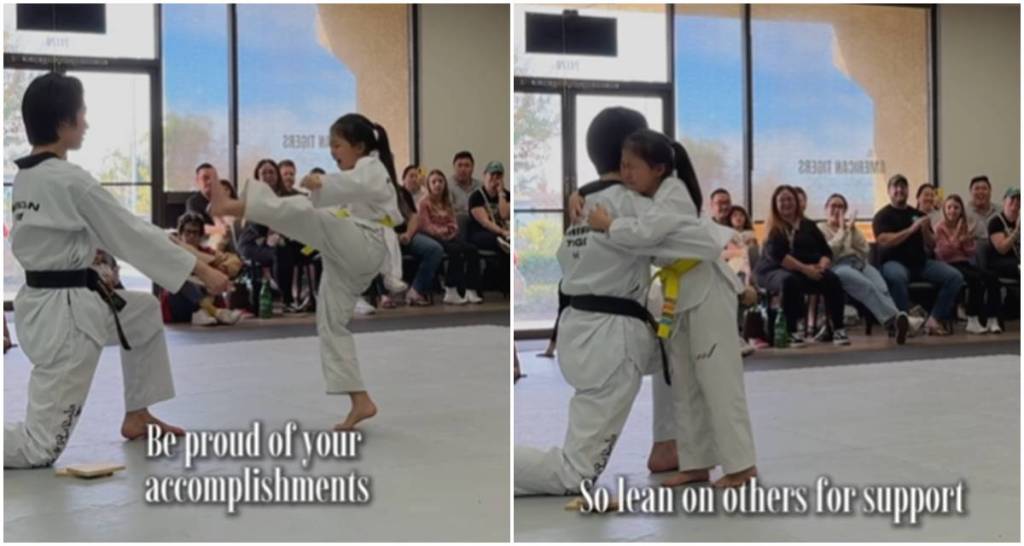
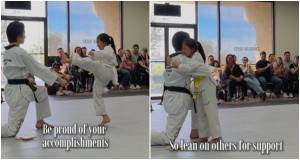
    Eight-year-old Elizabeth “Ellie” Park was shaking in fear as she approached her teacher, who was holding a practice board she was supposed to break with her foot. The day before, she had failed to break the boards, and her first attempt in front of a large crowd was unsuccessful.

    “On the day of testing, she stared at the board shaking in fear for about a minute,” Ethan Shin, head instructor of American Tigers, told USA Today. “We had her take a break, and called her up a second time.”

    Ellie’s incredible achievement

    Then, on her third attempt, she broke the board with her right foot. After her tremendous accomplishment, she stood at attention, and then she just couldn’t resist giving her teacher a big hug. After regaining her composure, she broke another board and returned to sit with the rest of her class.

    “She was shaking in fear from failing on the practice boards the day before. She chose to be brave, face her fears head-on, and overcame them,” American Tigers wrote in an Instagram post. They added, “When you fail. Find the courage in yourself to try again. Be proud of your accomplishments. And take time to celebrate your wins.”

    One of the commenters perfectly summed up how Ellie felt after successfully striking the board: “There’s a moment when her heart wants to hug her teacher, but ‘custom’ makes her hesitate…until.”

    It’s a wonderful moment where everyone took a break from the discipline of the martial art to express joy, gratitude, and a sense of achievement.

    taekwondo, taekwondo kick, martial arts, martial arts practice, high kick,
    A man practicing taekwondo. Photo credit: Canva

    “One of the things I miss most about teaching taekwondo is making this kind of impact on students. Not just teaching skills, but courage and confidence,” one of the commenters wrote.

    “This teacher is so beautiful. To be a safe space where she can find support and regain her confidence. Wow,” another added.

    Martial arts are great for a child’s development

    taekwondo, martial arts, kids martial arts, fists, martial arts practice
    Children learning taekwondo. Photo credit: Canva

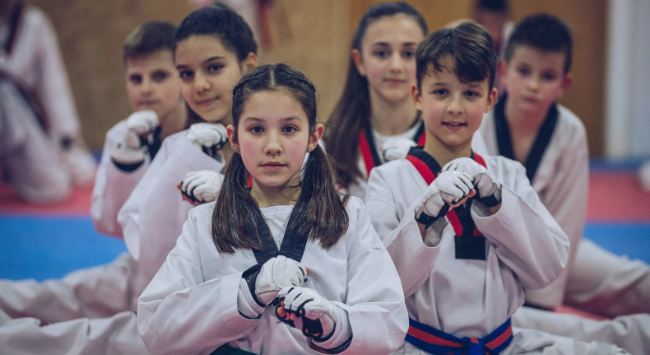
    The video is a wonderful example of the benefits of teaching kids martial arts. Martial arts teach kids to focus on individual growth rather than competition and help them develop greater self-control and discipline. It’s also a great way for them to learn and appreciate structure.

    “Martial arts is a good way to get kids more physically active and fit, and help them develop healthy exercise habits that will last a lifetime,” Cynthia LaBella, MD, from the American Academy of Pediatrics, told Colorado Parent in 2016.

    Ellie’s achievement is a wonderful example of how, when we find calm and composure, we can not only confront our fears but defeat them. It’s moments like that that show why martial arts can make a big difference in a child’s life. They build confidence, resilience, and the courage to keep going, even when it feels like the odds aren’t in your favor.

    Learn more about taekwondo at the American Tigers school in Mission Viejo, California.

Skills

Struggling to make friends as an adult? You may have fallen into the ‘liking gap.’

Pop Culture

Musician reimagines Darth Vader’s iconic theme song if he’d ‘gone to therapy,’ and it’s strangely beautiful

Family

Tearful 8-year-old girl has a beautiful reaction to breaking a taekwondo board

Culture

A driver lost consciousness on the highway. A stranger pulled a heroic PIT maneuver to stop his car.