Period poverty keeps women and girls from reaching their full potential, in the U.S. and around the world
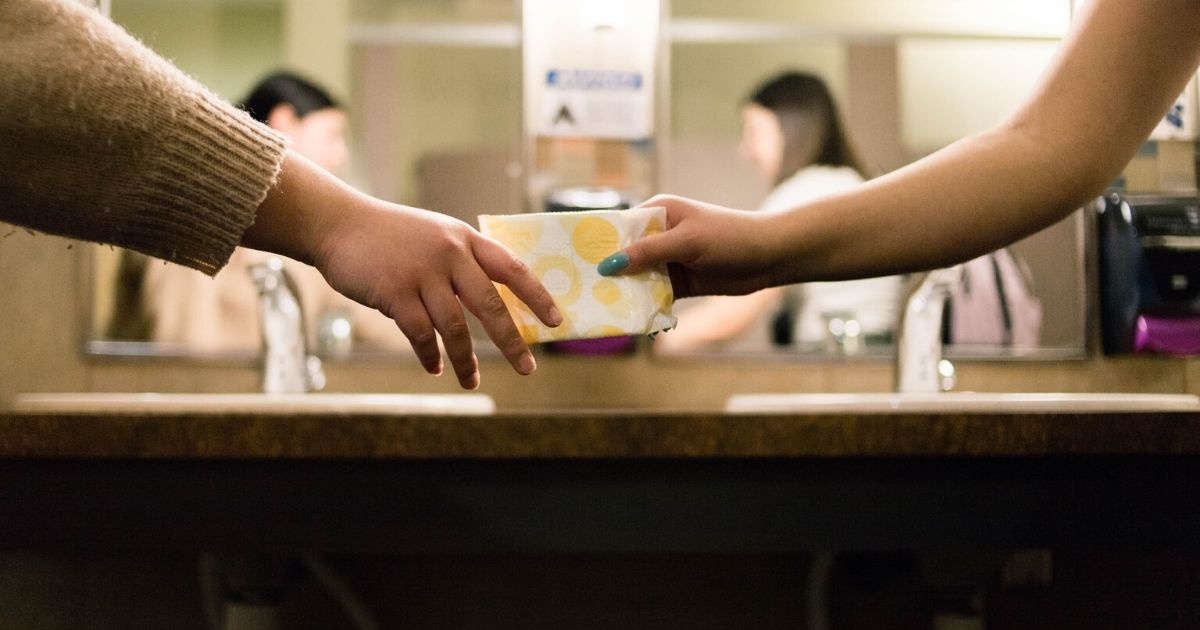
There are few certainties in life, but one thing women and girls can generally depend on is a monthly period. Come hell or high water, Aunt Flo is likely gonna show, and it’s almost always going to happen at an inopportune time. Now imagine what life looks like for those who lack access to period…
There are few certainties in life, but one thing women and girls can generally depend on is a monthly period. Come hell or high water, Aunt Flo is likely gonna show, and it’s almost always going to happen at an inopportune time.
Now imagine what life looks like for those who lack access to period products.
Katie is in the 6th grade. She lives in the poorest county in Kentucky, where almost everyone works in coal — and there is too little education and too much meth. Katie’s family doesn’t have enough money to eat or keep the power on consistently. Personal hygiene is an afterthought, which is why when she gets her first period, she has no choice but to stuff old washcloths into her underwear before going to school.
Later that week, when she runs out of washcloths, she simply stops going.
For girls like Katie, it’s easy to see how menstruation each month can stand in the way of a high school graduation or keeping a summer job — and could eventually prevent them from climbing out of poverty altogether.
According to the International Federation of Gynecology and Obstetrics, approximately 500 million women and girls live without access to essential tools for menstrual hygiene management, such as period products and handwashing facilities, but what many of them do have is a boatload of shame. Across the board, menstrual health is hugely underfunded and over stigmatized, leaving people like Katie at a huge disadvantage.
Thorsten Kiefer, co-founder of WASH United — a non-profit organization that focuses on improving menstrual hygiene and human rights worldwide — told Upworthy that he wants to see period poverty become a thing of the past. His goal is to “create a world in which no woman or girl is limited because of her period by 2030,” because Kiefer hates injustice.
That general distaste for ignorance and injustice is what led him to pursue a career in human rights law, and later spurred the idea for WASH United. It bothered Kiefer that no one wanted to talk about toilets and handwashing, and as a result, people suffered. “I guess I’m really interested in taboo social issues no one else wants to touch,” he said.
In 2013, WASH United took their work a step further and created Menstrual Hygiene Day (MH Day), a global advocacy platform that brings together the voices and actions of non-profits, government agencies, individuals, the private sector and the media to promote good menstrual hygiene management for all women and girls. The main goal of MH Day is to break the silence, raise awareness and change negative social norms surrounding periods.
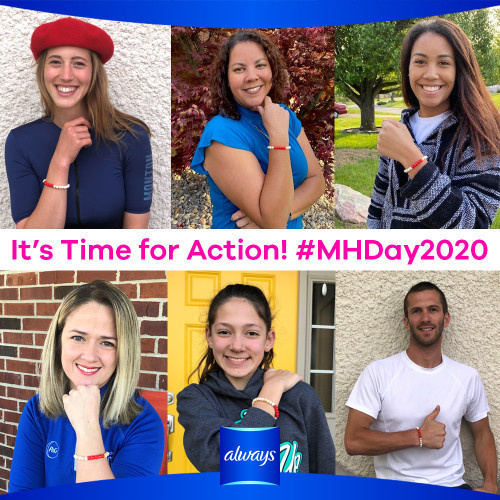
This goal is why his organization partners with brands like Always to bring the issues around menstrual health to the forefront.
Always ramped up production and shipping of pads in response to the COVID-19 crisis, with a goal of getting products into stores quickly and donating them to those in need through charity partners. So far, the company has donated over five million period products across the United States, as well as worked to find relevant ways to ensure that girls and their families have access to information and resources that they need to navigate their periods with confidence.
Clearly, the more attention periods get, the more resources will become available for the people who need them the most.
“I’m most proud of the MH Day partnership as a whole — of how this extremely heterogeneous group of organizations ranging from tiny, grassroots non-governmental organizations to corporate giants like Procter & Gamble sings together like one gigantic choir to make our voice heard loud and clear for one single purpose: empower women and girls to achieve their full potential and realize their dreams,” Kiefer said.
“Maybe ‘proud’ is not even the right word. To see MH Day in action just makes me really happy.”
Girls like Katie, if armed with period products, an education and a supportive environment, can change the world. The question is, will we help them get what they need?
To support this effort and other programs like it, all you have to do is keep doing what you’re doing — like shopping for period products. Turn your everyday actions into acts of good every day at P&G Good Everyday.

In a small village in Pwani, a district on Tanzania’s coast, a massive dance party is coming to a close. For the past two hours, locals have paraded through the village streets, singing and beating ngombe drums; now, in a large clearing, a woman named Sheilla motions for everyone to sit facing a large projector screen. A film premiere is about to begin.
It’s an unusual way to kick off a film about gender bias, inequality, early marriage, and other barriers that prevent girls from accessing education in Tanzania. But in Pwani and beyond, local organizations supported by Malala Fund and funded by Pura are finding creative, culturally relevant ways like this one to capture people’s interest.
The film ends and Sheilla, the Communications and Partnership Lead for Media for Development and Advocacy (MEDEA), stands in front of the crowd once again, asking the audience to reflect: What did you think about the film? How did it relate to your own experience? What can we learn?
Sheilla explains that, once the community sees the film, “It brings out conversations within themselves, reflective conversations.” The resonance and immediate action create a ripple effect of change.
MEDEA Screening Audience in Tanzania. Captured by James Roh for Pura
Across Tanzania, gender-based violence often forces adolescent girls out of the classroom. This and other barriers — including child marriage, poverty, conflict, and discrimination — prevent girls from completing their education around the world.
Sheilla and her team are using film and radio programs to address the challenges girls face in their communities. MEDEA’s ultimate goal is to affirm education as a fundamental right for everyone, and to ensure that every member of a community understands how girls’ education contributes to a stronger whole and how to be an ally for their sisters, daughters, granddaughters, friends, nieces, and girlfriends.
Sheilla’s story is one of many that inspired Heart on Fire, a new fragrance from the Pura x Malala Fund Collection that blends the warm, earthy spices of Tanzania with a playful, joyful twist. Here’s how Pura is using scent as a tool to connect the world and inspire action.
A partnership focused on local impact, on a global mission
Pura, a fragrance company that recognizes education as both freedom and a human right, has partnered with Malala Fund since 2022. In order to defend every girl’s right to access and complete 12 years of education, Malala Fund partners with local organizations in countries where the educational barriers are the greatest. They invest in locally-led solutions because they know that those who are closest to the problems are best equipped to solve and build durable solutions, like MEDEA, which works with communities to challenge discrimination against girls and change beliefs about their education.
But local initiatives can thrive and scale more powerfully with global support, which is why Pura is using their own superpower, the power of scent, to connect people around the world with the women and girls in these local communities.
The Pura x Malala Fund Collection incorporates ingredients naturally found in Tanzania, Nigeria, Pakistan, and Brazil: countries where Malala Fund operates to address systemic education barriers. Eight percent of net revenue from the Pura x Malala Fund Collection will be donated to Malala Fund directly, but beyond financial support, the Collection is also a love letter to each unique community, blending notes like lemon, jasmine, cedarwood, and clove to transport people, ignite their senses, and help them draw inspiration and hope from the global movement for girls’ education. Through scent, people can connect to the courage, joy, and tenacity of girls and local leaders, all while uniting in a shared commitment to education: the belief that supporting girls’ rights in one community benefits all of us, everywhere.
You’ve already met Sheilla. Now see how Naiara and Mama Habiba are building unique solutions to ensure every girl can learn freely and dare to dream.
Naiara Leite is reimagining what’s possible in Brazil
Julia with Odara in Brazil. Captured by Luisa Dorr for Pura
In Brazil, where pear trees and coconut plantations cover the Northeastern Coast, girls like ten-year-old Julia experience a different kind of educational barrier than girls in Tanzania. Too often, racial discrimination contributes to high dropout rates among Black, quilombola and Indigenous girls in the country.
“In the logic of Brazilian society, Black people don’t need to study,” says Naiara Leite, Executive Coordinator of Odara, a women-led organization and Malala Fund partner. Bahia, the state where Odara is based, was once one of the largest slave-receiving territories in the Americas, and because of that history, deeply-ingrained, anti-Black prejudice is still widespread. “Our role and the image constructed around us is one of manual labor,” Naiara says.
But education can change that. In 2020, with assistance from a Malala Fund grant, Odara launched its first initiative for improving school completion rates among Black, quilombola, and Indigenous girls: “Ayomidê Odara”. The young girls mentored under the program, including Julia, are known as the Ayomidês. And like the Pura x Malala Fund Collection’s Brazil: Breath of Courage scent, the Ayomidês are fierce, determined, and bursting with energy.
Ayomidês with Odara in Brazil. Captured by Luisa Dorr for Pura
Ayomidês take part in weekly educational sessions where they explore subjects like education and ethnic-racial relations. The girls are encouraged to find their own voices by producing Instagram lives, social media videos, and by participating in public panels. Already, the Ayomidês are rewriting the narrative on what’s possible for Afro-Brazilian girls to achieve. One of the earliest Ayomidês, a young woman named Debora, is now a communications intern. Another former Ayomidê, Francine, works at UNICEF, helping train the next generation of adolescent leaders. And Julia has already set her sights on becoming a math teacher or a model.
“These are generations of Black women who did not have access to a school,” Naiara says. “These are generations of Black women robbed daily of their dreams. And we’re telling them that they could be the generation in their family to write a new story.”
Mama Habiba is reframing the conversation in Nigeria
Centre for Girls' Education, Nigeria. Captured by James Roh for Pura
In Mama Habiba’s home country of Nigeria, the scents of starfruit, ylang ylang and pineapple, all incorporated into the Pura x Malala Collection’s “Nigeria: Hope for Tomorrow,” can be found throughout the vibrant markets. Like these native scents, Mama Habiba says that the Nigerian girls are also bright and passionate, but too often they are forced to leave school long before their potential fully blooms.
“Some of these schools are very far, and there is an issue of quality, too,” Mama Habiba says. “Most parents find out when their children are in school, the girls are not learning. So why allow them to continue?”
When girls drop out of secondary school, marriage is often the alternative. In Nigeria, one in three girls is married before the age of 18. When this happens, girls are unable to fulfill their potential, and their families and communities lose out on the social, health and economic benefits.
Completing secondary school delays marriage, and according to UNESCO, educated girls become women who raise healthier children, lift their families out of poverty and contribute to more peaceful, resilient communities.
Centre for Girls’ Education, Nigeria. Captured by James Roh for Pura
To encourage young girls to stay in school, the Centre for Girls’ Education, a nonprofit in Nigeria founded by Mama Habiba and supported by Malala Fund and Pura, has pioneered an initiative that’s similar to the Ayomidê workshops in Brazil: safe spaces. Here, girls meet regularly to learn literacy, numeracy, and other issues like reproductive health. These safe spaces also provide an opportunity for the girls to role-play and learn to advocate for themselves, develop their self-image, and practice conversations with others about their values, education being one of them. In safe spaces, Mama Habiba says, girls start to understand “who she is, and that she is a girl who has value. She has the right to negotiate with her parents on what she really feels or wants.”
“When girls are educated, they can unlock so many opportunities,” Mama Habiba says. “It will help the economy of the country. It will boost so many opportunities for the country. If they are given the opportunity, I think the sky is not the limit. It is the starting point for every girl.”
From parades, film screenings to safe spaces and educational programs, girls and local leaders are working hard to strengthen the quality, safety and accessibility of education and overcome systemic challenges. They are encouraging courageous behavior and reminding us all that education is freedom.
Experience the Pura x Malala Fund Collection here, and connect with the stories of real girls leading change across the globe.
Joy has a way of finding us when we least expect it. Sometimes it’s as small as the sound of a contagious laugh. Other times, it arrives in big, unforgettable moments—like a stranger showing up with an unexpected Christmas gift for a child in need.
These moments of joy are everywhere online, quietly breaking through the noise. But with today’s nonstop news cycle, they can easily get overshadowed by stories that are heavy, dramatic, or discouraging. We’re here to change that.
We all need reminders of what joy looks like—and better yet, what it feels like. That’s why we’re highlighting the five best examples of pure joy we’ve seen on the internet this week. From small, everyday wins to life-changing acts of kindness, these moments are your excuse to pause the doomscrolling and soak in something good.
In what she calls the “best day of my life so far,” content creator @michlivinlife found out early one morning she was pregnant after over two years of trying to have a baby. When her husband got home from work that evening, she led him into the spare bedroom, supposedly to show him how well she was able to clean it out. But once they went inside, the secret was out, thanks to a small sign she set up on a rocking chair, flanked by a baby blanket and a teddy bear. Watching her husband’s expression, and their hug at the end, shows you just how overjoyed they both are to share in the news.
Best of all, though? This couple is in for another big surprise — and a lot more joy — because they find out shortly after that there’s more than one baby they’re expecting. Like, several more. That’s right — triplets. That’s a lot to be joyful for!
2. The second best surprise ever (spoiler: it’s a HOUSE)
Imagine having to keep a secret from your kid. It’s not easy — especially when it’s a happy secret and you’re bursting at the seams to tell. The joy at the end is worth it, though, and nowhere is it more evident than in this video, where a mom gets to reveal her long-kept secret to her daughter — the empty house they’re touring is actually their new house. Surprise! Cue all the happy tears.
Meet George. George was born with osteogenesis imperfecta type 3, a genetic condition that makes bones extremely fragile and easy to break. George has been getting intensive, specialized care for his condition since he was just 15 days old.
Here’s the joyful part: Thanks to years of surgical care, physical therapy, and bone-strengthening infusions he received at Shriners Children’sTM, George is able to walk, run, sing, act in local plays (his favorite) and live his life to the fullest, despite living with his condition.
George’s story is truly amazing — and it also reminds us why supporting other people truly matters: Shriners Children’s is committed to caring for all children who need them — no matter how complex their needs are and regardless of the families’ ability to pay or insurance status. They’re able to do that through generous donations from people like you.
Want to learn more about helping children like George reach their greatest potential? Learn how you can support Shriners Children’s this giving season, here.
4. This kid nailing the “Whitney Houston Challenge”
Have you heard of the “Whitney Houston Challenge”? Long story short, in Whitney Houston’s classic song “I Will Always Love You,” there’s a loooonnnng pause between the bridge and the final chorus. Just before Whitney starts singing the iconic “And Iiiiii…” part of the song, there’s a single drum beat that interrupts the long pause — and apparently it’s really hard to hit at the exact right time. It’s such a challenge, in fact, that people have taken to holding friendly competitions where they line up and try to hit the drum beat, one by one.
Which brings us to this video, where students from Township of Ocean Intermediate School had their own Whitney Houston challenge and one of their own absolutely nails it. When he does, every student, teacher, and staff member is there to celebrate — and chances are, you’re watching at home and celebrating right alongside them, because hitting that note is difficult. And there’s nothing more joyful than watching someone absolutely nail a difficult task. Way to go!.
Getting a new job is always something to celebrate—but there’s something really special about this video from content creator Shea McHugh, who films her brother, Gavin, sharing the news that he’s landed a job working at his school’s coffee shop. (Even more exciting: he gets to SKIP MATH CLASS to work in the coffee shop, which is even more of a reason to celebrate, honestly.)
Gavin’s news is joyful in itself — but even more joyful is the obvious love these siblings have for each other. Have you ever heard more “I love you”s in a single TikTok? Or a brother calling his sister “divine” and “incredible”? The love just radiates off these two, as well as the supportive parent in the background. Brb, watching this video on a loop.
Shriners Children’s helps children heal and thrive so they can chase their dreams. Learn more about how they’re making it possible and share this article to inspire others to join you. Shriners Children’s relies on generous donors to make a difference.
Donate today during the 3X Match Challenge to make 3X the life-changing impact for patients.
If the past year has taught us nothing else, it’s that sending love out into the world through selfless acts of kindness can have a positive ripple effect on people and communities. People all over the United States seemed to have gotten the message — 71% of those surveyed by the World Giving Index helped…
If the past year has taught us nothing else, it’s that sending love out into the world through selfless acts of kindness can have a positive ripple effect on people and communities. People all over the United States seemed to have gotten the message — 71% of those surveyed by the World Giving Index helped a stranger in need in 2020. A nonprofit survey found 90% helped others by running errands, calling, texting and sending care packages. Many people needed a boost last year in one way or another and obliging good neighbors heeded the call over and over again — and continue to make a positive impact through their actions in this new year.
Upworthy and P&G Good Everyday wanted to help keep kindness going strong, so they partnered up to create the Lead with Love Fund. The fund awards do-gooders in communities around the country with grants to help them continue on with their unique missions. Hundreds of nominations came pouring in and five winners were selected based on three criteria: the impact of action, uniqueness, and “Upworthy-ness” of their story.
Here’s a look at the five winners:
Edith Ornelas, co-creator of Mariposas Collective in Memphis, Tenn.
Edith Ornelas has a deep-rooted connection to the asylum-seeking immigrant families she brings food and supplies to families in Memphis, Tenn. She was born in Jalisco, Mexico, and immigrated to the United States when she was 7 years old with her parents and sister. Edith grew up in Chicago, then moved to Memphis in 2016, where she quickly realized how few community programs existed for immigrants. Two years later, she helped create Mariposas Collective, which initially aimed to help families who had just been released from detention centers and were seeking asylum. The collective started out small but has since grown to approximately 400 volunteers.
In 2020, Mariposas shifted gears somewhat to help immigrants in the community who have lost their job or income stream due to the pandemic. The volunteers bring food and other essential supplies to families’ homes, but Edith often lingers beyond the initial drop off, providing a sympathetic ear for families dealing with high levels of stress. Her patience and genuine concern inspires other Latinx people to come into the Mariposas circle and become community leaders, which in turn is making Memphis a more welcoming place for immigrants.
Tom Dittl, a first-grade teacher in Wisconsin
Like most teachers in 2020, Tom Dittl had to find fun, creative ways to navigate the challenges of teaching his students virtually. And he took it to the next level. Recently, Dittl made a music video of Jack Johnson’s song “Upside Down” while dressed up as The Man in the Yellow Hat — a character from Curious George children’s stories — to cheer up his students who’ve been cooped up at home. But the song also had a deeper purpose: He hoped it would inspire them to be kind to one another and spread that kindness around their communities.
In the video, he tells his students that you can always be kind, even when you’re going through something tough. In response, many of them made “kindness rocks” and put them all over their neighborhoods as reminders for others to be kind.
Teachers have had one of the toughest jobs last year (not to mention every year). When a teacher like Mr. Dittl makes such a noticeable impact on his students, despite the obstacles and distractions of 2020, it’s unequivocally a win.
Nikki and Jonathan Romain, creators of the Art Inc. Center in Peoria, Ill.
Arts education is so often overlooked, even though it can be a pathway to creative thinking, personal growth and a successful future. It’s typically the first thing to go in lower-income public school curriculums, which leaves inner-city youth without an artistic outlet, or at least one that’s professionally guided. So Nikki and Jonathan Romain decided to open up another artistic avenue for the inner-city youth of Peoria, Ill., in the form of an art center called Art Inc.
The Center provides space and tools for the entire community to have an experiential arts education. Nikki and Jonathan also offer support and structure for young people to try their hand at various forms of artistic expression and pursue higher education goals. Nikki is the Executive Director and handles most of the business of the nonprofit, whereas Jonathan, using his professional artist expertise, runs development of the art and culture programs. He also serves as a counselor for youth who may be struggling to find their way. Together, they’ve made Art Inc. a haven for all community members and a place where art is always valued.
Kari Harbath, ‘involuntary expert in grief’ in Utah
Kari Harbath is no stranger to hardship and suffering. In April 2019, due to pregnancy complications, she gave birth to a daughter who is deaf, blind and has CHARGE syndrome, a rare disorder that affects multiple organ systems in the body. If that weren’t challenging enough, the following September, Kari lost her mother, and then this past June, she lost her husband of 13 years.
Yet somehow, after a year of unimaginable loss, Kari has managed to carry on with life and the care of her daughter, Sloan. In fact, she’s taken what she’s learned through her experience with grief and uses it to support others dealing with similar hardships. She’s willing to return to that uncomfortable place over and over again just so she can help someone else climb out of it. Kari is available as a resource for anyone who’s struggling or caring for someone who has disabilities and may feel lost.
Chavonne Hodges, Founder of Grillzandgranola in New York
When Chavonne was 26, she was going through a divorce and struggling with a panic disorder. She knew she needed to do something to help herself feel better, so she started working out at a gym. While there, she noticed a serious lack of racial and body diversity, so she decided to create her own gym and exercise program that caters to both. The gym is called Grillzandgranola, and aside from physical health, it’s dedicated to mental wellbeing and community collaboration.
Amidst the COVID-19 pandemic, Grillzandgranola has moved classes online and created a space for group therapy called FEEL Better. These free therapy sessions are led by a diverse group of mental health professionals and are designed to help Black, Indigenous and people of color cope with grief, isolation, and negative emotions during these challenging times.
Love Wins Kind, selfless acts have the power to change lives. It doesn’t matter how big or small your act of kindness is, if it’s thoughtful and genuine, you’re doing it right. Not sure where to start? By joining P&G Good Everyday, you can lead with love through your actions. Each time you answer surveys, take quizzes and scan receipts, you can feel good knowing that P&G will automatically donate to your favorite cause like ending period poverty, saving wildlife, or providing natural disaster relief.
Join us and #LeadWithLove. We know that even the smallest acts of good can make a world of difference.
Over the last year, we’ve witnessed beautiful moments of human kindness and have come together to support each other like never before. As we look ahead to 2021, we are excited to partner with P&G Good Everything to continue supporting all the different ways people are leading with love. There’s never been a better time…
Over the last year, we’ve witnessed beautiful moments of human kindness and have come together to support each other like never before. As we look ahead to 2021, we are excited to partner with P&G Good Everything to continue supporting all the different ways people are leading with love.
There’s never been a better time to come together, step up and act. That’s why P&G Good Everyday is committing to 2,021 acts of good in 2021 — starting with the next wave of donations including health, hygiene and cleaning products, personal protective equipment (PPE) and financial support worth tens of millions of dollars for COVID-19 relief efforts in communities in the U.S. and around the world.
https://youtube.com/watch?v=TSXz5ts4jJY
And by joining P&G Good Everyday, you can lead with love through your actions. Each time you answer surveys, take quizzes and scan receipts, you can feel good knowing that P&G will automatically donate to your favorite cause like ending period poverty, saving wildlife, or providing natural disaster relief.
Join us and #LeadWithLove. We know that even the smallest acts of good can make a world of difference.
Upworthy and P&G Good Everyday are teaming up to find the people who lead with love everyday. Know someone in your neighborhood who’s known for their optimistic attitude, commitment to bettering their community and always leading with love? Tell us about them for the chance to win a $2,000 grant to keep doing good in…
Upworthy and P&G Good Everyday are teaming up to find the people who lead with love everyday.
Know someone in your neighborhood who’s known for their optimistic attitude, commitment to bettering their community and always leading with love? Tell us about them for the chance to win a $2,000 grant to keep doing good in their community.
When Madeline Swegle was a little girl growing up in Burke, VA, she loved watching the Blue Angels zip through the sky. Her family went to see the display every time it was in town, and it was her parents’ encouragement to pursue her dreams that led her to the U.S. Naval Academy in 2017.…
When Madeline Swegle was a little girl growing up in Burke, VA, she loved watching the Blue Angels zip through the sky. Her family went to see the display every time it was in town, and it was her parents’ encouragement to pursue her dreams that led her to the U.S. Naval Academy in 2017.
“I’m excited to have this opportunity to work harder and fly high performance jet aircraft in the fleet,” Swegle said in a statement released by the Navy. “It would’ve been nice to see someone who looked like me in this role; I never intended to be the first. I hope it’s encouraging to other people.”
As Swegle’s story shows, representation and equality matter. And the responsibility to advance equality for all people – especially Black Americans facing racism – falls on individuals, organizations, businesses, and governmental leadership. This clear need for equality is why P&G established the Take On Race Fund to fight for justice, advance economic opportunity, enable greater access to education and health care, and make our communities more equitable. The funds raised go directly into organizations like NAACP Legal Defense and Education Fund, YWCA Stand Against Racism and the United Negro College Fund, helping to level the playing field.
According to the Council on Foreign Relations, the U.S. military has taken significant steps over the past decade to build a more diverse and inclusive force that attracts the country’s top talent. However, women and racial and ethnic minorities remain underrepresented in parts of the military, particularly at the highest levels of leadership. According to the Congressional Research Service, in the enlisted realm, 63% of senior enlisted troops are white, while 19% are Black; and only eight out of every 100 senior officers are Black. Women represent 16 percent of the enlisted forces and 19 percent of the officer corps.
Lieutenant Commander Joseph Thompson, an officer serving in the Navy’s Dental Corps, knows how it feels to be a minority in the military.
“As a fellow Naval Officer of African descent, I am extremely proud of Lt Swegle’s accomplishments. I know the standards of excellence required to be a naval fighter pilot are extremely high. In a historically white male dominated sector of the Navy for her to break through the glass ceiling, not only as a female, but as one of African descent is nothing short of phenomenal…her accomplishments have not only made me proud, but have also motivated me to keep pushing forward in pursuit of my own goals.”
When the novel coronavirus hit the United States, life as we knew it quickly changed. As many people holed up in their homes, some essential workers had to make the impossible choice of going to work or quitting their jobs— a choice they continue to make each day. Because over 80 percent of working Hispanic…
When the novel coronavirus hit the United States, life as we knew it quickly changed. As many people holed up in their homes, some essential workers had to make the impossible choice of going to work or quitting their jobs— a choice they continue to make each day.
Claudia Romo Edelman saw a community in desperate need of guidance and support. And she created Hispanic Star, a non-profit designed to help Hispanic people in the U.S. pull together as a proud, unified group and overcome barriers — the most pressing of which is the effects of the pandemic.
Because the Hispanic community is so diverse, unification is, and was, an enormous challenge.
The Hispanic Star campaign is rooted in a firm belief that “we don’t win until we all win,” and is viewed as both a unifying symbol and a nonpartisan, inclusive, inspirational, and unifying footing in order for Hispanics living in the United States to view themselves and help them act as a unified force for good. Hispanics widely represent stories of migration, struggle, resilience and strong values: hard work, optimism, family and friends, and belonging.
“We wanted to bring these efforts together under the Hispanic Star, for everyone to realize that together, we’re stronger. We wanted every Hispanic to feel heard and valued and we want our platform to become a source of pride.
“We just need to showcase our contributions to this country, so Hispanics feel proud of our culture and history, and for everyone else to know we’re not takers, but makers,” Edelman said.
However, before the community can move forward, they have to stop the spread of COVID-19. This staggering need is why P&G, a founding partner of Hispanic Star, pledged to donate personal protective equipment and critical products to Hispanic essential workers and families affected by the virus. If one household member can stop the spread by not bringing the virus home to their family, countless lives could be saved.
According to the CDC, Hispanics not only were being exposed because of the nature of their work and/or the number of people living in their households, but also because of language barriers and limited access to health care. The lack of reliable health information in Spanish has impeded efforts to combat the spread of the virus in Hispanic communities, making them more likely to be unaware of the importance of things like mask wearing. Additionally, “Hispanic people are also the largest population segment without health insurance coverage in the United States, leaving those with presumptive symptoms or with a positive COVID-19 test with limited access to needed health care,” according to this report.
Because of these unique challenges, Edelman says they launched the Hispanic Star “hubs”—regional groups of volunteers designed to bring people together and focus on each region and city’s specific issues. They’re also responsible for getting Family Support Packs, featuring critical home and personal care items provided by P&G, to families who need them most.
“We managed to get over 1.2 million products and helped more than 200,000 families nationwide. And the support is still ongoing,” Edelman said. Collaborations with companies like P&G have enabled them to reach an extraordinary number of people. Still, there is a lot of ground to cover, and Edelman encourages anyone who is able to get involved.
“You can join your local hub, and if there isn’t one you can start your own!” Edelman said. “There are so many things the community needs…we need stars to step up and lead the charge.”
Glenda moved to Houston from Ohio just before the pandemic hit. She didn’t know that COVID-19-related delays would make it difficult to get her Texas driver’s license and apply for unemployment benefits. She quickly found herself in an impossible situation — stranded in a strange place without money for food, gas, or a job to…
Glenda moved to Houston from Ohio just before the pandemic hit. She didn’t know that COVID-19-related delays would make it difficult to get her Texas driver’s license and apply for unemployment benefits. She quickly found herself in an impossible situation — stranded in a strange place without money for food, gas, or a job to provide what she needed.
Alone, hungry, and scared, Glenda dialed 2-1-1 for help. The person on the other end of the line directed her to the Houston-based nonprofit Bread of Life, founded by St. John’s United Methodist pastors Rudy and Juanita Rasmus.
For nearly 30 years, Bread of Life has been at the forefront of HIV/AIDS prevention, eliminating food insecurity, providing permanent housing to formerly homeless individuals and disaster relief.
Glenda sat in her car for 20 minutes outside of the building, trying to muster up the courage to get out and ask for help. She’d never been in this situation before, and she was terrified.
When she finally got out, she encountered Eva Thibaudeau, who happened to be walking down the street at the exact same time. Thibaudeau is the CEO of Temenos CDC, a nonprofit multi-unit housing development also founded by the Rasmuses, with a mission to serve Midtown Houston’s homeless population.
“I saw a woman walking toward me in a hesitant fashion. I called out to her and admired her Juneteenth t-shirt,” Thibaudeau said. Glenda asked her for directions, and they struck up a conversation. After finding out that she was in need, Thibaudeau sprang into action and began making phone calls. A few minutes later, two of her co-workers rounded the corner of St. John’s church with a box of household goods, courtesy of Bread of Life.
As they loaded up Glenda’s car with essentials, Thibaudeau asked questions and listened intently before inviting her to take a walk together.
“As [we] walked, she sobbed and shared that she isn’t any more deserving than anyone else and she was so grateful for our kindness. I told her that this is what we do and reminded her that she is not alone. Once you find all of us, you have found the Houston Love!” said Thibaudeau. “I put my arm around her and asked, ‘What’s your name?’ We laughed at realizing that we hadn’t exchanged names yet. ‘Glenda,’ she answered. ‘I’m Eva and we got you.’”
This kind of empathy and boundless love is what fuels the work of Pastors Rudy and Juanita Rasmus. By practicing what they preach—literally—they’ve created a Houston-based network of nonprofit organizations to cover almost every need imaginable.
The couple, who have been married for 36 years, light up recalling an event that transformed and refined their mission to serve. Shortly after they first took over the congregation at St. John’s, they arrived at the church to find a homeless man sleeping on the front stoop. Rather than shooing him away, they invited him inside. That, in sum, is what they’ve been doing ever since: using what they have to help those in need.
“We have an amazing team of compassionate people who really work together to make good happen, and that’s what we’ve been doing for almost 30 years,” said Pastor Rudy. “Eva’s story is a perfect example of that.”
Bread of Life received an outpouring of support from across the U.S. after Upworthy published their story in June 2020, enabling them to begin offering free weekly COVID-19 testing to the residents of downtown Houston. During a time when access to testing was problematic for many Americans, this service undeniably saved a number of lives. Bread of Life serves a primarily homeless population, people with disabilities and no insurance, with a primary goal of reducing homelessness and food insecurity.
Recently, they’ve shifted their volunteer efforts to the herculean task of contact tracing and case management, offering yet another invaluable service. They now have an official Mobile COVID Testing Unit, offering completely contact free, mobile testing (note the arm holes in the side)!
Additionally, Bread of Life’s partnership with Matthew:25 Ministries and the Houston Food Bank means that people who are sick and quarantined at home can now have food delivered. They’ve also added fresh, frozen meat to their weekly contactless distribution line downtown.
“Meat days are crazy,” said Pastor Rudy. “Because people who are experiencing food insufficiency don’t have many opportunities to get meat.” He calls it “small scale pandemonium.”
According to Feeding America, an additional 17.1 million Americans will experience food insecurity this year due to impacts from COVID-19, and they need our support now more than ever. In response to this growing problem, Feeding America® and Procter & Gamble have joined forces to bring food and household items to communities hit hardest by the pandemic. Across the U.S., P&G is donating products and personal care kits for distribution through the Feeding America network of food banks.
What Pastors Rudy and Juanita have accomplished in Houston is a direct result of ordinary people who are willing to do extraordinary things. And you can make a difference too by simply joining P&G Good Everyday. By taking action through the website, you can earn rewards by buying products you already know and love. And the best part? P&G will donate to a cause you care about so you can turn your everyday actions into acts of good.
Anne Hebert, a marketing writer living in Austin, TX, jokes that her closest friends think that her hobby is “low-key harassment for social good”. She authors a website devoted entirely to People Doing Good Things. She’s hosted a yearly canned food drive with up to 150 people stopping by to donate, resulting in hundreds of…
Anne Hebert, a marketing writer living in Austin, TX, jokes that her closest friends think that her hobby is “low-key harassment for social good”. She authors a website devoted entirely to People Doing Good Things. She’s hosted a yearly canned food drive with up to 150 people stopping by to donate, resulting in hundreds of pounds of donations to take to the food bank for the past decade.
“I try to share info in a positive way that gives people hope and makes them aware of solutions or things they can do to try to make the world a little better,” she said.
For now, she’s encouraging people through a barrage of persistent, informative, and entertaining emails with one goal in mind: getting people to VOTE. The thing about emailing people and talking about politics, according to Hebert, is to catch their attention—which is how lice got involved.
“When my kids were in elementary school, I was class parent for a year, which meant I had to send the emails to the other parents. As I’ve learned over the years, a good intro will trick your audience into reading the rest of the email. In fact, another parent told me that my emails always stood out, especially the one that started: ‘We need volunteers for the Valentine’s Party…oh, and LICE.’”
Hebert isn’t working with a specific organization. She is simply trying to motivate others to find ways to plug in to help get out the vote.
Photo by Phillip Goldsberry on Unsplash
The emails, which are entertaining and informative, break down basic ideas for exactly how to help educate and motivate other people to exercise their right to vote. She offers a multitude of suggestions and ideas based on level of difficulty, making it easy even for the most apathetic members of society. Her quirky and smart communication strategy caught the attention of Notley Tide, a non-partisan initiative launched in June of this year to encourage others to tap into their networks to advance racial justice and voting rights.
The members of Notley Tide receive monthly call-to-action emails, and Hebert’s helpful resources have been shared in them, according to Minh Vu, who is leading the effort.
“A rising tide lifts all boats…in this case, our ‘tide’ is made up of our community of monthly givers and doers committed to building a more racially just future,” said Vu. “The roots of the systemic and institutional racism that has been pervasive throughout our country’s history continued to expose itself at the expense of Black lives with the murder of George Floyd, Breonna Taylor, Ahmaud Arbery, and countless others.”
Hebert wasn’t always this passionate about the democratic process; she began a couple of years ago by writing emails to a handful of people, encouraging them to educate themselves and take action to spread awareness of the importance of voting in every single election.
“Many people have never phone banked or knocked on doors,” Hebert said. “My goal is to give people an entry point at which they are comfortable. Does anyone like to bake? Can anyone stuff envelopes?”
Research shows that more than a third of eligible voters are Gen Z or millennials, and 83% of people ages 18 to 29 believe they have the power to change the country and the world. However, voter registration numbers are down as a result of the COVID-19 pandemic, and with so many issues on the line, getting the young voters to make their voices heard is imperative. This is why Procter & Gamble has partnered with Global Citizen and HeadCount for #JustVote, a new initiative to register as many new voters as possible.
Hebert is concerned about missed opportunities for high schoolers and college students to register to vote, due to the impact of Covid-19. Normally those efforts are heavily promoted on campuses, and pushed forward by school administrators. With many schools operating abnormally due to the pandemic, there’s a huge need to get kids who recently turned 18 or who are of age, but have never voted before, registered to vote and informed on where their voting locations are.
“I’ve organized with my neighbors to work to increase voter registration and turnout in our precinct and now we are helping with the surrounding precincts…the last two weekends, we got volunteers to put voter registration forms on thousands and thousands of student apartment complexes.”
Voting is one way you can make a difference. Another is getting more people to the polls in November. So let’s go do some social good.
Turn your everyday actions into acts of good by P&G Good Everyday, a rewards program for people who want to make a positive impact in the world.