People from other countries share 14 things that instantly tell them someone’s American

Have you ever heard of the “American lean”?

american tourists, american culture, americans abroad, americans, USA, tourists, travel, europe, culture
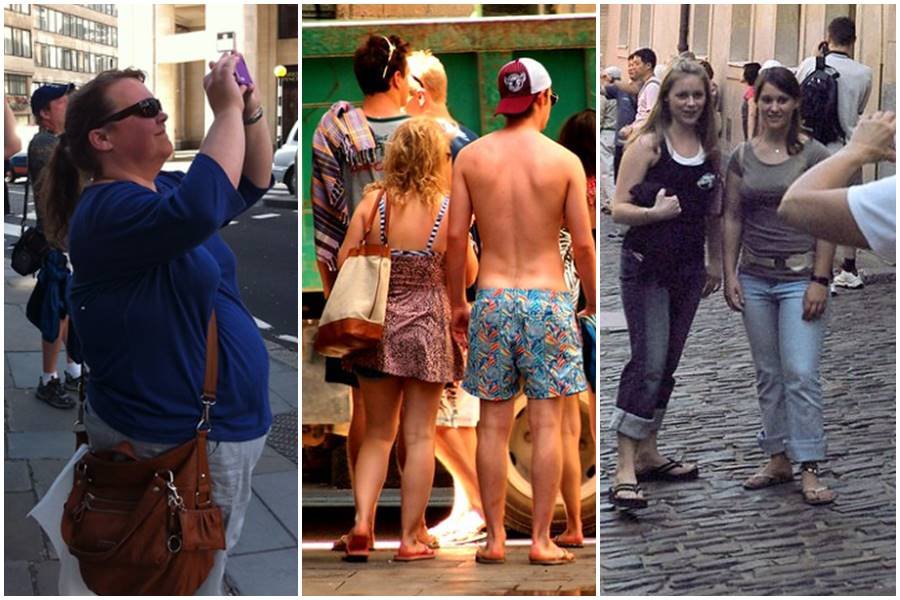
Photo credit: via zoetnet/Flickr, Ewen Roberts/Flickr and Tom Hodgkinson/FlickrSome American tourists enjoying the sights

Americans have a style and personality all their own, which isn’t a bad thing. It’s just noticeable when they travel aboard. Americans often stand out because of their outgoing personalities. They are friendly and enjoy having casual conversations with strangers.

This is an endearing trait to a lot of people in more reserved cultures, although it can also come off as a little brash.

An American characteristic that isn’t quite endearing to people in other countries is that they can be rather loud. In Europe, one can always notice the Americans in the restaurant because they can be heard from across the room.

One Reddit user wanted to know the specific ways that Americans stand out when traveling abroad, so they asked the AskReddit subreddit: “What’s an obvious sign that someone is an American?”
 

american tourists, american culture, americans abroad, americans, USA, tourists, travel, europe, culture
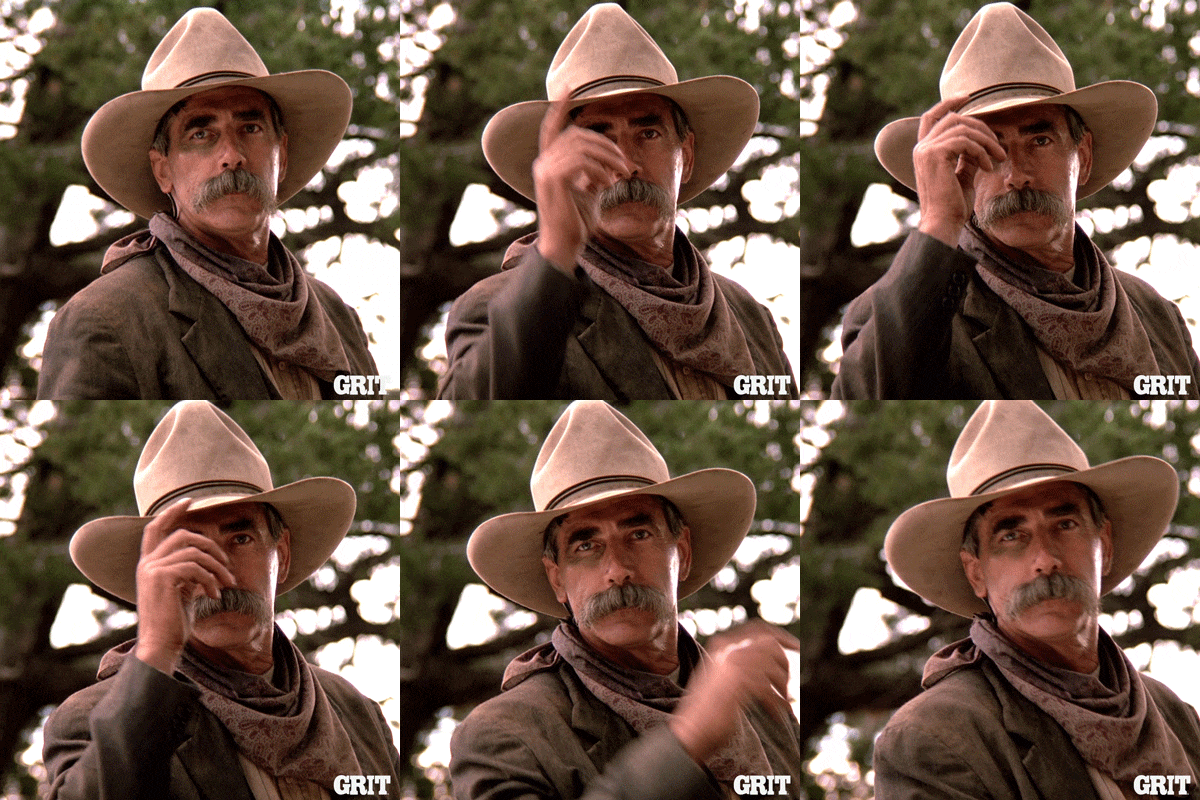
It may not be quite this obvious, but Americans do stand out. Giphy

The post was popular, receiving nearly 6,000 responses in just 6 days. The most popular ones described how Americans’ unique personalities, style of dress, dental hygiene and body language make them easy to spot.

Here are 14 “obvious” signs that someone is an American.

1. Posture
american tourists, american culture, americans abroad, americans, USA, tourists, travel, europe, culture

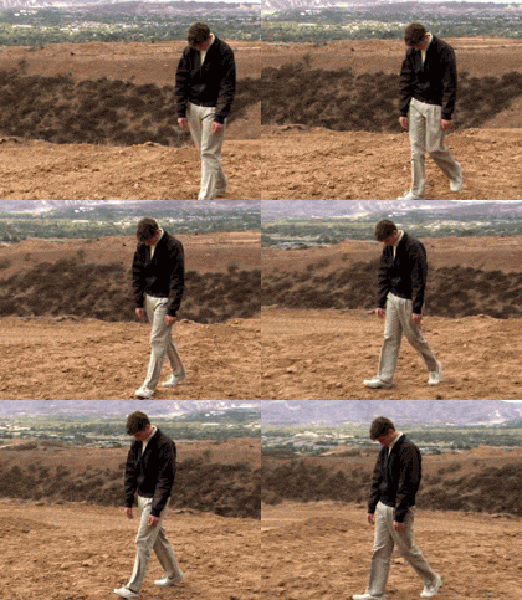
Americans slouch and lean. Giphy

“Apparently, the CIA trains American agents to not lean on things if they go undercover in foreign countries because Americans lean on anything they can while standing around,” one user wrote.

“I bet MI6 trains British agents to lean on everything if they go undercover in America because Americans lean on anything they can while standing around,” joked another.

Shockingly, this is actually true. The “American lean” is well-documented and, yes, a former CIA chief has said publicly that it’s something the agency addresses with its operatives to help them blend in.

2. The date

“MMDDYYYY,” a user said.

The way Americans write the date seems normal and commonplace when you’re in the US, but around the world, we’re practically the only ones who do it that way. Similarly, only a small handful of countries outside of the US use the imperial system of measure.

Writing the date or using feet and inches are a dead giveaway!

3. Distances are different

“Anything under 4 hours is ‘close by,” someone suggested.

“Everything in Europe is around the corner if you’re from the US. I can drive the whole day and not leave my state, but in Europe, I can pass through 4 countries in that same time frame,” said another.

The massive geography of the United States has a big affect on how we see distance. It shows up when we travel to other countries that are more densely packed together.

4. They’re polite to servers

“In the touristy cafe-restaurant I worked at:

If they asked me for the nicest spot we had

If they asked me my recommendation without seeing the menu first

I would walk to the table, and they would say right away ‘hey, how are you doing?’ This one threw me off a lot at first. Why is this person asking me how I’m doing?? I’m just there to take the order. I got used to it, and I think they found my awkwardness cute.

They would ask my name when I greeted them and took their order.

I’m Northern European.,” explained one user.

“It’s under-appreciated just how polite, friendly, and sincere Americans are in general. It blew my mind the first time I came to the US, and I love that my children are growing up with those same values,” said another.

You might expect to hear that Americans are rude and entitled when traveling, but that’s not necessarily the case! In America, some friendly rapport with your waiter is expected, and Americans tend to be a more outgoing bunch that love to engage. That makes them stand out in European countries, in particular, where restaurant service is meant to be professional and efficient rather than charismatic.

5. The water bottles

american tourists, american culture, americans abroad, americans, USA, tourists, travel, europe, culture

Americans love huge water bottles. Giphy

“I was told, ‘Americans carry water bottles around like they’re worried they’ll never have access to clean water ever again,” one user said.

“I don’t care what anyone says. If you think carrying a water bottle when walking a lot is weird, you’re probably slightly dehydrated all the time and are just desensitized to it. You seriously need to drink water frequently if you want to be ideally healthy,” said another.

The water bottle fad is uniquely American, for better or worse. Whether it’s a Yeti, a Stanley, an Owalla, or something else, you can bet if someone is swinging a massive water bottle wherever they walk, they’re an American.

6. Smiling

“I was in Germany this past summer, and I realized smiling at everyone you make eye contact with is very American. When I went to London on the same trip, they seemed less weirded out by it but would awkwardly return the smile. I was taught to always start with a disarming smile. Never realized it was American,” said one person.

7. “More ice, please.”

american tourists, american culture, americans abroad, americans, USA, tourists, travel, europe, culture

Americans love tons of ice in their drinks. Giphy

“I spent a year in Europe completely iceless to the point I forgot that was a thing. I stopped at a bar in Chicago fresh off the plane and not only did I get free tap water, but water with ice. I instantly felt at home,” added one person.

There is a long and fascinating history involving someone called “The Ice King” behind why Americans, and so few other cultures, love to put tons of ice in our drinks. Needless to say, it makes us stand out like a sore thumb when traveling.

8. Personal space

“As an American man, I’ve been told repeatedly by European and Asian friends that we simply take up space (not by being fat) as though we’re entitled to it. Men in other countries apparently don’t claim the same personal space we do,” one person offered.

You mean manspreading? Apparently, other cultures don’t do that.

9. White teeth

american tourists, american culture, americans abroad, americans, USA, tourists, travel, europe, culture

Americans value ultra-white teeth. Giphy

“It’s even more bizarre that they assume we have braces or bleach our teeth because they’re straight and white. I have naturally straight white teeth. I brush them twice a day so they stay white. I don’t do anything special to them, but I remember being in London and some similar-aged students literally making fun of me for my teeth… it’s true that they don’t naturally look like headstones in an ancient graveyard, but there’s no need to make fun,” someone added.

Imagine getting made fun of for having white teeth! For one reason or another, American culture places high value on having extremely white teeth. We all know the old jokes about British teeth, but some findings show that while Americans’ teeth may be whiter, Brits may be healthier overall. Something to think about.

10. Casual dress

“My friend went to Germany recently, and what people said about Americans is you can spot them a mile away because they’re the ones wearing pajamas in public. Apparently, in other countries, at least Germany, they dress a little more formally and in less baggy clothes than we do in America,” someone added.

Activewear, sweatpants, pajamas — we love to be comfortable! But it does make us a bit obvious when we’re out and about in other countries.

11. Baseball hats
american tourists, american culture, americans abroad, americans, USA, tourists, travel, europe, culture

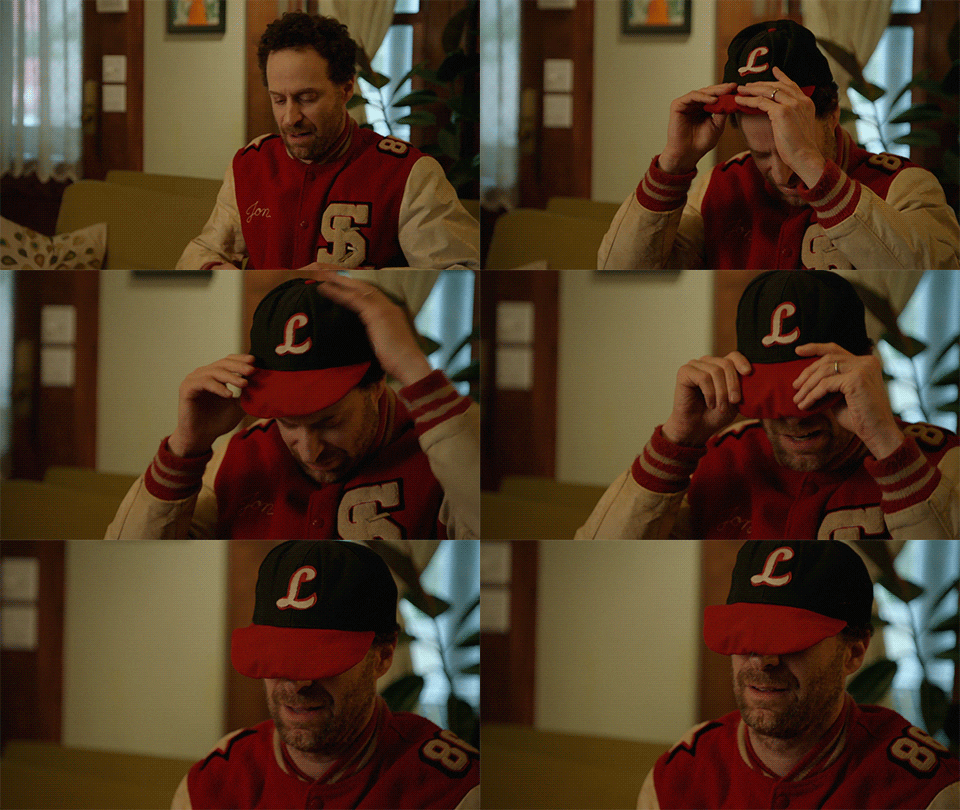
Americans wear hats… everywhere. Giphy

“Baseball cap… even on an infant riding in a pram,” a user suggested.

Baseball hats are common in many countries around the world, but most people internationally only wear them outside. If someone’s wearing a cap inside or at a restaurant, it’s a safe bet that person is American.

12. Shoes

“Americans are shoe snobs (they don’t think they are, but they are). Setting aside wealthier business types, Americans generally wear more on-brand, on-trend, high-quality shoes than others,” someone said.

13. They’re loud

american tourists, american culture, americans abroad, americans, USA, tourists, travel, europe, culture

Americans’ default volume is loud. Giphy

“That was my first thought. Americans yell at each other in normal conversation in public. I noticed it years ago in Europe, and now I can’t stand it in the US,” another user added.

Now there’s an unsurprising revelation! Just like our tendency to take up space, Americans seem to have less awareness of those around them when it comes to conversation volume, as well.

14. Occupation matters

“Immediately asking someone what they do for a living when meeting them. Our jobs and work are our entire identity,” one person said.

“I hate that about American culture. I’m an American and recently became a SAHM, so I don’t have an answer to ‘What do you do for a living?’ Half the time, I add the caveat, ‘Oh, my last job was with Apple,’ so that I’m not written off as an unemployed ‘loser.’ But it really is dumb to determine a person’s worth by what they do in order to afford food and shelter,” added another.

There are huge differences in work culture between America and other countries. They’re so big and pervasive that they show up not just while we’re working, but in the way we interact with others. For example, in Europe it’s far less common to be friends with your coworkers. People value the purpose they find in work and the results, but are happy to keep the majority of their life separate from their career.

This article originally appeared last year. It has been updated.
  • 100 people who’ve lived to 100 were asked the secret to a long, happy life. Here are their answers.
    Photo credit: CanvaThree older adults eat ice cream outside a store.
    ,

    100 people who’ve lived to 100 were asked the secret to a long, happy life. Here are their answers.

    The average 100-year-old surveyed only “feels” 68. That’s incredible.

    UnitedHealthcare (UHC) recently interviewed 100 centenarians, or people who have lived to the ripe age of 100.

    Fascinatingly, 100-year-olds feel younger than ever. The report reveals that the average centenarian only “feels” about 68. It’s a number that’s dropping dramatically. In 2015, when UHC conducted a similar survey, the average respondent said they felt 79. That’s incredible.

    What that ultimately means is that these folks can teach us an awful lot about how to live both a long and joyful life, how to feel decades younger, and how to keep living life to the fullest into our 100s and beyond. Here are some of their secrets:

    1. Staying up-to-date on tech keeps you young

    You might think of centenarians clinging to their rotary phones and the vinyl record players they had long before they were “cool.” You’d be wrong.

    UHC found that 100-year-olds are experimenting with ChatGPT and other AI—around 27% of them. And a stunning 40% of them regularly play video games.

    2. A strong body can go the distance

    Centenarians have changed their approach to longevity in the past decade. Compared to 2015, far more respondents today are doing regular strength training and monitoring their diet.

    Overall, they’re more active in almost every way. A higher percentage of 100-year-olds are doing cardio, gardening, and even meditating or practicing intentional stress relief. Meditation jumped from 29% of centenarians to 42% today.

    “Staying active keeps my heart strong, mind sharp, body moving, spirit high, and health steady every day,” one said.

    The only activity that declined was walking and hiking, and only by a small margin. But these busy seniors had to find the time to hit the gym somewhere.

    3. Finding humor in daily life is the best medicine

    It’s one thing when Joe Schmoe says “laughter is the best medicine.” It’s another when some of our oldest citizens are living proof that it’s true.

    It might be reading between the lines, but the cranky and miserly don’t seem as likely to make it to 100. Eighty-five percent of respondents said they laugh often and find that having a sense of humor comes easily to them.

    “A good belly laugh can make you feel better than any pill, I’ll tell you that,” one said.

    4. There’s something to look forward to at every age

    One of the most interesting questions asked of the participants was about their “best decade.”

    The answers from the 100 centenarians, who’ve lived through and seen it all, reveal that there’s so much good to find in every season of life. Life doesn’t go downhill after a certain age; you just have to learn to appreciate what it has to offer.

    Your 20s are for freedom and exploration. Your 30s and 40s are all about family. Your 50s and 60s are the best for community and friendship. Your 70s and beyond are about finding contentment and joy in the simple things.

    Even in the harder decades, the centenarians now have the perspective to know there was always light at the end of the tunnel:

    “I’d tell myself to embrace every messy moment because it all works out in the end. I really needed to hear that in my late teens when everything felt like such a big deal.”

    5. “Feeling old” has nothing to do with age and is sometimes out of your control

    Fascinatingly, the respondents were asked when they first started to “feel old.” Their answers had nothing to do with a specific age.

    It came down to the moments: giving up driving, the death of a spouse, and moving out of a beloved home and into a smaller place where they could age.

    There’s something peaceful about that. Some things may be in your control—keeping your body and mind sharp can delay certain events. Others are completely out of your control. But the overarching theme is that there’s no reason to fear a number.

    6. Family and friends are key to survival

    Being isolated and lonely is devastating for your health and longevity. Seventy-eight percent of the seniors in this report, thriving at the age of 100, credit a big part of their vigor to regularly spending time with friends and family.

    “They are everything to me. I try to spend as much time with my family as I can,” one of the 100-year-olds said. “Life is short; you never know when it’ll be the last day.”

    7. The advice they’d give their younger selves is what we all need to hear

    Centenarians say the secret to happiness is really no secret at all. It’s mind-numbingly simple: Don’t worry so much. Spend time with your loved ones. Move your body. Be true to yourself.

    The difference is that these 100-year-olds have the wisdom and urgency to really mean it. Don’t wait until you’re their age to start living like you know you should.

    “If you don’t ask, you don’t get,” one said, referring to getting a promotion at work, but more generally, anything you truly want. In other words, go for it.

    The overall trends identified in the report are surprising and hopeful.

    In 10 years, our centenarians will likely be even more focused on their physical and mental health, finding even more joy in their lives as they age, and, through it all, feeling younger than ever. We can learn a lot from watching what they’re doing right.

  • 19 viral photos show what happens after drinking 1, 2, and 3 glasses of wine
    Before and after photos of people who drank wine.

    Marcos Alberti’s “3 Glasses” project began with a joke and a few drinks with his friends.

    The photo project originally depicted Alberti’s friends drinking, first immediately after work and then after one, two, and three glasses of wine.

    But after Imgur user minabear circulated the story, “3 Glasses” became more than just a joke. In fact, it went viral, garnering more than 1 million views and nearly 1,800 comments in its first week. So Alberti started taking more pictures and not just of his friends.

    “The first picture was taken right away when our guests (had) just arrived at the studio in order to capture the stress and the fatigue after a full day after working all day long and from also facing rush hour traffic to get here,” Alberti explained on his website. “Only then fun time and my project could begin. At the end of every glass of wine, a snapshot, nothing fancy, a face and a wall, 3 times…by the end of the third glass several smiles emerged and many stories were told.”

    Why was the series so popular? Anyone who has ever had a long day at work and needed to “wine” down will quickly see why.

    Take a look:

    Drinking, wine, viral photos
    Drinking, wine, viral photos
    Drinking, wine, viral photos
    Drinking, wine, viral photos
    Drinking, wine, viral photos
    Drinking, wine, viral photos
    Drinking, wine, viral photos
    Drinking, wine, viral photos
    Drinking, wine, viral photos
    Drinking, wine, viral photos
    Drinking, wine, viral photos
    Drinking, wine, viral photos
    Drinking, wine, viral photos
    Drinking, wine, viral photos
    Drinking, wine, viral photos
    Drinking, wine, viral photos
    Drinking, wine, viral photos
    Drinking, wine, viral photos
    Drinking, wine, viral photos

     This article originally appeared ten years ago. It has been updated.

  • Two vacationing paramedics deliver a baby at 30,000 feet with a shoelace and borrowed blankets
    Photo credit: Canva PhotosA woman on a Delta flight unexpectedly went into labor. Two vacationing paramedics sprang into action.

    The best flights are uneventful. Timely, smooth, and relaxing. Even a little boring. However, that’s not always in the cards.

    A lot of things can happen in the air, including unforeseen medical emergencies. Thankfully, this one has a happy ending thanks to the help from two selfless strangers.

    Woman on Delta flight unexpectedly goes into labor minutes before landing

    Ashley Blair was pregnant and due in about two weeks, but really wanted to be with her mom in Oregon when the baby arrived. So, she hopped a Delta flight through Atlanta and was well on her way when things took an unexpected turn.

    Pregnant mothers are generally discouraged from flying this late into a pregnancy, and some airlines may forbid them entirely. But life happens. Sometimes, travel is unavoidable, and in Blair’s case, she still had a few weeks left before she was supposed to go into labor, making the risk relatively low.

    The baby had other ideas.

    CNN reports that Blair went into labor when her Delta flight was about 30 minutes away from landing at Portland International.

    Two hero paramedics step up to help

    A paramedic is never truly off the clock. Even though Tina Fritz and Kaarin Powell, two friends and emergency workers, were flying home from vacation in the Dominican Republic, they’d already been called to action not long after the plane took off.

    Fritz and Powell were attending to another passenger when flight attendants made an urgent announcement: Was there a doctor onboard?

    They rushed to Blair’s side and, with the help of flight attendants, began shuffling passengers around to make enough room to deliver the baby. Unfortunately, there were no medical tools or sterile equipment available on the plane, and the baby was coming fast, so there was no time to lose.

    delta, planes, airplanes, flying, airports, labor, babies, newborns, baby delivery, new mom, kind strangers, air travel, emergency, heartwarming
    150-some passengers, and the crew, all pitched in to help. Photo Credit: Edgar Zuniga Jr./Flickr

    Passengers work together to help

    Right as Blair was getting ready to start pushing, the pilots announced that the plane was about to begin its landing procedure. That usually means all passengers and crew must take their seats.

    This was going to have to happen fast.

    Fritz and Powell told flight attendants that they needed blankets, and lots of them. Passengers all over the plane passed theirs back so that Blair could be comfortable as she began pushing.

    They also needed shoelaces, of all things. One to use as a tourniquet for an IV, and another to tie off the umbilical cord. That is, before they cut it with a butter knife, which was all that was available.

    Truly an amazing MacGyver-like delivery. Just a few quick pushes and the baby was born. Some passengers barely even knew anything was happening outside of a few murmurs and folks standing up or moving around.

    According to all reports, Blair and baby girl Brielle were healthy and stable when the plane arrived.

    A beautiful irony in the teamwork

    Airplanes and airports are notorious for bringing out the worst in humanity. Passengers berate flight attendants, fight over seats, and throw etiquette and human decency into the wind over the most minor inconveniences.

    So, it’s amazing to see an example of 150-some odd strangers working together to tackle a true medical emergency. It wasn’t the smooth, convenient, and peaceful ride some passengers probably had in mind—but it’s one they won’t soon forget.

  • A baby was born landing at JFK. The pilot ran with the traffic controller’s name pick on the spot.
    Photo credit: CanvaA pregnant woman on an airplane and a pilot talking on his headphones.

    There’s a particular kind of magic that happens when professionals doing routine work get hit with a genuinely extraordinary situation. The instinct is usually one of two things: clinical efficiency or unexpected warmth. Sometimes, gloriously, both.

    That’s exactly what happened on April 4, 2026, when Caribbean Airlines Flight BW005 was descending into John F. Kennedy International Airport from Kingston, Jamaica. One of the passengers, a heavily pregnant woman, went into labor. The pilot calmly radioed Kennedy Tower with the situation and requested a direct routing in. Air traffic control lined everything up: clearance to land on Runway 4R, ground crew briefed, medical personnel arranged at the gate.

    Then, a few minutes after touchdown, ground control checked in.

    aviation, air traffic control, JFK, kindness, Caribbean Airlines
    An airplane pilot. talking to air traffic controller. Photo credit: Canva

    “Caribbean five, ground.”

    “Yes sir, go ahead.”

    “Is it out yet?”

    “Yes, sir.”

    “All right. Tell her she’s got to name it Kennedy.”

    “Ahh, Kennedy. Will do.”

    “All right. Have a good day.”

    That was it. The audio, which CBS Mornings shared on April 6, has been making the rounds online ever since, mostly because of the timing of the whole thing. A mother had just delivered a healthy baby on a Boeing 737 mid-descent. The pilot had just helped coordinate that situation while flying a plane. And the ground controller, having calmly walked the flight through one of the more unusual arrivals at JFK that week, decided the appropriate sign-off was a dad joke about naming the kid after the airport.

    According to Caribbean Airlines, the flight never even formally declared an emergency. The crew handled it within standard procedures, and upon landing the mother and newborn were attended to by medical personnel and received the care they needed. Everyone was fine.

    What’s stuck with people online isn’t really the medical drama, though. It’s the ground controller’s instinct to make a joke. There’s a version of this exchange that’s all clipped efficiency, and we’d never have heard about it. But this particular controller, in the middle of a shift at one of the busiest airspaces in the country, decided the moment called for a small human gesture. A pop of warmth on a frequency that’s usually nothing but headings and altitudes.

    It’s nice to see that the people running our infrastructure are people. They’re listening, they’re paying attention, and once in a while they’re trying to give a stranger they’ll never meet a little something to remember the day by.

    Whether the baby actually ends up named Kennedy is up to the family. But somewhere out there is a woman who can tell her child a true story that starts with “you were born on a plane, and the man on the radio who guided us in picked your name.”

    Hard to top that.

  • Older millennials share their biggest mistakes so you can learn from them
    Photo credit: CanvaA millennial woman stares at the ground

    It wasn’t long ago that a millennial was seen as a college kid that baby boomers chided for being entitled and Gen Xers thought were way too sincere and needed to learn how to take a joke. Today, the oldest millennials, those born around 1980, are now in their mid-40s and have lived long enough to have some serious regrets.

    They also have enough experience to take some pride in decisions that, in hindsight, were the right moves. The good news is that at 40 there is still plenty of time to learn from our successes and failures to set ourselves up for a great second half of life. These lessons are also valuable to the Gen Zers coming up who can avoid the pitfalls of the older generation.

    The Reddit thread that hit a nerve

    A Reddit user who has since deleted their profile asked millennials nearing 40 what their biggest mistakes were at this point in life and they received more than 2,200 responses. The biggest regrets these millennials have are being flippant about their health and not saving enough money when they were younger.

    They also realized that the carefree days of youth are fleeting and impossible to get back. So they should have spent less time working and more time enjoying themselves. Many also lamented that they should have taken their education more seriously in their 20s so they have more opportunities now.

    The responses to this thread are bittersweet. It’s tough hearing people come to grips with their regrets but the realizations are also opportunities to grow. Hopefully, some younger people will read this thread and take the advice to heart.

    Here are 21 of the most powerful responses to the question: “Millennials of Reddit now nearing your 40s, what were your biggest mistakes at this point in life?”

    On health and relationships

    1. “Not taking care of my hearing, not even 35 and going deaf.” – Kusanagi8811

    2. “Not getting healthy earlier.” – zombiearchivist

    3. “Staying too long at a job in my 20s, just because it was safe and easy. When I finally got the motivation to leave, ended up with an almost 50% pay boost.” – Hrekires

    4. “Thinking that I could and should put myself on the back burner for anything and anyone else.” – lenalilly227

    5. “Smoking and not dealing with my sh** the right way.” – Allenrw3

    6. “Pining after the wrong person.” – runikepisteme

    7. “I turned 40 this year and just started liking who I am. Why the fuck did it take 40 years for self acceptance?” – guscallee

    8. “Take care of your f***ing back. Lift with your knees. Sure it’s rad when you grab a fridge by yourself and lift it in the back of a moving truck unaided, but one day that shit is going to have consequences that won’t just magically go away by resting and ‘taking it easy’ for a week.” – GuyTallman

    9. “I wish I spent more time with my dad while I had the chance.” – CharlieChooper

    10. “I’m 37. I absolutely could have taken better care of my body, but I’m in relatively good health. I’m starting to realize how important it is to maintain my health. I do also think I drank far too much in my 20 and early 30’s. I’m trying to rectify that now, but it’s hard. So that I guess.” – dartastic

    On work, money and missed opportunities

    11. “I’m not sure if people have experienced the same but when I entered my 30s I became convinced I was rapidly running out of time. Rather than using that as motivation I let it paralyze me with indecision because I ‘couldn’t afford to make the wrong choice.’ Consequently, I’m now 39 and, though I’ve had great things happen in my 30s, I regret spending so much time worrying and so little time committing to a course of action.” – tomwaste

    12. “Work to live, don’t live to work. You have half your working life after you turn 40 but only 20-25 years to really live it up before the responsibilities become heavy and your joints start to ache. Live life. Really LIVE it. Experience as much you can. Every sensation, sight, sound, touch. Be open. Be brave. Live your first few decades in the fast lane. You have the rest of your life to take it easy, when you have no choice.” – MrDundee666

    13. “I should have paid more attention to my parents telling me to save money and less attention when they were teaching me about purity culture.” – Arkie_MTB

    14. “If I could tell my 18 year old self one thing, it would be to save 10% of every paycheck I ever got.” – PutAForkInHim

    15. “Thinking that I have time to do everything I want only to find myself loosing time, and the endless energy I used to have in order to purse them.” – ezZiioFTW

    A man with a regrettable sunburn. Photo credit: Canva

    16. “Not wearing sunscreen.” – blueboxreddress

    17. “Not recognizing the importance of work/life balance earlier in life. My late teens, all 20’s, and early 30’s were spent pulling 60-100+hr weeks because I thought it was what was required to succeed. How wrong I was. Others stabbed me in the back and reaped the reward.” – [Deleted]

    18. “When you get out of college, keep your friends. No matter how hard it is. Hold on to them.” – mpssss22

    19.“Should have bought a home. We qualified 20 years ago for enough to buy a small 2 bedroom but I didn’t think we could afford it. That 2 bedroom would be worth nearly 3Xs and paid off by now. We pay nearly double in rent what our mortgage would have been. Gotta love the SF bay area cost of living.” -Thelazywitch

    20. “Always ask for more pay. Starting, yearly, before leaving, whatever. Get that money.” – SensibleReply

    What younger generations can take from this

    Reading through these responses, one thing becomes clear: most of these regrets aren’t about big dramatic failures, they’re about the small, quiet choices that compound over time. The good news is that the same principle works in reverse. Small, quiet choices toward health, connection, and financial security add up, too.

    This artice originally appeared five years ago. It has been updated.

  • Jimmy Fallon asked people to share their wildest stories from their bad summer jobs
    Photo credit: YouTubeHis face is all of us after that first summer job paycheck.

    Call it a rite of passage, a baptism by fire, or simply a necessary evil, but a terrible summer job is pretty much a staple of young adulthood. Those concert tickets aren’t gonna pay for themselves, after all. Some summer jobs are heinous by the sheer amount of manual labor involved. Others are just plain weird. I remember one year working as a “live strolling table.” Yep, just walking around attached to an elaborately dressed table offering hors d’oeuvres and champagne. A human-furniture hybrid. How do you put that on a resume?

    No matter the role, there is one thing all summer jobs have in common: they teach us humility in one way or another … especially once we see that first paycheck. There’s simply no way to prepare for seeing two weeks worth of hard work equate to a (usually) paltry sum. Hopefully that experience alone makes generous tippers of us all.

    Back in 2022, during one of his popular “hashtag” bits, Jimmy Fallon asked people to share their own “funny, weird, or embarrassing story about a bad summer job” as part of his iconic #hashtags challenge.

    When Jimmy Fallon asked, people delivered

    Here are 15 that might make your own summer job memory feel a little less dreadful:

    “I planted trees for the US Forest Service one summer in HS. Our foreman would go through our lunches, eat our cookies and chips, and take bites out of our sandwiches. We were all about 15 so too afraid to tell.” – @dumpster_diva 

    “One summer I worked at Taco Bell during lunch and Furr’s cafeteria during dinner. People would see me at both and ask if I was twins.” – @kerrikgray

    “As a young comedian I was hired to MC an event for a furniture store. The owner paid me 5 bucks for every time I would fake trip and fall on my way to the mic. He said he was a 3 stooges fan.” @Brentfo4242

    “I applied for a job while in high school at a toy store. I called back days after the interview asking if they had any news for me. They told me I got the job, and they forgot to tell me. They had me scheduled for that day and was told ‘you’re late.’” – @RockerSam91

    “In high school, I worked at an insurance agency…let’s just say the bus ride to and from work was the best part of the job.” – @SharonZurcher

    “In high school I worked at a bounce house company. My first day working was an elementary school field day and the huge inflatable slide starting deflating and collapsing with kids at the top…angry parents staring at me like I had an answer for this at 16 years old.” @calamari_carly

    “In middle school my friend and I got paid to fill, lick and seal about 500 envelopes with documents for a lawyer – a penny per envelope. 3 hours later, we asked for 2 cans of soda from his cooler. He said sure, and took $2 each from our pay. We made a dollar.” – @CameronFontana

    It gets weirder from here

    “I worked at a dog kennel. A guy brought in 2 dogs to stay a month. He told me to give a pill every morning to dog #1. So, I did for the month. When he returned, I brought out dog #1 and he said, ‘Hi, dog #2!’ My face turned so red. Oh, well. The dog survived.” – @TheTomeWebster

    “I babysat identical twin boys where one constantly screamed and got into mischief but potty trained early while the other was quiet, well behaved but always blowing out diapers. They never did anything ‘identical’. I’m shocked that I still wanted kids after that!” – @overbaughs

    “Worked at Crumbl in high school. One coworker had the exact same shifts as me, and she was a theater kid. Like MAJOR theater kid, was cracked out 24/7, randomly performing theater at work. I am not proud to say I memorized 10 Shakespeare monologues because of her.” – @itstherealmeboo

    “I held human hearts with a white cotton glove during open heart surgeries, so they didn’t ‘slip’.…No pressure! That’s why l am now a planetary medium and asteroid deflector. Much less stress.” – @rosamalvaceae

    “I worked for a local sweet corn farm. I had to sort the corn into boxes for their stands around the state or local grocery stores. It came off the truck onto a conveyor belt by the 1000s. I literally saw thousands of corn cobs in my dreams at night.” – @jdianemiller

    “In high school my mom got me a job working with the city to clean an island in the local lake that ducks lived on. Everyday I had to fight a duck, and everyday I needed a bandaid after getting bit by a duck. It was a nightmare and I still hate ducks 30 years later.” @KingSergioS

    “Hired at an amusement park for the summer, taking summer college classes at the same time…Show up for my 1st day to a supervisor who says ‘Oh, the girl who didn’t show up!’ Proceeds to show me the previous week’s schedule where I had 40 hours during my class time. He rolls his eyes when I explain and gives me every crappy task he can find…….I left after the 2nd day, never picked up my check, but kept my employee ID & got in for free all summer!” – @trixiebelle47

    What bad summer jobs actually teach us

    While certain summer jobs, like the ones above, sound like a total nightmare, there have been studies that indicate they may lead to better school outcomes, similar to other out-of-school activities such as sports and clubs. That said, recent reporting from CNBC and other outlets confirms that low-wage, entry-level positions are among the first to be compromised by the rise of artificial intelligence. So unfortunately, not as many heart-holding gigs will be available.

    This article originally appeared four years ago. It has been updated.

  • Couple shares photo of cherry tree they planted as teens has now ‘mirrored’ their pregnancy
    Photo credit: CanvaA couple posing for pregnancy photos and a cherry tree.
    ,

    Couple shares photo of cherry tree they planted as teens has now ‘mirrored’ their pregnancy

    The cherry tree they planted as teenagers never sprouted a single offshoot. Then she got pregnant.

    In 2007, Wes Dixon gave his teenage girlfriend Kelsey Dixon (@kelseyrileydixon) a cherry tree sapling for their first anniversary. They planted it in his mother’s backyard in Pennsylvania and did what seemed like a sweet but slightly impractical thing: they decided to take a photo with it every year.

    They kept that promise for nearly two decades. Through high school graduation, through moving 3,000 miles away, through marriage, through the year they forgot and had to make peace with the gap in the series — they kept coming back to that tree. The annual photo became a living timeline of their relationship, the tree growing taller and wider behind them as they changed too.

    Then came the pregnancy photo. Kelsey was expecting twins, and her mother-in-law was keeping an eye on the tree back in Pennsylvania. That’s when she noticed something she’d never seen before in 17 years.

    The cherry tree had sprouted new shoots from one of its roots. Basal sprouts, sometimes called suckers, a cluster of small new growth emerging from the base of the original tree. In nearly two decades it had never done this. It did it the year the Dixons were expecting their first children.

    “My mom sends me a picture,” Kelsey narrated in a video posted to her Instagram, “and there’s a little baby tree growing. She pointed out that it’s growing from one of the roots of the main cherry tree.”

    The video hit 48 million views. Kelsey and Wes appeared on ABC News and the TODAY show to tell the story. The comment that seemed to capture what people were feeling: “We’re so much more connected to these beautiful living beings on earth than we can even fathom.”

    There’s no scientific reason to think the tree knew. Basal sprouting is a normal form of vegetative reproduction for ornamental cherries, triggered by stress, root disturbance, or just the right conditions underground. The timing was coincidence.

    But it was a very good coincidence, and the Dixons are not inclined to overthink it. Kelsey has since written a children’s book called “Roots and Wings,” inspired by the tradition and the sprout, and partnered with plant retailer The Sill on a line of trees meant for marking meaningful moments — anniversaries, births, new beginnings.

    They also, for the record, skipped 2019. Kelsey said she’s made her peace with it. “I kind of love it now that we missed it,” she told Newsweek. “It’s a good demonstration of imperfection being part of life and relationships.”

    The tree is still in the backyard. The baby branches are still growing.

  • A school counselor comforted her crying student new to the United States. Her tender response is an emotional lesson in empathy.
    Photo credit: TikTok/@theclassyclinician [with permission]School counselor and social worker Korynn Patterson comforts new student.

    Korynn Patterson, an elementary school counselor and social worker in Maryland, knew exactly what she needed to do when a brand new student walked into her office “sad” and “scared”—she took her into her arms for an empathetic embrace.

    Patterson shared the sweet interaction with the young student who recently moved to the United States from a Spanish-speaking country. And with the help of a fellow female student to translate, she was able to comfort her.

    “Our new student doesn’t speak any English and I paid my translator in fruit snacks ☺️,” she wrote in the caption.

    @theclassyclinician

    Our new student doesn’t speak any English and I paid my translator in fruit snacks ☺️ How would you comfort and empower her? #fyp #explore #schoollife #schoolcounselor #socialwork

    ♬ Relaxing Music – kucing tetangga

    Ms. Patterson models empathy with emotional student

    In the viral video shared with her followers on TikTok, Patterson hugged her student and asked her student translator to say, “I know you must be very scared, but can you tell her you’re very brave? You’re a very brave girl.”

    The student is crying and tells Ms. Patterson that she misses her mom and doesn’t want to go to class. Patterson responds, “Tell her I am going to sit in class with you for a little bit, okay?”

    Patterson offers her a fidget toy to help her with anxiety and more reassurance that she “knows she is scared [and] that she is there to help her.” The three keep things light talking about Paw Patrol. Ms. Patterson then tells the upset student that they can spend time at lunch and recess together as well.

    @theclassyclinician

    #stitch with @theclassyclinician Here’s the update before the real update! ☺️ I will be posting the students update video on Monday. Stay TUNED and Thank you guys so much for ALL of your support! Welcome to the family! ❤️✨ #schoolcounselor #socialwork #fyp #explore

    ♬ Relaxing Music – kucing tetangga

    In the video overaly, Patterson explains more about the girl’s story.

    “At her age, school was optional in her country,” she shared. “She is experiencing HUGE culture shock…I’m always happy to be a safe space for my students. Being that her whole world is changing, she needs to feel some sense of safety. I affirm them just as they affirm me.”

    @theclassyclinician

    Here’s the update on the girls that have stolen our hearts, our little translator and new student. She calls me azul 🦋🩵 Thank you all SO MUCH for your love and support. All links to support us are in my bio 🥹💙 Stay tuned for the next update! #schoolcounselor #socialwork #fyp #explore #schoollife

    ♬ original sound – theclassyclinician

    Ms. Patterson reacts

    In an interview with Upworthy, Patterson shared, “I am overwhelmed in the best way by all the love and the support that we have gotten from all of you! I am so grateful to be in position to touch so many lives of all ages, races, and walks of life.”

    She created an Amazon Wishlist for those looking to support her students.

    Patterson also created two follow-up videos (here and here) that updated viewers on the student. In one video, the girls are back in Ms. Patterson’s office eating lunch and chatting with each other. They tell her they are now “best friends.”

    Ms. Patterson shared that the student was moved down a grade to help her “catch up” with English, and the young girl notes that she is trying to learn English through her schoolwork. Ms. Patterson continues to pick up Spanish through her students.

    Viewers respond

    The emotional video garnered an overwhelming response from viewers, who praised Ms. Patterson for her tenderness towards the student as well as her translator:

    “the baby who’s translating is such an empath i’m crying rn🥺.”

    “She is not only translating words, she translates empathy. That girl did an amazing job.”

    “As a future school counselor, I am CRYING 🥺 kids are so precious.”

    “All of us immigrant kids are crying coz we know exactly how that lil girl feels 🥺🥺”

    “I cried for this whole interaction. My heart breaks for baby girl but you guys are awesome.”

    “The fact she felt SAFE with you speaks volumes!!!!! Great job Queen 👸🏽.”

Family

Millennial parents are pleading with Boomer grandparents to stop giving excessive gifts to grandkids

Pop Culture

19 viral photos show what happens after drinking 1, 2, and 3 glasses of wine

Nature

Goth woman rescues a flightless carpenter bee and gives it the most heartwarmingly wonderful life

Wholesome

Two vacationing paramedics deliver a baby at 30,000 feet with a shoelace and borrowed blankets