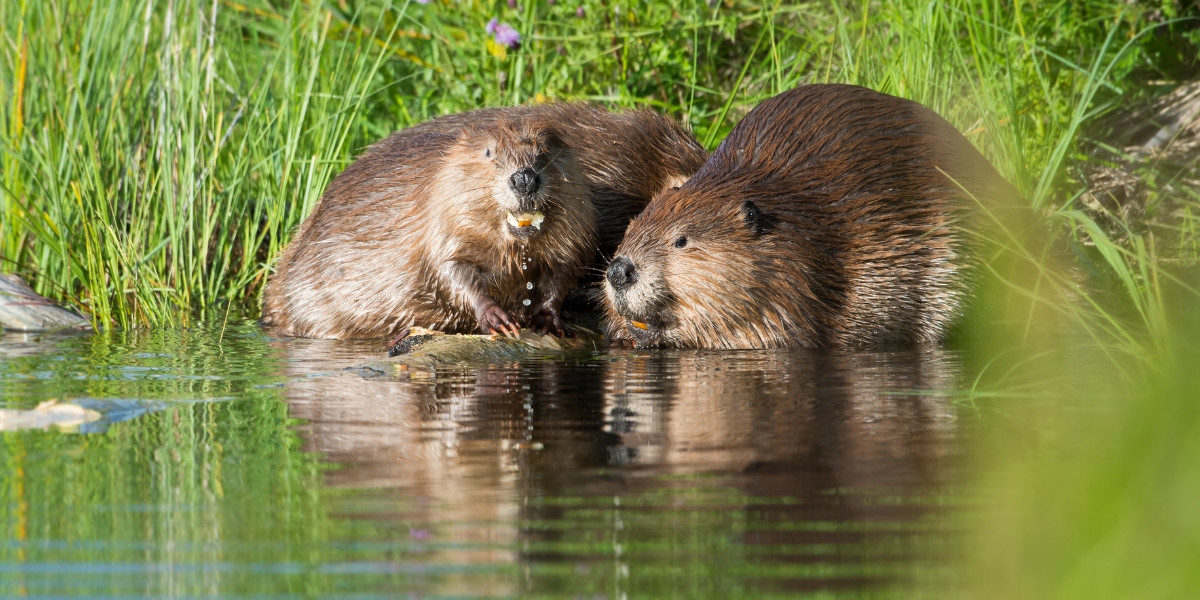
Beavers now have a proven track record of being ecosystem heroes, healing rivers from centuries of human-made damage in a matter of years.
Their latest recorded victory: the North York Moors, a national park in England.
This area had already been lined with man-made defenses that took professional engineers a decade to build, including 130 dams. Though these structures did protect Pickering, a nearby town that was often dangerously flooded by water runoff, they quickly rotted and needed regular replacement.
This begged the question: Could nature provide stronger, more enduring infrastructure?
Spoiler alert: Duh.
A couple of rodents on one important mission
As reported by the BBC, two Eurasian beavers were released in 2019 into an enclosure in Cropton Forest, nestled at the base of the park, as part of a study conducted by the University of Leeds and Forestry England.
In that short amount of time, these beavers got to work. Interestingly, they didn’t adopt the man-made structures already established, as researchers had hoped. Instead, they built their own from scratch, placing them based on the streams’ elevation, width, and available nearby materials.
Over the course of six years, they successfully built six dams, one of which is the biggest in the country. All of them outperformed decades’ worth of human engineering in every way and were self-repairing, making them exponentially more cost-effective flood protection.
But that wasn’t the only benefit these beavers provided.
Beaver-built biodiversity
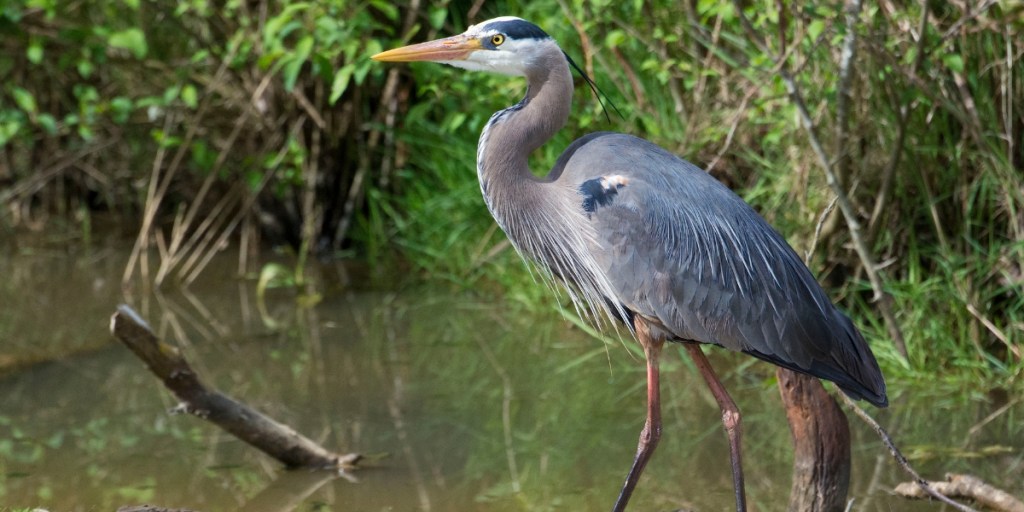
In addition, the dams increased the number of plants, herons, otters (which help regulate beaver populations), badgers, amphibians, dragonflies, and bats, just to name a few. Almost none of these creatures were present in the area at the numbers they are today. Bats alone had not been recorded in the area for 30 years.
And with the arrival of 11 babies, these two have made major contributions to the beaver population there as well (busy beavers, indeed). Mimicking the natural way beaver families disperse, those kits will eventually be relocated to surrounding areas that also need help building infrastructure.
In short: “The site was transformed by the beavers in ways we never imagined,” said Cath Bashford, a species recovery officer for Forestry England in Yorkshire.
It’s about dam time for a change
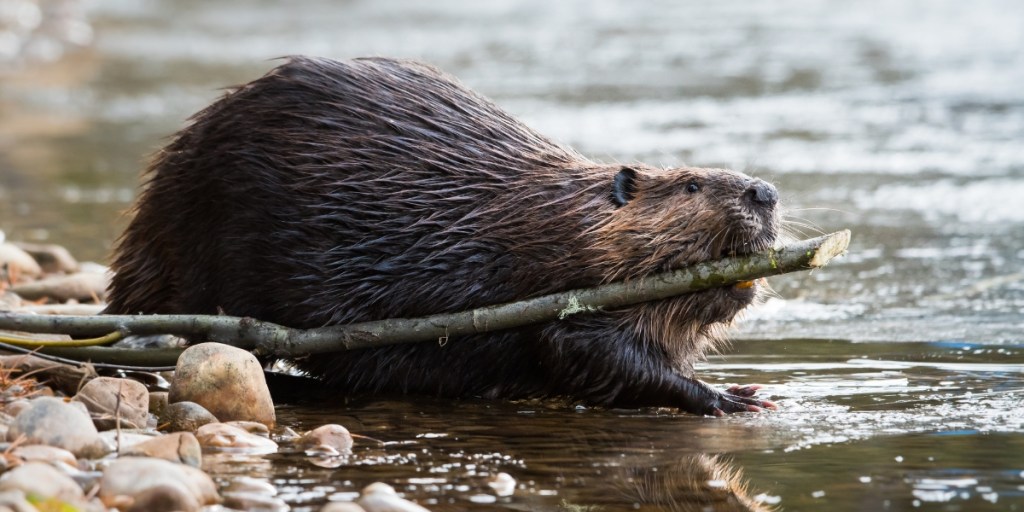
Unlike the North American beaver, which is what most people picture when they think of the animal, Eurasian beavers build wider, more permanent dams, and have evolved specifically for the clay and peat soils common to British wetlands. That said, places like California and Utah have also recorded similar successes with North American beavers.
With each species, we are provided overwhelming evidence that nature’s solution beats a man-made one. Which leaves only one question: Why are we still opting for man-made flood-control structures when nature has so generously given us a superior one?