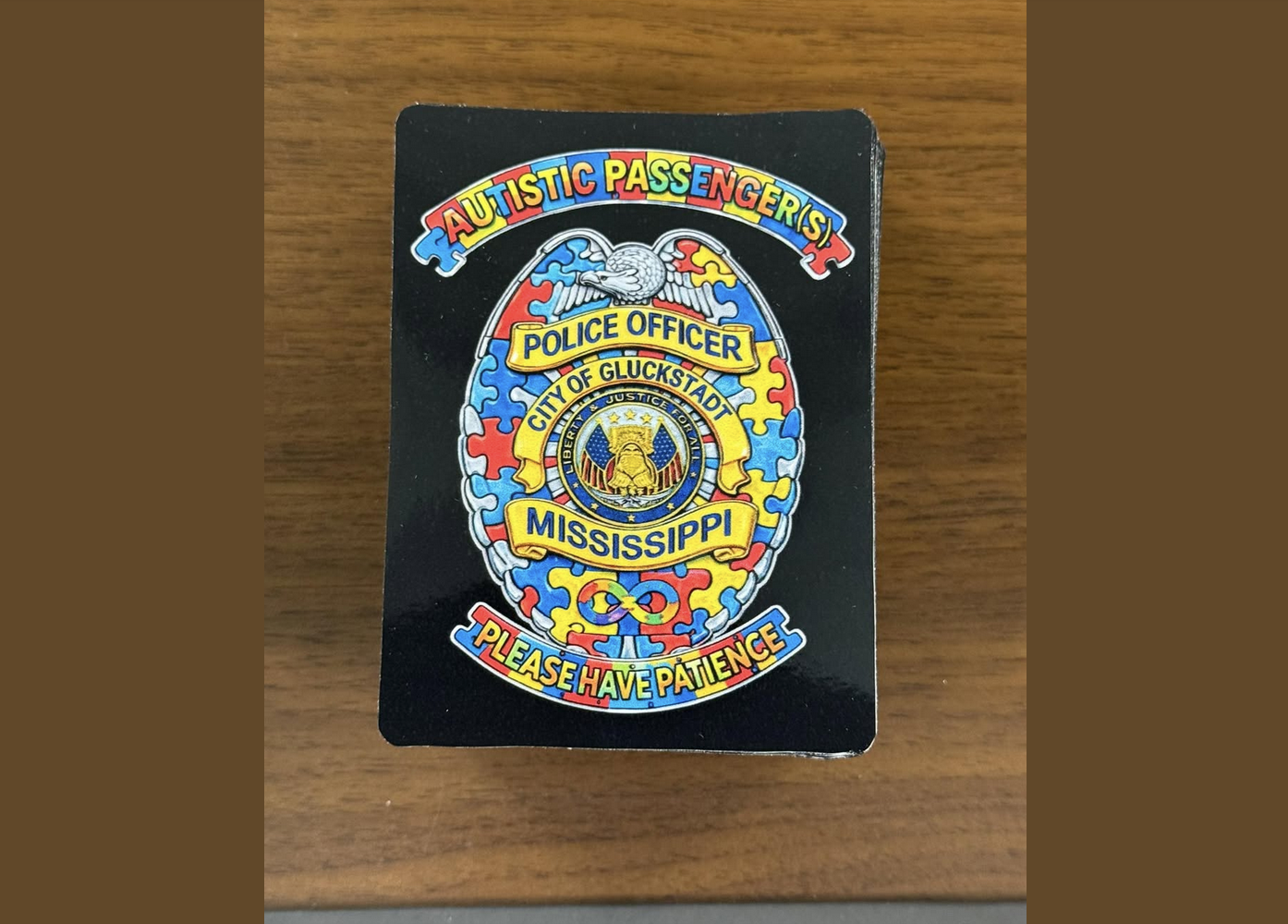
It began with an everyday encounter. One family with an autistic teen shared a concern with a local police officer. Soon after, an idea was born that sparked a growing movement. The issue at the center of it all affects millions of families across the United States: How can first responders better understand and communicate with neurodivergent individuals during traffic stops and emergencies?
Sergeant Kyrie Lucas is a longstanding member of the Gluckstadt, Mississippi, Police Department. It was his conversation with two worried parents, Adam and Amber Wells, that got the ball rolling. The Wellses’ son, Amare, has level 3 autism, which means he’s mostly nonverbal.
Adam Wells had an understandable concern that high-stress situations, like traffic stops, can easily lead to dangerous misunderstandings for people like his son. Autistic individuals may experience extreme sensory overload, exhibit repetitive movements (stimming), be reluctant to make eye contact, or entirely misunderstand or fail to respond to verbal commands. Some police officers might read that behavior as noncompliance or even aggression. That’s when Lucas realized there was an urgent need to create a visual cue to help officers adapt their approach when encountering these situations.
Bridging the communication gap
Lucas’ solution was to design an identifying vehicle sticker, something that could be placed directly on a car’s window or bumper. The decal gives approaching officers a heads-up that an occupant inside has autism. This quick visual alert prompts officers to adjust their tactics so they can approach with patience and understanding rather than with heightened suspicion.
“I thought if there was a way to let officers or medical personnel know that there was a kid or adult with autism on board, they might be able to better deal with the situation,” Lucas told the Madison County Journal. “We want everybody to be safe and do not want a situation to turn bad because of a lack of knowledge on our part.”
The sticker program was built to be easily accessible to any family member who needs it. In a local TV news interview, Barry Hale, chief of police, acknowledged that households with autistic family members often share driving responsibilities and utilize multiple vehicles. As Hale made clear, “If they’ve got four or five cars, they can have four or five stickers.” This way, no matter which vehicle an autistic individual is riding in, they remain protected. Meanwhile, police officers who conduct traffic stops are better informed.
A local solution sparks regional demand
What started as a compassionate, localized response to one family’s needs has gained traction far beyond Gluckstadt’s borders. Considering the program’s simplicity, it’s not surprising to learn that surrounding cities and counties—and even neighboring states—want in. Word of the simple yet life-saving initiative spread rapidly on social media. With every like and share, it’s drawing praise from disability advocates and law enforcement agencies alike.
The Gluckstadt Police Department has even expanded the program to include stickers for vehicles with deaf drivers and passengers. With just one conversation, the Wells family and Sergeant Lucas created a grassroots initiative that’s leading to safer, more compassionate communities nationwide.