Here is a question you probably never asked in the shower: who invented shampoo? Surprisingly, the name isn’t a big-name brand or chemist in a laboratory. Even stranger, the word itself—“shampoo”—once had nothing to do with hair at all.
It meant a massage.
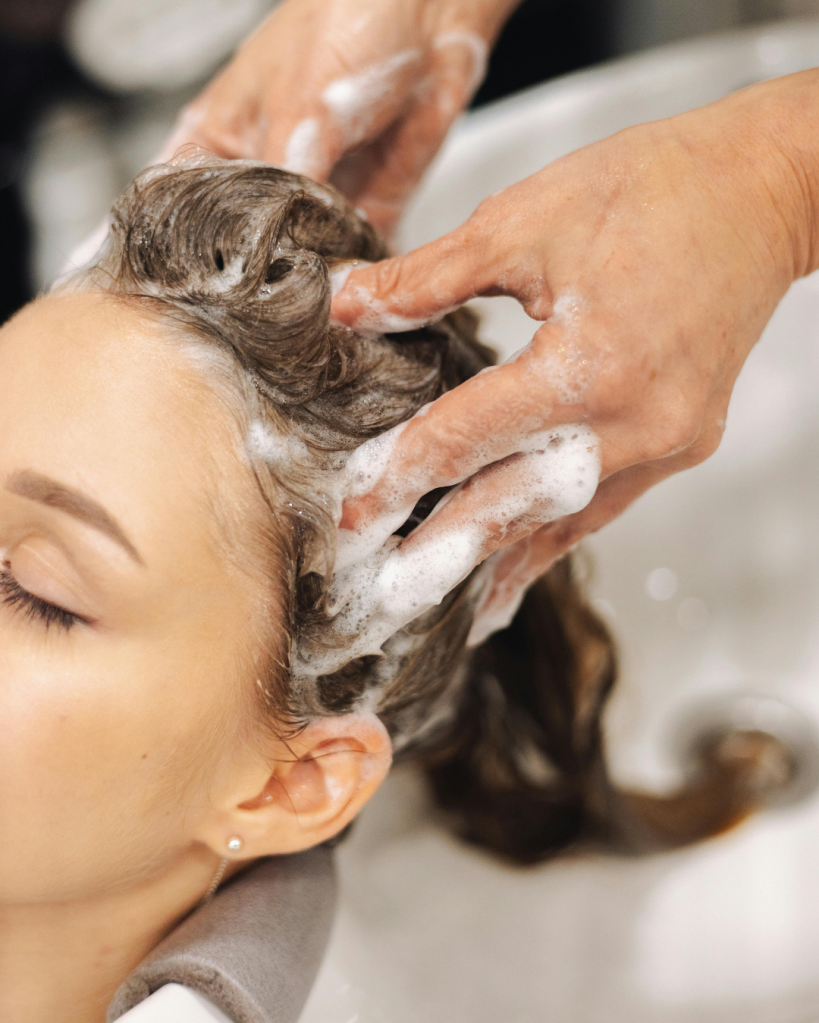
Today, you’ll find bottles and bottles of the stuff at retailers like Target. Each claims to work a different miracle. There are shampoos that cure dandruff, maintain bleached hair, and add volume to your strands. Shampoo can be dry. Shampoo can, supposedly, both clean and condition hair, then be used to wash your body. How did we get here?
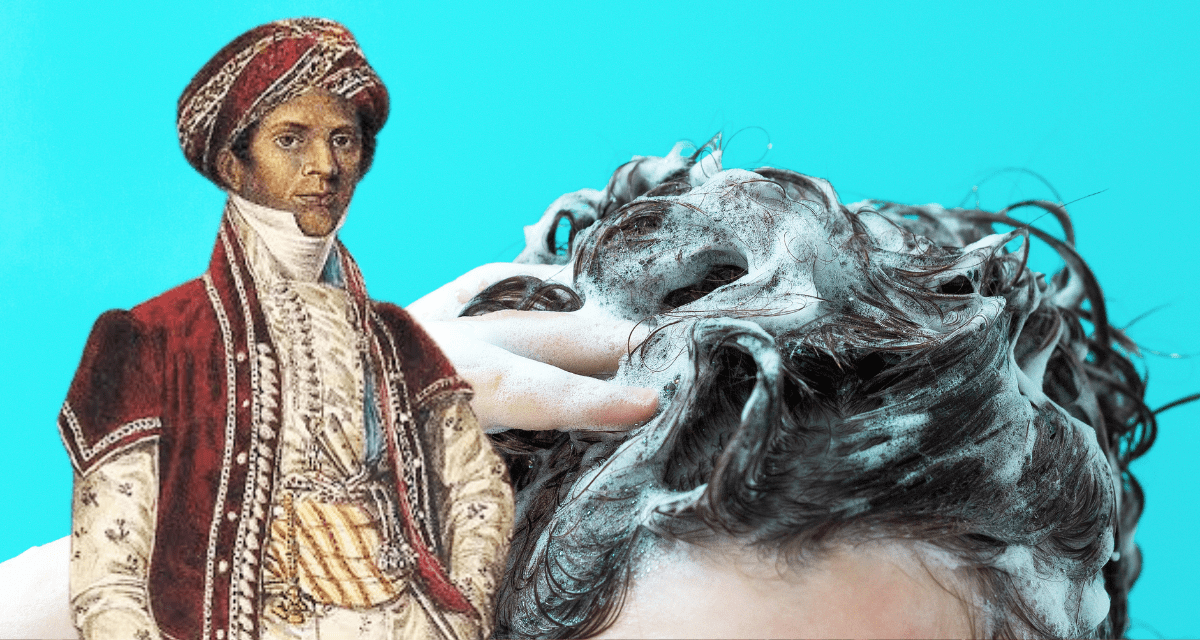
The answer begins with an Indian immigrant and a seaside town in England. More than 200 years ago, this man taught Britain how to “shampoo” for the first time. He’d never guess that his methods would one day catch on all over the world. This is the story of Sake Dean Mahomed.
First, a 4,000-year head start
Before we get to Mahomed, give humanity some credit. Long before shampoo came in a bottle, people on nearly every continent had already figured out how to get their hair clean, usually turning to whatever nature handed them.
Around 4,000 years ago, in the Indus Valley (a stretch of South Asia that now spans Pakistan, India, and parts of Afghanistan), people boiled soapberries with dried Indian gooseberries (amla) to produce a gentle, foaming wash for their hair.
Elsewhere, that same instinct took wildly different forms. The Yao people of southern China washed their famously long hair with rice water. Ancient Egyptians reached for soapwort. Indigenous peoples in North America combined yucca roots with aloe vera. And in Rome, olive oil did the job, along with a curved metal scraping tool called a ‘strigil.’
The word “shampoo” used to mean something else
The word “shampoo” entered the English language around the mid-18th century, borrowed from the Hindi “chāmpo” (or its root, “champna”) meaning to “press, knead, or soothe.” Etymologists trace the word back even further to Sanskrit’s “capayati,” placing “shampoo” firmly in the world of physical care: scalp massages, body rubbing, kneading muscles, and medicinal bathing. In other words, “shampoo” started life as a massage: a full-body, knead-your-cares-away treatment. The “wash your hair” meaning didn’t get recorded until much, much later. That’s when Sake Dean Mahomed entered the picture.
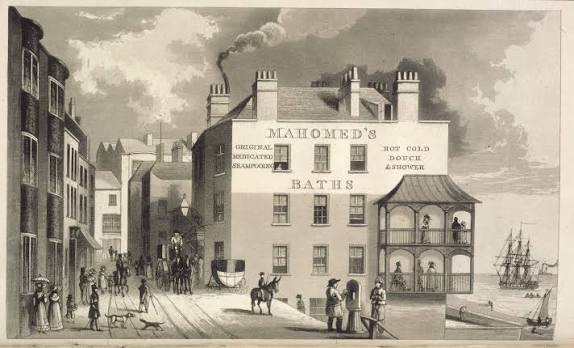
Mahomed was born in Patna, India, in 1759. He grew up to serve in the army of the British East India Company — then left it all behind to follow his friend and commanding officer to Ireland. There, he fell for a local woman named Jane Daly, eloped with her, and moved with her to Brighton in the early 1800s. At the time, Brighton was a fashionable seaside destination full of aristocrats chasing the latest health cures. So, Mahomed opened a bathhouse.
He was an entrepreneur, certainly. Earlier, Mahomed launched the Hindoostane Coffee House in London, often credited as the first Indian restaurant in England. When he was 35, he wrote an autobiography entitled The Travels of Dean Mahomed, becoming the first Indian author to publish a book in English. Although the restaurant eventually failed, Mahomed never gave up — and his second act is the one history remembers.
“Dr. Brighton” and his famous baths
Inside, Mahomed’s bathhouse in Brighton was a whole sensory event: rooms thick with herbal steam, the warm smell of Indian oils, the hushed calm of the curtained Ladies’ Baths. Everyone came for his signature offering, “shampooing” — an invigorating Indian therapeutic massage, paired with vapor baths and aromatic oils that, he claimed, could ease everything from rheumatism to stiff joints.
Getting the public on board—and into his bathhouse—proved surprisingly difficult. Personal hygiene in the Victorian era left a lot to be desired: women were actually warned against washing their hair daily, in fear that it would fall out. Dirty hair was the norm, and so were powdered wigs. It was the fashionable fix to an unglamorous problem. Dirty hair? Just cover it up.
“It is not in the power of any individual to give unqualified satisfaction, or to attempt to establish a new opinion without the risk of incurring the ridicule, as well as censure, of some portion of mankind,” writes Mahomed in his 1826 book, Shampooing: Or Benefits Resulting From The Use Of The Indian Medicated Vapor Bath. “So it was with me,” he continues, “in the face of indisputable evidence, I had to struggle with doubts and objections raised and circulated against my Bath, which, but for the repeated and numerous cures effected by it, would long since have shared the common fate of most innovations in science.”
Word caught on fast, and Mahomed’s clientele list eventually climbed all the way up to the throne. He was appointed “shampooing surgeon” to both King George IV and King William IV, and locals took to calling him “Dr. Brighton.” In 1824, a Polish princess reportedly traveled to Brighton just for his baths — and gifted him and his wife with an engraved silver cup, as a token of her gratitude.
After years of struggle—war, a new country, a failed restaurant—Mahomed had finally succeeded, far beyond his expectations. Together with Jane, he’d made it.
Did he actually invent shampoo?
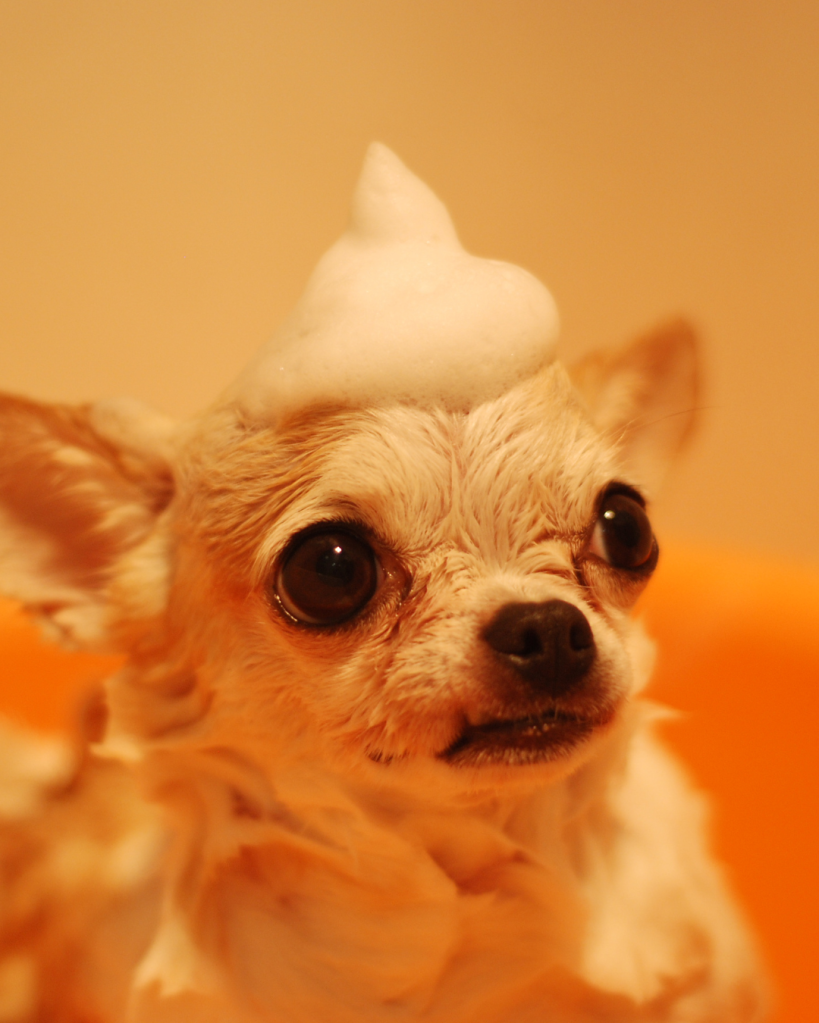
Not the bottle in your shower — that came later, with German chemist Hans Schwarzkopf’s powdered shampoo in the early 1900s and the liquid versions that followed in the late 1920s.
What Mahomed did was arguably more impressive. He brought a practice from his home culture, dropped it into a country that badly needed it—and eyed it with suspicion anyway—then stuck it out until he’d won enough to make “shampoo” a household word across the English-speaking world. Not bad for a man whose first business had gone under.
Legacy, on heads around the world
Mahomed died in Brighton in 1851. He was in his early 90s. Then, for more than a century, he was largely forgotten, until scholars revived his story in the 1970s and ‘80s. In 2019, Google honored him with a Doodle; his Brighton headstone was restored in 2025. Two centuries later, Mahomed’s legacy lives on, in a product the whole world uses on its heads.
The next time you reach for the shampoo, thank our ancestors all over the world, who, for centuries, washed their boiled berries or olive oil. Now, you get to use Aesop, and it’s largely because of one determined immigrant who showed an empire a new way to feel clean.