upworthy
Add Upworthy to your Google News feed.
Google News Button
More

A mom goes to a hearing about minimum wage to make a point. I think it worked.

Amanda Monroe testified at a hearing about raising the minimum wage to show why $15 per hour would make all the difference in the lives of her and her son.

"I believe that every person that is willing to work and work hard deserves dignity and respect and the ability to support their own families."

Meet Amanda Monroe, a mom who recently testified at a New York Wage Board hearing. She really lays it out clearly for people to empathize and understand what it must be like. But the last 15 seconds? She reaches my heart, man.


Although Amanda had a career, The Great Recession took its toll.

Amanda started working in billing at a medical center in 1999. She worked her way up in a specialist's office at a rheumatology center and then enrolled in college at Bryant & Stratton four years ago for her medical assistant's degree.

She had her son (the one sleeping in the video above) in 2010 and lost her job about the same time. The economy, still on a slow rebound from The Great Recession, meant plenty of people were looking to fill jobs like the one she lost.

She couldn't find work for the first two years of her son's life.

In fact, the industry had changed: Without a degree, she couldn't even get in the door. Finally, she ran out of unemployment. Upon discovering that she qualified for state-assisted child care, she realized she was in a bad place.

"You have to be so poor to qualify for child care assistance," she quipped. "You have to basically have zero."

As Amanda explains in the video, the current minimum wage doesn't cover the most basic needs.

Amanda finally took a job at Dunkin' Donuts and, eventually, McDonald's. She really wanted to make sure her son to had the best childhood education possible, but it meant that there were extra fees that went to child care costs.

She started paying $15 per week to the child care provider. That cost has gone up; now, she owes $37 every week, which she can't afford. It wasn't long before she owed the child care provider over $100 — three week's fees unpaid.

"I borrow money," she said.

Amanda is forced to rely on food stamps, Medicaid, and subsidized child care, but it's still not enough. She needs $15 an hour so she can take care of her son and make sure he has access to the future he deserves.

There are many more stories like hers out there. This is why the fight for a $15 per hour minimum wage matters.

dog experiments, dog tongue cleaner than humans, experiments by kids, cool science, dogs, fun science, experiments, science

A young teen boy holding a beagle.

Dogs come in a wide variety of breeds, along with their own unique personalities and needs. They can be guardians, helpful workers, loyal friends, snuggly companions, but there's one thing almost all dogs have in common: Licking.

Sure, some dogs lick way more than others, but it's rare to find a dog who never licks anyone or anything. Many dogs communicate and show affection by licking, which is sweet—if a little gross—depending on how slobbery they are. There's a common saying that dogs' mouths are cleaner than humans', which is a bit hard to believe when you see what some dogs put in their mouths, but it is true?


What does science say about dog tongues and saliva? Is a dog licking our face something we should worry about?


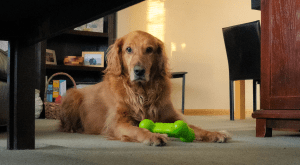
dog experiments, dog tongue cleaner than humans, experiments by kids, cool science, dogs, fun science, experiments, science A man being licked by a golden retreiver. Photo credit: Canva

It turns out, the answer to whether a dog's mouth is cleaner than ours isn't super straightforward.

An 8th grader named Abby tackled this question in a science experiment that won her a Young Naturalists Award from the American Museum of Natural History in 2011. Her family had gotten a dog and her mom kept telling her not to let the dog lick her face because dog mouths are full of bacteria. Instead of arguing, Abby decided to find out herself if this was true.

"I hypothesized that human tongues would be cleaner than dog tongues," she wrote. "I thought this because humans brush their teeth at least once a day. I hypothesized that dogs' tongues would be dirty because they were always licking dirty things like garbage."

After diving into the research about bacteria that live in and on humans and dogs, Abby decided she had a testable hypothesis. But this wasn't any old middle school science experiment. She applied for and got a grant to the State Hygienic Lab at the University of Iowa, where she was assigned a mentor to work with her.

You can read the nitty-gritty details of her experiment here, but it involved a lab, swabs, agar plates, and more. Here was the conclusion:

dog experiments, dog tongue cleaner than humans, experiments by kids, cool science, dogs, fun science, experiments, science A dog's tongue close-up. Photo credit: Canva

"I concluded that dog and human mouth flora are very different. (Flora means the bacteria found in a mouth or anywhere else.) The bacteria found in human mouths are more similar to another human's oral bacteria than the bacteria found in a dog's mouth.

"I also concluded that dogs' mouths are cleaner than humans' in some ways, and dirtier in other ways. Humans have more bacteria in their mouths than dogs do, based on the total number of bacteria. Most of the humans had a 'moderate' number of bacteria, and most of the dogs had 'few' bacteria. A possible explanation of this might be that dogs pant a lot, and maybe while panting, bacteria falls off their tongues along with their saliva. But dogs had more types of bacteria. The average number of different bacterial colonies in a dog's mouth was about 5.7. The average number of different bacterial colonies in a human's mouth was about 4.1. I think this is so because dogs sniff and lick a variety of things, like carpets, floors, chairs, grass, etc., so they pick up bacteria from many places."

But what about the licking of our faces? That's a bit of a subjective call, but Abby's results gave her some peace of mind:

"In conclusion, will I let my dog continue to lick me? The answer to the question is yes!" she wrote. "I will feel guiltless about letting my dog lick me because I found out that human and dog oral bacteria are different, so my dog's oral bacteria present no harm to me."

What do the experts say?

According to Colin Harvey, professor at the University of Pennsylvania’s School of Veterinary Medicine and executive secretary at the American Veterinary Dental College, comparing dogs' mouths to humans' mouth is "like comparing apples to oranges." As Abby found, the microbes in a dog's mouth are very different than those in a human's.

The American Kennel Club elaborates:

"Most of the bacteria in your dog’s mouth aren’t zoonotic, which means you probably won’t get a disease from a big old doggy kiss. There are exceptions to this. Dogs that eat a raw diet are at an increased risk of contracting salmonella, which can be spread to humans. You also probably shouldn’t share kisses with a dog that regularly raids the litter box.

In other words, kissing your dog is less risky than kissing another human, but that doesn’t mean that your dog’s mouth is necessarily cleaner than a human’s—they just have a mostly incompatible set of germs."

Keeping your dog's mouth healthy through regular teeth cleaning and dental check-ups can also help prevent issues that could potentially come from dog licks.

dog experiments, dog tongue cleaner than humans, experiments by kids, cool science, dogs, fun science, experiments, science A golden retreiver getting their teeth brushed. Photo credit: Canva

So there you have it. If your dog doesn't eat a raw diet and doesn't go snacking in the cat box (or some other equally fecal-bacteria-ridden place), their kisses are probably not going to hurt you. Guilt-free pooch smooches for the win!

This article originally appeared last year.

feel good story, music, rock music, lost and found, musicians
Photo credit: Marcus Pollard on Facebook

Marcus Pollard is reviving a 77-year-old warehouse worker's lost rock music.

In the 1960s, Norman Roth and his band, The Glass Cage, were Canadian indie rockers who played small local shows and built enough of a following to land gigs in bigger cities. When Roth was 18, the band recorded a live performance that was never officially released and was eventually lost after they broke up shortly afterward. Now, thanks to a four-dollar thrift store purchase, the band's music is reaching a wider audience—58 years later.

In 2016, veteran rock music promoter Marcus Pollard bought an unlabeled vinyl record at a thrift store on a whim, despite the album being physically damaged. He fell in love with the six songs recorded on it and spent the next two years trying to track down any band members connected to the record.


"I searched in vain for two years trying to get any clue as to who was on the record, but to no avail," Pollard wrote on Facebook. "Then, in a last ditch effort I posted a clip on the Canadian Artists Records Appreciation FB page and... I got a hit!"

Pollard eventually received a reply that read, "Hey, that's my record!" from Roth, now 77 and working as a warehouse manager. Roth was floored that his band's long-lost recording had resurfaced, and he was able to listen to songs he hadn't heard in more than 50 years.

- YouTube youtube.com

After reuniting Roth with his lost music, Pollard went a step further. After consulting with the other band members, he set out to bring The Glass Cage's music back to life after remaining dormant for generations. Pollard spent the next eight years using his industry connections and expertise to officially release the album. Working with a team of professionals, he refurbished the damaged record, digitally remastered the songs, designed elaborate packaging, and developed a booklet detailing the band's impact on the Vancouver indie rock scene of the 1960s before they broke up.

The finished vinyl album, titled Where Did the Sunshine Go?, is scheduled for release on February 24, 2026.

"I feel like everyone has done something in their life that was dismissed," Pollard told CTV News. "And I wanted them to feel like what they created was actually important."

While Roth and his former bandmates are excited about the album's release, they aren't trying to relive their youth or chase the rock star dreams they once had. They're just happy that others will now have access to their music and are enjoying the ride.

"I'm not looking for accolades or super stardom—that's long gone," Roth told CTV News. "It's just saying to the world, 'I was here.' And I hope they enjoy it."

If you'd like to hear Roth's music, you can stream tracks by The Glass Cage on Bandcamp and purchase the vinyl when it's released.

crowd, unique, personality type, nonconformist
Photo Credit: Canva

A person stands out in a crowd.

So many of us have the desire to compartmentalize our personality traits into neat little boxes. "Oh, she's such an INFJ. Oh, he's such a Gemini." Some of it is rooted (well sort of) in psychology, such as the Myers-Briggs Type Indicator, based loosely on Jungian ideas. Others rely on arguably less scientific data like stars and "rising signs." Humans aren't usually that simple.

That said, there's still value in understanding one's own personality and inclinations. Here's a confession: I've taken countless personality tests because I just couldn't figure out if I was an extrovert or an introvert. Neither description quite fit, and as someone constantly trying to understand what makes me tick, this has been frustrating.


Turns out, there are other options. The term "ambivert" got popularized in the 1930s (after being coined by Edmund S. Conklin in 1923), and it refers to a person "who has features of both an introvert (someone who prefers to spend time alone) and an extrovert (someone who prefers to be with other people) in their personality."

@tedtoks

Replying to @Factura🛄 now knowing what an ambivert is, how would you describe yourself? #ambivert #introvert #extrovert #adamgrant #psychology #TEDTalk #worklife

But for those who still don't quite relate, meet the otrovert. Just recently, psychiatrist Rami Kaminski published The Gift of Not Belonging, in which he discusses his coined term to describe a whole new type of personality. In an Insta-reel captioned "What is an Otrovert?" Kaminski mentions the polarization of introverts and extroverts. "When Jung invented the terms extrovert and introvert, he saw them as two fundamental orientations of the personality. I see the otrovert in the same way. A personality trait that faces away from the group."

He continues, "Extroverts and introverts are inherently communal, while the otrovert is an outsider to the group. In itself, it is not a problem or condition, nor is it a diagnostic label. It simply means that while most people learn to develop a sense of belonging to a specific group through social conditioning, otroverts remain social but not communal."

In writer Sarjna Rai's piece, "Struggle to Fit the Mold? The 'Otrovert' Personality Explains Why" for Business Standard, they write: "Unlike introverts or extroverts, otroverts are not defined by where they draw their social energy. Instead, the concept captures people who constantly feel like outsiders, and tend to look in a different direction altogether, not necessarily aligned with the rest of the group."

While it's impossible to group people into perfect categories, Rai explains that Kaminski claims the main thing that sets otroverts apart is their "reluctance to conform to group norms."

Writer Avery White lists signs one might be an otrovert in the article "7 Signs You Might Be an Otrovert" for VegOut. Among them is preferring "high-signal conversations and low-maintenance relationships." They give this as an example: "You’ll happily spend three hours exploring one idea with one person—and then not speak for weeks without either of you taking it personally. In other words, low pressure, low expectations, high connection.

Another on the list—and this is a big one according to Kaminski—is: "You can look extroverted in public—yet feel fundamentally 'other.'" This is actually the crux of the term, and in fact, what Kaminski formed The Otherness Institute for: as their website says, "those who feel they don't belong."

The site also shares that recognizing aspects of this type in yourself and others (if it applies) will help "balance between your individuality and your function as part of the social matrix that determines your well-being. The experience of otherness in a togetherness-minded world can be emotionally bruising. Often misunderstood and misdiagnosed, otherness may lead individuals to feel strange, lonely, and unwelcome in groups. Left unidentified, otroverts' non-belonging can result in a frustrating, futile lifetime effort of trying to 'fit in.'"

Some Redditors are scrambling to figure out if they fit into this category. In the subreddit r/INTP (referencing one of the Myers-Briggs personality types), the OP asks, "Maybe I am an 'otrovert?'" Under this, they write, "Dr. Kaminski described the otrovert child as 'neurotypical, friendly, curious, well-adjusted, and often popular' yet 'they resist being pressured into group activities.'"

While this can seem inconsequential in childhood, joining the peer group "becomes critically important" in adolescence, said the psychiatrist, and teens "start to gauge their self-worth based on the group’s ranking of popularity (or unpopularity).'

"Membership in a group, no matter how lowly, is better than being an outsider," he added. "Otroverts, however, are comfortable with being outsiders and find it impossible to feel like insiders, regardless of how welcome they are.'

There are a handful of commenters who feel seen, but many push back, claiming the term could easily apply to other personality traits. One writes, "I think it's easy to resonate with this description... but as some warning noted, there aren't enough studies done about this term that people should be running to adopt it. I resonated with it after reading about it... But I have ADHD and persistent depressive disorder... both of which coincide with the descriptions of an otrovert."

Time will tell if this new term sticks, but for now, it's helping a lot of people feel more understood.

This article originally appeared last year.


children, child development, milestones, theory of mind, lying
Photo Credit: Canva

A child mischievously hides in a ball pit.

Parents, teachers, and child caregivers are often aware of the gentle quirks young kids can display. They can become moody, rambunctious, and, at a certain age, they begin to tell fibs. "I only had one cookie, Mommy," a child might say as an empty Oreos package sits on the floor beside them.

But never fear! Child neurologist Arif Khan explains that parents shouldn't worry if a young child tells little white lies. In fact, it's incredibly common and even a sign of healthy cognitive development.


In a YouTube video entitled, "The REAL Reason Children Start Lying to Parents," Khan explains, "Children lie, not because they're bad or manipulative. Children lie because their brains are developing something new. Psychologists call it 'Theory of Mind.' It's the ability to understand that other people think differently than you do."

Dr. Arik Khan explains how lying in childhood can be a developmental milestone. www.youtube.com, Dr. Arif Khan

He goes on to explain that it's a huge mental leap for the brain in that they're learning that they can actually possibly change someone's mind. "It's a huge milestone. It means the child is starting to realize, 'Mom doesn't know what I'm thinking.' And once they realize that, they start to experiment."

Though admitting it might sound "sneaky," he says it can be an example of massive mental growth. "Because to lie…the brain needs to do three things:

  1. Remember what's real.
  2. Inhibit the truth.
  3. Predict what the other person might believe."

Khan cites a 2015 study from the University of Toronto that concluded "Children who start lying earlier actually score higher on measures of social and cognitive intelligence."

Of course, that doesn't mean that lying should be encouraged. Instead, simply note that it means the "brain is growing in complexity" and why this can be an excellent predictor of good social skills and even empathy later on in life.

Laura Todd, a licensed therapist who specializes in parental mental health and child development, spoke with Upworthy regarding the topic. "White lies are a healthy part of social and emotional development in children by demonstrating a child's understanding of social skills, empathy, and emotional intelligence. It is a way of showing that they are balancing the nuance of being honest and being kind."

The question then becomes, how should parents react? Todd gives specific examples on how to model a shame-free environment for their kid. "Have the child 'do over' by letting them try again, such as, 'That doesn't sound like the whole truth. Do you want to try again?'"

She adds, "Focus on the underlying feelings that might be the reason for the white lies, such as embarrassment, fear, or anxiety. Avoid interrogating or pressuring your child to be honest, as that may backfire and encourage further lying to save face. If necessary, seek professional help if the child is lying frequently, impulsively, and shows additional behaviors that the parents or teachers are concerned about."

Stephanie Pappas, LMFT, tells Upworthy that parenting approaches have changed in recent years. "Up until recently, a majority of the parenting approach to lying has been to blame, shame, and create distance between parent and child through time-outs or punishments. In reality, lying is trying to serve the opposite function by creating connection, empathy, and attachment. When your child lies, they aren’t trying to upset you or create distrust on purpose; they’re actually trying to stay close and connected to you by avoiding shame or embarrassment about what they did. When we reframe lying as a child’s brain trying to avoid shame and disconnection, parents can soften their approach to it."

Pappas echoes Khan's assessment that the act of lying for a young child is most definitely a milestone. "The ability to lie also requires a child to simultaneously know the truth and also create a new story, which is an incredible neurological feat in the prefrontal cortex of the brain."

A compilation of children telling white lies to their parents. www.youtube.com, Listed

She also gives practical suggestions. "Next time your child lies, instead of creating a close-ended question of 'Did you do this?' which can elicit shame or embarrassment, open the conversation up with curiosity and leadership, such as, 'It looks like you made a mistake. We all make mistakes, and what’s important is that we grow from them. I want to be able to talk with you truthfully. Can you walk me through what happened?'"

Or, she states, it's even helpful to even turn the interaction into a game. "Being playful and silly can also be effective with younger children, with saying something along the lines of, 'Wow! I love how you used your brain and imagination to come up with that. Can we keep going with the story? Maybe we can draw a picture! Then after, we can talk about what really happened and figure out a solution.'"

heat, heating, heating tips, frugal heating tips, money saving heat tips, heat tips during winter

A woman touches the thermostat on her wall.

Finding ways to stay warm during the winter is never easy, especially with rising energy costs. Now more than ever, keeping heating bills low is crucial.

On Reddit, a user shared frugal advice from their single mom about keeping a home warm during brutal Michigan winters on a tight budget.


"I currently live and grew up in mid Michigan with a very frugal single mother of 3 kids," user KookyUnderstanding65 explained. "We had a 100+ year old house with terrible insulation. We learned a few tricks for staying warm on a budget over the years. ... It was tough for a while, but we always made it through."

- YouTubewww.youtube.com

Frugal ways to heat the home

These are six frugal ways the Reddit user's mom kept their family warm during the winter:

1. Use window film

"You can get it from consumers energy for a steep discount or sometimes for free. It's ugly and a pain but it makes all the difference on a drafty window! Still chilly? Hang a blanket over the window for extra insulation!"

2. Grab a hair dryer

"Freezing pipes? Grab a hair dryer! Legit. Can't tell you how many cold mornings I spent in the basement warming the pipes with a hairdryer lol. May not be the most energy effective but at least we didn't have to run out and buy anything new. Hairdryer was free and available!"

3. Utilize the oven after baking

"After you're done baking something, leave the oven door open to allow the residual heat into your home. It's not advised to do this with the oven on and you should never attempt to heat your home with a stove or cooking device."

4. Block drafts

"Roll blankets or towels and set them at the bottom of doors to reduce drafts (on exterior doors and between rooms that you're not in/trying not to fully heat)."

- YouTubewww.youtube.com

5. Make the most of your space

"During the day, try to keep everyone to one room that's the most heated. Do activities that help keep warm (like jumping jack or push up contests. Probably the only time my mom intentionally riled up three kids). If needed, sleep in the same room. Mom made this fun by saying we were 'camping in the living room'. We'd grab every blanket in the house and all cuddle up together on the living room rug. Easier to heat one room and more warm bodies to cuddle!"

6. Don't be afraid to ask for help

"When there's nowhere else to turn, ask for help. If you're backed against a wall, reach out to someone or community programs. Everyone deserves warmth and safety. There's absolutely no shame in keeping yourself and/or your family safe."

Additional money-saving heating tips

Fellow Michiganders and frugal readers offered their advice on how to heat a home during the winter:

"I like to keep a big pan of water on to boil periodically. Helps add heat and moisture when the house gets dry." - alohamora19

"If you can't afford the film for windows, buy painter's plastic from Menards, Lowe's, or Home Depot. Per foot it's cheaper and you can get several winter's with in a single purchase. Use painter's tape, blue papery tape, to hold the plastic up right ripping the paint off your walls. Still be careful removing it, don't just yank it. If you have unused exterior doors seal them completely with plastic and tape." - mesoterra

"On the coldest days I like to walk around and figure out where drafts are coming in. I found one on our sliding door last year and yesterday found a gap between the mantle/wall that seemed to be allowing cold air in. A little bit of foam or replacing seals can make a huge difference and it's a permanent improvement." - HonestOtterTravel

"You can also place a tent on top of your mattress and sleep inside. It stays quite warm. No-frills tents are relatively inexpensive." - SomethingHasGotToGiv