When animals thrive, it often signals a healthy ecosystem. But when the wrong kinds of animals thrive in the wrong area, it can actually signal the opposite.
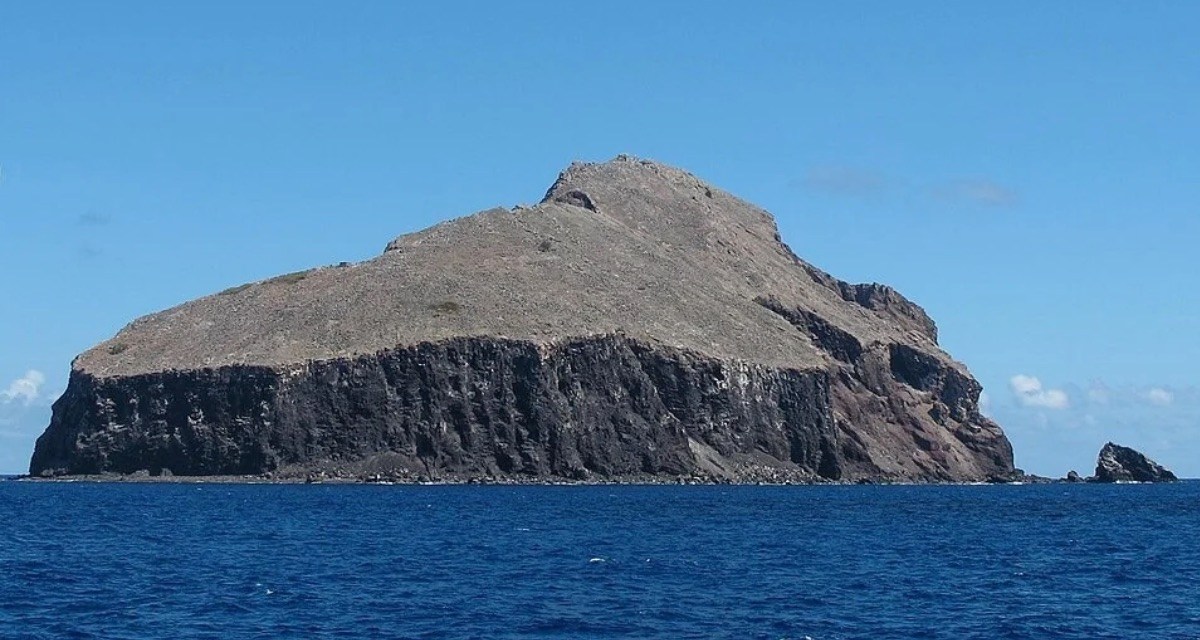
Redonda is a perfect example. In 2016, the uninhabited Caribbean island looked like a big rock jutting out of the ocean. Goats and rats, brought to the island by human phosphate miners in the late 19th and early 20th centuries, had effectively destroyed the ecosystem. These invasive species consumed nearly all of the island’s plant life, making what was once a lush landscape into a barren moonscape.
A decade later, the natural ecosystem is recovering remarkably, thanks to the government of Antigua and Barbuda, in partnership with organizations such as the Environmental Awareness Group (EAG), Fauna & Flora, and Re:wild.
Relocating the goats and exterminating the rats
Dozens of goats and 6,000 black rats inhabited the island in 2016. Sadly, they had decimated the landscape to the point where they themselves were starving and resorting to cannibalism to survive. Something had to be done.
Over 50 goats were airlifted off the island and sent to Antigua, but not without enormous effort. The helicopter ride wasn’t the issue; catching the goats was. Workers tried setting up a corral with shade and water, but the goats were suspicious of it. They tried snares, traps, and even a net launcher, but no luck. Finally, after observing the goats for months, they figured out that if they could just get the kids into the corral, the parents would follow.
That worked. Goat rescuers covered the goats’ horns in pool noodles and put hoods over their eyes to lower their stress levels during the 20-minute helicopter ride. (They transported the goats one or two at a time, holding onto them in the helicopter—it wasn’t a Mission: Impossible dangling-by-a-rope situation.)
The rats were another story. A team of about 10 people, including cliff rappellers, placed rat poison about every 100 feet around the 1.5 sq. km island. The process began in December 2016, and by the end of March 2017, all signs of rats were gone.
The natural island ecosystem rebounds
Shanna Challenger, the island’s Restoration Program Coordinator with EAG, told Nautilus:
“We’ve seen the lizard populations skyrocket. We have a six-fold increase in some of the species of endemic lizards. We are having plants that we haven’t seen in decades. We even had a hummingbird, and we are looking at re-introducing a burrowing owl. But we’ve not brought over any vegetation or anything, we just allowed nature to recover naturally.”
The island’s natural state is wild and green, with flocks of birds, according to descriptions from Christopher Columbus’s 1493 voyage. Miraculously, Redonda today looks more like it did 500 years ago than it did 10 years ago.
Challenger said seeing the transformation was emotional.
“I’m not gonna lie, on the helicopter coming in, I started to cry because I couldn’t believe it!” she told Nautilus. “I thought not only has she recovered, but she was continuing to recover, and it was like this conservation, it works!“
Even the underwater ecosystem around the island is recovering
As the greenery recovered, coral reefs and other ocean life rebounded as well. Erosion from the lack of vegetation caused soil to run off into the sea, disrupting the marine ecosystem around the island.
“Even in the marine space, we are discovering new coral colonies popping up, more foraging turtles, more parrotfish, etc.,” said Challenger.
“When there was no vegetation on Redonda, there were a lot of rocks falling and sediment washing straight into the ocean,” she explained. “Big boulders just dropping into the sea and crushing the coral reefs. Since we have removed the rats and goats, the trees and roots hold the soil together, so there’s a lot less runoff and sedimentation going into the water.”
Additionally, more seabirds are returning to the island. Their poop (guano) provides important nutrients for coral recovery when it washes into the sea. (Ironically, the abundance of phosphate-rich guano is what brought miners to the island in the first place.)
A rewilding success story for the ages
It may be just one small island, but Redonda’s successful rewilding shows what purposeful conservation efforts can do. In this case, it meant removing invasive species and letting nature do what it does.
Some may wonder why such efforts matter on an uninhabited island. But if there’s one thing we’ve learned about our planet in the environmental age, it’s that not even an actual island is “an island entire of itself.” Everything in nature is interconnected.
The seabird colonies that live on Redonda are globally important. Coral reef restoration affects marine life and ocean health. The impacts from one small island spread much further than some might think.
It’s also just heartening to see such a dramatic conservation win as we grapple with the environmental impacts of climate change. Redonda’s ecosystem rewilded and recovered much faster than anticipated. Perhaps we should take it as a sign of hope for our planet’s future.