Trans kids were seeking treatment decades before today’s political battles over health care

In 1942, a 17-year-old transgender girl named Lane visited a doctor in her Missouri hometown with her parents. Lane had known that she was a girl from a very young age, but fights with her parents over her transness had made it difficult for her to live comfortably and openly during her childhood. She had…

Array
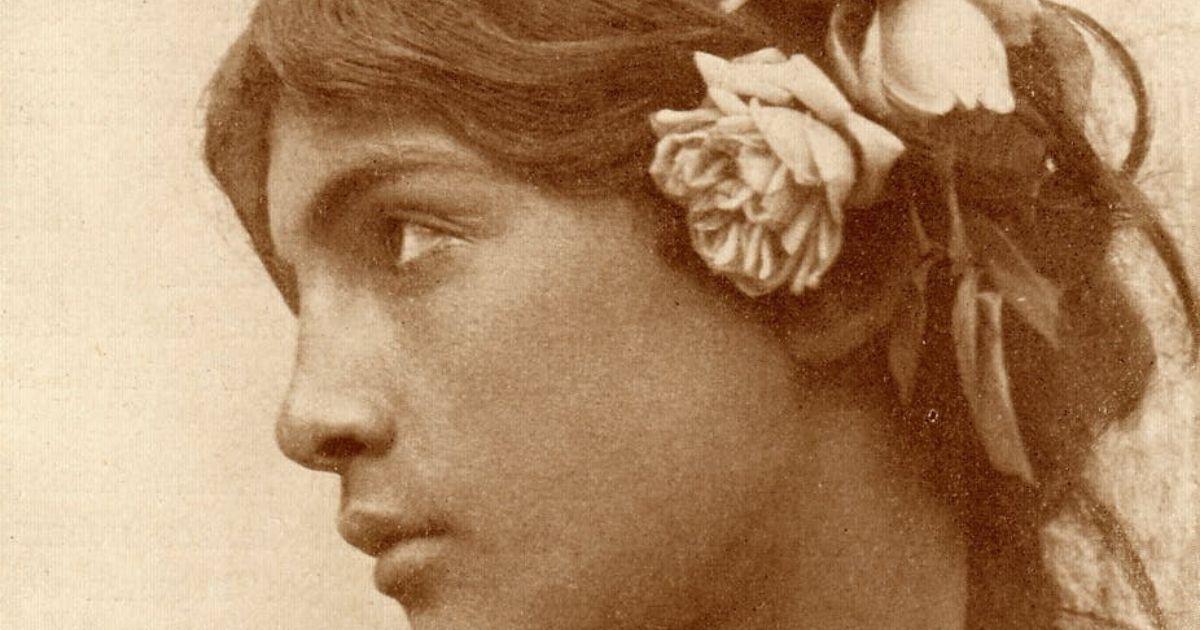
Photo credit: ‘Boy Wearing a Wig,’ Wilhelm von Gloeden (1900) Wikimedia CommonsArray

In 1942, a 17-year-old transgender girl named Lane visited a doctor in her Missouri hometown with her parents. Lane had known that she was a girl from a very young age, but fights with her parents over her transness had made it difficult for her to live comfortably and openly during her childhood. She had dropped out of high school and she was determined to get out of Missouri as soon as she was old enough to pursue a career as a dancer.

The doctor reportedly found “a large portion of circulating female hormone” in her body during his examination and suggested to Lane’s parents that he undertake an exploratory laparotomy – a surgery in which he would probe her internal organs in order to find out more about her endocrine system. But the appointment ended abruptly after her father refused the surgery, feeling “the doctor did not know what he was talking about.”

I first encountered Lane’s story buried among the papers of an endocrinologist, but her brief encounter with a doctor during her teenage years was typical of many transgender children like her in the early to mid-20th century. These stories form a key thread of the first several chapters of my book, “Histories of the Transgender Child,” and they point to the tremendous obstacles these kids faced in a world where the word “transgender” didn’t even exist.


The living laboratories of gender

In the first half of the 20th century there was nothing like today’s gender-affirming pediatric care model, which involves building a social support network and can include treatments like hormone blockers. Doctors simply did not allow trans patients to transition.

That doesn’t mean doctors and researchers weren’t interested in seeing children like Lane as patients. But instead of supporting their wishes and hopes, doctors tended to see them as canvases for experimentation – to see how their growing bodies responded to various surgeries or hormonal cocktails. In my research I tracked several decades of this kind of medical research, beginning in the early 20th century at research hospitals like the Johns Hopkins Hospital in Baltimore.

In fact, medical researchers were particularly interested in treating still-developing LGBTQ youths as a way to refine their techniques for forcing a binary sex on intersex children or carrying out conversion therapy – which aims to coerce a heterosexual or gender-confirming behavioral outcome – on gay children.

In this climate, Lane’s father may have unwittingly saved her from a harmful attempt at “corrective” surgery or hormones to try to prevent her from being trans. Even though Lane left home at age 18 to live as a woman, she would have to wait over a decade before finally obtaining access to hormones and surgery in the mid-1950s.

Trans childhoods before trans medicine

The struggles of trans children in the era before modern transgender medicine show not just how trans youths are far from a new phenomenon, but also how tenacious and forward-thinking they were compared with their parents and doctors.

Two stories of other trans people like Lane show how clinicians’ refusal to let them transition never stopped them from being trans. Both of them found their way to the Johns Hopkins Hospital, which, during the first seven decades of the 20th century, was widely regarded as the one institution in the U.S. for people with questions about their sex and gender.

When psychologists at Johns Hopkins interviewed a retired trans woman from the Midwest in 1954, she told them about her childhood in the 1890s. Even then, without any concept or term for being trans, this woman – by then in her 60s – told them it was obvious to her that she was a girl.

“I wanted a doll and buggy very much,” she reminisced of her intense attachment to the toys given only to girls. While her wish to be a girl never waned, her life had never afforded her the opportunity to transition to living full time as a woman until she retired.

Five years later, the clinicians at Johns Hopkins met a trans man who was then in his 30s. He had come to them seeking top and bottom surgery. Growing up in rural upstate New York in the 1930s, he had been forced to drop out of school “because of the excruciating sense of embarrassment at being obliged to wear girls’ clothes.”

Unlike the trans woman from the Midwest, this trans man, as a teenager, found a path to living openly as a boy: manual labor at a lumber mill. By working in a men’s profession and proving his masculinity through showcasing his strength, his presentation as a boy was embraced by his community. Decades later, he sought out the doctors at Hopkins only to confirm what had long been true in his life: that he was a man.

Growing up despite every obstacle

Each of these three children – like the countless more from this early 20th-century era – had to wait until adulthood to finally transition.

Yet the failure of doctors and other gatekeepers to stop them from transitioning as children, and their inability to access any form of gender-affirming medical treatment, hardly prevented them from being trans or growing up to be trans adults.

This is all the more remarkable given that before the 1950s, very few Americans had access to any concept or information about trans life. While small communities of adult trans people are evident as far back as the turn of the 20th century, most children would not have had access to these discreet social worlds, which tended to exist in major cities like New York and San Francisco. Without any media to supposedly influence them and without role models, these remarkable young people were able to stay true their inner feelings en route to living trans lives.

They’re a reminder that conversion therapy, attempts to suppress or limit transness and gatekeeping through legislation don’t work.

They didn’t work a century ago and they won’t work today.

Jules Gill-Peterson is an Associate Professor of English and Gender, Sexuality, and Women’s Studies at University of Pittsburgh.

This article first appeared on The Conversation. You can read it here.



  • Quick-thinking gas station clerk stops kidnapping after victim mouths ‘help’
    Photo credit: via Hamtramck Police DepartmentA kidnapping victim saved in Detroit.

    A gas station clerk in Detroit is being hailed a hero after he risked his life confronting a suspected kidnapper who came into his store. It all began at around 7:00 a.m. on Monday, April 13, in Hamtramck, Michigan, when a 16-year-old girl was approached by the suspect at a bus stop while waiting for her ride to school. The suspect pointed a gun at her and demanded she get in his car.

    Thirty minutes after the abduction, the man took the girl into a gas station in nearby Detroit and forced her to buy him a pack of cigarettes. The gas station cashier thought the situation looked suspicious, a hunch that the girl confirmed. “When he asked her to pay for the cigarette, I said, ‘Stop. There’s something wrong.’ And she mouthed, like talked to me like with no sound, ‘Help,’” Abdulrahman Abohatem told WXYZ

    Abohatem put his life on the line to help the abducted girl

    Abohatem asked the girl to come around the counter and get behind him. He walked outside the bulletproof glass, told the suspect to leave the store, and followed him out just as the police rolled up to the gas station. “I see the police outside. I point to him—’That’s the guy,’” Abohatem recalled.

    The police were at the right place at the right time because they had been tracing the girl using her smartphone. After word spread of the abduction, a friend of the girl was able to track her location. 

    Gas station footage shows Abohatem following the suspect out of the store as the police pulled up to detain him.

    “One of her friends opened the location through one of the social media apps. I said, ‘Oh, I could see her location right now,’” Mohammed Alsanai, the principal at the girl’s school, Frontier International Academy, told ABC News. “As we show the police the location, informed the dispatch, and as she walked in and said she had the location, like the whole room froze, and we all look at each other like, ‘Here we go.’”

    Amazing things can happen when people work together

    It’s incredible that the girl was saved just 30 minutes after being abducted by a group of quick-thinking people working together—although some of them didn’t know it). It was a great piece of teamwork from the girls’ friends, school administrators, the police, and a quick-thinking clerk who trusted his gut and took a big risk to do what was right. The suspect was armed, so he could have easily been shot for confronting the man.

    The entire situation is a great reminder that people of all ages and walks of life are willing to step up and do what’s right when someone’s life is on the line. 

    “It is very concerning because we’re talking about a child’s life here,” Hamtramck Police Chief Hussein Farhat said during an April 13 press conference. “It’s scary to [the victim’s family]. It’s scary to every parent who has children. So, we can only imagine what’s going through their head right now. Just want to make sure they know we’re there for them.”

  • For 10 years, social anxiety kept us from meeting our neighbors. One afternoon changed everything.
    Photo credit: CanvaWe learned a vital lesson about taking the first step.

    My 80-year-old mother lives in a neighborhood most people would envy. It’s not fancy or desirable in a material sense, but it is rich in a sense of community. Her neighbors share home-baked bread and extra veggies from their gardens. They pet-sit for one another and chit-chat about their kids and grandkids. They borrow tools and shovel snow from one another’s sidewalks. It’s a beautiful thing.

    My family’s neighborhood, just a mile away, isn’t like that. We live on a busy street. We don’t even have sidewalk in front of our house. Several homes around us are rentals where college students stay for less than a year. In the decade we’ve been here, we’ve only met three neighbors total, one of whom has since moved away.

    We can’t have block parties because our road is an arterial. People can’t park on our street, so everyone parks behind their homes. There’s almost no natural opportunity to even see, much less talk to, most of our neighbors

    street, neighborhood, yellow lines, road
    How do you meet your neighbors when there’s not a natural opening to do so? Photo credit: Canva

    The Anxiety

    I’ve relied on “our block is just different” to explain away the contrast between my mom’s neighborhood and ours. But in reality, someone at some point took the initiative to create that community where she lives. There was no reason we couldn’t do the same with our neighbors.

    So, why hadn’t we done it? Social anxiety. Simple as that. We’d have to physically go up and knock on our neighbors’ doors to meet them, and no one in my family felt comfortable doing that. We love people as a whole and want our neighborhood to feel like a community. But we would rather do almost anything than randomly knock on a stranger’s door and introduce ourselves.

    So, we sat in that conflicted space for years, feeling silly about wanting to know our neighbors but avoiding taking action out of fear.

    The Decision

    Inspired by friends who had visited their closest 15 neighbors when they moved to a new neighborhood, we decided it was time to kiss our comfort zone goodbye. We made an ambitious plan: Instead of starting small with just one neighbor, we’d spend one afternoon visiting the 10 houses we could see from our front porch. And instead of just introducing ourselves, we’d invite them all to a brunch at our house the following Saturday morning.

    We made flyers with the brunch details and talked about what to say. We decided we’d just lay out how we’d been feeling:

    Hi! We live in the house with the white fence over there. We’ve lived here for 10 years and hardly met any of our neighbors, and we’re feeling kind of silly about that. So we wanted to introduce ourselves and invite you to a neighborhood brunch at our house on Saturday. Super casual. Bring something if you want, but don’t feel like you need to. Would love it if you could come. Our phone number to RSVP is on the flyer. Let us know if you can make it.

    We prayed for courage, gathered our wits, and set out with flyers in hand.

    (Those who don’t struggle with social anxiety may wonder what all the fuss is about. Let me put it this way: My family is not unsocial. We have lots of friends. But I would rather give a speech in front of 50,000 people than walk up and introduce myself to someone I don’t know. It’s hard to explain why that specific act is so difficult, but taking this step was a very big deal.)

    hand, knocking, door
    Someone has to take the initiative to reach out first. Photo credit: Canva

    The Response

    No one was home at the first two houses. At the third, we met a man and his wife in the yard. As soon as we said, “We’re your neighbors,” and pointed out our house, their faces lit up. They were so happy and grateful we were reaching out. We had a lovely chat, and they said they’d try to make it to the brunch.

    Of the remaining seven houses, three had people at home. One was a young family with a preschooler and twin newborns. Next was an older man who said he and his wife had lived there for 15 years. The last was a young mom with a two-month-old baby.

    Again, as soon as we told them we were going around to meet the neighbors, their faces lit up with beautiful expressions of recognition. Yes, we’ve been wanting that, too. Yes, thank you for going out of your way to come by. Yes, we’ll try to make it. Yes, yes, yes.

    We left flyers on the doors of people who didn’t answer and returned home, exhausted from the effort but invigorated by the response.

    The What-ifs

    As the Saturday brunch approached, the anxious what-ifs kicked in. What if no one comes to the brunch? What if people do come and it’s just weird? What if we run out of food? What if we unwittingly just invited a bunch of psychos into our home?

    Anxiety excels at two things: Making excuses not to act and forecasting catastrophy once you do. We knew this, thankfully, so we sat in the uncomfortable uncertainty of what might happen and hoped for the best.

    The day before, we received RSVPs by text from the first couple and a woman who’d found the flyer on her door. Okay, three new-to-us neighbors, two of whom we knew were easy to talk to. Totally doable, right?

    meal, sharing, family, community, together
    Sharing a meal is a great way to start getting to know people. Photo credit: Canva

    The Result

    About 30 minutes before brunch time, our doorbell rang. It was the husband of the mom with the two-month-old, who wanted to thank us for the invite. They had hoped to make it but couldn’t, but he at least wanted to come by and introduce himself. He and my husband chatted for a few minutes. Before he left, they had already talked about swapping tools.

    Those who had RSVP’d arrived shortly after 10:00 a.m., one with homemade bread in hand. As we were eating and chatting away about 30 minutes later, the doorbell rang again. A woman holding a plate of apple muffins introduced herself. She’d found the brunch invite on her front door, but accidentally texted the wrong number to RSVP. She apologized that she couldn’t stay, as she had company at her house, but she at least wanted to stop by and say hello. She came in for a few minutes to meet everyone, left the muffins, and returned to her house just across the street.

    It’s a small detail, but I happily noted that she brought the muffins over on a real plate. Now I get to return her plate to her, like a true neighbor.

    About an hour into brunch, the couple’s teen son showed up to join us. We were tickled to find out he’d been at a rehearsal for the same community concert our adult daughter was performing in the next day. We were already connected in ways we didn’t even know about.

    The Takeaway

    Brunch lasted a couple of hours. It was leisurely, friendly, and wonderful to see how the conversations flowed. It was also a good reminder that people actually want this. People want to know their neighbors. They want community and connection. Even if we have our own established social networks outside of our immediate neighborhood, there’s something special about getting to know the people who live around us.

    I know some people already have this kind of neighborhood, which is great. And I know it all could have gone another way, too. Sometimes neighbors don’t get along, and in some neighborhoods, it might not make sense to do something like this. But most Americans don’t know any or only know some of our neighbors and we have a hard time trusting one another. A Pew Research survey found that most people say they would help their neighbors with various tasks, but far fewer believe their neighbors would do the same for them. Perhaps our perceptions of one another would be different if we actually knew each other.

    My family is thrilled with how meeting our neighbors went and excited to make opportunities to meet the ones we missed. It feels like a solid first step in building that sense of community my mom and her neighbors enjoy so much. My only regret is that we waited so long to make it happen.

  • Watch a 10-year-old Sabrina Carpenter  cover The Beatles “Come Together” for Miley Cyrus
    Photo credit: Red Carpet Report/Flickr & Wikimedia CommonsSabrina Carpenter and The Beatles.

    Sabrina Carpenter seems to have been born on stage. There’s a clear ease with which she performs, often adding a cheeky layer of humor to her incredibly strong singing voice. It gives her that extra bit of magic that entertainers so often seek. So it’s not surprising that, when she was just 10 years old, she commanded performances.

    In an Instagram clip making the rounds, we see her slaying “Come Together” by The Beatles. With total confidence, she punches every word of the John Lennon/Paul McCartney masterpiece, even daring to switch up a few notes. “He got feet down below his knees,” she croons, pretending, like many of us do, to know what it means.

    The year was 2009, and Miley Cyrus had an online fan club called MileyWorld. Cyrus and her team held auditions for a show called “Are You a Superstar?” (also known as “Be a Star”), in which Carpenter auditioned. The clip notes that Carpenter’s fabulous performances didn’t go unnoticed: “She ended up placing third out of around 7,000 participants.” (Then-16-year-old Amy Colalella ultimately won the grand prize.)

    The clip’s commenters—and there are many—seem truly impressed. A few note that she’s actually singing the Michael Jackson cover of the hit tune. This prompts some to argue over which version they prefer.

    One commenter points out the meteoric rise Carpenter has taken: “15 years later, Sabrina became the second artist in history after the Beatles to have her first three songs land in the top five of the Billboard Hot 100 at the same time.”

    Another commenter believes Lennon would be proud, writing, “John would be smiling. A star is born. Love it. Stays true to the melody, but adds her style and flair. Good one Sabrina.”

    Carpenter tackled other songs throughout the contest, including Cyrus’ “Hoedown Throwdown” and “The Climb.” She also brilliantly covered Christina Aguilera’s “Makes Me Wanna Pray.”

    She even got to meet her Hannah Montana hero at a concert. According to a 2009 news story in The Morning Call:

    “Sabrina Carpenter was in the front row for Miley’s ‘Wonder Tour’ stop at the Wachovia Center in Philadelphia. She had a close view of Cyrus flying above the audience and riding a motorcycle. ‘I was kind of starstruck,’ Sabrina says. ‘It was a really awesome experience.’”

    Sixteen years later, in 2025, Carpenter got the chance to pose with Cyrus at the Grammys. Kayleigh Roberts, a writer for Marie Claire, explained just how significant the moment was:

    “Whoever said ‘never meet your heroes’ clearly wouldn’t have understood Sabrina Carpenter’s undying fangirl love for Miley Cyrus.

    The fact that the ‘Espresso’ singer’s intense appreciation for Cyrus dates wayyy back to when she was just 10 years old is common knowledge on social media, where a photo of a young, fedora-clad Carpenter proudly posing with her idol has been making the rounds for years. So, when the singers crossed paths again at the 2025 Grammy Awards and posed for a modern recreation of the now-famous photo, fans were most definitely here for it.”

    It’s once again proof that there’s room in this game for everyone, especially those with extraordinary talent. There’s no doubt that musical geniuses like The Beatles and Jackson helped pave the way for new artists like Cyrus and Carpenter to shine. And they will undoubtedly do the same for future up-and-comers not yet born.

  • Singer in hospice performs soulful ‘Landslide’ cover ‘one last time’
    Photo credit: via Recordsnet and Matt Becker/Wikimedia CommonsSingers Marirose Powell (L) and Stevie Nicks (R).
    ,

    Singer in hospice performs soulful ‘Landslide’ cover ‘one last time’

    She was Stevie Nicks in a Fleetwood Mac cover band for over 20 years.

    The final performance of singer Marirose Powell has people welling up all over TikTok because of the soulful way she sang “Landslide” by Fleetwood Mac while in hospice care. Powell performed as Stevie Nicks in a Fleetwood Mac cover band for over twenty years, so the song was a major part of her life.

    A week before she died from cancer, some friends showed up at her home and asked what she would like to sing. “And she said, ‘I want to sing ‘Landslide.’ And so she sang ‘Landslide’ one last time,” Powell’s daughter-in-law, Sam Xenos, who posted the video on TikTok, told People. 

    In the video, Powell grabs the railing over the medical bed as she sings a song about the inevitability of the passing of time. The song had to have taken on an even greater meaning as Powell was in the final days of her life. “I’ve been afraid of changing because I built my world around you,” Powell sings. “Time makes you bolder, and even children get old and I’m getting older, too.”

    “My mother-in-law performed as Stevie Nicks for decades,” Xenos wrote in a video overlay. “This was her final performance before she passed the following week.” In the caption, she added there wasn’t “a day that goes by that I wish we’d had more time with her. She was truly the only person I’ve ever known to leave people better than she found them. Until we can be together again, mama.”

    Powell passed away on April 10, 2024, at 62.

    @samxenos

    there isnt a day that goes by that i wish we’d had more time with her. she was truly the only person i’ve ever known to leave people better than she found them. until we can be together again mama…

    ♬ original sound – samxenos

    In her obituary, she is remembered for her “infectious smile” that “guaranteed to brighten anyone’s day and she was known for her incredibly kind soul and generous heart. She had the beautiful ability to leave all those she touched better than she found them.”

    In addition to performing as Steve Nicks, Powell released 3 solo albums and worked as an ER nurse. As a lifelong musician, she would probably be more than pleased to learn that her final performance has touched many people.

    “I hope Stevie Nick sees this. She would be proud to know that your mom sung her songs for decades,and her choice of this song was heartfelt,” one commenter wrote. “I’m sobbing. God bless you and your family. Your mom is beautiful,” another added.

    “That might be the most touching performance of ‘Landslide’ to ever exist,” a commenter wrote.

    Xenos and her husband, Powell’s son, are overjoyed that the video has gone viral. At first, she was afraid of how her husband would react to the clip being posted on TikTok. “I remember calling my husband nervous because he didn’t know I posted it,” Xenos told Upworthy. “He was over the moon after reading the comments and seeing people feel her genuine soul from that small clip. He asked me to post more videos of her and they have generated a phenomenal response. She was the most giving and generous person. I would tell her to post her music and she was worried no one would care. I’m so honored to have proved her wrong on that fact.”

    Nicks says she wrote “Landslide” in Aspen, Colorado, at 27. “I did already feel old in a lot of ways,” Nicks told The New York Times. “I’d been working as a waitress and a cleaning lady for years. I was tired.”

    She was also having a hard time in her relationship with Fleetwood Mac guitarist Lindsey Buckingham. She composed the song while looking out her window in the snow-covered Aspen mountains. “And I saw my reflection in the snow-covered hills / Til the landslide brought me down.”

    Here is a full performance of “Landslide” that Powell gave in 2016 at the Prospect Theater in Modesto, California. Jamie Byous joins her on guitar. 

    This article originally appeared last year. It has been updated.

  • Indigenous woman cries tears of joy after hairdresser discovers ‘unruly’ grey hairs
    Photo credit: CanvaIndigenous woman cries tears of joy after hairdresser discovers 'unruly' grey hairs

    Grey hair has been a concern for people since before hair dye was invented. Some people pluck them and dye them as soon as they see them growing in, while others embrace the silvery hairs. Chiara Do’wal Sehi (Sunshine) Enriquez, an Indigenous woman from the Karankawa Tribe, recently shared her excitement about learning she had grey hair.

    For a brief period of time, people were actually dyeing their hair grey prematurely. It wasn’t uncommon to meet a 20-something with “granny grey” purplish-silver hair, but the popularity faded nearly as fast as it started. But for Enriquez, grey hair isn’t a fad or something to hide. It’s a right of passage to celebrate.

    indigenous, grey hair, getting older, culture and humanity, going grey
    Indigenous woman with long braids.
    Photo Credit: Canva

    During the colonization of the Texas Gulf Coast where the Karankawa originated, the Indigenous tribe was nearly eliminated. According to the Texas State Historical Association, the Karankawa people fought to maintain their land from 1685 until 1858 from French and Spanish settlers. Due to this multi-century, on-and-off battle for their territory, the tribe’s numbers became so small that they were considered “extinct.”

    Enriquez is a descendant of the small number of Karankawa that survived. To her, living long enough to experience the growth of grey hair is a gift. The woman shares how much her “unruly” greys mean to her in a video uploaded to her Instagram page.

    indigenous, grey hair, getting older, culture and humanity, going grey
    Indigenous woman standing in sunshine.
    Photo credit: Canva

    “I got my hair styled today. I don’t get it cut. It’s a cultural belief that I was taught by my mother. We don’t cut our hair, we let it grow. We save the cut for very, very serious and important moments in our lives,” she says while sitting in her car.

    The woman explains that while she was having her hair styled, she asked the hairdresser about the texture of her hair. This is when she learned of her wiry new strands. She surprised hairdresser with her delighted response. “She said to me that it was because I had many little greys, and the unruly ones that were pushing up my other hair that weren’t grey were causing it to be a little bit frizzy.”

    Enriquez lights up and smiles while recalling the moment in her hairdresser’s chair. She reveals, “And that felt so incredible. What an honor, and I was…I’ve only ever seen my head grow one grey hair, and even when I knew I had one grey hair, I was incredibly thankful. When she saw that I was smiling and so happy, she said, ‘Oh wow, you really must come from a different culture.’”

    indigenous, grey hair, getting older, culture and humanity, going grey
    Elderly indigenous woman.
    Photo credit: Canva

    She later adds while tearing up, “I’m very happy to report that not only do I have for sure one grey hair, I have many. A plethora of grey hair. What an honor. What a fantastic gift to be lucky enough to see myself grow grey hair. That is so incredible. I am so lucky. What a life it has been. What a life it continues to be.”

    Enriquez wipes away tears as she encourages others to embrace their grey hair. Viewers were moved by her joyfully emotional response to finding out she has a head full of grey hairs pushing their way through.

    One person shares, “As a chemo patient I am always surprised when people are upset about their grey hair. I have come to see it as a privilege and dream of the day I might have greys, though my mom’s hair has never changed colors, and neither did her dads. Their hair has always stayed brown for some reason. Since my hair has begun growing again I have decided not to cut it for as long as possible. So I can say, I’ve been cancer free for this long, and show people my hair for reference.”

    Someone else writes, “This had me in tears because i’ve loss so many people and im only 30 and the day i get grey hairs i will celebrate with them!”

    Another person says, “i’m so happy to hear this expression of delight regarding your grey hair~ i am only just now getting greys & my own natural reaction was very different from my mom’s & grammom’s reactions~ i was surprised to find that i like seeing them appear~ hearing your perspective makes me think that it’s because i am not as tethered to the usa culture as they…
    so thank you for sharing your experience & offering food for thought~ & congratulations.”

    “I have been allowing my greys to come in naturally and have stopped dyeing my hair and it’s very liberating and in a society where ageism is everywhere it feels like resistance. And I love that! I have more greys than my mom. :),” someone else shares.

    indigenous, grey hair, getting older, culture and humanity, going grey
    Elderly Indigenous woman with hair covered.
    Photo credit: Canva

    “What a sacred and healthy perspective,” one person says.

    Another reveals, “I love this so much! Thank you for sharing your joy and gratitude with us. I’m getting grey and have been oscillating between feeling happy about it and feeling like I’m not sure i feel “ready” to have grey hair.”

    Enriquez says, “I’ve always been of the personal belief that humans take the longest to change the color of their foliage in observation of their reconnection with Mother Earth and the cyclicity of her seasons and transitions.” She then explains that trees change with the seasons, grass goes through a cyclical change, and even animals turn grey and calm with age. “And it has always been representative that you have lived a full life. Do you know how many people didn’t get to grow grey hair? Didn’t get to see the hair change? What a gift,” she adds.

  • A young girl tells Carol Burnett ‘hello’ from her neighbor. It happened to have been Carol’s biggest crush.
    Photo credit: Elmer Holloway, NBC, Wikimedia CommonsComedian Carol Burnett in a 1958 TV sketch.

    When a person consistently brings the world joy, it’s extra special when we see them experience it tenfold. This is what happened for iconic comedian Carol Burnett when a young girl relayed a message from her next-door neighbor. Burnett’s response was pure delight.

    A re-surfaced clip of Burnett shows her taking questions at the Q&A segment before her taping of The Carol Burnett Show. A young girl tells Burnett that she “lives next door” to one of her old boyfriends and that he says “Hello.” Burnett, clad in a lively black and yellow dress with a giant chiffon bowtie, confirms, “You live next door to an old boyfriend of mine and he says hello?” She throws her head back in jest. “There were so many!” The audience, as they so often did, laughs uproariously.

    Tommy Tracy?

    Burnett leans toward the girl and asks, “Who?” The firl answers quickly, “Tom Tracy.” Burnett, who had reportedly not planned the reaction, answers in earnest shock, crying, “TOMMY?! You’re kidding? Tommy Tracy?” Clearly, Burnett can hardly believe it. “She lives next door to… I can’t believe this! ” she stutters as she squats down. “How IS he?”

    The audience continues to eat up the exchange, while Burnett adds a vulnerably adorable tidbit to the story. “Did you know that I loved him from the time I was about 12 years old up till the time I was 17? Which was about ten years ago. I always loved Tommy Tracy. And I always dreamed that someday we’d get married and have two children and I’d name them Stacy Tracy and Dick Tracy.”

    An Instagram page shared the clip, noting a super fun fact: “The audience Q&A was one of the most beloved segments on The Carol Burnett Show, which ran on CBS from 1967 to 1978. Carol never knew what she’d be asked, so it was pure improv. The Q&A was done without any wigs, costumes, or character, just Carol herself, and if she ended up with egg on her face, so be it, which is exactly what made audiences connect with her so deeply.”

    Making sure he could find her

    The Instagram handle continued. “Carol has said she actually considered changing her name to Carol Creighton early in her career because she thought it sounded better, but she kept Burnett specifically because she wanted Tommy Tracy to know it was her if she ever became successful. He sent his regards via a little girl in a studio audience decades later.” (This anecdote has been confirmed!)

    The clip had over a quarter of a million likes in less than a week and many comments. Quite a few simply reveled in the brilliance and happiness Burnett brought (and brings) to a crowd. One noted how sincere her “Tommy” squeal was, writing, “That ‘Tommy’ was from the heart.”

    Many joked about Tommy himself. “Tom went to everyone he knew saying, ‘I told y’all I dated Carol Burnett!”

    Jerry Hall

    This wouldn’t have been the only time Burnett was shocked by a crush during Q&A. In 1976, a young girl showed up in the audience and asked, “Did you know Jerry Hall?” Burnett proudly proclaimed, “I had a crush on Jerry Hall!” The audience goes wild, exclaiming, “This is his daughter!”

    Burnett hilariously responds, “You’re Jerry Hall’s daughter? You could have been mine!” She then comes into the audience to give the young girl a giant hug.

    This clip has yielded well over half a million likes as well. One Instagrammer seemed to sum up what so many of us feel, writing, “Every time I see a clip from her show I can’t help but smile. She’s so infectious.”


  • After his father rejected a circus’ offer to buy him for $5,000, 3-foot-tall man becomes a doctor
    Photo credit: via Sir Takhtasinhji General Hospital/InstagramSir Takhtasinhji General Hospital Bhavnagar and Dr. Ganesh Baraiya.

    The odds seemed stacked against Ganesh Baraiya at birth. He had seven brothers and sisters, was born with dwarfism, and has a locomotor disability that impairs his movement. His prospects in life were so limited that while he was in primary school, a circus offered his family 500,000 rupees ($5,350) to take him as a performer. Even though it was a life-changing amount of money, his father refused, in hopes that his son would pursue an education.

    His hard work in school paid off, and in 2018, Ganesh eventually passed India’s medical exam. However, instead of celebrating, Ganesh faced another barrier: the Medical Council of India rejected his admission to an MBBS program because of his physical disability.

    The council believed that his height could be a hindrance during medical emergencies. “I was very disappointed,” Ganesh told the BBC. “I could not see a way out… I was thinking that my dream of becoming a doctor would remain incomplete.”

    Ganesh was hurt, but he wouldn’t take no for an answer

    “When the MCI rejected my application, I was very disappointed. But I didn’t give up,” he told The Federal. “I approached my college principal, Dr. Dalpatghai Katariya, who encouraged me to fight for my right to pursue medicine.” With the help of his friend, he fought the rejection in India’s high court, but his plea was rejected.

    Undeterred, Ganesh appealed the decision, and the case reached India’s Supreme Court. “After four months, the Supreme Court of India ruled in my favor on October 22, 2018,” he told The Federal. “After completing my MBBS and internship, I began my first posting as a medical officer on November 27, 2025. It’s a moment I’ve worked hard for.” Ganesh now works as a medical officer at Bhavnagar Civil Hospital, the same place where he received his medical degree.

    Ganesh’s story is an inspiration for us all 

    While some may believe that being only three feet tall and weighing a little over 40 pounds might pose serious drawbacks as a medical practitioner, Ganesh says his stature offers unique benefits. “Children would open up to me easily,” he told the BBC. “They would tell me their small problems, which they would not share with other doctors.”

    Looking ahead, Ganesh wants to pursue a career that leverages his strengths, including radiology, pediatrics, and dermatology. Now that he has a steady income, he’d also like to build a brick house for his family. 

    Ganesh’s story is a powerful example of what can happen when you refuse to settle, whether that’s joining a circus or giving up when powerful institutions say you can’t pursue your dreams. He’s also a great inspiration for anyone who has had to pick themselves up from a major setback. If a three-foot-tall man born into a humble farming family can fulfill his dreams, then anything is possible.

    “A life without struggle is like not living at all,” he told the BBC. “Many times in life, I feel like I am failing. But you have to keep moving ahead toward your goals.”

Three leaders who are changing what it means to do good in business.

Pets

Veterinarian shares 5 cat breeds he’d personally never get and why

Pop Culture

Watch a 10-year-old Sabrina Carpenter cover The Beatles “Come Together” for Miley Cyrus

Family

Father of 3 shares how he finally understood wife’s ‘mental load’ when she left him alone for 8 days