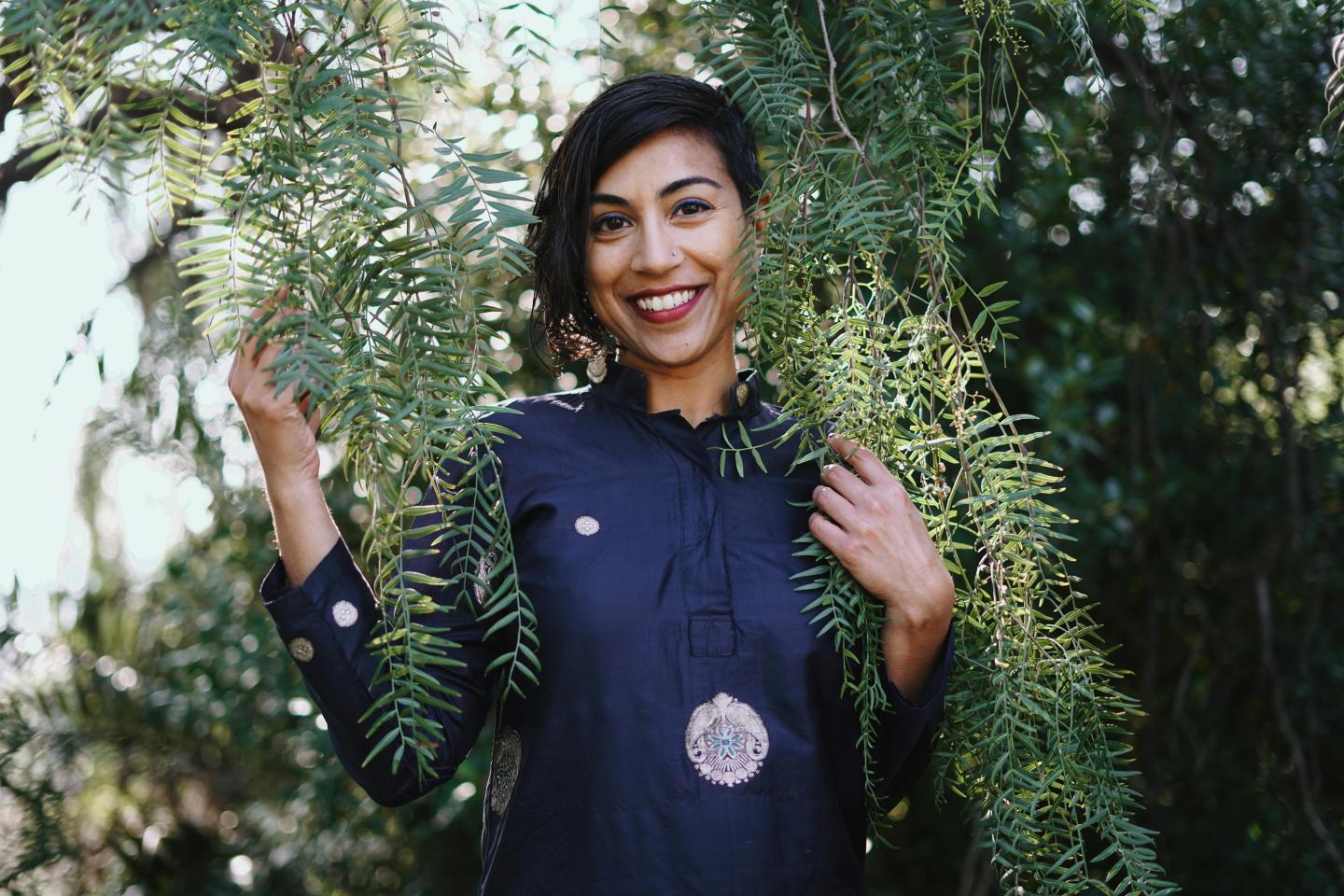
In 2016, Amita Swadhin, a child of two immigrant parents from India, founded Mirror Memoirs to help combat rape culture. The national storytelling and organizing project is dedicated to sharing the stories of LGBTQIA+ Black, indigenous people, and people of color who survived child sexual abuse.
“Whether or not you are a survivor, 100% of us are raised in rape culture. It’s the water that we’re swimming in. But just as fish don’t know they are in water, because it’s just the world around them that they’ve always been in, people (and especially those who aren’t survivors) may need some help actually seeing it,” they add.
“Mirror Memoirs attempts to be the dye that helps everyone understand the reality of rape culture.”
Amita built the idea for Mirror Memoirs from a theater project called “Undesirable Elements: Secret Survivors” that featured their story and those of four other survivors in New York City, as well as a documentary film and educational toolkit based on the project.
“Secret Survivors had a cast that was gender, race, and age-diverse in many ways, but we had neglected to include transgender women,” Amita explains. “Our goal was to help all people who want to co-create a world without child sexual abuse understand that the systems historically meant to help survivors find ‘healing’ and ‘justice’ — namely the child welfare system, policing, and prisons — are actually systems that facilitate the rape of children in oppressed communities,” Amita continues. “We all have to explore tools of healing and accountability outside of these systems if we truly want to end all forms of sexual violence and rape culture.”
Amita also wants Mirror Memoirs to be a place of healing for survivors that have historically been ignored or underserved by anti-violence organizations due to transphobia, homophobia, racism, xenophobia, and white supremacy.
“Hearing survivors’ stories is absolutely healing for other survivors, since child sexual abuse is a global pandemic that few people know how to talk about, let alone treat and prevent.”
“Since sexual violence is an isolating event, girded by shame and stigma, understanding that you’re not alone and connecting with other survivors is alchemy, transmuting isolation into intimacy and connection.”
This is something that Amita knows and understands well as a survivor herself.
“My childhood included a lot of violence from my father, including rape and other forms of domestic violence,” says Amita. “Mandated reporting was imposed on me when I was 13 and it was largely unhelpful since the prosecutors threatened to incarcerate my mother for ‘being complicit’ in the violence I experienced, even though she was also abused by my father for years.”
What helped them during this time was having the support of others.
“I’m grateful to have had a loving younger sister and a few really close friends, some of whom were also surviving child sexual abuse, though we didn’t know how to talk about it at the time,” Amita says.
“I’m also a queer, non-binary femme person living with complex post-traumatic stress disorder, and those identities have shaped a lot of my life experiences,” they continue. “I’m really lucky to have an incredible partner and network of friends and family who love me.”
“These realizations put me on the path of my life’s work to end this violence quite early in life,” they said.
Amita wants Mirror Memoirs to help build awareness of just how pervasive rape culture is. “One in four girls and one in six boys will be raped or sexually assaulted by the age of 18,” Amita explains, “and the rates are even higher for vulnerable populations, such as gender non-conforming, disabled, deaf, unhoused, and institutionalized children.” By sharing their stories, they’re hoping to create change.
“Listening to stories is also a powerful way to build empathy, due to the mirror neurons in people’s brains. This is, in part, why the project is called Mirror Memoirs.”
So far, Mirror Memoirs has created an audio archive of BIPOC LGBTQI+ child sexual abuse survivors sharing their stories of survival and resilience that includes stories from 60 survivors across 50 states. This year, they plan to record another 15 stories, specifically of transgender and nonbinary people who survived child sexual abuse in a sport-related setting, with their partner organization, Athlete Ally.
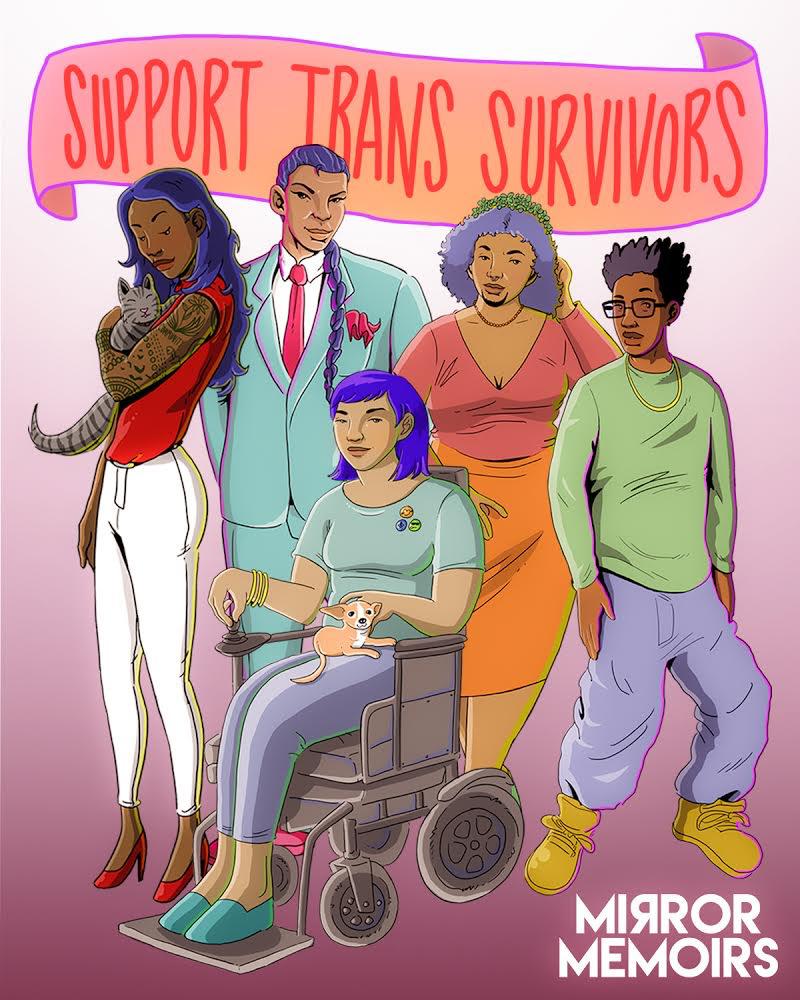
“This endeavor is in response to the more than 100 bills that have been proposed across at least 36 states in 2021 seeking to limit the rights of transgender and non-binary children to play sports and to receive gender-affirming medical care with the support of their parents and doctors,” Amita says.
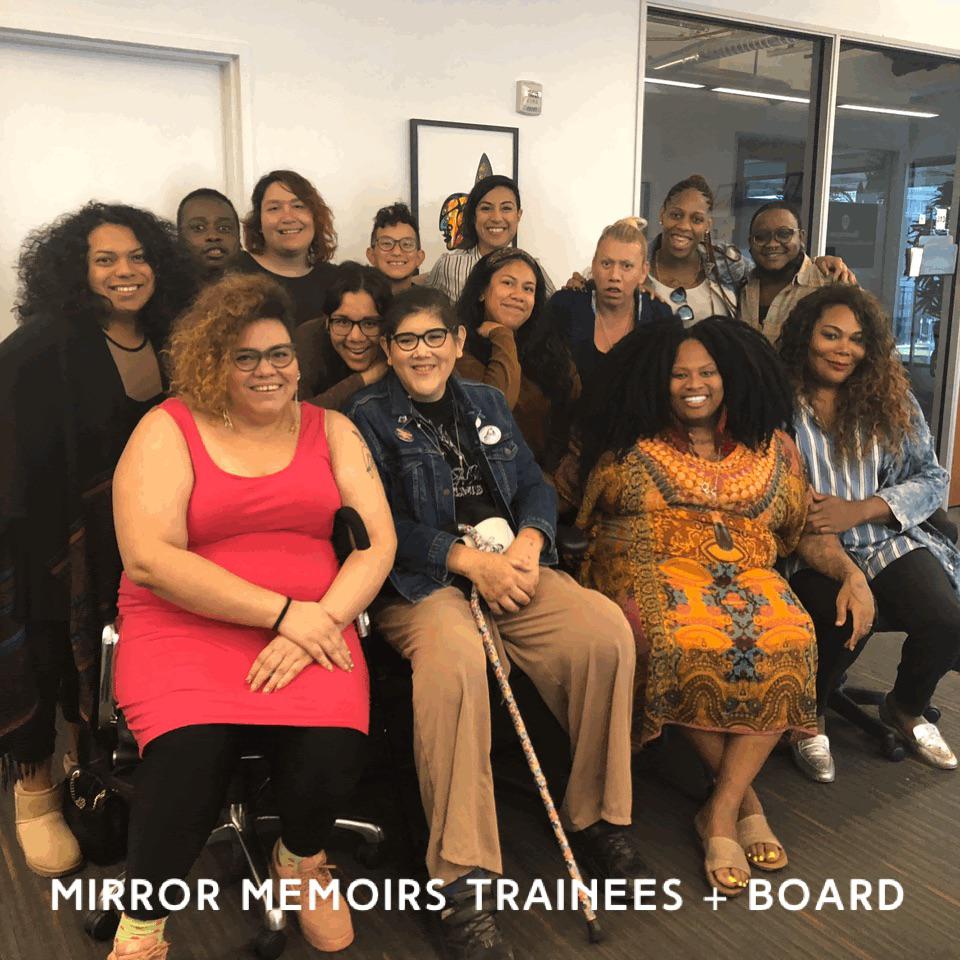
In 2017, Mirror Memoirs held its first gathering, which was attended by 31 people. Today, the organization is a fiscally sponsored, national nonprofit with two staff members, a board of 10 people, a leadership council of seven people, and 500 members nationally.
When the pandemic hit in 2020, they created a mutual aid fund for the LGBTQIA+ community of color and were able to raise a quarter-million dollars. They received 2,509 applications for assistance, and in the end, they decided to split the money evenly between each applicant.
While they’re still using storytelling as the building block of their work, they’re also engaging in policy and advocacy work, leadership development, and hosting monthly member meetings online.
For their work, Amita is one of Tory’s Burch’s Empowered Women. Their donation will go to Mirror Memoirs to help fund production costs for their new theater project, “Transmutation: A Ceremony,” featuring four Black transgender, intersex, and non-binary women and femmes who live in California.
“I’m grateful to every single child sexual survivor who has ever disclosed their truth to me,” Amita says. “I know another world is possible, and I know survivors will build it, together with all the people who love us.”
To learn more about Tory Burch and Upworthy’s Empowered Women program visit https://www.toryburch.com/empoweredwomen/. Nominate an inspiring woman in your community today!