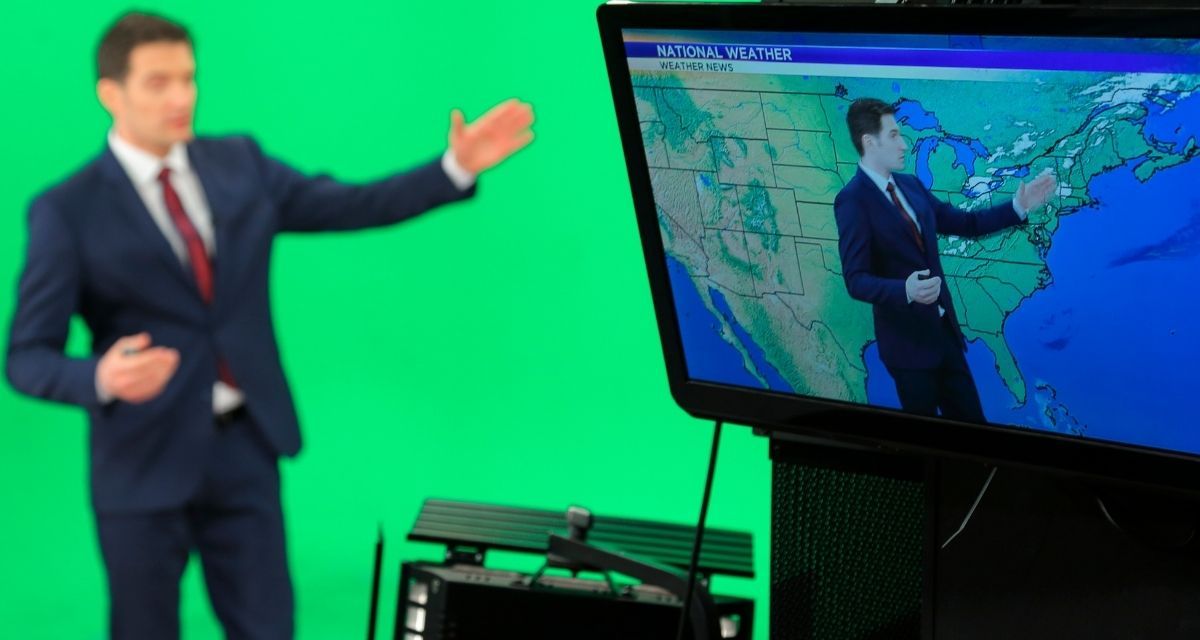
Every few years, the weather folks start tossing around the terms El Niño or La Niña, predicting cooler or warmer temps, higher or lower amounts of precipitation, milder or harsher-than-usual weather. Occasionally, an El Niño year gets upgraded to a “Super El Niño,” but this year, we’ve got a doozy they’re calling a “Godzilla El Niño.”
Sounds impressive, if maybe a bit terrifying. But what does it really mean? Should we be worried? Mitchell Moffit of AsapSCIENCE shared a helpful video that breaks it all down, visuals included, in less than five minutes. Watch:
An exceptionally dramatic rise in ocean temperatures
An El Niño means a rise in ocean temperatures of 0.5 degrees above average or more. (A La Niña is the opposite, a drop of 0.5 degrees below average.)
“The reason this El Niño is getting so much attention is because it just broke the record for the highest temperature ever recorded by the phenomenon,” Moffit explains, showing a chart with a line that sits at the top as an outlier. “And we’re still months away from its potential peak.”
Moffit says that as of the making of this video, which was uploaded on September 24, 2026, temps currently sit around 3.08 degrees above average. That’s higher than the peak of all other recorded years. No wonder experts have been saying it will likely be the most severe El Niño ever seen by humans.
“There was a massive El Niño in 1877 before satellite data existed, causing around 50 million deaths, and modern scientific models predict that it hit upwards of 3.5 degrees above average,” Moffit says. “This current El Niño is predicted to hit around 4 degrees above average.”
What do 4 degree-above-average ocean temperatures actually do?
Moffit explains how trade winds weaken during an El Niño, allowing the warmer water in the Pacific to shift direction.
“This warm water movement heats the air above it, changing atmospheric pressure patterns and can ultimately impact weather systems around the globe since everything’s interconnected,” he says.
Jet streams are affected, which affects storms and droughts all over the world. The west coasts of the Americas will likely see more rainfall and storms, which means more flooding and mudslides. Parts of Africa and Oceania, on the other hand, will be hotter and drier, meaning heat extremes and wildfires. The Amazon, Central America, and Sahelian regions may see drought. We’ll see fewer hurricanes in the Atlantic but more in the Pacific.
Ocean temperatures also affect industry. Peru has already canceled its anchovy fishing season because the fish have swum too deep to catch in search of colder waters.
“Overall, it basically changes the dynamics of the whole globe,” Moffit explains.
That sounds bad. Is it really that scary?
Not gonna lie. It doesn’t look particularly good.
“In 2023, researchers estimated that an average El Niño causes $3.4 trillion of losses to the global economy over the following five years,” Moffit shares. “And that’s the average El Niño. Current predictions for this El Niño anticipate around 450,000 deaths from the heat alone and 50 million people being pushed into acute hunger.”
We might be tempted to blame all of this on climate change, but Moffit says that’s not quite accurate. El Niño is not a product of climate change. However, it’s coming on top of challenges we’re already facing due to climate change, so its impact will be greater
“It’s almost like a steroid added to the warming from climate change,” he says. “And recent research does suggest global heating is intensifying El Niño cycles.” Basically, each makes the impact of the other worse.
So we can expect to see a period of more extreme weather, fires, and floods in various places, as well as the downstream economic and supply chain impacts of those disasters, which will be felt by all.
“I know this kind of info can be intense and doomish, but I find, at least for me, understanding how something works removes some of the hyperbole and fear that can get triggered from seeing all the headlines going on,” Moffit concludes. “So, I hope it brings a small sense of peace and understanding to you, too, despite the not-so-great outlook.”
You can follow AsapSCIENCE on YouTube for more helpful science videos.