If you’re a Gen Xer of a certain age, you might remember the indescribable glee that filled your body every time your favorite band appeared on MTV. There were quite a few of those for me, but nothing that caused the hair-pulling obsession the way Duran Duran did when I was 12 years old.
At a certain point, one could say it became an “issue.” I had to have every poster, every fedora, every lipstick shade worn by keyboardist Nick Rhodes. I knew every imported B-side record, each one of their favorite colors, food, pastimes, and the names of their dogs. But one day, I read an article in the tween magazine Tiger Beat, and it changed my viewpoint almost instantly. (It didn’t, however, change my infatuation with the band, Simon Le Bon in particular.)
Be fabulous, attract a fabulous life
I haven’t been able to dig up the piece, but it essentially instructed us dreamy, starry-eyed kids that while it’s okay to be fans, it would be even better to turn the admiration inside out, so that we were becoming like them, not in awe of them. It had never occurred to me, in my short 12 years, that instead of adoring them, I could become the kind of woman they’d adore. Essentially, the rule was this: work on becoming fabulous and you’ll attract fabulous people and, even better, a fabulous life.
I immediately enrolled in singing lessons, joined a middle school rock band, and tapped into my inner Madonna, complete with rubber bracelets and fluorescent hair bows. While that band wasn’t very good (and luckily there were no iPhones back then to capture the moment we got booed off stage), it launched a path to find out exactly who I was and the many versions of who I had the potential to be. (I later found myself obsessing over comedian Jim Carrey in high school. I remembered this wisdom and became a comedian myself.)
‘Some of us are becoming the men we wanted to marry’
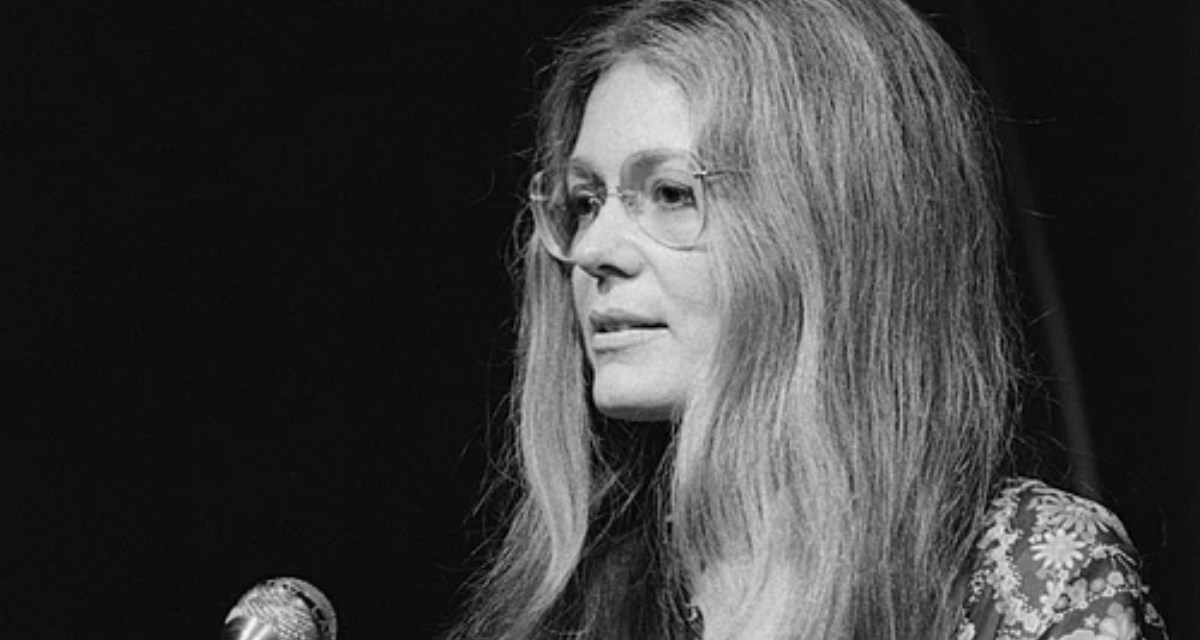
Cut to: Six years later, I’m a freshman in a university women’s studies class. We were, of course, studying Gloria Steinem and her often-quoted line, “Some of us are becoming the men we wanted to marry.” So it hadn’t been Tiger Beat after all! (Though I was still greatly impressed that one of their writers had the foresight, if not moral obligation, to plant that seed.)
In a piece for Thought Catalogue, writer Sari Moon explains Steinem didn’t actually coin the popular advice. Moon writes, “The earliest solid trace of the line isn’t Steinem. It’s a 1972 radio diary on New York’s WBAI, where Gail Kuenstler said it in the first person: ‘I’m becoming the man I wanted to marry.’ Steinem never claimed she coined it. She called it a ‘saying’ then made it famous. Quotation dictionaries pin the wording to her Yale speech in September 1981.”
But the sentiment remained. We all have it within ourselves to be the sun and not just the moon reflecting its light. Of course, this doesn’t mean we can’t love or respect or appreciate others fully. It was never about being “anti-husband” or “anti-man.” It was about finding purpose and awe of ourselves equally as important as finding it in others.
‘Personification of the women’s movement’
Steinman was a champion for these ideals. In her 92 years, she was not only a renowned journalist, but also co-founded Ms. Magazine, where she helped become a leader for women’s rights. She remained a fierce activist, not just for women, but for people of color, for the LGBTQ community, and essentially anyone who is marginalized in the world.
A just-published New York Times article called her “the personification of the women’s movement.” I’d have to agree. She helped reimagine a world where everyone had a voice and a seat at the table, even if they were just a 12-year-old girl in Texas with a giant crush.