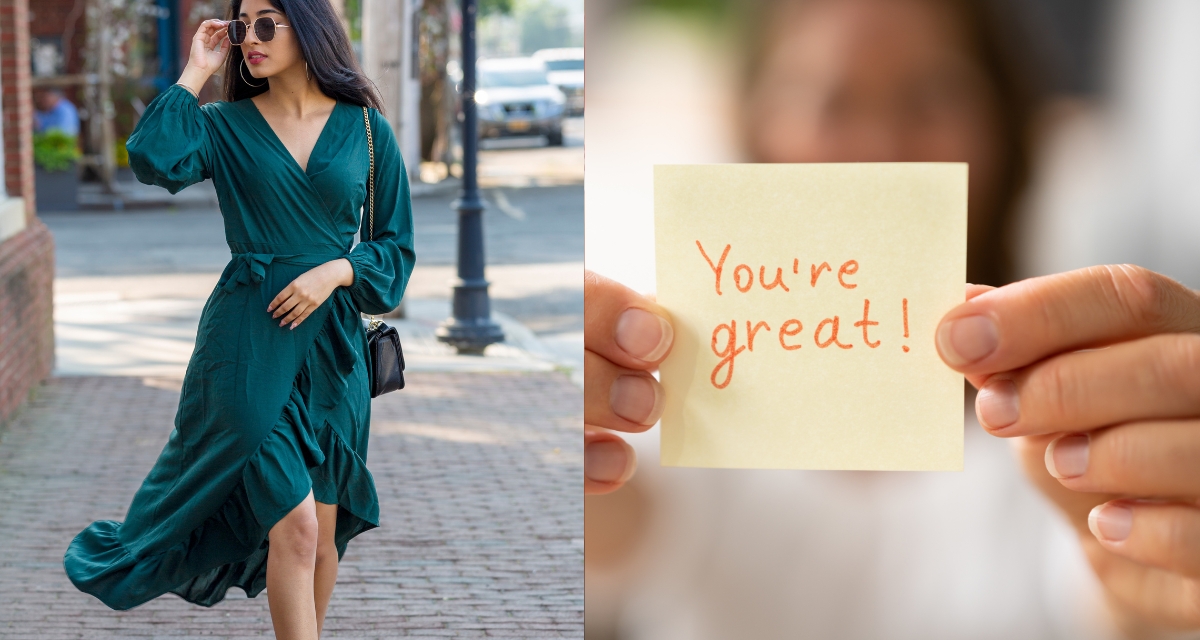
It’s really quite simple, and nothing especially new. Kindness can often beget kindness. At the very least, it certainly helps soften the edges in a world that some consider a bit rough right now.
And yet, some folks stop themselves from giving other people compliments. Let’s say, for example, you spot someone in an adorable green dress at a coffee shop. But just as you’re about to say, “Cute dress,” your nerves get in the way. There are valid reasons for this anxiety, but researchers say that, when it comes to words of affirmation, the giver is often just as rewarded as the receiver.
What stops us?
First, some might wonder why people stop themselves from complimenting others. In a study jointly conducted at the University of Pennsylvania and Cornell University, researchers Erica J. Boothby and Vanessa K. Bohns theorized that the person giving the compliment may simply “underestimate” how much it will affect the receiver.
The study, titled “Why a Simple Act of Kindness Is Not as Simple as It Seems: Underestimating the Positive Impact of Our Compliments on Others,” shares the findings of five studies that suggest several reasons people hold back:
“Perhaps people mis-forecast the effect their compliment will have. In Studies 1a and 1b, givers underestimated how positively the person receiving their compliment would feel, with consequences for their likelihood of giving a compliment.”
What’s also noteworthy is that givers often worry that saying, for example, “Cute dress,” won’t be well received. The researchers found, “Compliment givers also overestimated how bothered and uncomfortable the recipient would feel—and did so even in hindsight.”
Feeling better after
Despite their anxiety, the study concluded that even though people giving affirmations underestimate how much their words will affect others, they feel better after giving a compliment: “Our studies suggest that people misestimate their compliments’ value to others, and so they refrain from engaging in pro-social behavior.”
In a similar study conducted at the University of Chicago Booth School of Business, researchers Xuan Zhao and Nicholas Epley reached the same conclusion:
“Compliments increase the well-being of both expressers and recipients, yet in a series of surveys people report giving fewer compliments than they should give, or would like to give.”
After nine experiments, they also found that people simply didn’t realize how meaningful kind words would be:
“Participants wrote genuine compliments and then predicted how happy and awkward those compliments would make recipients feel. Expressers consistently underestimated how positive recipients would feel but overestimated how awkward recipients would feel.”
Why receivers might feel awkward
Author Katie Horwitch appeared on NBC News Now to discuss the topic. She said some people feel uncomfortable receiving kind words because they’re afraid they might be perceived as narcissistic. Others may doubt the sincerity of the person giving the compliment or think they have some kind of agenda.
How compliments affect the giver
“It’s actually about the giver too,” Horwitch said. “Giving and receiving compliments can boost your self-image. Your self-worth. It can strengthen community and a sense of interpersonal relationships. It can reinforce positive self-talk.”