Foster care can be an incredibly rewarding experience, but it’s not without its emotional challenges. One of the most common fears among those considering foster parenting is getting too attached to a child. And yet, as those who have been there can attest, this dilemma might also be the exact reason why you might want to say yes to the endeavor.
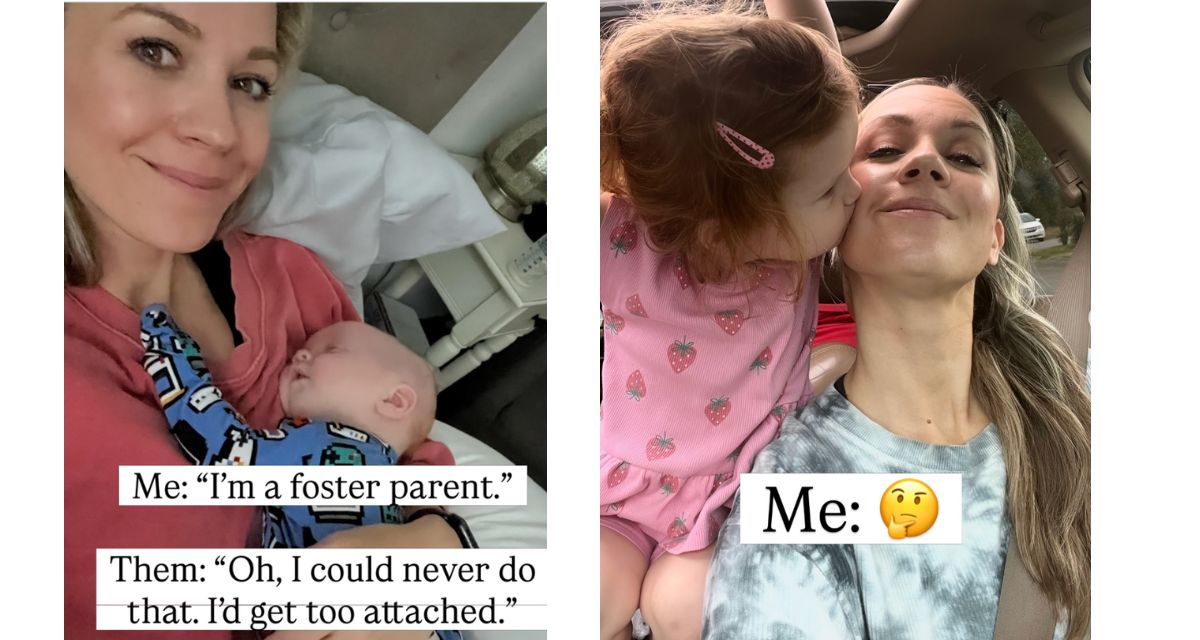
In a viral Instagram post, Kate Rapier, a 43-year-old single foster/adoptive mother from the Nashville area, recently challenged this notion that it’s even possible to get attached as a foster parent.
She began by saying that she frequently hears people say they “could never do it” because they would care too much, implying that she was somehow “magically protected” from feeling the pain of deeply loving her foster kiddos.
A belief rooted in flawed understanding
This couldn’t be further from the truth. As Rapier attested, foster parents don’t magically circumvent attachment. Rather, “attachment is the whole point.”
“Kids don’t need adults who stay emotionally distant,” wrote Rapier. “They need adults who are willing to love them fully, even when it hurts.” Because in the end, the goals is ultimately to make sure that child “experiences safe attachment.”
The lasting impact of feeling safe and loved
This mindset has shaped Rapier’s experience fostering and later adopting her now 5-year-old daughter, Gigi, who came into Rapier’s life at only one week old with very little notice.
Even though she didn’t at the time know what the future held, she took solace in the fact that the secure attachment she bestowed upon Gigi would serve as a foundation for the rest of her life.
“Love, at its purest form, is sacrificial,” added Rapier. And real love is what a foster child—many of whom have experienced trauma, instability, loss—need most of all. Not only for their immediate well-being, but for their ability to cultivate healthy relationships in adulthood.
This sentiment was echoed in one of the top comments to Rapier’s post, which read:
“I’m nearly 40, and I had a foster mom like you during the time I was 2-6 years old, and while she didn’t adopt me, I am always SO thankful for the love she poured into me in my most developmentally formative years. I always feel like because of her love, I had a solid foundation to grow from.”
All in all, Rapier argued that, though painful, if foster parents witness a child leaving their home having experienced deep love, safety, and connection, that is a “success.”
Loving fully while protecting your own well-being
That perspective is backed by experts, who note that forming healthy attachments is one of the most valuable things foster parents can offer. At the same time, the emotional realities of fostering make it important for caregivers to care for themselves, too. Mental health professionals often recommend building a strong support network, whether through fellow foster parents, trusted friends, therapists (it seems Rapier herself has one), or community groups that understand the unique challenges of fostering.
Experts also encourage foster parents to acknowledge grief when a child leaves their home rather than suppress it. Making space for those feelings, maintaining routines that promote emotional well-being, and focusing on the role they played in a child’s growth can help caregivers navigate difficult transitions.
While saying goodbye may never become easy, many foster parents find comfort in knowing that the love, stability, and security they provided can have a lasting impact long after a placement ends. As Rapier’s story illustrates, attachment is not a complication to avoid. For many children in foster care, it is precisely what they need most. And for the adults willing to open their hearts, that connection can become one of the most meaningful parts of the journey.