Modern humans spend a lot of time sitting—more time than ever before. Too much time, if you ask medical experts, who say it’s not great for our health.
Fittingly, we’ve come up with a lot of clever solutions to the sitting problem: yoga, foam rollers, Pilates, even timers that remind us to get up and walk around every once in a while. But the best solution might also be the simplest: What if we all regularly practiced just…standing up?
Guy goes viral for revolutionary idea of standing still for 20 minutes
Jules Horn is a former model. But while he had the “perfect” body for fashion designers and magazine covers, he discovered that living in that body felt far from perfect. So he gave it all up and became an expert in breathwork, somatic exercises, and fascia—the connective tissue that supports every muscle, bone, nerve, and organ in the body.
Horn recently shared the results of an experiment he conducted. For 90 days straight, he carved out about 20 minutes each day to do one thing: just stand there.
At least, that’s what it looks like. In reality, the practice is far more complex than it seems.
Tongue-in-cheek aside, Horn didn’t pull this idea out of thin air. It’s actually his own version of an ancient practice known as Zhan Zhuang, or Standing Post. The concept is thousands of years old and rooted in Traditional Chinese Medicine, martial arts, and tai chi. The practice itself is likely around 2,000 to 3,000 years old, though some historians believe similar ideas may date back as far as 7,000 years.
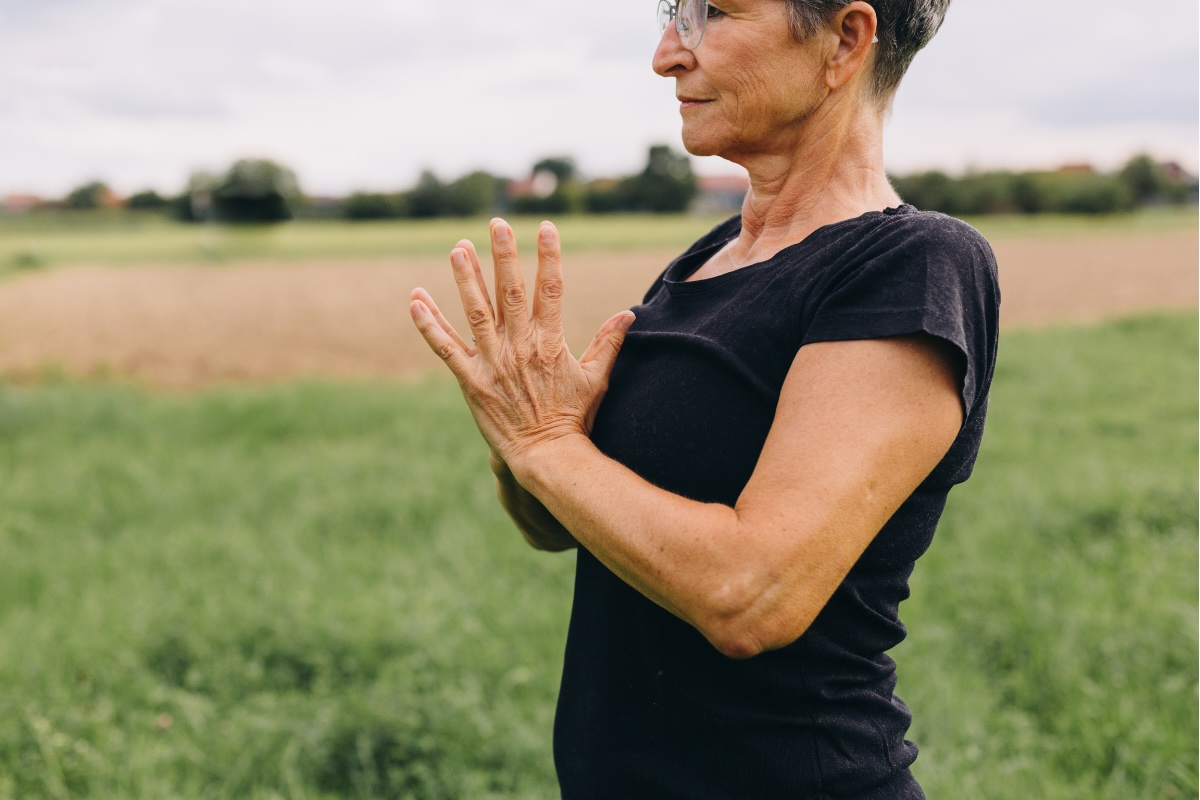
Zhan Zhuang is essentially a standing meditation. Not only does it challenge the mind to slow down and remain focused and still for an extended period of time, but it also puts the body in a surprisingly challenging position. Maintaining good posture while standing and breathing intentionally requires significant effort from the lower body and core. It forces the body to engage muscles it doesn’t normally rely on, highlighting areas of weakness and tension. It looks passive and lazy, but it’s actually anything but.
It’s so challenging, in fact, that beginners are encouraged to start by practicing for just two minutes at first.
The ancient practice of standing can produce big results
Horn wrote in a viral post on X that even he struggled with Zhan Zhuang at first, despite being an experienced practitioner of fitness, breathwork, and meditation: “The first 5 minutes in the beginning were not easy, the mind starts going crazy, I got bored and I wanted to move so bad.”
But he knew the practice had survived for thousands of years because it promised some pretty amazing benefits, so he stuck with it.
“It became easier and easier. My legs got stronger, aches and pains I had went away and my overall mood is just much better too,” he wrote.
Even trained physiotherapists agree that a standing meditation practice can do wonders for the body and mind. They say it can help correct weaknesses and imbalances that cause aches and pains, strengthen the lower body and pelvic floor, boost energy, reduce fatigue, and even help ease anxiety and depression.
Some practitioners report that the meditation has helped them restore their libido, process trauma, and more.
All that from just standing up with intention and good posture.
It’s best to learn the art of standing meditation from an experienced teacher.
It’s not for the faint of heart. Some beginners experience intense reactions if they try too much too soon, including feeling hot, dizzy, or even trembling uncontrollably.
But you don’t have to become a Qi master to take the cue to stand a little more, sit a little less, and find ways throughout the day to reconnect with your body and breath.
Horn’s theory for why it works so well: “The body knows how to heal when we give it the right environment.”
We didn’t know about fascia and pelvic floors thousands of years ago. But we didn’t need to in order to discover that standing up, and standing still, made us feel a lot better.