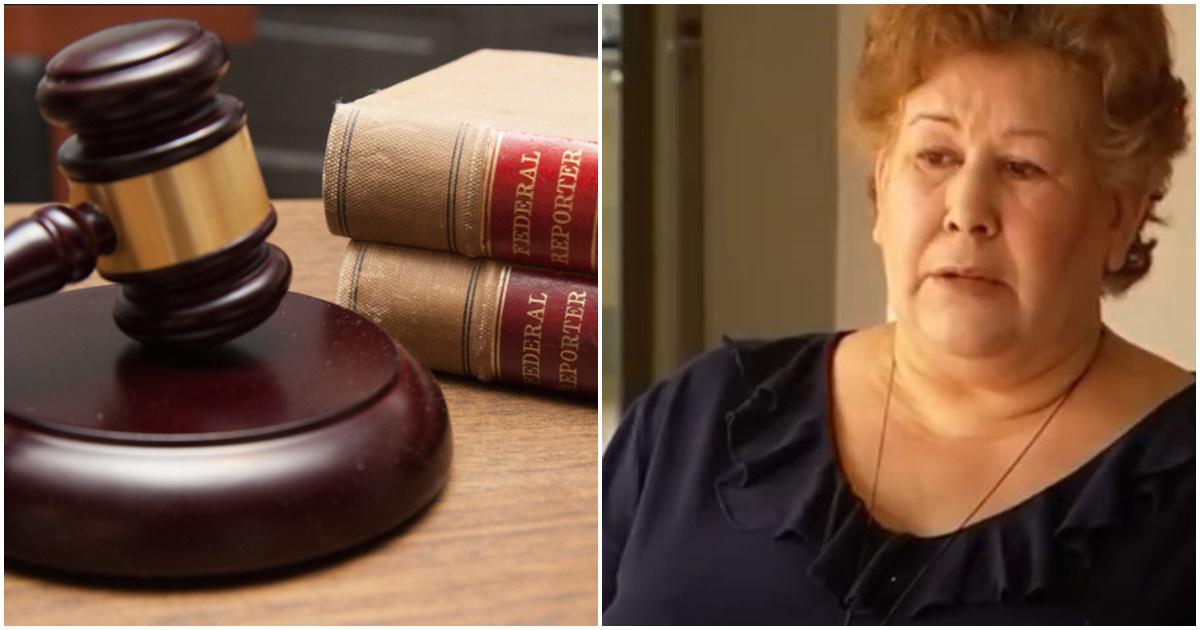
Woman declared dead in 2017 is in the fight of her life to prove she still walks among us
It must be terribly unnerving to wake up one day and realize the government thinks you’re dead, even though you’re alive and kicking. You’d figure that if you were declared dead and weren’t, you’d have some say in the matter. However, for a woman in France, things haven’t been that easy. Jeanne Pouchain, 58, who…
It must be terribly unnerving to wake up one day and realize the government thinks you’re dead, even though you’re alive and kicking. You’d figure that if you were declared dead and weren’t, you’d have some say in the matter.
However, for a woman in France, things haven’t been that easy.
Jeanne Pouchain, 58, who lives in the village of St. Joseph, near Lyon, had a rude awakening three years ago when she received a letter from the Lyon court of appeals declaring that her family members need to pay the money she allegedly owed.
Because, according to state records, she was deceased.
“My problem is that I’ve been declared dead,” she said according to KFGO.
Getting your identity stolen is a truly terrible ordeal, but Pouchain’s story shows that getting your life back after you’ve been declared dead is even more of a headache.
“I feel like I’m living a nightmare,” she said.
Woman ruled dead in 2017 fights to be declared alive
Pouchain is now living proof of how difficult it is to live if the government says you’re dead. She cannot drive, because if she gets pulled over her license is expired. She can’t go to the grocery store, in case someone asks her to provide ID for purchase.
She also can’t go to the hospital because she no longer has health insurance.
Her death has also frozen the joint checking account she has with her husband because she was never issued a death certificate.
“I no longer exist,” Pouchain said. “I don’t do anything…I sit on the veranda and write.” She called the situation “macabre.”
Pouchain’s woes stem from a grievance filed by a former employee seeking compensation after being fired twenty years ago. This suit combined with some farcical moves by the local bureaucracy resulted in a situation where Pouchain is legally deceased.
In 2004, an industrial tribunal ordered Pouchain to pay an ex-employee of her cleaning company €14,000 ($17,000) in damages. But, the suit was filed against the company, not Pouchain, so the money didn’t have to be paid out.
In 2009, the employee sued again, but the case was thrown out in court.
Seven years later, a court ruled in the employee’s favor and, during the proceedings, they said they hadn’t been able to reach Pouchain because she was deceased. So the court ordered her son to pay the damages.
The led the local governments to purge Pouchian from state documents, invalidating her health insurance, driver’s license, and bank account.
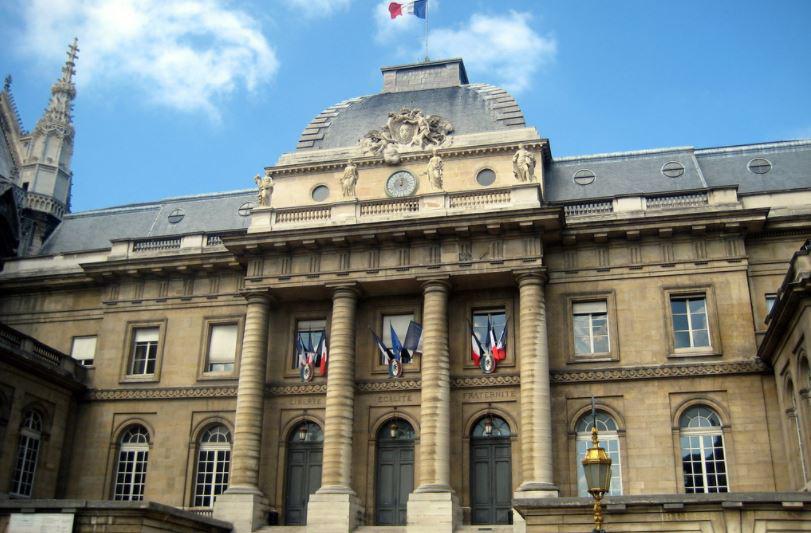
The fight for Poucian’s life has gone all the way to France’s highest court which threw out the case citing it wasn’t in its jurisdiction.
“I’m alive for my husband, for my son, for my loved ones, for the people around me, but for the justice system, I’m dead,” Pouchain laments.
So for three years, she has been fighting the government to reinstate her as a living, breathing entity so she can get back to living a government-sanctioned existence.
“The most important thing is to prove that I’m alive. To prove I exist,” said Pouchain. “I want the state to return my identity.”
Her lawyer has petitioned a court to grant a hearing where she can prove that, in fact, she is alive. “It’s my last chance to recover my life,” she said.
Pouchain’s s story is a pretty remarkable case of bureaucratic malfeasance. But it’s also a look at how much of our lives are intertwined with the state. In fact, if the government says you’re dead, you may as well be.
An Operation Smile volunteer reverses an oxygen mask so a child with a cleft condition can blow a bubble for the first time in Guadalajara, Mexico. (Operation Smile Photos)
For thousands of children born with cleft conditions, Operation Smile provides simple, playful tools—like bubbles—to strengthen the skills they need to speak and thrive.
While a bottle of bubbles might seem out of place in a hospital setting, you might be surprised to learn that, for thousands of children around the world born with cleft lip and palate, they can be a helpful tool in comprehensive cleft care. Lilia, who was born with cleft lip and palate in 2020, is one of the many patients who received this care.
As a toddler, Lilia underwent two surgeries to treat cleft lip and palate with Operation Smile’s surgical program in Puebla, Mexico. Because of Operation Smile’s comprehensive care, it wasn’t long before her personality transformed: Lilia went from a quiet and withdrawn toddler to an exuberant, curious explorer, babbling, expressing herself with a variety of sounds, and engaging with others like any child her age.
Lilia is now a healthy five-year-old, with the same cheerful attitude and boundless energy. Her progress is the result of care at every level, from surgery to speech therapy to ongoing support at home—but it’s also evidence that small, sustained interventions throughout it all can make a meaningful difference.
Lilia at age 1, before surgery, and at age 5, 4 years post-surgery
Cleft Conditions: A Global Problem
Since 1982, Operation Smile has provided cleft lip and cleft palate surgeries to more than 500,000 patients worldwide with the help of generous volunteers and donors. Cleft conditions are congenital conditions, meaning they are present at birth. With cleft lip and palate, the lip or the roof of the mouth do not form fully during fetal development. Cleft conditions put children at risk for malnutrition and poor weight gain, since their facial structure can make feeding challenging. But cleft conditions can have an enormous social impact as well: Common difficulties with speech can leave kids socially isolated and unable to meet the same developmental milestones as their peers.
Surgery is a vital step in treating cleft conditions, but it’s also just one part of a much larger solution. Organizations like Operation Smile emphasize the importance of multi-disciplinary teams that provide comprehensive, long-term care to patients across many years. This approach, which includes oral care, speech therapy, nutritional support, and psychosocial care, not only aids in physical recovery from surgery but also helps children develop the skills and confidence to eat easily, speak clearly, and engage in everyday life. This ensures that each patient receives the full range of support they need to thrive.
Marie, 11 months, with her mother at Operation Smile Madagascar before her cleft surgery (Operation Smile Photos)
A Playful (and Powerful) Solution
Throughout a patient’s care, simple tools like bubbles can play a meaningful role from start to finish.
Immediately before surgery, children are often in a new and unfamiliar environment far from home, some of them experiencing a hospital setting for the first time. When care providers or loved ones blow bubbles, it’s a simple yet effective technique: Not only are the children soothed and distracted, the bubbles also help create a sense of joy and playfulness that eases their anxiety.
Milagros Rojas, a volunteer speech therapist in Peru, using bubbles in a screening with a patient. (Operation Smile Photos)
In speech therapy, bubbles can take on an even more important role. Blowing bubbles requires controlled airflow, as well as the ability to form a rounded “O” shape with the lips, which are skills that children with cleft conditions may struggle to develop. Practicing these skills with bubbles allows children to gently strengthen their facial muscles, improve breath control, and support the motor skills needed for speech development. Beyond that, blowing bubbles can help kids connect with their parents or providers in a way that’s playful, comforting, and accessible even for very young patients.
Finally, bubbles often follow patients with cleft conditions home in the “smile bags” that each patient receives when the surgical procedure is finished. Smile bags, which help continue speech therapy outside of the hospital setting, can contain language enrichment booklets, a mirror, oxygen tubing, and bubbles. While regular practice with motor skills can help with physical recovery, small acts of play help as well, giving kids space to simply enjoy themselves and join in on what peers are able to do.
Bubbles at Home and Beyond
Today, because of Operation Smile’s dedication to comprehensive cleft care, Lilia is now able to make friends and speak clearly, all things that could have been difficult or impossible before. Instead of a childhood defined by limitation, Lilia—and others around the world—can look forward to a childhood filled with joy, learning, discovery, friends, and new possibilities.
CTA: Lilia’s life was changed for the better with the care she received through Operation Smile. Find out how you can make an impact in other children’s lives by visiting operationsmile.org today.
https://commons.wikimedia.org/wiki/File:Sinaida_Jewgenjewna_Serebrjakowa_At_the_Dressing-Table_1909.jpgZinaida Serebriakova's self-portrait feels like a modern selfie.
Modern selfies are often met with eye rolls, despite how ubiquitous they are on social media. Context can make a difference in how people see them, of course. A selfie taken in front of a major landmark or beautiful vista might feel different to people than a photo or video in front of a mirror on a good hair day, for instance.
However, the idea that someone would want to share themselves (or see others) grooming may not be as much a sign of the times as people think. Russian painter Zinaida Serebriakova’s 1909 self-portrait, titled “At the Dressing Table,” almost looks like it could have been painted today.
In the painting, Serebriakova sits in front of a mirror at a vanity table filled with bottles, jewelry, and a cushion holding hat pins. Serebriakova looks directly at herself in the mirror, smiling while brushing out her long brown hair with a black comb. She wears an undergarment that is slipping off of one shoulder, giving an air of casual intimacy. Her slight eyebrow raise almost feels flirtatious.
At the Dressing Table by Zinaida Serebriakova, 1909 (Public Domain)
What’s the difference between a self-portrait and a selfie?
Seeing Serebriakova’s self-portrait does beg the question, what’s the difference between this and someone doing a bathroom selfie or “get ready with me” video? Clearly, it takes more time and specific skill to paint than to take a photo with a smartphone, but is that the only difference?
In the opinion of Arpad Kovacs, associate curator in the Department of Photographs at the Getty Museum, the selfie and self-portrait is largely a matter of replaceability and disposability, as well as careful decision-making. As he told Annelisa Stephan when asked about the difference:
“The self-portrait and the selfie are two separate, though at times overlapping, efforts at establishing and embellishing a definition of one’s self.
“Qualities like medium specificity, deeply rooted histories, and traditions (or lack thereof) that define these efforts only superficially differentiate the two. What has greater weight is the selfie’s inherently replaceable and even disposable quality. If after taking a picture of oneself the results are unsatisfactory, it is easily forgotten and replaced by a new picture.
“The self-portrait, whether it is a carefully composed study or created in haste, often contains more decisions than could be easily erased. Calling a self-portrait by Rembrandt a selfie is not only anachronistic, it also negates the carefully calculated set of decisions that created the rendering.”
A selfie can be a self-portrait, but not all self-portraits are selfies
Kovacs pointed out that an artist could use a selfie as a self-portrait, but that doesn’t mean all self-portraits would be considered selfies.
Professor Tim Gorichanaz wrote his dissertation on self-documentation, and found that the academic research offers some specific qualities of selfies:
do not require strong technical skills
emphasize the present moment
emphasize external appearances
manifest a networked sense of self
are rooted in sharing, communication and consumerism
may be motivated by narcissism and exhibitionism
Jackie Kennedy, John F Kennedy, and Ethel Kennedy taking a mirror selfie with a 35mm camera- 1954 pic.twitter.com/uqiiHxVGtP
— Things From the Past (@pastarchive) May 20, 2026
Historically, self-portraits possess the opposite qualities across the board, Gorichanaz argues. When a selfie does not match the qualities listed, it would more likely be considered a genuine self-portrait. (After all, photography is a genuine medium for self-portraits.)
It seems clear that Serebriakova’s “At the Dressing Table” is a self-portrait with the feel of a modern selfie.
Why ‘At the Dressing Table’ feels like a 100-year-old selfie
“It’s so fascinating how a painting made in 1909 can look like it was painted yesterday. It literally looks like and has the feel of Instagram!”
“I wonder if it’s the first get ready with me painting.”
“‘It almost feels photographic’ this right here is why the painting feels like it was made yesterday and feels so striking. It doesn’t even feel like just a photo. It’s a particular style of photo, very personal, very carefree, and completely comfortable. Which only became particularly widespread with the proliferation of digital photography and phone cameras. It doesn’t just feel like a photo, it feels like a photo taken right now.”
ArtDeco shared more about the painting and Serebriakova’s career and personal life in the video below. Selfie or self-portrait, the artist was definitely ahead of her time.
Costco is beloved by its loyal customers around the world. There are more than 800 locations worldwide, according to Costco.
The world’s smallest Costco warehouse is located all the way in Juneau, Alaska. The Juneau Warehouse was opened on November 4. 1993.
YouTuber Adam Legg (@LeggLife), a creator from Anchorage, Alaska, gave a full-fledged tour of the big box store dubbed a “tiny but legendary Costco location.”
“I think it is also one of the most beautiful settings of any Costco,” says Legg in the video, as he later shows the building’s backdrop that features an evergreen forest, fog, and snow-covered mountains. “This is a unique one. It is roughly half the size of a normal Costco.”
Despite its size, the world’s smallest Costco is still impressively stocked.
“It carries more than half the amount of products. So most ‘normal’ Costco’s carry right around 3,800-4,000 products,” says Legg. “This Costco carries about 3,200. So even though it is half the size, it carries more than half the amount of products.”
When it comes to prices, Legg explains that “everything in Juneau comes in either by ship or by plane. There are no roads to Juneau, Alaska.”
As he walks in, there is the familiar electronics section with TVs and more, including some massive inflatable water toys for the yard that Legg did not expect.
Things in our Alaska Costco that would confuse people from the lower 48 😭❄️🛒 🌙 blackout curtains because the summer sun literally does not go down in parts of Alaska 🥾 hiking sticks because “going for a walk” here can accidentally turn into a mountain hike 🎣 fishing waders because salmon fishing is basically a personality trait in Alaska 🦟 mosquito spray because Alaska mosquitoes are genuinely terrifying in the summer 🏕️ camping gear (SEASONAL) because half the state disappears into the wilderness every weekend this time of year 🛶 paddle boards and kayaks immediately hit the shelves the second breakup season starts 👢 Xtratuf boots because they’re basically the official state shoe 🔥 fire extinguishers near the entrance once wildfire season starts 🐻 bear spray sold casually like it’s sunscreen bcs we are is bear country and we all own a least a can or two! Living in Alaska means one Costco trip can prepare you for fishing, hiking, camping, wildfire season, and a bear encounter all in the same afternoon 😂 Where are you watching from? Which one surprised you the most? #fairbanks#alaska#livinginalaska#lifeinalaska#fyp @Costco Wholesale
Immediately, Legg notices some items ‘unique’ to the Juneau location. These include some XTRATUF rain boots that Legg himself is wearing to the store, a necessary staple for Alaska’s climate. There’s also some University of Alaska-Fairbanks clothing. Legg notes that the clothing section is “smaller than most Costcos.”
There are also home goods items, furniture, and mattresses. Legg then shows some other “interesting” regional necessities: bear spray and mosquito/tick repellant.
Legg explains that there are also many summer Alaska essentials, like backpacks, coolers, and “giant family tents and canopies.”
Food items
Legg makes his way to the grocery section. He points out that a large watermelon is $12.99, and bananas are $2.99 a pound. Moving on to the prepared meat, the baby back ribs are $7.99 a pound, and chicken wings are also available.
However, one iconic Costco item is not available at the location: the rotisserie chicken.
“The rotisserie chickens was one of the things I was wondering about, but they don’t have them,” Legg says.
There are still many meat and seafood options available, including plenty of the prepared meal kits. As he ventures to the frozen and refrigerated section, he reassures viewers: “If you were wondering, yes they do have samples.”
Two dozen organic brown eggs cost $7.69, and, in the dry goods section, the big box of Lucky Charms is on sale for $5.39. Additionally, Legg points out that customers can also purchase alcohol at the Juneau warehouse.
Legg points out the Juneau Costco does have a pharmacy, as well as an optical department and Tire Service Center. Hearing aids are also available there. However, there is no bakery.
The food court also has classics like the infamous Costco hotdog and chicken bake. However, there is no pizza available. “There is no seating inside the food court, but they do have tables outside,” says Legg.
After shopping the entire warehouse, Legg gave his final thoughts:
“I absolutely loved that…it was super simple. It has the vast majority of stuff you want your Costco to have,” he says. He points out that there are only three cities in Alaska with a Costco: Anchorage, Fairbanks, and of course, Juneau.
“I love this concept. I bet not every town could support a full-sized Costco, but I bet a lot of towns could support something this size,” he shares. “I hope Costco starts doing more things like this. Not every Costco has to be the huge, giant, over-the-top warehouse.”
Sure, you could venture to Las Vegas to experience Phish’s legendary Gamehendge saga in 360 at the Sphere, but it would pale in comparison to the palpable, electric joy that permeated throughout the audience after an elementary school cast decided to bring it to life.
A small-town teacher with a big idea
Every year, music teacher Kirk Kubicek, the leader behind this massive project, tries to give his students in the smaller schools throughout the mountains of Colorado something special for their year-end musical production, despite not having access to the same resources as schools in the flatlands.
“They have heart, they have courage, and they deserve every bit as much ambition and opportunity as anyone else,” he wrote in an Instagram post. “Every year I try to give them something bigger, something that asks more of them and leaves them with something they carry forever.”
This year, that meant telling the tale of Colonel Forbin, Icculus, and the Mockingbird, who help the “Lizard” community regain their sacred “Helping Friendly Book,” stolen by the greedy King Wilson. With DIY costumes, cardboard sets, a four-person instrumental backing band, and a passionate teacher orchestrating it all from start to finish.
The result was something spectacular and heartwarming, whether you’re a card-carrying Phishhead/Phan or have never heard any of their songs.
“I wanted to recreate what it feels like to be at a Phish show,” Kubicek told Rolling Stone.
As you can see in the video above, that mission was certainly accomplished.
Not only did Kubicek and his merry band of kindergarten through fifth graders recreate peak Phish vibes, but they also stayed true to the themes presented throughout the album—and arguably throughout all of the band’s work—including community, sharing wisdom, and, most importantly, “surrendering to the flow.”
“This elementary adaptation celebrates those same values: that knowledge shared becomes more powerful, that true importance comes from connection rather than control, and that sometimes the bravest thing we can do is remember to have fun and embrace the vibration of life,” the program reads.
Why Gamehendge means so much to fans
For longtime Phish fans, Gamehendge occupies an almost mythical place in the band’s history. The rock opera originated as guitarist Trey Anastasio’s senior thesis project at Goddard College in the late 1980s and became the foundation for some of the band’s most beloved songs.
Instead of releasing it as a traditional album with widespread radio promotion, Phish allowed the story to evolve through live performances over the years. That helped turn Gamehendge into something fans passed down almost like folklore, with audiences eagerly awaiting rare full performances.
The story itself blends fantasy, humor, and surprisingly heartfelt messages about kindness and knowledge, which, in hindsight, makes it a pretty perfect fit for an elementary school production.
A wholesome, inspiring memory for all
Part of what makes the video so charming is how fully committed the students are to the material. Nobody appears self-conscious. They sing, dance, act, and throw themselves into the wildly imaginative world with complete sincerity, thanks in no small part to the teacher who encouraged them to do so.
That enthusiasm clearly rubbed off on the crowd as well, many of whom can be heard cheering throughout the performance like proud parents witnessing the world’s sweetest jam band concert.
And for online viewers, the performance was a reminder that live music, when performed with passion, still brings people together in the best possible way. For everyone involved, the production became something far more magical than a simple school activity.
Graciously, the full production of Gamehendge was posted on YouTube and is available to view below. Enjoy.
One of the most iconic American images is American Gothic, a 1930 painting by Grant Wood of a farmer holding a pitchfork, standing next to his annoyed daughter (or wife). It’s been parodied everywhere from Homer and Marge standing in the pose on The Simpsons, to advertisements for Nicole Ritchie and Paris Hilton’s reality show, The Simple Life (2003-2007), to Magenta and Riff Raff recreating the painting in The Rocky Horror Picture Show (1975).
To modern eyes, the painting appears to be a traditional depiction of a couple living on the farm. It’s as wholesome as America gets. However, when it was first hung in the Art Institute of Chicago, it was a cultural Rorschach test that offended rural Americans and delighted city slickers. “We should fear Grant Wood. Every artist and every school of artists should be afraid of him, for his devastating satire,” writer Gertrude Stein said of the painting.
Why was American Gothic so controversial?
With American Gothic, context is everything. The painting was released on the precipice of the Great Depression at a time when the Dust Bowl was killing American agriculture. It was also after a great migration when Americans left farms in droves for city life. Rural Americans were mocked for their simpler, conservative ways, with cultural voices such as H.L. Mencken referring to rural Americans as “booboisie.”
The painting showed a dour, joyless couple wearing simple clothing and was painted in a style that could be called medieval—no doubt a comment on their traditional ways. After the painting caught the public’s attention, an Iowa farmer’s wife phoned Wood and didn’t hold back. “She claimed she wished to come over and smash his head for depicting her countrymen as grim Bible-thumpers,” Art History School host Paul Priestley said, according to Open Culture.
The artist’s background also plays a big role in how the painting is interpreted. Wood grew up in Cedar Rapids, Iowa, but often traveled to Europe to study Impressionism. This meant that he had one foot in the world of Bohemian Europe and another as an Iowa farm boy.
Wood would never admit that his painting was anything but an expression of genuine affection for its subjects. Wood “said he painted American Gothic to extol rural American values, real people in their well-ordered world: an image of reassurance during the onset of the Great Depression,” Priestly continues.
American Gothic was born at the beginning of the Great Depression, and its meaning would evolve over the difficult period. By the end of the decade, working people of the Midwest had begun to be seen as noble by city dwellers, who embraced folk music and workers’ rights. Further, mocking the “yokels” who were devastated by a natural disaster felt rather cruel.
The painting’s meaning evolved “because over the course of the thirties in the context of the depression and throughout World War II, it changed from being that satirical image to a national symbol of stability, order, prosperity, virtue and wholesomeness,” Steven Biel, historian and author of American Gothic: A Life of America’s Most Famous Painting, told Pop Entertainment.
Great pieces of art can mean different things to different people and evolve with the times. For many in 2026, American Gothic is seen as simple American iconography and little more than a template for satire. But those who intend to tap into its cultural cache should first understand that it has undergone an incredible cultural arc: it redeemed those it intended to mock while softening the hearts of its jaded first audience. That’s something that the farmer’s wife (or daughter?) probably couldn’t even scoff at.
Many of us know diamonds weren’t always considered the go-to stone for engagement rings. In the grand scheme of things, they haven’t even held the title that long. It was only thanks to a certain clever marketing ploy in 1948 that convinced us diamonds were “forever” that they became the standard in the first place.
Before that, engagement rings have come in many different shapes, sizes, and materials throughout history…some interesting, some inspiring, and others a bit more baffling when viewed through a modern lens.
No stones, no problem
Ancient Egyptians, for example, exchanged braided hemp or reed rings, believing the circle symbolized eternity. Romans adapted this by giving iron or copper betrothal rings often featuring tiny keys, symbolizing that the wife was her husband’s property. Perhaps some rituals are best left in the past.
Puritans in the 1600s, on the other hand, gave engagement thimbles, which wives would use to sew their own wedding dress. While not the most romantic upon first glance, that thimble would then be cut into a ring. All in all, a pretty clever way to serve both practical and sentimental purposes…which sounds very on brand for Puritans.
Meanwhile, in Medieval Times all the way through the Renaissance, brides-to-be were given gold-banded posy rings (derived from the French word “poesy,” meaning poetry) featuring short, intimate inscriptions engraved on the inner or outer surface. These could be romantic promises, religious sentiments, or even secret messages.
According to jewelry site Berganza.com, it’s likely that goldsmiths of the day had a book of stock phrases from which the customer would pick, two of the most popular being “A true friend’s gift” and “a loving wife during life.”
In some ways, these rings feel ahead of their time, considering personal messages engraved inside jewelry is still a popular choice today.
The vibrant era before diamonds took over
When it comes to stones specifically, colorful, meaningful gems like sapphires, rubies, and emeralds were among the most popular. Sapphires were particularly favored for their durability and symbolic meanings—representing love, commitment, and royalty. Sapphire engagement rings date back to Egypt, Greece, and Rome. Even today, they remain a top diamond alternative, celebrated for their rich, distinctive hues.
More than one way to symbolize commitment
For all the cultural power diamonds hold today, history suggests that engagement traditions have always been quite flexible. Across different countries and time periods, people attached meaning to whatever felt valuable within their own communities, be it from rarity, usefulness, or how it told the story of a relationship.
If you yourself are not convinced diamonds are your best friend when it comes to an engagement ring, take comfort in the fact that there are countless other alternatives.
Peter Bence’s performance of “Africa” by Toto has over 19 million views on YouTube because of his creative reimagining of the song and, well, just about everyone loves “Africa.” Bence is a Hungarian composer and producer who has become a viral sensation for his Michael Jackson, Queen, Sia, and Beatles covers. He has over 1.1 million followers on YouTube and has toured the globe, playing in more than 40 countries across four continents.
His performance of “Africa” is unique because it opens with him creating a rhythm track and looping it by strategically tapping the piano and rubbing its strings to create the sound of shakers and conga drums.
The video eventually becomes rapturous, with Bence making the piano sound like an entire orchestra.
The comments say it all
As the video caption says, “Toto x Peter Bence = Africa Piano Symphony.” Indeed. People were blown away by Bence’s impressive rendition of the classic 80s song.
“I’m so glad to watch and see a fellow musician, that enjoys the music deep down. Excellent playing man!”
“So fluid. The piano is an extension of your whole body. Amazing.”
“I don’t think I’ve ever seen anyone has so much fun playing the piano. You’re not just terrifically talented, I love the creativity.”
“Brilliant! Loved it. It made me think what would J S Bach have done with looping on a piano/harpsichord?”
“Mesmerizing! He became the music and the music became him.”
“Are you kidding me!!!! This cover is incredible. Still listening to it, years after I discovered it.”
“I return to this regularly, it’s absolute witchcraft levels of genius. This level of talent isn’t written in any handbook, it’s completely unworldly.”
“I love how PB plays a piano worth more than my house in his bare feet like it’s an actual extension of his body. Pure brilliance.”
Peter Bence was considered a musical prodigy as a child. Photo credit: Canva
He has been a prodigy since toddlerhood
If it seems like Bence was born to do this, that appears to be accurate. According to the bio on his website:
“Starting as early as age 2 he already played back melodies by ear from his favorite cartoons and films on his grandparents’ upright piano. Showing serious interest and talent, he soon began his musical education at 4 in the local music school of his hometown, Hajduboszormeny in Hungary.
He was considered a musical prodigy by teachers and peers, and was already accepted at Franz Liszt University of Music in Debrecen, despite he was still being enrolled at elementary school.
At 7 he wrote his first composition, which was heavily influenced by the music of Mozart and Chopin, and at 11 he published his first solo piano album of his early compositions.”
So yeah. The guy has had piano chops since toddlerhood, and he’s made the instrument his own with unique, edgy pieces like this one.
And about the song itself
Released in 1982 and peaking at number one in the U.S. in February 1983 and number three in the UK, “Africa” was Toto’s biggest hit, and the top 10 globally. It’s a stirring piece of music that’s beautifully arranged with an anthemic chorus. However, the lyrics aren’t that accurate.
The song’s author, Toto drummer Jeff Porcaro, describes it as: “A white boy is trying to write a song on Africa, but since he’s never been there, he can only tell what he’s seen on TV or remembers in the past.”
Nevertheless, the song is an iconic tune that captures a specific spirit of the early ‘80s when the world turned its focus to Africa. Over 40 years later, the song’s wholesome sincerity has made it a piece of music that every few years captures the hearts of a new generation.
Back in April 2021, then-17-year-old Weronika Jachimowicz got a lot of attention for subverting people’s expectations of who excels in high school—and that’s exactly what she wanted. Jachimowicz was named New York’s Mattituck-Cutchogue Union Free School District’s 2021 salutatorian. Her yearbook photo next to valedictorian Luke Altman is going viral because of her dramatic Goth makeup and attire.
It all started when assistant professor and writer Dr. Jules Lipoff’s tweet of the photo of the valedictorian and salutatorian he saw in a newspaper went viral. How many salutatorians have you seen wearing pentagram hoop earrings, a choker, and black devil horns? The juxtaposition of her next to the bowtie-wearing Altman makes the photo even more amusing.
The Today Show reports that Jachimowicz at first took her senior photo dressed “normal.” During the retake, she decided to “go all out and be herself.”
Jachimowicz wanted the world to know that there’s no one way someone has to look or present themselves if they want to be academically successful, or successful in any right.
What research actually says about Goth kids
In fact, it’s completely normal for kids who are interested in the Goth subculture, as well as any other clique or community, to be good students.
“The scene has quiet middle-class values—education, highbrow culture, theatre, museums, romantic literature, poetry, philosophy, Gothic architecture,” Dr. Dunja Bril, who studies Goth culture in England, told The Independent in 2006.
“Many Goths like classical music. It’s a status symbol to have a good collection of classical pieces—mostly requiems and darker pieces,” she added.
“Going to do a university degree is encouraged,” Bril continued. “[Being Goth] doesn’t encourage people to drop out of school. Whereas in the Punk scene you turn down the normal educational values, in Goth you gain status if you’re perceived as being educated. You get people who are in it for the shock value, but they are usually the ones who grow out of it.”
Another study found that joining the Goth subculture may be good for young people’s mental health, offering them protection in the form of strong peer support and community. “Rather than posing a risk, it’s also possible that by belonging to the goth subculture, young people are gaining valuable social and emotional support from their peers,” writes New Scientist, quoting the study’s author.
“In all honesty, that’s all I wanted. I wanted to help anyone I could who is struggling with expressing themselves because I’ve been in the exact same position,” Jachimowicz told Yahoo! Life. “When people message me telling me how I have given them the confidence to be who they truly are, I almost cry from happiness.”
Jachimowicz says that she was able to be herself because she was encouraged by others, so this is her chance to pay it forward.
“I was always trying to please others and be like what everyone else wanted me to be, or at least try to fit into what was ‘normal.’ However, I did slowly start to realize that it’s OK to be different,” she said. “I’ve met people in my life who gave me the confidence to fully be myself,” she added.
By the way, her resume is incredible
In addition to having an unweighted GPA of 97.27%, Jachimowicz was on the fencing, ping pong, and winter track teams. She was also a member of the National Honor Society, Students Against Drunk Driving, and the Unity Club. The Suffolk Times says Jachimowicz had some of her hand-drawn art chosen to appear on the cover of the senior yearbook, as well.
She told Fox 5 New York in a 2021 interview that she planned to major in biology and forensics after graduation, with hopes of becoming a forensic pathologist.
Jachimowicz’s accomplishments are another reason to never judge someone for how they look or their interests. Just because someone is wearing satanic earrings doesn’t mean they aren’t highly intelligent or athletic.
She believes the most important thing is to be yourself, regardless of what anyone else thinks. “Even if others don’t really like my style, it’s what makes me happy and I’ve worked hard to finally come to that conclusion,” she said.
This article originally appeared five years ago. It has been updated.
Bob Dylan sang that the times are a-changin’ back in 1964, and since then, they haven’t ever stopped a-changin’. And yes, change has been a constant for all of humanity’s existence, but things certainly seem to be progressing a whole heck of a lot faster, don’t they?
Before ya know it, those once fashion-forward pants you purchased are now retro, you don’t understand any of the slang the kids are spouting, and you’re doing your taxes, grocery planning and work meetings all from your phone. You know, that device that once only…gasp…called people.
It certainly feels like more than simply growing older, too. Technology is evolving at a rapid pace, to the point where human beings are finally having a hard time keeping up. Combine that with uncertain economic times, and it’s no wonder that some folks are left reminiscing about how, in some (not all or even most, but some) ways, the good old days really were good.
Thousands of people chimed in with fascinating bits of bittersweet nostalgia. Some were monetary — just think that the price of most everyday items has increased 2-3x since the 90s. Other memories were more intangible, based on experiences you just don’t get very often anymore.
The things people miss most might surprise you
Here are some of the best answers.
1. “New furniture made out of real wood.”
If you regularly traffic in furniture from Target, IKEA, Wayfair, and other relatively affordable places like that, you’ll recognize that furniture these days is more often than not made from particle board or fiber board, not real wood. That makes it convenient and relatively cheap, but not very durable.
3. “Paying no more than 30% of your income in rent.”
One user added: “I lived in poverty housing and this was how they determined our rent. It was 30% of mom’s income, regardless of how much she was making. That was 20 years ago, not sure what starving kids do today.“
One person added: “17 years ago I spent $30 to see an internationally touring band play a concert, and I thought that was way too high. Now I’m spending minimum $20 to see local bands. Just on admission.”
5. “Household products that don’t break within the first few years of use.”
One user wrote: “My grandma had the same fridge from 1993 before deciding to switch to a newer, bigger one two years ago. My mom’s wedding cookware is still going strong 25 years later, but whenever she needs new pans, they start flaking Teflon into the food within a few months.”
Today, modern refrigerators are only expected to last about 10 years and generally aren’t worth repairing.
6. “Not being expected to be reachable 24/7.”
Ah, yes, being completely unreachable was the ultimate luxury. Most of us have actually forgotten what it feels like.
7. “Being able to afford going out every Friday after work.”
Remember happy hour specials? Dollar beer nights? It was easy to go out with friends or colleagues when a single beer didn’t cost $11 with tip.
8. “Farmer’s markets.”
“You used to be able to go down and get fruit and vegetables cheaper than the grocery store. Now it seems like they charge 3x more than stores do,” one user noted.
9. “Single income families buying a home.”
Another user read everyone’s mind by adding: “Buying a home in general”
“I have clothes from the 90s (and 80s from my mother) that still hold up today. These days, I’m lucky if my shirt isn’t saggy and misshapen within a year,” one user wrote.
You’re not crazy. Flying used to be more comfortable. Planes have given up about 1-2 inches of legroom over the years, making passengers cramped and grumpy.
The days when legroom was free. Photo credit: Canva
13. “Free driver’s education classes taught in all high schools.”
Private driver’s ed can cost anywhere from $500-1000 where it used to be much more commonly provided for free. Shouldn’t giving the next generation of drivers thorough safety training be considered a public necessity?
14 . “Family vacations.”
“I remember going on road trips regularly as a kid and even flying once or twice. Now that I have kids, I cannot afford a weeklong trip to the Badlands, Grand Canyon, Disney/Universal Studios, etc. The best I can do is a day trip to the Wisconsin Dells maybe once a year,” one user wrote.
15. “Apartments.”
“I could get a one-bedroom apartment in Wisconsin back in 1997 for under $500. Now that same apartment is at least $2,000.”
Apartments are supposed to be the affordable thing! What happened?!
16. “Affordable healthcare.”
Even “good” healthcare these days leaves you paying enormous of out-of-pocket expenses. I’m not sure healthcare in America was ever great, but it’s definitely gotten worse.
17. “People making friends with one another purely because they enjoy their companionship and not because of networking.”
Hustle culture has really changed the way we think about friends and leisure time.
18. “Calling a company and getting a person on the other end of the phone.
Another problem that’s only getting worse with AI! They even have AI instead of people working at drive-thrus now.
19. “Drinking water from the tap without filters and softeners.”
More and more people are using home water filters for taste and, more importantly, because they don’t trust the local drinking water. Gee, wonder why?
20.”Being able to dance and have a good time without having the risk that it will end up being recorded and put on social media.”
Every time you leave your house you’re at risk of being pranked for TikTok or ending up in one of those life-ruining drunk “street interviews.”
So what does all of this actually mean?
The 90s and 2000s were a simpler time. Not everything was better, or even great, but there was something real about it. People were more authentic, things we bought weren’t so cheaply made yet expensive, and your hard-earned dollar went a lot further than it did today. We can’t go back, but it’s sure nice to visit every now and then.
This article originally appeared three years ago. It has been updated.