There’s no simple answer for how to be happy, but many brilliant individuals have dedicated their lives to finding the answer nonetheless.
Matt Killingsworth is one of them. A Harvard-educated psychologist and senior fellow at the esteemed Wharton School, Killingsworth has led numerous studies designed to uncover the secret to happiness. In one of his biggest undertakings, he helped design TrackYourHappiness.org, “a large-scale research project that uses smartphones to collect real-time happiness data from people around the world.”
The findings he’s cultivated over the course of his career are mandatory reading for anyone who wants to maximize the joy they get out of life. Here are just a few takeaways from his body of research:
A groundbreaking study conducted in 2010 by Daniel Kahneman and others found that money does not make you happy. Or rather, money increases happiness only up to around $60–$90,000 per year—enough to live comfortably and without many of the hardships associated with poverty. Beyond that point, Kahneman found no additional benefit to earning more money when it came to happiness.
Killingsworth’s own research disagreed, showing “a linear relationship between happiness and income” with essentially no upper limit.
The two authors came together to reconcile their findings in a paper titled “Income and emotional well-being: A conflict resolved.” In the end, they determined that the “flattening” effect applies only to the least happy people. Meanwhile, the happiest people continued to get happier as their wealth increased.
In other words, if you aren’t happy to begin with, more money probably won’t help. But if you’re generally pretty happy, having more resources allows you to maximize your joy in new ways.
2. Buying things doesn’t move the needle. Buying experiences does.
It’s hard to say exactly why having more money continues to make most of us happier, but some of Killingsworth’s other research may offer a clue.
Money makes a lot of problems in our lives go away. But as the old saying suggests, having a lot of money also creates new problems. One thing large amounts of money do allow us to do is buy things that can help us experience joy. Well, not necessarily things.
Experiences make us happier than things. Photo credit: Canva
In his paper with fellow authors Amit Kumar and Thomas Gilovich, Killingsworth finds: “Spending on doing promotes more moment-to-moment happiness than spending on having. Relative to possessions, experiences elicit greater in-the-moment happiness.”
The study found that experiences trumped possessions in nearly every category of satisfaction, including anticipation, moment-of-consumption, and remembrance. Vacations, concerts, parties, and adventures are a far better use of your money than cars, clothes, and other material items.
3. The joy is in the waiting
Speaking of anticipation, Killingsworth has found that it is sometimes one of the greatest elicitors of happiness.
In the published paper “Waiting for Merlot,” Killingsworth and his co-authors argue that waiting eagerly is a crucial element of extracting joy from experiences, and reiterate that the happiness we feel while anticipating an experience or event far outweighs the joy we get from waiting for a material possession.
Happiness expert and New York Times bestselling author Gretchen Rubin agrees. She writes that there are four keys to maximizing how happy an event makes you. The first is anticipation, but savoring the moment, sharing it with others, and reflecting back on it often round out the magic formula.
“Anticipation is a key stage; by having something to look forward to, no matter what your circumstances, you bring happiness into your life well before the event actually takes place,” she writes. “In fact, sometimes the happiness in anticipation is greater than the happiness actually experienced in the moment—that’s known as ‘rosy prospection.’”
4. Being present is a happiness superpower
In “A wandering mind is an unhappy mind,” Killingsworth dropped one of the biggest truth bombs of his career. He and his co-author Daniel Gilbert found “that people are thinking about what is not happening almost as often as they are thinking about what is and … found that doing so typically makes them unhappy.”
In an essay for the University of California, Berkeley, Killingsworth writes that many of the other factors involved in happiness are relatively superficial: “Yes, people are generally happier if they make more money rather than less, or are married instead of single, but the differences are quite modest.”
Our ability to stay present in the moment and take joy in our lives—not what’s already happened, or what’s coming next—is incredibly powerful:
“We found that people are substantially less happy when their minds are wandering than when they’re not, which is unfortunate considering we do it so often. Moreover, the size of this effect is large—how often a person’s mind wanders, and what they think about when it does, is far more predictive of happiness than how much money they make, for example.”
It’s no wonder so many scientists, philosophers, and researchers have dedicated their careers to understanding the mysteries of happiness. After all, most people simply want to live a happy life, and feeling fulfilled can make us healthier and help us live longer.
Finding happiness is easier said than done. Killingsworth’s research suggests that being rich and checking things off your bucket list can help in the search, but ultimately the most important part is learning to find joy in the everyday moments.
In a small village in Pwani, a district on Tanzania’s coast, a massive dance party is coming to a close. For the past two hours, locals have paraded through the village streets, singing and beating ngombe drums; now, in a large clearing, a woman named Sheilla motions for everyone to sit facing a large projector screen. A film premiere is about to begin.
It’s an unusual way to kick off a film about gender bias, inequality, early marriage, and other barriers that prevent girls from accessing education in Tanzania. But in Pwani and beyond, local organizations supported by Malala Fund and funded by Pura are finding creative, culturally relevant ways like this one to capture people’s interest.
The film ends and Sheilla, the Communications and Partnership Lead for Media for Development and Advocacy (MEDEA), stands in front of the crowd once again, asking the audience to reflect: What did you think about the film? How did it relate to your own experience? What can we learn?
Sheilla explains that, once the community sees the film, “It brings out conversations within themselves, reflective conversations.” The resonance and immediate action create a ripple effect of change.
MEDEA Screening Audience in Tanzania. Captured by James Roh for Pura
Across Tanzania, gender-based violence often forces adolescent girls out of the classroom. This and other barriers — including child marriage, poverty, conflict, and discrimination — prevent girls from completing their education around the world.
Sheilla and her team are using film and radio programs to address the challenges girls face in their communities. MEDEA’s ultimate goal is to affirm education as a fundamental right for everyone, and to ensure that every member of a community understands how girls’ education contributes to a stronger whole and how to be an ally for their sisters, daughters, granddaughters, friends, nieces, and girlfriends.
Sheilla’s story is one of many that inspired Heart on Fire, a new fragrance from the Pura x Malala Fund Collection that blends the warm, earthy spices of Tanzania with a playful, joyful twist. Here’s how Pura is using scent as a tool to connect the world and inspire action.
A partnership focused on local impact, on a global mission
Pura, a fragrance company that recognizes education as both freedom and a human right, has partnered with Malala Fund since 2022. In order to defend every girl’s right to access and complete 12 years of education, Malala Fund partners with local organizations in countries where the educational barriers are the greatest. They invest in locally-led solutions because they know that those who are closest to the problems are best equipped to solve and build durable solutions, like MEDEA, which works with communities to challenge discrimination against girls and change beliefs about their education.
But local initiatives can thrive and scale more powerfully with global support, which is why Pura is using their own superpower, the power of scent, to connect people around the world with the women and girls in these local communities.
The Pura x Malala Fund Collection incorporates ingredients naturally found in Tanzania, Nigeria, Pakistan, and Brazil: countries where Malala Fund operates to address systemic education barriers. Eight percent of net revenue from the Pura x Malala Fund Collection will be donated to Malala Fund directly, but beyond financial support, the Collection is also a love letter to each unique community, blending notes like lemon, jasmine, cedarwood, and clove to transport people, ignite their senses, and help them draw inspiration and hope from the global movement for girls’ education. Through scent, people can connect to the courage, joy, and tenacity of girls and local leaders, all while uniting in a shared commitment to education: the belief that supporting girls’ rights in one community benefits all of us, everywhere.
You’ve already met Sheilla. Now see how Naiara and Mama Habiba are building unique solutions to ensure every girl can learn freely and dare to dream.
Naiara Leite is reimagining what’s possible in Brazil
Julia with Odara in Brazil. Captured by Luisa Dorr for Pura
In Brazil, where pear trees and coconut plantations cover the Northeastern Coast, girls like ten-year-old Julia experience a different kind of educational barrier than girls in Tanzania. Too often, racial discrimination contributes to high dropout rates among Black, quilombola and Indigenous girls in the country.
“In the logic of Brazilian society, Black people don’t need to study,” says Naiara Leite, Executive Coordinator of Odara, a women-led organization and Malala Fund partner. Bahia, the state where Odara is based, was once one of the largest slave-receiving territories in the Americas, and because of that history, deeply-ingrained, anti-Black prejudice is still widespread. “Our role and the image constructed around us is one of manual labor,” Naiara says.
But education can change that. In 2020, with assistance from a Malala Fund grant, Odara launched its first initiative for improving school completion rates among Black, quilombola, and Indigenous girls: “Ayomidê Odara”. The young girls mentored under the program, including Julia, are known as the Ayomidês. And like the Pura x Malala Fund Collection’s Brazil: Breath of Courage scent, the Ayomidês are fierce, determined, and bursting with energy.
Ayomidês with Odara in Brazil. Captured by Luisa Dorr for Pura
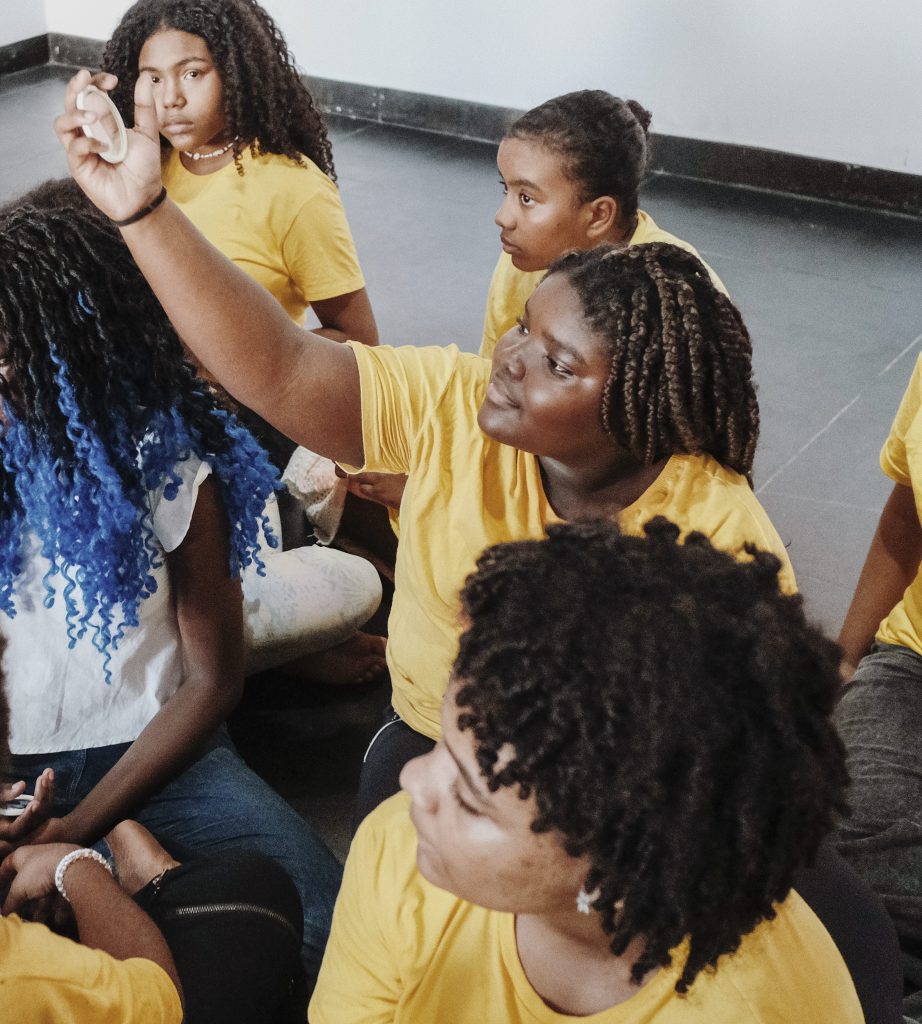
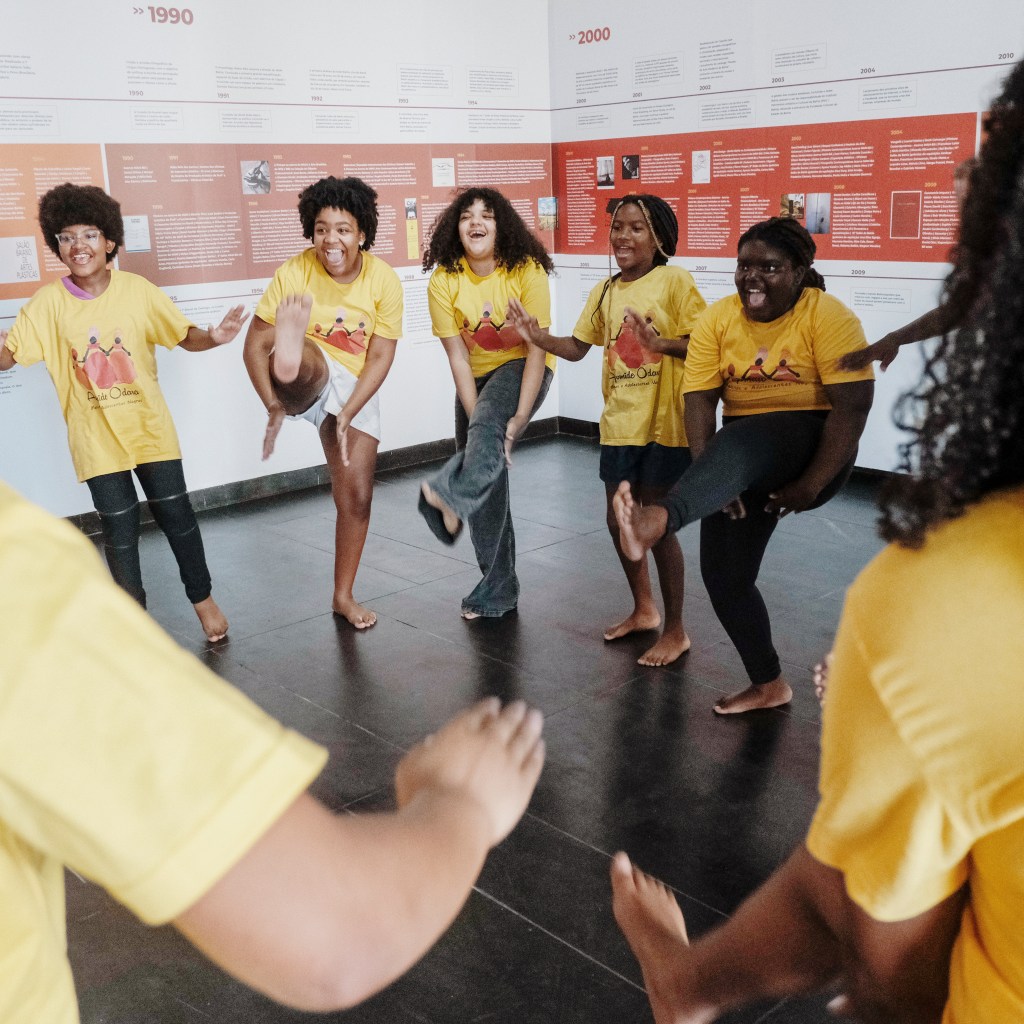
Ayomidês take part in weekly educational sessions where they explore subjects like education and ethnic-racial relations. The girls are encouraged to find their own voices by producing Instagram lives, social media videos, and by participating in public panels. Already, the Ayomidês are rewriting the narrative on what’s possible for Afro-Brazilian girls to achieve. One of the earliest Ayomidês, a young woman named Debora, is now a communications intern. Another former Ayomidê, Francine, works at UNICEF, helping train the next generation of adolescent leaders. And Julia has already set her sights on becoming a math teacher or a model.
“These are generations of Black women who did not have access to a school,” Naiara says. “These are generations of Black women robbed daily of their dreams. And we’re telling them that they could be the generation in their family to write a new story.”
Mama Habiba is reframing the conversation in Nigeria
Centre for Girls' Education, Nigeria. Captured by James Roh for Pura
In Mama Habiba’s home country of Nigeria, the scents of starfruit, ylang ylang and pineapple, all incorporated into the Pura x Malala Collection’s “Nigeria: Hope for Tomorrow,” can be found throughout the vibrant markets. Like these native scents, Mama Habiba says that the Nigerian girls are also bright and passionate, but too often they are forced to leave school long before their potential fully blooms.
“Some of these schools are very far, and there is an issue of quality, too,” Mama Habiba says. “Most parents find out when their children are in school, the girls are not learning. So why allow them to continue?”
When girls drop out of secondary school, marriage is often the alternative. In Nigeria, one in three girls is married before the age of 18. When this happens, girls are unable to fulfill their potential, and their families and communities lose out on the social, health and economic benefits.
Completing secondary school delays marriage, and according to UNESCO, educated girls become women who raise healthier children, lift their families out of poverty and contribute to more peaceful, resilient communities.
Centre for Girls’ Education, Nigeria. Captured by James Roh for Pura
To encourage young girls to stay in school, the Centre for Girls’ Education, a nonprofit in Nigeria founded by Mama Habiba and supported by Malala Fund and Pura, has pioneered an initiative that’s similar to the Ayomidê workshops in Brazil: safe spaces. Here, girls meet regularly to learn literacy, numeracy, and other issues like reproductive health. These safe spaces also provide an opportunity for the girls to role-play and learn to advocate for themselves, develop their self-image, and practice conversations with others about their values, education being one of them. In safe spaces, Mama Habiba says, girls start to understand “who she is, and that she is a girl who has value. She has the right to negotiate with her parents on what she really feels or wants.”
“When girls are educated, they can unlock so many opportunities,” Mama Habiba says. “It will help the economy of the country. It will boost so many opportunities for the country. If they are given the opportunity, I think the sky is not the limit. It is the starting point for every girl.”
From parades, film screenings to safe spaces and educational programs, girls and local leaders are working hard to strengthen the quality, safety and accessibility of education and overcome systemic challenges. They are encouraging courageous behavior and reminding us all that education is freedom.
Experience the Pura x Malala Fund Collection here, and connect with the stories of real girls leading change across the globe.
Mental health therapy in the United States is expensive. According to a 2024 study that analyzed over 175,000 psychotherapy providers, the average cost of a therapy session was $143.26 for those paying cash without insurance coverage.
Unfortunately, the high costs of mental health services and support can prevent many people from getting the help they need. According to the National Alliance on Mental Illness (NAMI), nearly half of Americans with mental health needs go without treatment.
To help others, a teacher on Reddit making a “teacher salary” with “teacher mental health needs” shared the affordable mental health resources they discovered to help them stay well on a small budget after “refusing to pay $175/hour.”
“Spent a summer researching what actually exists between ‘expensive therapy’ and ‘suffer alone.’ More options than I expected,” they wrote.
They found several mental health services that were both free and low-cost. “Total: under $100/month for real, human support,” they added, noting that they receive monthly therapy at a community health clinic for $35, peer support calls between sessions for about $50 per month, and a free NAMI support group twice monthly.
“It’s not perfect. I’d love weekly therapy with a specialist,” they shared. “But this is sustainable on my salary and it’s genuinely helping.”
These are some of the helpful resources they found, along with additional suggestions from frugal Redditors who shared how they afford mental health services.
According to the site, “Warmlines (also known as peer support warmlines or peer-operated behavioral health warmlines) are phone, chat, or text lines that provide empathetic listening and peer support to individuals who may be experiencing distress or loneliness, or those seeking validation from a peer with lived experience who identifies with their concerns and can offer a confidential and non-judgmental space for connection and self-directed exploration of possible solutions and alternatives.”
7 Cups is an online therapy resource. The teacher explained that, in their experience, “quality varies, but it’s free.”
Library books
The teacher shared that CBT (Cognitive Behavioral Therapy) and DBT (Dialectical Behavior Therapy) books available for free through their local library are “surprisingly helpful.”
Another Redditor noted, “a lot of public libraries now offer free access to meditation and mental health apps through their digital services. My library gives free Headspace access and also has Libby for audiobooks — there’s a surprising amount of good CBT and mindfulness stuff in audiobook form that you can just listen to on a walk.”
The U.S. Department of Veterans Affairs offers veterans a number of options for free mental health support.
“In the USA if you are a military veteran who served in a combat zone, you can go to a Vet Center and get mental health support for as long as you need it,” another Redditor shared. “For me that will be for the rest of my life. Not just for people who served in a combat zone, several other qualifiers– drone operators, Coast Guard drug patrols, military sexual trauma, and a few other I can’t remember. Call and ask and they will tell you. It saved my life.”
Apps
Redditors also shared their favorite free mental health apps.
“Chiming in with my favorite free resource: freeCBT app on iOS and Android. parts of CBT are so formulaic it can literally be a … form,” one explained. “Anyway this has definitely helped me when I remember to use it.”
Another shared: “There is also a free [mindfulness meditation] app by UCLA called Mindful worth looking into, to at least help ppl get started.”
The teacher noted that Open Path Collective can also help you find affordable therapists through its membership-based model.
University training clinics
Some local universities offer low-cost services through training clinics.
The teacher shared that you may be able to find affordable care, noting that in their experience they found help for “$20-50 with supervised grad students.”
One Redditor also shared that this helped them: “The university training clinic tip is gold. I did therapy there for a year, paid $25/session, and the grad student I worked with was excellent. They’re motivated and current on research.”
Another Redditor added that they were “also seconding the university training clinic tip. The grad students are usually way more up-to-date on current research than some private practice therapists who haven’t read a new paper in 15 years. And they’re supervised by licensed clinicians so it’s not like you’re getting unqualified help.”
A new trend is sweeping the Internet, and it goes something like this: A person posts a TikTok. They say they’re doing a “sprint month.” Then they disappear and return a few weeks later with a follow-up video. They’ve transformed. They’re calmer, more focused, and, in a weird way, more themselves. The comment section goes appropriately wild.
In May 2025, TikTok user Kelli (@growwithkelli) shared a video titled “A Sprint Month Changed the Trajectory of My Life,” which garnered over 58,000 likes and has been viewed nearly 700,000 times. In it, Kelli explains the sprint month phenomenon: “A few months ago, I did what’s called a ‘sprint month,’ and it absolutely changed the trajectory of my life. I feel like I’ve jumped timelines into becoming a different version of myself.”
“A sprint month is basically a process where, for thirty days, you become the person you want to be. You act as that person. Before long, you start to notice all the excuses you’ve been using for so long that have prevented you or stopped you [in the past]. For thirty days, you put those excuses to the side, and you sprint towards ‘the goal’ or the one thing that you know will move your life in monumental ways.” – Kelli
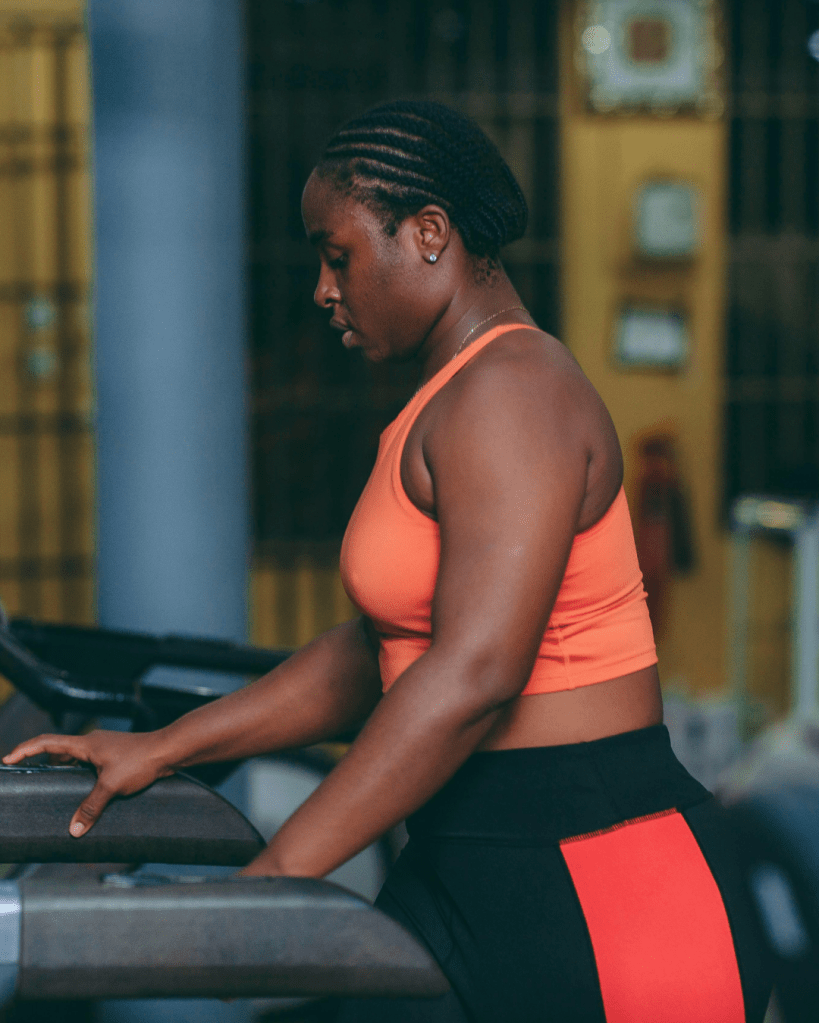
She goes on to detail her sprint month goals (technically, “sprint months”—Kelli kept this going for two consecutive months): she wanted to eat healthier, show up more at the gym, and pursue her passions outside her nine-to-five job.
Yes, you can accomplish a sprint month while holding down a full-time job.
This is more than a social media fad: it’s a certified movement supported by leading psychology. There’s a reason this concept has connected with hundreds of thousands of people on TikTok, Instagram, and wellness blogs. Sprint months tap directly into how our brains process time, motivation, and personal transformation. And we’re sharing the secrets to running your sprint month safely, the history of the trend, and the psychology of “locking in.”
The Internet’s reaction
Kelli finished back-to-back sprint months while holding down a full-time job. Seems like a lot, right? That’s exactly the point. In her viral video, she goes on to detail the positive effects she noticed during her sprint months: “When you start acting in alignment with who you feel like you’re meant to become, it creates this ripple effect in every area of your life.”
She provides examples: Over the past few months, she’s landed a job that’s more aligned with her personal passions. She started a social club that’s improving every day. Her anxiety softened. Her relationship with her partner improved. The best part? Those weren’t even her sprint month goals.
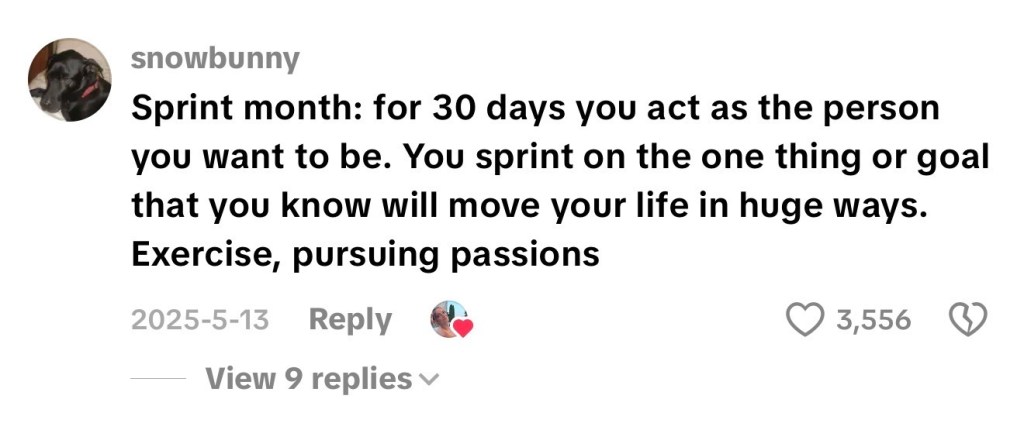
A comment from Kelli’s viral video. Photo credit: Screenshot
“These things happened, even though I wasn’t prioritizing those specific [areas],” says Kelli. “I was just focusing on a few key areas. That’s the power of a sprint month.”
Kelli’s comment section erupted, with other users chiming in with their own sprint month experiences. “I did that for a couple of months, and now I’m living in France in my dream apartment,” wrote one commenter. “The less you resist, the more you receive!” chirped another.
Hollie Fleischman (@hmfleischmann) wrote: “I saw your video and did one in March, and continue to do one every month. March was weight loss, April was studying for my certificate, and May is my financial month! I’ve lost over 25 pounds since then and saved over $3,000! Thank you for the idea!!”
Kelli isn’t alone. Search “sprint month” on TikTok, and you’ll find hundreds of videos—made overwhelmingly by young women—showing how they drastically changed their lives in just 30 days.
In a video titled “A Sprint Month could change your life,” Grace (@graciesecrist) shared her sprint month wishlist with the platform. “I’ve seen people posting about [sprint months] before, and I would always think, ‘Oh, I’ll start on the first of the month,’ or, ‘I’ll start on a Monday.’ But I need to stop making excuses for myself. Because at the end of the day, I’m only wasting more time,” she tells viewers. She’s aiming to walk 10,000 steps per day, break her doomscrolling habit, and explore New York City.
For people who don’t know where to start, a video posted by Kelly Matthews (@kellylmatthews) details a general template designed for those who want to “accelerate the timeline” toward becoming a different person. She recommends aiming for 10,000 steps a day (8,000 minimum), planning three gym sessions a week (and putting them on your calendar ahead of time), eating one gram of protein per pound of body weight per day (plus 25 grams of fiber), and putting your phone away half an hour before bed.
She ends the video with a challenge. “So what’s it going to be?” she asks. “Are you going to walk towards the goals you have? Or are you going to sprint? 30 days. That’s it. We can do it.”
From software teams to your TikTok For You Page
“Sprint months” didn’t come from the self-help world. The term “sprint” is actually lifted from Scrum, an agile project management framework developed for software engineering in the early 1990s. In the Scrum Guide(which details the product’s accountabilities, events, artifacts, and rules), co-creators Jeff Sutherland and Ken Schwaber define a sprint as “a fixed-length event of one month or less.” Sprints are designed to give developers a clear goal, a set timeframe, and an opportunity to review progress at the end.
Sprints entered the personal growth stratosphere when productivity writer J.D. Meier introduced the “Monthly Improvement Sprints” method. Instead of chasing a single long-term goal, his personal growth framework centers on a series of twelve monthly themes each year. “This way, each month would be a fresh start,” he writes. “What I generally notice is that a lot of the hurdles I hit in my first week are gone by week 2. Little improvements each day add up quickly.”
Meier adds suggestions for sprint month themes:
Make progress on a dream (chip away at a big dream or [invent] a little dream and make it happen).
Sharpen a skill.
Try your hand at something new.
Reshape your body.
Adopt a new habit.
TikTok users discovered this framework and, no pun intended, ran with it. Creator @kellylmatthews pumps up sprinters in her viral clip:
“For thirty days, you’re not going to walk towards your goals. You’ll be sprinting towards all the things you want to accomplish this year. This isn’t about toxic hustle culture. It’s not ‘I’ll sleep when I’m dead.’ It’s about increasing the amount of work that you’re willing to put in.”
Why 30 days hits that perfect sweet spot
Besides glowing anecdotes and enthusiastic letters of recommendation, there’s a decent chunk of psychology and science backing 30-day sprints. The “Fresh Start Effect” helps explain the psychology behind sprint months and why this 30-day challenge feels so motivating. Researchers from the Wharton School found that people are more likely to work toward their goals after a “temporal landmark,” like the start of a new week, a birthday, or the first of the month.
Temporal landmarks provide us with a mental clean slate. They are moments that help us distinguish our “past self” (who might feel discouraged by past struggles or perceived failures) from our “future self,” whom we believe will succeed. A sprint month transforms the beginning of the month into a portal: accept the challenge, and you’re given a fresh opportunity to embody the person you’re meant to become.
I saw @Sprint Month / vaere_wellness talking about the sprint month and I’m all in! Let’s gooooo! 1) Nutrition Coaching Certification 2) Maintain calorie deficit- for weight loss 3) Save a specific amount/ No excess spending #sprintmonth#fyp#over40
“While consistency over time is important, we can’t always put considerable effort toward one thing for a year. Having a clear start date and a clear end date enables us to push more than we usually would on something. The structure and containment of sprint months is what makes them so powerful and useful.”
While we normally pursue long-term goals (like exercising) to receive delayed rewards (like improved health), that mindset can be counterintuitive. Fishbach and Woolley found the opposite: immediate rewards—such as enjoyment, fun, or positive experiences—better indicate whether a person will stick with an activity. Immediacy creates a perceptual fusion between the activity and its reward, linking the two. In the context of “sprint months,” when you see results in such a short time span, your brain begins to associate your progress with pleasure. The activity itself—whether it be working out, eating better, or lowering your screen time—starts to feel rewarding. That’s incredibly powerful.
A daily feeling of achievement, a visible streak on a tracker, or encouragement from a TikTok accountability group can all act as immediate rewards that help keep motivation high.
How sprint months compare to other viral challenges
You may not have encountered sprint months before, but you’ve likely heard of their buddies: “75 Hard,” “The Winter Arc,” and “The Great Lock-In.”
Sprint months are part of a rising number of fitness challenges on TikTok. Photo credit: Canva
Sprint months don’t exist in a vacuum. They’ve emerged as part of a rising trend of short-term self-improvement challenges popular among Gen Z and Millennials.
75 Hard, created by entrepreneur Andy Frisella, is a grueling program in which participants must complete five intense daily tasks for 75 consecutive days: two 45-minute workouts (one outdoors), drinking a gallon of water, following a strict diet with no cheat meals or alcohol, reading 10 pages of nonfiction, and taking a daily progress photo. If you miss a single day, you have to start over.
“This is not a fitness challenge,” Frisella warns on his website. “I spent years feeling like I was nothing, trying program after program to get back on track…only to fall off right after I completed it. Then I realized that the root cause of all my problems was not addressed by any existing program.”
The Winter Arc rose to fame on TikTok in late 2024. This self-improvement trend avoids the “new year, new me” trap and urges people to jump-start their personal growth well before the ball drops on January 1. Miami-based influencer Carly Berges (known as @carlyupgraded) is widely credited as the creator of the Winter Arc; her TikTok about it has garnered over 4.8 million views.
“If you’re seeing this video before October 1st, then you are just in time for your Winter Arc,” says Berges. “This is a time where people tend to let their foot off the gas, but there are still three months left in the year.” She goes on to reframe October, November, and December as an opportunity to “dial the f*** in” and get serious about your personal transformation goals.
Unlike the severity of 75 Hard, the Winter Arc has no fixed ruleset. Instead, participants typically build a personal list of around 10 daily self-improvement habits they commit to for the duration, usually spanning fitness, sleep, mental health, nutrition, and relationships. The hashtag #winterarc quickly climbed to fifth on TikTok’s U.S. trending chart, accumulating over 250,000 videos.
Start with small actions you can consistently show up for.
Track your wins visibly and daily (Glenn suggests using a daily habit tracker or sticky notes).
Adopt the “never miss twice” rule. You can skip one day, but never miss two. Create friction for bad habits (removing harmful apps from your phone, for example) and enable flow for desirable ones (like laying out your gym clothes the night before).
Writer Cal Newport noted that “lock in” was voted the “most useful” term of 2024 by the American Dialect Society, stating that the concept reflects Gen Z’s desire for undistracted focus amid constant notifications.
In comparison to their counterparts, sprint months are shorter and more focused. These 30-day challenges are meant to be more accessible, and missing a day (or two!) doesn’t mean starting over, which provides a more realistic way to build habits.
The part no one talks about: Burnout
Now the not-so-fun part. When pushed to the extreme, sprint months can be dangerous, and it’s important to recognize that.
Dr. Meghan Marcum, chief psychologist at AMFM Healthcare, warns participants not to slip into all-or-nothing perfectionism. A single missed day should not feel like a total failure. Clinical psychologist Jamie Evan Bichelman echoes this: “Where this trend could become unhealthy is the act of comparison: seeing influencers who obsessively post about their progress…and comparing their achievements to your busy life.”
Planning a sprint month? Beware of burnout and perfectionism. Photo credit: Canva
Establish short, achievable minimums for tough days. Even five minutes spent toward your goal counts. Remember that perfection isn’t what you’re after, and be gentle with yourself.
Break your sprint goal into daily actions with a specific time and place. Prioritize these actions in your schedule.
Here’s a truth that gets overlooked: the 30-day sprint isn’t the finish line. It’s just the beginning.
The feeling you get when you complete a goal, or set your mind to something—and achieve it—feels like magic. But in reality, it’s the logical result of a combination of structure and intent. Yes, a concentrated 30-day effort builds the type of momentum needed to push through initial resistance. However, the habit won’t be second nature—not yet. But you’ve already done the hardest part: showing up.
The pursuit of happiness is seen as such an inseparable element of being human that the founders of the United States put it in the first sentence of the Declaration of Independence. Everyone wants to be happy. And yet, so many find happiness elusive.
Harvard University social scientist Dr. Arthur C. Brooks has made human happiness (and the pursuit of it) the central focus of his research. In his studies, he has identified four habits that the happiest people practice each day.
Defining happiness
How are “the happiest people in the world” measured? Brooks explained the happiest people are those who score highest on what he calls the “macronutrients of happiness”: enjoyment, satisfaction, and meaning.
Enjoyment doesn’t mean pleasure, Brooks said at a John F. Kennedy Jr. Forum in 2024. “The pursuit of pleasure is a great way to ruin your life,” he said. “Enjoyment takes the source of pleasure and adds two things: people and memory.”
Satisfaction involves both achievement and detachment. We are satisfied when we successfully achieve a goal. We are also satisfied when we want less.
Meaning is the most important of these macronutrients. “Meaning is about coherence—why do things happen the way they do? Purpose. What is my direction and goals? And significance. Why does it matter that I am alive?” Brooks said.
People who score highest in these areas tend to engage in four “big habits” every day. Brooks collectively refers to these habits as a “happiness pension plan” that people make deposits into:
Happiness Habit #1: Transcendence
“They’re paying attention every day to their faith or philosophical life, which is religious or not, but is transcending themselves and standing in awe of something bigger,” Brooks shared.
Transcendence is seeking something greater than yourself. Photo credit: Canva
Brooks talks about transcendence as a “vertical” practice, “where you’re looking for something that’s divine, something that’s bigger than you.” But that could look like a lot of different things:
“Maybe that means studying the Stoics and living according to their principles, even as an atheist,” Brooks explained to Mark Manson. “Maybe that’s walking in nature for an hour before dawn without devices. Maybe that’s studying the fugues of Bach. Maybe that’s studying the Vipassana meditation practice with seriousness. And maybe that’s going to mass every day. Transcending yourself is one of the great secrets to happiness.”
Happiness Habit #2: Family
“They’re taking their family life seriously,” said Brooks.
“All families are imperfect and everybody cares about their families. Anybody who says ‘I don’t care about my family’ they’re just lying. It’s very, very important that we understand that the strange and magical nature of family relationships we have, they’re some of the most intense love relationships that we have. And we didn’t choose them. It doesn’t even make sense. It’s almost a mystical thing, that people have those people who can drive you absolutely around the bend, make you completely crazy, and you didn’t even choose a relationship? And you feel great sorrow where there’s schism? This is something that we need to understand.”
Brooks said that stress in families due to differences in opinions or values is “inevitable.” He added that we need to understand the imperfect nature of families and that we all need to work at making those relationships better.
Happiness Habit #3: Friendships
Happy people also take their friendships seriously, Brooks said. “And that’s super hard for people in business,” he added, “especially the higher you go in management, the fewer real friends you have and the more ‘deal friends’ that you have. And deal friends don’t count.”
Brooks told the Mighty Pursuit podcast that friendship exists at three levels. Deal friends are the lowest level of friendship, where the relationship is transactional. Next are friendships based on beauty or admiration. The friend has something magnetic about them that attracts you and makes you enjoy being around them. Finally, there are friendships of virtue, the deepest and truest form of friendship. Brooks called this level of friendship “useless” because it’s not about either person gaining anything, but rather about truly knowing one another on a deep level.
“Last but not least is dedicating your work to earning your success and serving other people,” Brooks said.
“Joy comes from work under two circumstances that have nothing to do with money and power and position and prestige, nothing, nothing, nothing,” Brooks shared in a video. “It has to do with earning your success, which means that you’re creating value with your life, you believe that you’re needed. And that you’re serving other people. You’re doing something that’s actually good for other people.”
Joy at work doesn’t come from money, power, or prestige. It comes from earning your success, creating value, serving others, and knowing you are needed. When your work becomes an act of love, it sanctifies everything you do.
Love it or hate it, or love it and hate it, the Internet is a place of creation and destruction. It’s where people come together to share ideas and collaborate to make a better world. It’s also the destination of choice for those who like to sow chaos and contribute to the gradual unravelling of civilized society. In this article, we aim to focus on the positive side of the Internet by sharing one of the newest rounds of life hacks, which are seriously simple ways to make your life easier.
Tech writer Danny O’Brien coined the term “life hack” in 2004 to describe software-related tricks that developers used to make their lives easier. “Modern life is just this incredibly complex problem amenable to no good obvious solution,” O’Brien told Lifehacker in 2005. “But we can peck around the edges of it; we can make little shortcuts. And once you point out that everyone does that, once you coin the term, it’s really easy to pile a whole of lot of shared behaviors into one neat pile.”
Reddit is always a great place for people to share their latest and greatest life hacks. Recently, a user asked people to share the ones that are “so good, you can’t believe other people don’t know them.” The responses didn’t disappoint. They covered everything from time-saving keyboard shortcuts to how to pick the best orange at the grocery store. We combed the list to choose the best 17, and here they are:
17 lifehacks that are so great people can’t believe everyone doesn’t know them
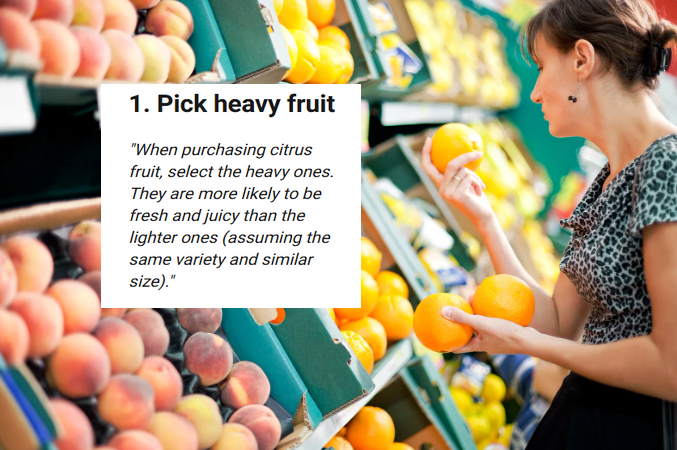
1. Pick heavy fruit
“When purchasing citrus fruit, select the heavy ones. They are more likely to be fresh and juicy than the lighter ones (assuming the same variety and similar size).”
“I learned from Alton Brown to pick the fruit that feels heavier than it looks. Means it’s more dense. Hasn’t failed me yet!”
“Dental tablets – like the ones that dissolve to clean dentures – clean out water bottles incredibly well. Can be super lightweight to carry while camping/hiking/traveling too. Put all my friends onto this hack!”
“Have been using them for decades for cleaning anything that’s not easily cleanable. And since it’s made to clean … teeth you can use it without worry for anything that touches food.”
Denture tablets are great at removing stubborn stains, descaling coffee makers, or getting the impossible red-sauce hue out of tupperware.
3. Clipboard history
“For people who work on Windows computers, hit the Windows key and V at the same time. Instead of pasting, it opens up your entire clipboard. Once you enable it, it will save a history of what you copy, and you can pick and choose.”
“I have worked with computers for decades and just tried this. I cannot believe I didn’t already know how to do this. Thank you random internet person!”
“Instead of hitting backspace 10x when you misspell a word and want to retype it you hold control and when you backspace it deletes the whole word.”
5. Proven stress reducer
“Minding your own business really does reduce stress.”
“Honestly, just leaving social media behind in the dust can be amazing for your soul.”
6. Latex for pet hair
“A wet latex glove in circling motions extracts all the pet hair embedded in your couch’s upholstery into neat little balls that you can easily collect and discard.”
“Tbh you don’t even need to get it wet. The friction and static clump everything together. I work as a dog groomer and at the end of every work day, I throw on a glove and just start going to town on any fuzzy surfaces.”
Tattoo Artist Oh Snap GIF by Hart & Huntington Tattoo Giphy
7. Two checking accounts
“Having two checking accounts. One for bills, one for spending. Total up all of your monthly bills and divide by how many paychecks you get in a month. That amount (plus a little more for fluff) should go into the bills account. The rest is for saving or spending and goes to the other account. Never keep the debit card for the bills account with you. That money is NOT for fun times!”
“I have not had a single money issue since I started doing this. Should be way higher.”
“If you have hiccup or sidestitch (running), you can rid of it by exhaling all the way till you have no more breath and then hold it for a few seconds.”
“For hiccups, I usually take really deep breaths and hold them. I guess either way is pretty much just stimulating the diaphragm, which helps stop the hiccups.”
There are many scientifically backed methods for getting rid of hiccups. No one in particular is a silver bullet, but lots of people find one that works for them and stick with it.
9. The trick to being a great listener
“Do you want to vent or do you want advice?”
“We’re on the same team. It’s you and me vs the problem, not me vs you.”
10. Unzip zip ties
“You can loosen zip ties by pinching the side of the block with pliers.”
“Alternatively, you can also push a pin or small flathead screwdriver under the tab to lift it and then let the zip tie out that way without damaging the block.”
11. Lettuce that lasts
“Wrapping lettuce in aluminum foil makes it last for a month.”
The key is getting the moisture levels just right. A sealed plastic bag will make the lettuce soggy, while storing it in open air will cause it to dry out. Loosely wrapped foil keeps just enough moisture on the leaves.
12. Brag your way to the top
“Work pro tip, particularly if you are in an office/corporate environment: Just doing your work silently isn’t enough. There is a reason those most vocal are usually who get promoted. It might be unnatural, but you need people to know the work you’re delivering. You have to be comfortable humble-bragging to keep climbing.”
“Can confirm. Have talked myself through many promotions all the way from the floor to a director position. I guess I have to do some actual work soon though… meh, let me go see who’s by the coffee machine now. It’s been five minutes after all.”
“Prayer and meditation do not change other people or your surroundings; what they change is *you*: how you interpret situations, other people’s actions, how you react, etc. and as you calm and filter life through this lens, the people around you become calmer, more at ease, more open to connection with you, and life expands.”
“This is also what mindfulness does, too! And ACT (Acceptance and Commitment Therapy). They help you learn to give space to your thoughts, feelings, and actions before you make a decision to keep them or let them go.”
14. Get moving
“If you’re depressed, don’t feel good, maybe had a bender or anything else, get out from underneath the blanket and take a walk around the block. You will feel 10x better after about 10 minutes of moving. If you’re actually bed-ridden or sick sick. Don’t. But if you’re hungover or beating yourself up or you don’t feel good, go for a stroll. You’ll feel better when you get back.”
“When I was super depressed, I’d call it my depression shuffle. Once every 24 hours, didn’t matter what time, I had to go outside for 10 minutes. Didn’t get properly dressed or anything, coat and beanie, and then at minimum a slow shuffle to loop twice around my building. Usually I went right back to bed after. It didn’t make everything instantly better, but it did put me one inch closer toward recovery. An inch is an inch, I’ll take it.”
“Using a slightly damp paper towel to cover food when you microwave it. Prevents it from getting dry and retains more flavor.”
“Also, if you’re reheating leftovers and don’t want them to be soggy from the microwave, put them in the Air Fryer for 5 to 7 minutes. Works well for French fries, chicken wings, spring rolls, etc.”
16. Revolving credit
“I have one credit card that is used exclusively for recurring bills, and it never leaves the house. It’s also set to autopay, so I never have to think about it.”
17. Don’t worry about what you can’t control
“Stop allowing things you can’t control to live rent-free in your head.”
“A very helpful trick I learned for when anxiety is making me ruminate at night is to pick a random shortish word, preferably with nonrepeating letters (ex, “blue”). Take the first letter of that word (B) and just start listing any and all words you can think of that start with that first letter. When stuck, move on to the next letter (L) and start listing those words. If you make it to the end of your word, start over with a different word and eventually your brain gets bored enough to let you fall sleep lol. I can usually go from high anxiety to dead asleep within a few minutes and most often before I finish my first word, so it might be worth a try! Bonus: there’s nothing to learn or practice for it to work since it’s just listing words 🙂 hell, it even works if you misspell your base word lol.”
This article originally appeared last year. It has been updated.
Do you feel like your brain is constantly juggling a million things? Like your mind is on overload and you cannot focus? Between the effects of scrolling social media, navigating the 24/7 news cycle, and managing work and family life, your brain can easily feel overwhelmed.
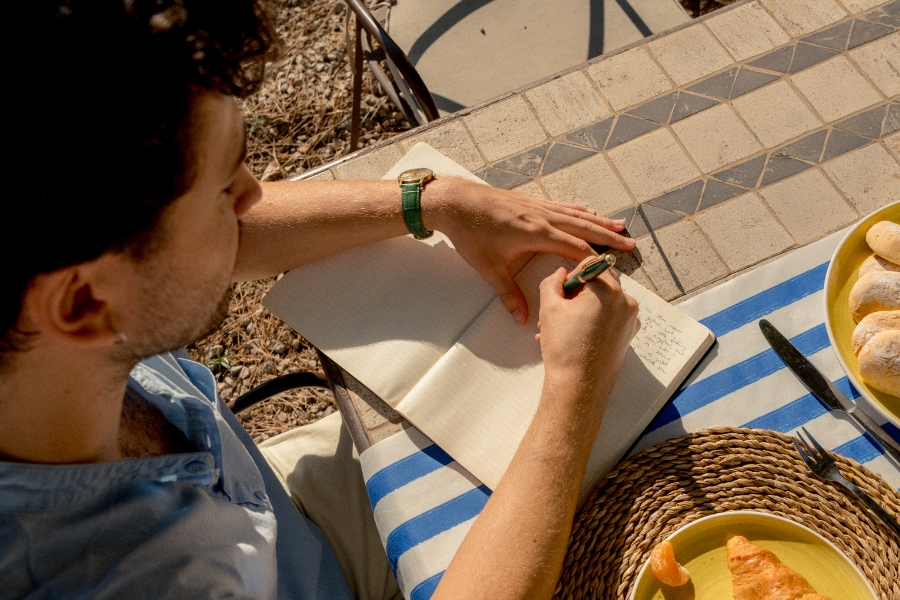
Even when you have quiet moments of calm, your mind might still feel too cluttered to get your thoughts in order. However, according to pediatric neurologist Dr. Arif Khan, there is an old-school solution to that problem with modern science to back it up: journaling. Khan goes a step further by sharing three specific techniques and the neuroscience behind why they help.
“In brain scans, something remarkable happens when people write about their feelings,” Khan says in a YouTube video. “The regions for motion and the regions for reasoning begin to synchronize, as if the brain is learning to talk to itself. That is the hidden power of journaling. It’s not just reflection. It’s neurological repair.”
Khan explains that when you write, your prefrontal cortex—the brain area that helps with planning and analysis—begins to communicate with your amygdala, the brain’s emotional reaction center. He cites a 2021 Stanford University study, which demonstrated that expressive writing can help your brain recover from stress.
“The mid-cingulate cortex, which usually fires under emotional pressure, becomes calmer and more coordinated,” says Khan. “And when you put emotions into words, the ventrolateral prefrontal cortex turns on, helping to quiet the amygdala. This process is called affect labeling; it allows you to feel without drowning in the feeling.”
Writing by hand matters, Khan adds.
“A 2023 study in Frontiers in Psychology showed that handwriting activates more areas of the brain than typing,” he says. “When your hand moves with your thoughts, that is, the mind slows down just enough to make sense of itself.”
Here are three journaling techniques Khan recommends to reduce brain clutter:
Technique #1: Expressive writing
Expressive writing, a technique developed by psychologist James Pennebaker, involves writing about something you feel strongly about.
“Think about something you still carry—a disappointment, a loss, a moment that lingers longer than it should,” Khan says. Then write about it for 15 to 20 minutes.
“Don’t worry about grammar,” he adds. “Don’t edit. Don’t write for anyone else. Write until you run out of words.”
Khan says this technique is effective because the brain treats emotional suppression as “unfinished work.”
“Studies show that after expressive writing, the brain’s emotional centers quiet down while cognitive control increases,” he explains. “Your body feels lighter because your mind has stopped trying to contain what it has finally released. You might cry. You might feel tired. You might want to stop halfway. That’s okay. Healing requires a small amount of discomfort before calm returns.”
Technique #2: Gratitude journaling
Gratitude journals aren’t new, but Khan explains how and why they work from a neurological point of view.
Instead of writing about what’s troubling you, write down two or three things you’re grateful for. It could be anything, but stay specific. (Khan gives examples like “the smell of rain,” “a message from a friend that came at just the right time,” or “a meal that made you feel safe.”)
“Gratitude journaling doesn’t force positivity,” says Khan. “It retrains your attention. Neuroscientists have found that practicing gratitude activates the ventral striatum and the medial prefrontal cortex regions that regulate mood and motivation. When you do this daily, you teach your brain to look for what is stable instead of what is threatening.”
Khan says gratitude journaling “tunes your nervous system towards balance.” Rather than erasing struggle, it helps you see beyond it.
Technique #3: Reflective reframing
Reflective reframing journaling focuses on a specific incident and helps you work through it. Khan says to think of a challenge you’ve had and write about it plainly. No judgment, just write what happened. Then write down:
What it meant.
What it revealed.
What it taught you.
One small action you can take the next time something like that happens.
Emotion regulation is like other skills: it takes practice.
After 2 weeks of daily journaling to reframe unpleasant events, depression dropped, life satisfaction rose, and the benefits lasted at least a month.
“This pattern strengthens the prefrontal regions that regulate emotional reactivity,” Khan says. “It builds the ability to pause and reinterpret before reacting. You learn to step back—not to detach, but to understand. Over time, this practice reshapes resilience itself. You begin to see difficulties not as failures, but as data points for growth. That subtle shift changes how your brain responds to future stress.”
Journaling rewires the brain over time
Khan says you don’t have to use all three journaling techniques every day.
“Think of journaling as mental cross training,” he says. “Use expressive writing when emotions feel heavy. Use gratitude journaling when you feel numb or distant. Use reflective reframing when life feels confusing. Each practice strengthens a different circuit of awareness.”
Khan says that journaling isn’t just self-expression but self-construction. While it can help in the moment, the real power is the change that happens over weeks or months. “You pause longer before reacting. You remember more clearly. You recover more quickly,” says Khan.
Journaling has genuinely changed my life.
I used to think it was just another trend people hype up for a few weeks and move on from. But it works like magic, and the reason is surprisingly simple: it reduces cognitive load.
If you are someone who deeply cares about everything,…
People in the comments of Khan’s video shared their own experiences with how journaling has impacted their lives:
“I’ve done all these. I’m 68 now, and I’ve been journaling since I was 13. I have all of these journals. It is all very true and tried out. Today, people ask me how do I live my life so well. This is one of the secrets…..”
“This is fascinating. When I was about 12, I had a teacher who made us keep journals, and we would write about a given promt for 10 minutes at the start of each class. On the days when we wrote about something negative/stressful, she always told us to just keep writing until every single word we had about the topic had drained out. Sounds like we were actually doing technique #1!”
“I recently went thru a 12 year relationship breakup. I felt so bad , like no pain I had ever experienced before. After two weeks of this agony I started a journal and wrote whatever came into my mind including my diet. Now, a month and a half later I have stopped daily entries and my anxiety has dropped from 100 pc every day for a month to almost zero. I write as I feel the need. What an amazing insight this video has given me.”
“I have survived and thrived by doing this kind of journaling since 1996 when my husband left me with our three wonderful children (thank God for them!). I highly recommend writing as often as you can on both good and bad days.”
“I’m 27. I’ve been journaling since 16/17. I can honestly say it’s gotten me out some pretty dark places. All types a writing, expressing, pain, gratitude, to God, to my future self, it all helps. Writing and journaling are a lost art. I hope more people get in tune with themselves a little more and open up to writing and journaling. It’s a beautiful experience.”
“I started to write about my life at 75, mainly for my children, grandchildren and future generations. I have to say that getting all the hurt, upset, sorrows and jubilation has given me peace at last.”
You can follow Dr. Khan’s The Brain Project channel on YouTube for more neuroscience info.
This article dives into timeboxing, and why it’s such an effective technique—and why it remains underused by the general public. By the end, you will have the tools to incorporate timeboxing into your daily routine.
What is timeboxing?
It’s simple. Timeboxing is a time management technique in which you set a specific, fixed time limit for a single task. You then commit to focusing on it exclusively during that period. It’s like setting up a personal one-on-one with your to-do list. When the allocated time is up, you stop and move on to the next scheduled task. What if you’re not done? Too bad. You move on to the next task, regardless of whether the previous one is fully finished.
Think of it as setting healthy boundaries for yourself and your work. By enforcing this strict, self-imposed deadline, you naturally eliminate distractions and sharpen your focus. You channel all your energy into completing the task within that set timeframe. It turns a vague goal like “work on the report” into a specific action like “spend the next 45 minutes writing the introduction to the report.” Genius.
Why does it work?
The secret to timeboxing lies in its simplicity. By allocating a fixed period to a specific task, you avoid open-ended to-do lists. No vague goals to “get it done today.” You’re left with clear, defined work.
The origins of timeboxing date back to the mid-1900s. In November 1955, British naval historian Cyril Northcote Parkinson published a satirical essay in The Economist with a now-famous observation: “Work expands so as to fill the time available for its completion.” The illustration that accompanied it was a drawing of a woman focused on a single task—sending a postcard—who spent the entire day doing it.
Parkinson’s Law gives us a sharp, accurate insight into human behavior. Photo credit: Canva
This concept, known as Parkinson’s Law, is a sharp, accurate insight into human behavior. Give a task with no clear deadline, and it will expand to fill all available time.
This structured approach to time management soon became a core element of Agile software development methods like Scrum. Instead of letting projects drag on indefinitely, developers began using fixed-length “sprints”—in essence, timeboxes—to complete specific chunks of work. This shift brought predictability and focus to what was often a chaotic process.
While timeboxing originated in software engineering, its power wasn’t limited to coding. The practice has since been widely adopted for personal productivity, and it’s supported by fascinating science that explains why it works so well across so many tasks.
What the research says
A significant 2021 meta-analysis published in PLOS ONE examined 158 studies involving 53,957 participants to determine whether structured time management is effective. The results even caught the researchers off guard.
They found that time management increased life satisfaction by 72%, whereas job satisfaction rose by only 19%. Researchers also discovered that “time management may primarily enhance wellbeing rather than boost performance.” What does that mean? Essentially, the main advantage of managing your time well is not just higher productivity, but a more fulfilling and meaningful life.
The psychological reasoning behind timeboxing is even more important. Research by psychologist Roy Baumeister shows that decision-making is a limited resource that gets used up. Every moment you spend wondering “what should I work on next?” uses up the same mental energy you need for your most important work. Timeboxing removes those small, repetitive decisions completely. Your past self, during the planning stage, decides for you, so your current self can just focus on doing the work.
Then there’s the cost of distraction. Gloria Mark’s research at the University of California, Irvine, found that it takes an average of 23 minutes and 15 seconds to fully regain focus after being interrupted. Timeboxing creates protected windows where interruptions are explicitly blocked, preserving the deep focus that makes real progress possible.
How timeboxing flips the traditional approach
Most people organize their work—and life—around to-do lists. The issue with these lists, as Zao-Sanders points out in his HBR article, is that they lack a system for when tasks should be done or how long they should take. Tasks often remain on lists forever, growing and shrinking, getting delayed, mainly because there’s no sensible limit.
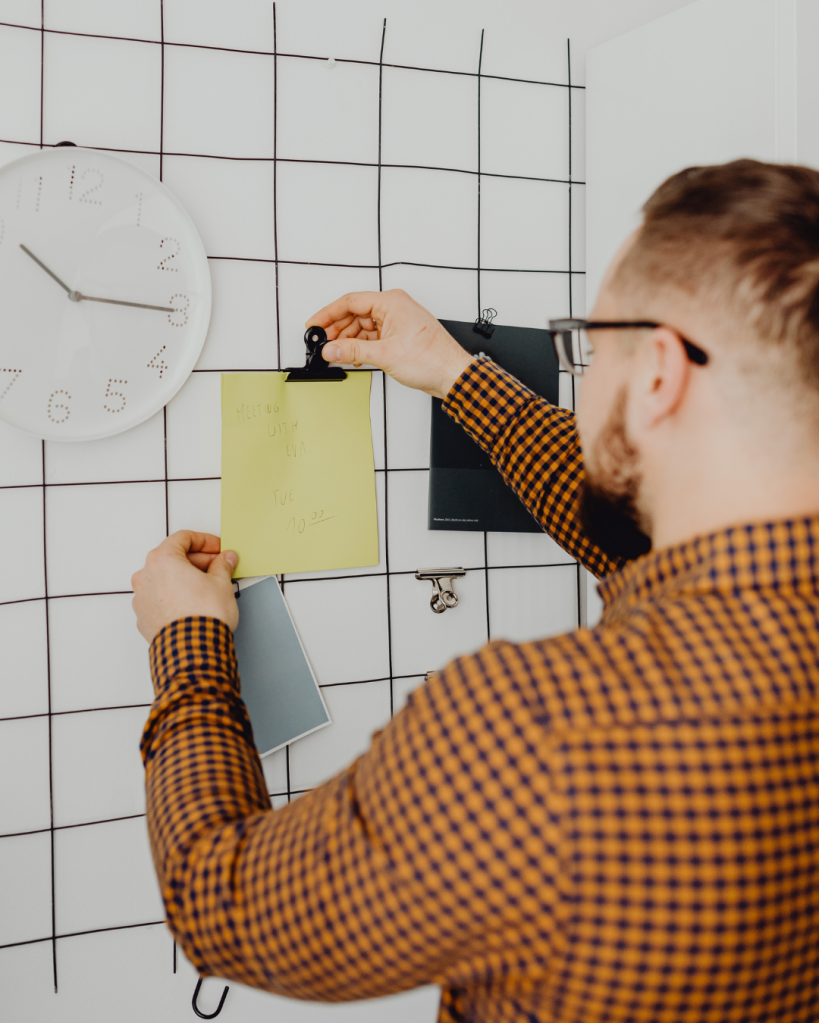
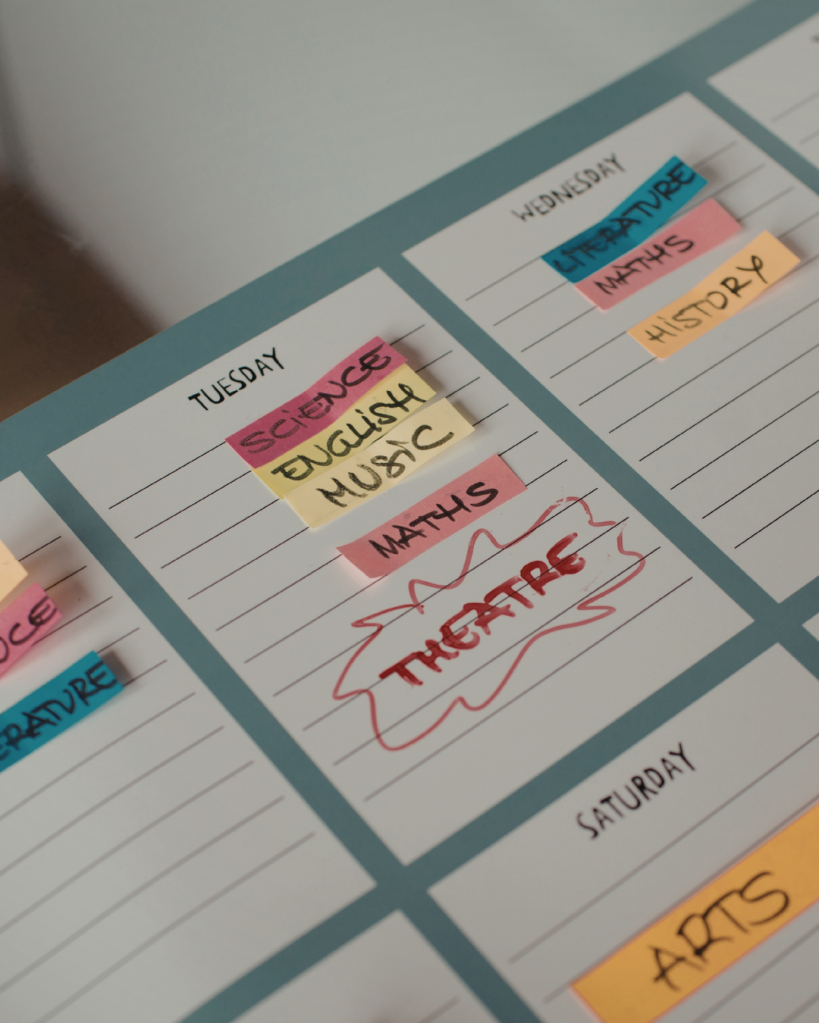
Timeboxing moves tasks from the list to your calendar. Each task is assigned a specific start time, an end time, and a clear goal. Your calendar becomes more than just a schedule: it offers a full view of how your time is really used. It becomes a record of what you’ve achieved and a tool for understanding how long things truly take.
This shift matters beyond just personal productivity. When your timeboxed calendar is visible to colleagues, it becomes a tool for coordination. Teams can plan around each other’s focus periods. Shared visibility decreases the constant flow of “quick questions” that disrupt the workday.
The people who already live by it
Some of the most demanding schedules in the world operate on timeboxing principles. Both Bill Gates and Elon Musk reportedly divide their days into five-minute blocks: a hyper-detailed version of the same core practice. Jack Dorsey, former CEO of Twitter and Square, used a broader approach called “day theming,” dedicating each day of the week entirely to a specific business function. Author Cal Newport has estimated that “a 40-hour time-blocked work week produces the same amount of output as a 60+ hour work week pursued without structure.”
These are not coincidences. Each of these approaches follows the same basic idea: when something has a place, attention goes there.
How to get started
You don’t need a sophisticated app or a complete calendar overhaul to start timeboxing. The core method has seven steps:
List your tasks. Write down everything that needs to be done—big projects, small administrative items, emails, and all of it.
Set clear goals for each task. Specify what “done” looks like. “Work on the report” is too vague. “Complete the executive summary section” gives you a clear target.
Estimate the time, then add a buffer. Most people consistently underestimate how long tasks take (psychologists call this the planning fallacy). Add a 25–50% buffer to your initial estimates.
Schedule blocks of time on your calendar. Assign particular start and end times to each task. Think of these blocks as scheduled meetings.
Work without interruptions. When a timebox starts, close unrelated tabs, mute notifications, and focus solely on the task at hand.
Stop when the time is up. This discipline keeps the system working. If a task isn’t finished, evaluate how many more timeboxes you’ll need and reschedule — don’t let it spill over into the next block.
Review and adjust. At day’s end, evaluate how your estimates aligned with reality. This data sharpens your future planning.
One practical tip: keep your blocks under 90 minutes. Research on cognitive rhythms shows that sustained, high-quality focus has a natural limit. For larger tasks, schedule multiple 60–90-minute sessions throughout the day or week instead of a single marathon session.
Start small, then build
The biggest mistake people make when adopting timeboxing is going all-in right away. Timeboxing your entire week from the start often feels overwhelming—and people give up before it proves useful. Begin with two or three timeboxed tasks each day. Allow yourself a couple of weeks to fine-tune your estimates and develop the habit of focused work before expanding the system.
The key to effective timeboxing is not overwhelming yourself. Photo credit: Canva
If you’re unsure where to start, try this: select your top three tasks for tomorrow, estimate how long each will take, add a buffer, and schedule them on your calendar tonight. That’s all. One week of this practice will reveal more about how you work than months of vague intentions.
The 2021 meta-analysis found that the effects of time management on well-being persisted even when performance improvements were small. That means even imperfect timeboxing—estimations that are off, occasional overruns, days that don’t go as planned—still make a difference in life satisfaction. The structure itself has value, regardless of whether you carry it out perfectly.
Your calendar awaits
Parkinson’s Law has been shaping your schedule for years, whether you realize it or not. Tasks grow, focus scatters, and days slip away between intention and action.
Timeboxing gives that time shape: a start, an end, and a purpose. The research clearly shows that the practice provides benefits beyond the office: reducing stress, increasing life satisfaction, and giving a sense of control over how your days unfold.
Your to-do list will always have more on it than any single day can hold. What timeboxing offers is a way to stop fighting that reality and start working with it, one focused, bounded block at a time.
While moving into a new place is exciting, for most people, the actual process is exhausting. Even with the help of movers, boxing up all your belongings and getting them into your new home can take a lot out of a person. At the end of move-in day, most folks just want to relax, unwind, and refresh after a long day before unpacking everything in the morning. But then the question hits: “Wait, which box has the toothbrushes?”
This common occurrence is why moving companies and folks on Reddit recommend packing a separate “first night box” among all your other belongings. A first night box is a box of items you and your family will need to ensure a comfortable first night in your new home. This way, you won’t have to open various boxes to find essentials when everyone is tired and needs to recharge after the move.
The concept isn’t too dissimilar to a go bag for emergencies. Each person packs essentials such as toiletries, phone chargers and snacks, into a box. Depending on the size of your family, each of you may have to pack your own first night box.
Depending on your family, you might want to have an additional first night box for your baby. Include things they’ll need like bottles, diapers, and their favorite toy.
If you own a pet, you may want to pack a separate box with pet food, bedding, and toys, among other items. This can help with your pet’s transition to the new place. You don’t want to hunt for the dog’s leash if your pup needs to go outside.
Make another box for tools
Folks also recommend having a separate toolbox with items you’ll want to have at the ready to hang up pictures, assemble bookcases, and the like. They also recommend packing cleaning supplies in the box to quickly clean up any move-in messes.
Some items recommended for this box include:
Power drill with charger, battery, and drill bits
Screwdriver
Fasteners (nails, screws, etc.)
Flashlights
Spare light bulbs
Paper towels
Cleaning solutions
Dish soap
Trash bags
Hammer
Box cutter
For all of these boxes, make sure they are the last items added to the moving truck so you can easily access them. This can also allow you to unpack just those boxes and leave the rest in the vehicle until the morning.
Moving can be a pain, but preparation like this can make it less stressful. It also allows everyone to get what they need to recharge as you make your new place truly home.
The average adult makes upwards of 35,000 decisions a day. These can include the bigger, more existential questions that require reflection to weigh the pros and cons. But the vast majority of decisions seem insignificant: What will I wear today? Order takeout or make food at home? Podcast or playlist? Still, these fleeting impulse choices can play just as big a role in our lives as the more thought-out ones.
Prime examples of this were recently made on Reddit, when people were asked to share a “decision you made in under 10 seconds that changed your life forever.” These seemingly insignificant choices changed fates in profound ways.
“Decided to go to Subway instead of Dairy Queen. They were across the street from each other and I was passing through town during lunchtime. Ended up hitting it off with the woman making my sandwich. Next week is our 11 year anniversary.”
“My best friend said she wanted to move 2000+ miles across the country back to her home state and asked me if I wanted to come. I didn’t think, said ‘Yup, I’ll go.” We moved, less than a year afterwards I met my now wife. Couldn’t be happier.”
“Said yes to adopting a stray dog that followed me home. 10-second ‘sure why not’ moment—now he’s my best buddy for 8 years.”
Others were able to uncover new passions they never imagined.
“I flipped a coin to decide if I was going to quit my job. Heads. I quit. A friend saw my lights on that night and stopped by to see what I was doing. I told him what happened, and he told me it was great timing. They let someone go at his job that day. He set me up with an interview for the next day, and I was hired. There were only three people who worked there. I eventually became the plant manager and have been working in management ever since!”
“Saw a random advert advertising scuba diving certification. I signed up thinking ‘why not?’ I’m now an aspiring diving instructor!”
“Early 20s and my sister asked me to drive her to the music shop to buy a guitar. I point one out and say ‘that black and gold one is gorgeous. Get that one.’ She tries it out and says ‘ehhh, I dunno if I really feel this one.’ I tell her that if she doesn’t buy it, I will, and she says ‘you don’t even play guitar! What are you gonna do with it?’ Walked out of the store with it on a complete whim, spent 3 months learning before I started doing open mics, making friends at the music shop, joining a band, and having the time of my life throughout my 20s.”
For some, a 10-second decision ended up with an unexpected windfall.
“Decided not to get into an elevator with my ex and her new boyfriend, so I took the stairs instead. On the third flight, I found a discarded scratch-off ticket that ended up being worth $50,000. It’s the only time in my life where being socially awkward actually paid off my mortgage.”
“A family in my marina announced that they are moving away the following week. They were going to turn their sailboat over to a broker to sell it for them. I mentioned that I was contemplating a larger boat with a smaller engine and would be interested in theirs. I asked what price would they consider? He said, $10k. I said, okay, and we shook on it. The boat was worth over $24k. I got a wheelbarrow from the marina corral and removed stuff from my smaller boat, walked it over to their dock, and loaded it onboard. That was ten years ago, and I still live on it six months out of the year. Sweet.”
Sometimes, these kinds of life-altering changes are simply fresh new outlooks on life.
“I was going through old text messages with my then girlfriend and realized I had become a very negative person. I decided right there to always look for the bright side of things. It takes some effort but that was 12 years ago and I’m much happier. It becomes second nature after a while.”
In many instances, a 10-second decision prevented tragedy for themselves or others.
“Most of these answers are super happy and mine really isn’t but fits the question. Mine would be double checking on my wife before bed. She suffers from PTSD, depression and anxiety and had just been ‘off’ all day. I checked with her a couple times and she said everything was alright each time. It might sound weird but she was too happy and calm but kind of sad at the same time. It just didn’t sit right with me. She said she was going to bed and we kissed and I asked again she chucked and said to stop worrying. She went upstairs and I waited a few seconds and went up to say I think something is wrong. I stopped her from committing suicide that night. Normally I would take her for her word but that decision was 12 years ago and we are having the best version of our lives because I listened to my gut and went and checked.”
“One night I drove home from working evening shift (like 2 miles) and when I glanced in the rear view I had chills when I saw the headlights behind me at a red light. I got to my house and was about to park but then heard a voice in my head tell me to keep driving, so I did… and they continued to follow me. Called my dad to stay on the phone as I drove to a police station. Car stopped following when a cop car pulled up behind us (coincidentally). Next morning read about an armed carjacking in the area about an hour later.”
“In middle school my best friend invited me to Knott’s Berry Farm with another group of kids he was friends with…I got to my friend’s house after running some errands with my mom. There were 5 kids aged 14-15 there. I asked my friend how we were getting [to Knott’s Berry] and he said he was driving his dad’s car (he was underage and had no license). I was nervous but I wanted to look cool so, I said ok. Right before we got into the car, I had the worst feeling come over me. In approximately 5 seconds, I felt a drop in my stomach to a bottomless pit, a hot flash followed by chills, and intense nausea. I literally left without making a sound, running to a nearby Starbucks and using a stranger’s phone and asking my mother to pick me up. I felt so embarrassed. I knew I was going to get shit all month from my friend…A few hours later, they were on their way home on the freeway and lost control of the vehicle. All 5 died.”
And yet, for some (make that many) of us, knowing that every decision is uniquely important can be a major source of anxiety, causing us to freeze via “analysis paralysis” and not choose at all—which, in itself, is a choice (they’re inescapable!). In fact, our brains tend to struggle more with less risky decisions.
Interestingly, experts seem to suggest combating this ambivalence with tools that force a quick deadline. You can either toss a coin or set a time limit, which would arguably incite one of these potentially life-changing 10-second decisions.
Life will inevitably call on us to make both long, thought-out decisions and to go with our gut. But hopefully, this reminds us that even our whims can lead to something truly pivotal without making us lose our minds.