upworthy

vcr tapes

VHS, VCR, Tape player, 1970s, 1980s, Gen X, Boomer
Photo Credit: Canva

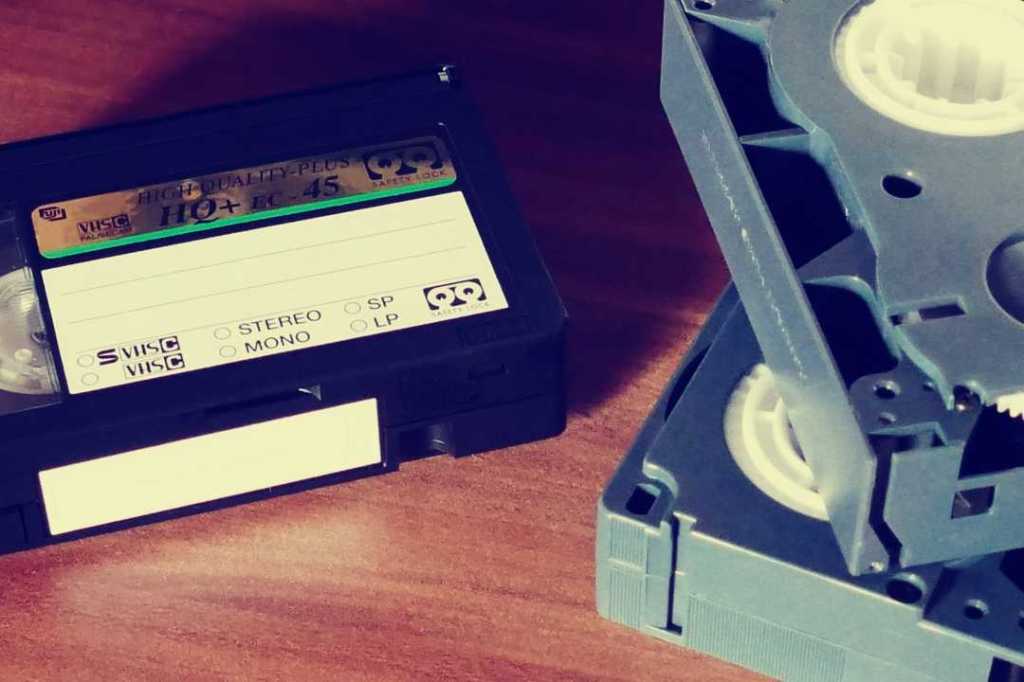
A few VHS tapes on a table.

There are certain words, expressions, and references that, when used, can absolutely give away a person's generation. If someone hears "Leave a message on my machine," they might assume they're dealing with a Boomer. On the other end of the spectrum, if someone says, "Hit me up on Snapchat," one could place bets that it's not a Boomer or even a Gen X-er talking.

So when @Bittenhand19 took to Threads to state, "If I hear a person say 'VHS player' I know for a fact that person was born after 1995," it got quite a lot of people weighing in.

But let's rewind for a quick technological history lesson.

A brief history of the VCR. www.youtube.com, 21st Century Entertainment

Way back in the 1950s (1956, to be exact), the first VCR, or Video Cassette Recorder, was released to the public. According to Christian Roemer's article on the history of the VCR, "The first widely available VCR-like device was mainly intended for television networks, and it was incredibly expensive. Its 1956 price tag was $55,000, which converts to about half a million dollars in 2022. That's right: the first VCR analogue was more expensive than a house!"

Over the decades, the price tag dropped, and by the early 1970s, the first VCRs were hitting store shelves for consumers. But here's where the confusion might come in for some. "The problem was that VCRs didn't all use the same tapes at that point," Roemer wrote. "Sony had Betamax, JVC had VHS, and a couple other stragglers bounced around too. Sort of like different video game systems, the different home video formats vied for market share and duked it out for a while. By the late 1970s, the public had spoken with their wallets, and VHS won the day. VCRs would eventually be in practically every home worldwide."

VCR, VHS, Tapes, 80s, 90s A VHS tape is pulled out of a VCR. Giphy Video VHS GIF

Interestingly, a post titled "The Rise and Fall of the VCR: A Comprehensive History" on the DiJiFi website further explains:

"Despite incorporating state-of-the-art sound and audio quality at the time, Betamax and VHS were at war. JVC developed and released the VHS in Japan in 1976, then released the product in the U.S. market a year later. While Sony's Betamax machine was the first form of videotape hardware to host home videos, it was no match for JVC for several reasons.

The VHS has a lighter build, resulting in cheaper manufacturing. The rectangular box could hold twice the amount of film tape, allowing it to play longer features that Betamax could not. While Sony's Betamax had superior picture quality, the VHS took first place in terms of cost-effectiveness and convenience, making it the preferred home videotaping format."

Which brings us back to the Threads post. With nearly 2,000 likes and more than 300 comments, people most definitely had their own takes. Some jumped in to say the correct term was "tape player," with one person specifically writing, "tape player, if you're nasty."

Betamax, Sony, 1980s, Gen X, Boomer A Betamax sits on the floor. commons.wikimedia.org, File:Sony Betamax SL-C7E.jpg - Wikimedia Commons

Many seem to know that the correct term is VCR, since VHS was merely a brand name (not unlike the way "tissues" and "Kleenex" are often used interchangeably).

Another commenter went into greater detail, while also pointing out that someone born in 1995 understands the distinction: "1995 here. Wrong. All VCRs played VHS tapes, but not all VHS players were VCRs. There were dedicated VHS players that could only play tapes, but couldn't record onto those tapes."

This commenter goes deep into the weeds: "You do not know this for a fact. They could possibly be someone who thought Betamax was a superior format for video cassette recorders. Or differentiating from their regular VHS VCR and one that did S-VHS, Video8, VHS-C, Hi8, PXL-2000, etc. etc. etc. Sometimes people have to make a distinction."

Some went the humorous route: "VHS player? That's a VCR. Stands for…video…crambobulating…robot."

Perhaps even more interestingly, some claim it's not a generational thing at all, but a geographical one: "Funny, if I hear a person say 'VCR,' I know they're American."