This easy melatonin-boosting shower trick may be the answer to getting deep sleep
A better night's sleep starts in the shower.
Dark showering may be a helpful nighttime routine for better sleep.
Showering at night, rather than in the morning, has been shown to improve sleep quality. (Plus, showering at night can say a lot about your personality.)
Hopping in the shower at the end of the day can help prep your body for sleep. But one way to enhance your nighttime shower experience for even better sleep is to cut the lights and try "dark showering."
Showering in the dark is a recent health trend on TikTok that many people claim helps them fall asleep faster and wake up feeling more rested. But are those claims really true? Here's what you need to know.
@emgillyy As a mom who’s husband works 24/7 & no family close I’m always finding ways to reset my nervous system so I can show up & be the best mom I can be. #sahmlife #sahmsoftiktok #motherhoodunfiltered #momhacks #motherhood #motherhoodunplugged #momlife
What is dark showering?
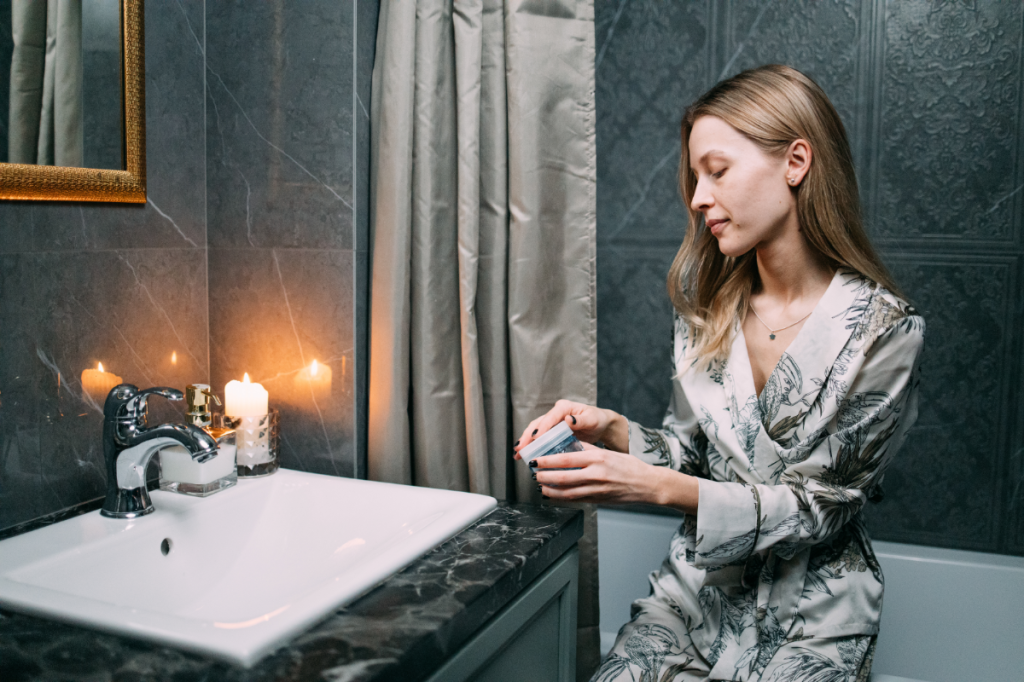
"Dark showering is when you take a shower in little to no light, which can be done by turning off overhead lights, using a dim lamp, candlelight, or just showering adjacent to darkness," Dr. Daniella Marchetti, a clinical psychologist specializing in behavioral sleep medicine at Rise Science, tells Upworthy. "The idea behind the trend is to reduce bright light exposure in the evening while also pairing a calming, predictable routine with conditions that are more aligned with the body's natural wind-down process before bed."
And the effects of dark showering may indeed lead to better sleep. There are three mechanisms at play:
Light exposure
By keeping the lights on during your nighttime shower, you may be losing out on some big melatonin benefits.
"Bright light in the evening, especially overhead or blue spectrum light, can suppress melatonin release and delay sleep onset," Marchetti explains. "Showering in low light supports melatonin release, which may help the brain stay in 'night mode' instead of shifting into alertness through bright light exposure."
Temperature regulation
Showering at night can also prep the body to start cooling down—a natural part of the sleep process.
"A warm shower can promote sleep by triggering a drop in core body temperature afterward, which is a natural signal the body uses for sleep onset," Marchetti adds. "This effect is modest but well supported in the research."
Nervous system cues
A dim, quiet shower can help the nervous system downshift just in time for sleep.
"It acts as a consistent wind-down activity that signals safety and predictability," Marchetti says. "That can reduce cognitive and physiological arousal, which are two major barriers to falling asleep."

Dark showering may also have mental health and mood benefits.
"For some people, dark showering can feel grounding or soothing, especially at the end of an overstimulating day. It reduces the amount of sensory input we get by having less light and fewer visual cues," Marchetti explains. "Getting enough sensory rest has the potential to lower mental load and quiet racing thoughts, which often interfere with sleep. Dark showering can also encourage mindfulness, which can be helpful for people who struggle with nighttime rumination or anxiety."
With promising outcomes, dark showering may be a helpful trick for some people seeking better sleep. But Marchetti adds that it may not work for everyone, especially those with chronic insomnia.
"If someone is struggling with ongoing insomnia, the solution usually isn't adding another ritual," she says. "It may be a question of addressing sleep timing, arousal, and the relationship they've developed with sleep. Sometimes adding more 'sleep rules' can increase the pressure we have to get 'good sleep' and backfires. Doing Cognitive Behavioral Therapy for Insomnia (CBT-I) with a trusted sleep provider can help you address all those areas, as CBT-I is the gold standard treatment for insomnia (yes, even above sleeping pills!)."