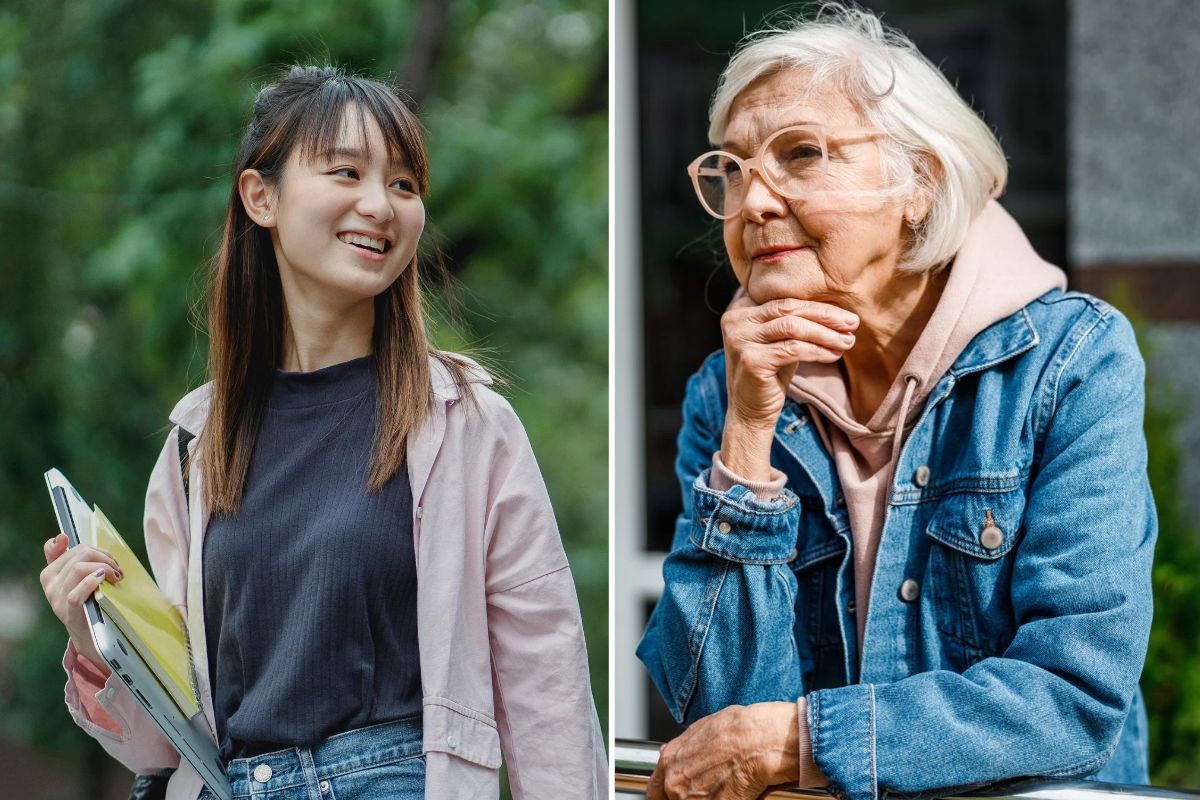
Retirement can mean many things to different Americans. It can mean aging in place while relying on Social Security and eking by on a fixed income, or it could mean moving to a lavish retirement community. It can mean picking up part-time work to get by or stay active, or traveling the world with a partner, and everything in between.
What retirement doesn’t usually mean is moving back into a glorified “college dorm” and hanging out with 20-year-olds in your spare time. But Arizona State University and Pacific Retirement Services figured the idea was just wild enough to work.
ASU opens “Mirabella,” an on-campus retirement community, in 2020
In 2013, Arizona State University President Michael Crow had the idea that college wasn’t and shouldn’t only be for 18-year-olds coming out of high school. Night classes or supplemental learning for adults of all ages and backgrounds would no longer be an afterthought, but a major part of the school culture. He called this vision the “New American University.”
Instead of measuring prestige by how many students the school rejected, they’d measure how many different kinds of students they could include.
As part of that concept, the university’s development arm partnered with Pacific Retirement Services to develop a retirement community that would not just be close to campus, it would be a part of it. Research suggested that when seniors had community engagement, purpose, and intergenerational contact, they had better health and cognitive outcomes.
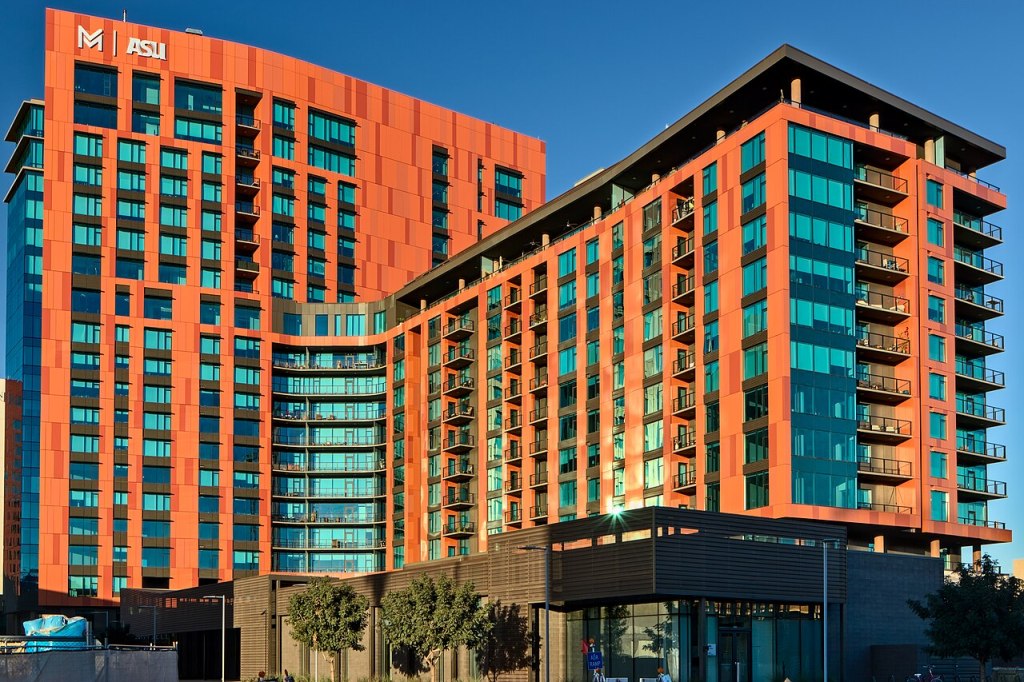
This new community, part of a growing trend of University Based Retirement Communities (UBRCs) would put that idea to the test, and into action. In 2020, the building, named “Mirabella,” officially opened.
Campus retirement home unites old and young students, to everyone’s benefit
Mirabella isn’t your average retirement community that just happens to be near one of the most vibrant and exciting college campuses in the country.
Residents don’t have to be former ASU students to live at Mirabella, but many of them are; and they’re overjoyed to be back at their alma mater among so many memories. No matter where the residents come from, however, all residents are officially Sun Devils and receive official student ID cards that let them access all of the campus amenities.
Seniors over 62 who live at Mirabella can audit classes on campus, go to sporting events and games, access the library; you name it. It keeps them engaged in the community directly around them, protects their brains from cognitive decline, and organically reduces loneliness.
But perhaps the most incredible thing about the concept is the intergenerational contact it creates. Residents volunteer and mentor students on campus, imparting their years of wisdom and experience on the younger generation.
Within the halls of Mirabella, some graduate design and arts students live free of charge; they’re only asked to put on performances and workshops for the residents. Which they do gladly.
One beautiful example of this connection in action is the All Ears Friendship Bench. It’s a program run by Mirabella that places a resident volunteer on a bench on a prominent part of campus. There, they simply sit and offer a kind ear, advice, wisdom, and friendship to anyone who happens to need it as they pass by.
“I find it energizing, and I feel like I’m helping them,” a volunteer said, per ASU. “One girl told me, ‘I’ve only been here 15 minutes, but I feel so much better.”
Mirabella is expensive and exclusive, but it works
Mirabella is a state of the art facility that comes with numerous perks and amenities for residents. That means space is limited, and the price tag is steep. Quite a bit more than your standard senior living home.
Simply put, a community like this is not in reach for most retirees.
There have also been reports of some tension and clashes within the campus community. ASU’s reputation as a “party school” is well-earned, and not all of the residents are fans of the nonstop activity and loud music. That could be because the building is located directly next to Shady Park Tempe, a live outdoor music venue. Shady Park was forced via lawsuits to install sound abatement structures to dampen the noise, much to the chagrin of some students.
But, all things considered, the model is exciting and promising. A case study published in the Journal of Aging and Environment lauded the benefits of such a community:
“Well-designed UBRCs can be an effective mechanism for increasing intergenerational connections that offer opportunities to create mutual understanding between younger and older adults. Exposing younger individuals to older persons may support positive views of aging … in alignment with the World Health Organization’s strategies for reducing ageism … This learning experience is reciprocal, in that older persons also learn new skills and perspectives while interacting with younger individuals.”
Ideas to make UBRCs like Mirabella more accessible include shifting to a rental pricing structure versus buying in for life, having residents live in dedicated sections of existing dorms, or even offering all of the programs and benefits to seniors who live off-campus in more affordable housing.
UBRCs like Mirabella are becoming more popular. There are already dozens of them at colleges around the country—including Berry College, Duke, Penn State, and the University of Florida. As the promising data and first-hand accounts continue to pour in, it could be something we see a whole lot more of.
It’s a totally new and exciting way to think about how we retire and age. One resident put it beautifully on Google reviews:
“There is energy here! We volunteer, attend classes, develop student friendships, cheer at recitals and sporting events, and learn/share stories. We are people who love learning and reject being isolated into an ‘old people’s’ community. Wouldn’t you?”