American English comes in all sorts of different flavors and varieties. I grew up in Baltimore, which shares some dialectical DNA with the accent you find in other Northeastern cities like Philadelphia. Baldamor, hon! There are the New England dialects, most famously the Boston accent: Pahk the cah at Havahd yahd! The New York accent is world famous, as is the deep Southern twang, which gives way to a thick Cajun accent the closer you get to the bayous of Louisiana.
These are all different versions of the greater American dialect. But there is one place, a tiny island off the coast of North Carolina, where a few residents speak in such a unique way that many listeners don’t even recognize it as American.
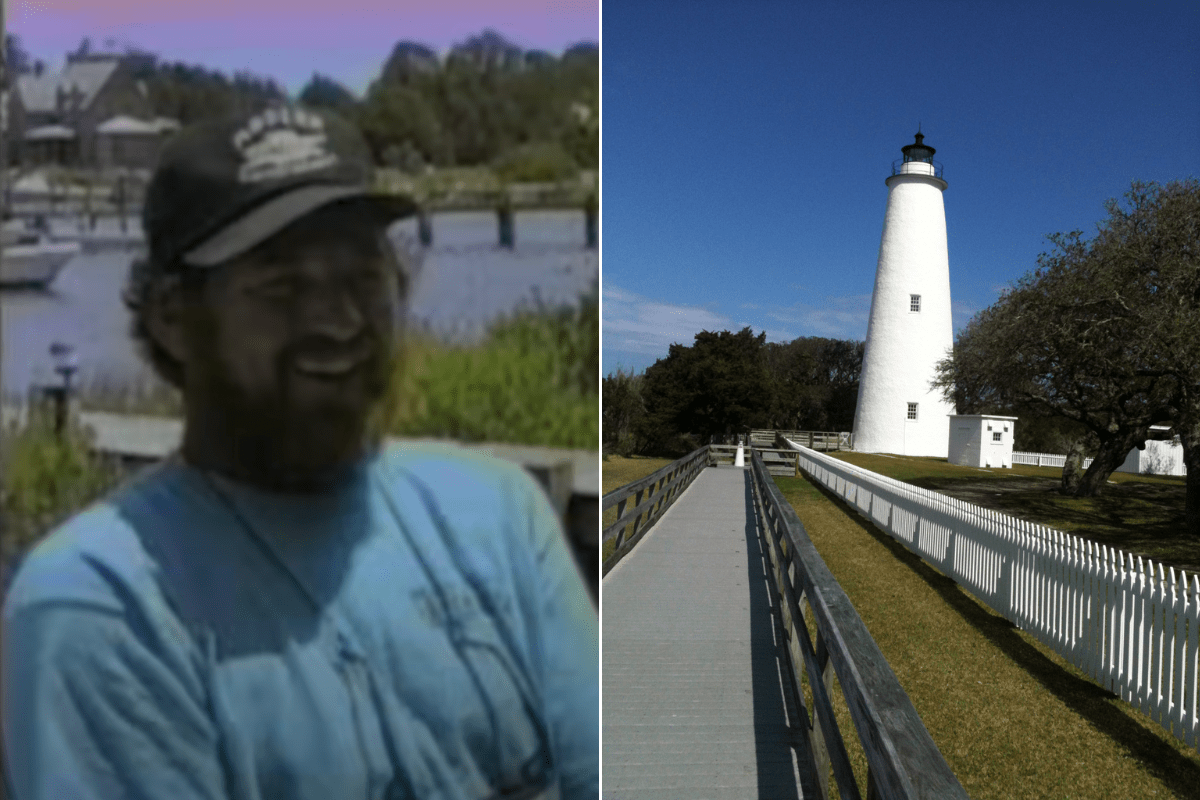
Ocracoke, North Carolina, is home to a unique dialect called the Brogue, a blend of American Southern and English, Irish and Scottish influences from the 1600s.
The Brogue, also known as Hoi Toider, is absolutely fascinating to hear in action. When you watch interviews with the locals of the island, they at first appear to be speaking a form of deep American Southern, and you can hear the twang the way you might in parts of Georgia or Alabama. But then, without warning, a word or phrase will slip out that sounds distinctly British. Centuries-old English, even.
Then you’ll swear you hear a bit of Irish!
How the Brogue took shape
The dialect owes its roots to a surprising source: Pirates.
Pirates loved to hide out on Ocracoke because the island is incredibly remote, roughly 20 miles from the mainland of North Carolina. Even today there are no bridges to Ocracoke and no scheduled commercial flights. Most visitors arrive by ferry, and some by private plane.
Eventually, the island was purchased by William Howard, a man said to have served as Blackbeard’s quartermaster (yes, that Blackbeard), and his family helped build the settlement that followed. English sailors and Native American tribes also passed through and had their own unique impact on the culture and developing language of the island.
In case you have your doubts about the island’s buccaneerish roots, there’s a popular legend about its name: “In one popular island legend, Ocracoke comes from the phrase, ‘Oh, crow cock,’ which was spoken by the infamous pirate Blackbeard as he waited to do battle at sunrise with the governor’s forces that had come to capture him,” writes a guide from NC State University.
The dialect had a lot of room to develop without much outside influence. The BBC writes, “Howard’s community lived in near-isolation for almost two centuries. Electricity didn’t arrive at the island until 1938 and a ferry service didn’t start until 1957, leaving the islanders cut off except for the occasional supply trip to the mainland.”
Words only locals would know
That’s why Hoi Toider is still alive to this day, although its speaking population has dwindled to a few hundred people at most. Here are a few hallmark phrases of the unique dialect:
A “dingbatter” is anyone not from the island, such as a tourist. An “O’cocker” is a native islander. “Meehonkey” is the island word for hide-and-seek. The Brogue uses ‘weren’t’ liberally for singular nouns (“The sun weren’t out yesterday.”) and frequently adds an ‘a’ in front of verbs (“We went a-fishin’ this morning”).
But to fully appreciate Hoi Toider, you’ve got to hear it in action:
Why the Brogue is slowly fading
Experts say, as awesome as the Brogue is, it will likely disappear within the next 50 years.
Though the island remains about as remote as it comes, there’s no escaping the influence of social media, television, and film these days. Every generation born on the island is a smidge less likely to adopt the Brogue than the one that came before.
It will probably be mostly gone in the next couple of generations, which feels like a tragedy. Instead of “dingbatter” and “meehonkey,” the kids will be saying “rizz” and “no cap.” OK, maybe that’s an exaggeration, but young people growing up on the island won’t be as immersed in the language as their elders and will begin to speak more and more like your average American.
There’s a concept called cultural homogenization. It’s the idea that over time, because of technology and globalization, unique individual cultures from around the world will all start to look more and more the same. It’s why you see fast food chains in the shadow of historic landmarks and people all over the globe listening to the same handful of musical artists.
Ocracoke has managed to hang on longer than most places due to how difficult it is to reach. Here’s hoping that the Ocracoke Brogue can survive somehow, some way, in little pockets of the island. It’s just too dang cool and interesting to go away just yet.
This article originally appeared last year. It has been updated.