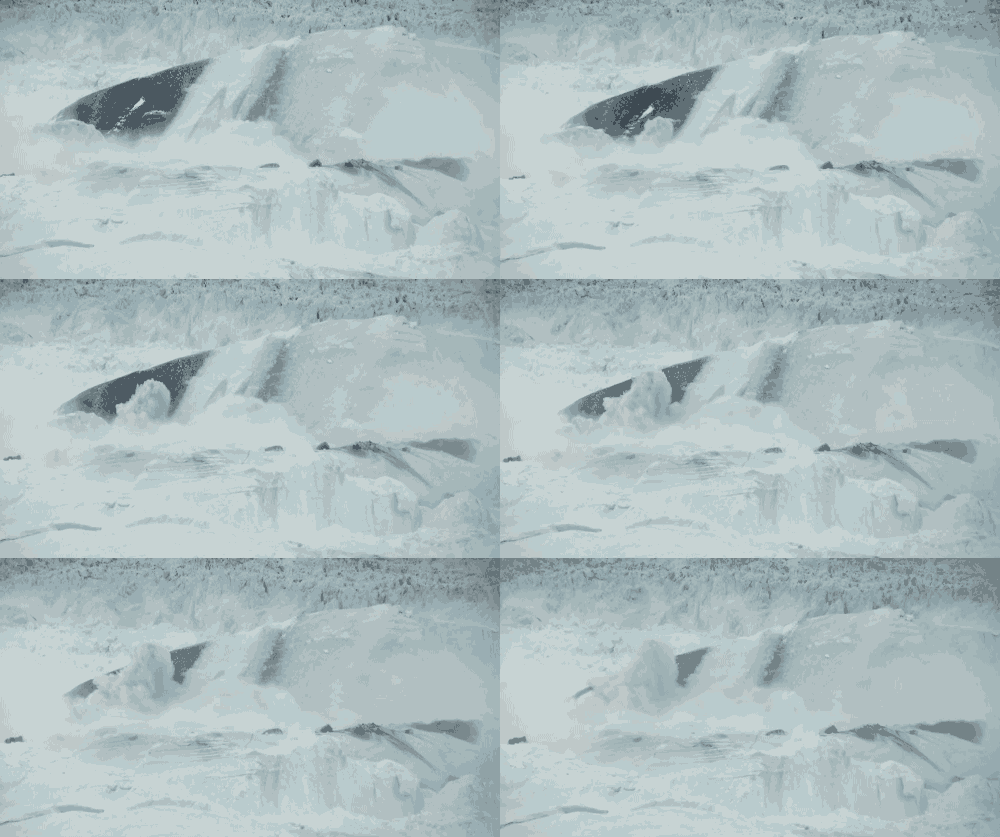
Photographer James Balog and his crew were hanging out near a glacier when their camera captured something extraordinary. They were in Greenland, gathering footage from the time-lapse they’d positioned all around the Arctic Circle for the last several years.
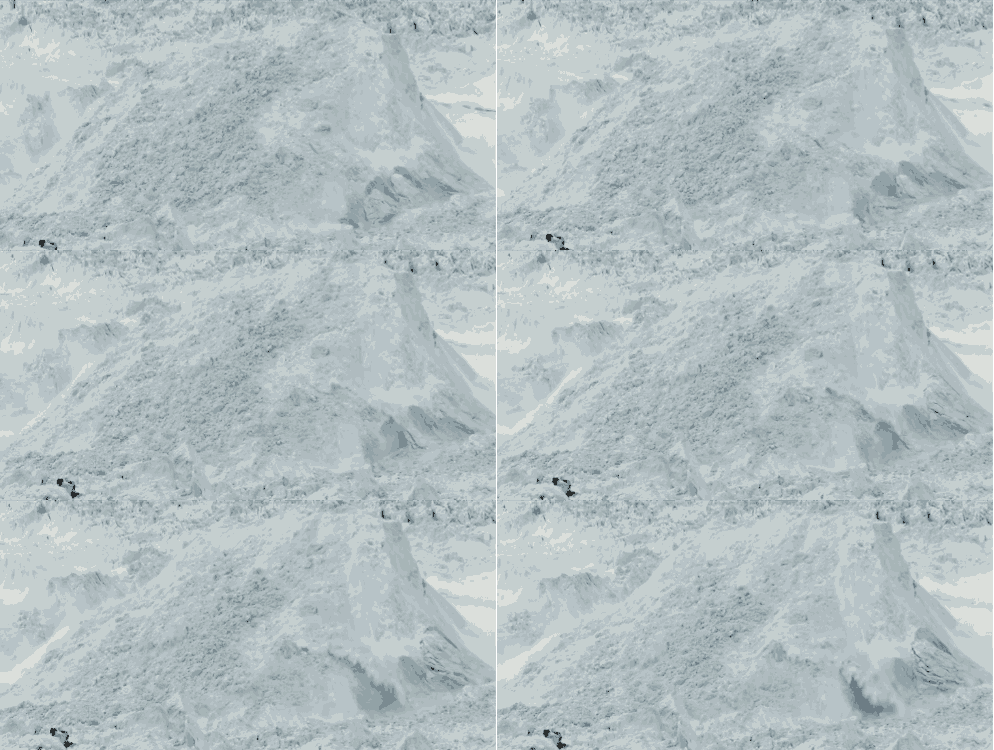
They were also there to shoot scenes for a documentary. And while they were hoping to capture some cool moments on camera, no one expected a huge chunk of a glacier to snap clean off and slide into the ocean right in front of their eyes.
A glacier falls into the sea. <a href="https://assets.rebelmouse.io/eyJhbGciOiJIUzI1NiIsInR5cCI6IkpXVCJ9.eyJpbWFnZSI6Imh0dHBzOi8vYXNzZXRzLnJibC5tcy8xOTQ5OTk4MS9vcmlnaW4uZ2lmIiwiZXhwaXJlc19hdCI6MTY0Mzc1NTc3OH0.FAySffHTIynGNOXPuRAokuqF7bGD_M20bj7y8AC8fW0/img.gif?width=980">assets.rebelmouse.io</a>
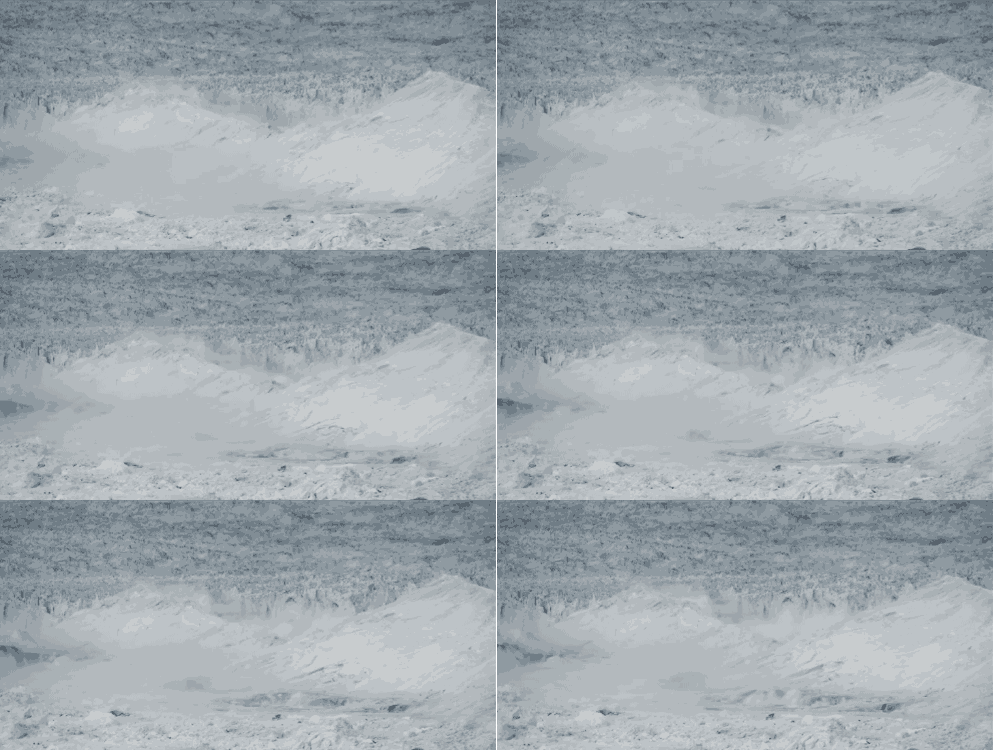
Massive swells created by large chunks of glacier falling away. <a href="https://assets.rebelmouse.io/eyJhbGciOiJIUzI1NiIsInR5cCI6IkpXVCJ9.eyJpbWFnZSI6Imh0dHBzOi8vYXNzZXRzLnJibC5tcy8xOTQ5OTk4Mi9vcmlnaW4uZ2lmIiwiZXhwaXJlc19hdCI6MTY5MjAyNjg2Nn0.4uD3PHudZc7Wf9XMIQ8DG2nEfELR8JK4_6G14Ph2Ok8/img.gif?width=980">assets.rebelmouse.io</a>
It was the largest such event ever filmed.
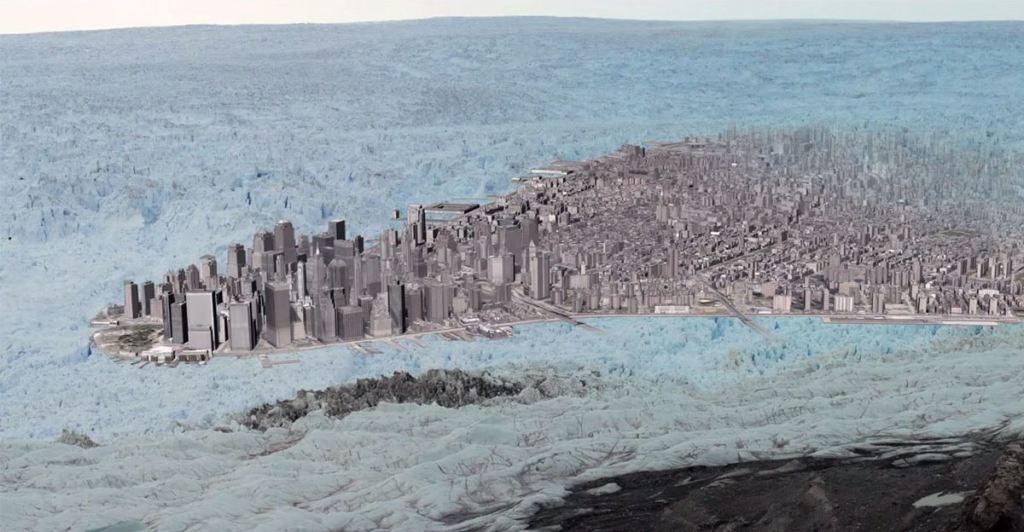
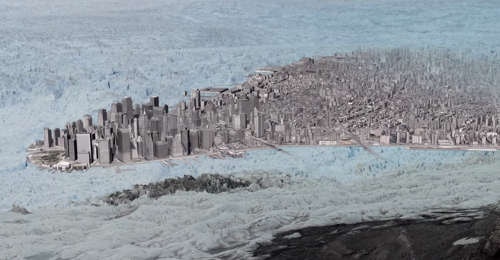
For nearly an hour and 15 minutes, Balog and his crew stood by and watched as a piece of ice the size of lower Manhattan — but with ice-equivalent buildings that were two to three times taller than that — simply melted away.A representation demonstrating the massive size of ice that broke off into the sea. <a href="https://assets.rebelmouse.io/eyJhbGciOiJIUzI1NiIsInR5cCI6IkpXVCJ9.eyJpbWFnZSI6Imh0dHBzOi8vYXNzZXRzLnJibC5tcy8xOTQ5OTk4My9vcmlnaW4uanBnIiwiZXhwaXJlc19hdCI6MTY0NTc3MDU2MH0.A3vkySOxfkoGCsFu1LKsh9_pOWJKzaXWAUUeMp4D_Og/img.jpg?width=980">assets.rebelmouse.io</a>
As far as anyone knows, this was an unprecedented geological catastrophe and they caught the entire thing on tape. It won’t be the last time something like this happens either.
But once upon a time, Balog was openly skeptical about that “global warming” thing.
Balog had a reputation since the early 1980s as a conservationist and environmental photographer. And for nearly 20 years, he’d scoffed at the climate change heralds shouting, “The sky is falling! The sky is falling!”
“I didn’t think that humans were capable of changing the basic physics and chemistry of this entire, huge planet. It didn’t seem probable, it didn’t seem possible,” he explained in the 2012 documentary film “Chasing Ice.”
There was too much margin of error in the computer simulations, too many other pressing problems to address about our beautiful planet. As far as he was concerned, these melodramatic doomsayers were distracting from the real issues.
That was then.The glacier ice continues to erode away. <a href="https://assets.rebelmouse.io/eyJhbGciOiJIUzI1NiIsInR5cCI6IkpXVCJ9.eyJpbWFnZSI6Imh0dHBzOi8vYXNzZXRzLnJibC5tcy8xOTQ5OTk4NC9vcmlnaW4uZ2lmIiwiZXhwaXJlc19hdCI6MTY1NDM4NDY1OH0.mEoIl6RYtdd5bbRS6MrKIt_ne69YC3yE9QdLD7qN6YA/img.gif?width=980">assets.rebelmouse.io</a>
In fact, it wasn’t until 2005 that Balog became a believer.
He was sent on a photo expedition of the Arctic by National Geographic, and that first northern trip was more than enough to see the damage for himself.
“It was about actual tangible physical evidence that was preserved in the ice cores of Greenland and Antarctica,” he said in a 2012 interview with ThinkProgress. “That was really the smoking gun showing how far outside normal, natural variation the world has become. And that’s when I started to really get the message that this was something consequential and serious and needed to be dealt with.”
In March 2023, after months of preparation and paperwork, Anita Omary arrived in the United States from her native Afghanistan to build a better life. Once she arrived in Connecticut, however, the experience was anything but easy.
“When I first arrived, everything felt so strange—the weather, the environment, the people,” Omary recalled. Omary had not only left behind her extended family and friends in Afghanistan, she left her career managing child protective cases and supporting refugee communities behind as well. Even more challenging, Anita was five months pregnant at the time, and because her husband was unable to obtain a travel visa, she found herself having to navigate a new language, a different culture, and an unfamiliar country entirely on her own.
“I went through a period of deep disappointment and depression, where I wasn’t able to do much for myself,” Omary said.
Then something incredible happened: Omary met a woman who would become her close friend, offering support that would change her experience as a refugee—and ultimately the trajectory of her entire life.
Understanding the journey
Like Anita Omary, tens of thousands of people come to the United States each year seeking safety from war, political violence, religious persecution, and other threats. Yet escaping danger, unfortunately, is only the first challenge. Once here, immigrant and refugee families must deal with the loss of displacement, while at the same time facing language barriers, adapting to a new culture, and sometimes even facing social stigma and anti-immigrant biases.
Welcoming immigrant and refugee neighbors strengthens the nation and benefits everyone—and according to Anita Omary, small, simple acts of human kindness can make the greatest difference in helping them feel safe, valued, and truly at home.
A warm welcome
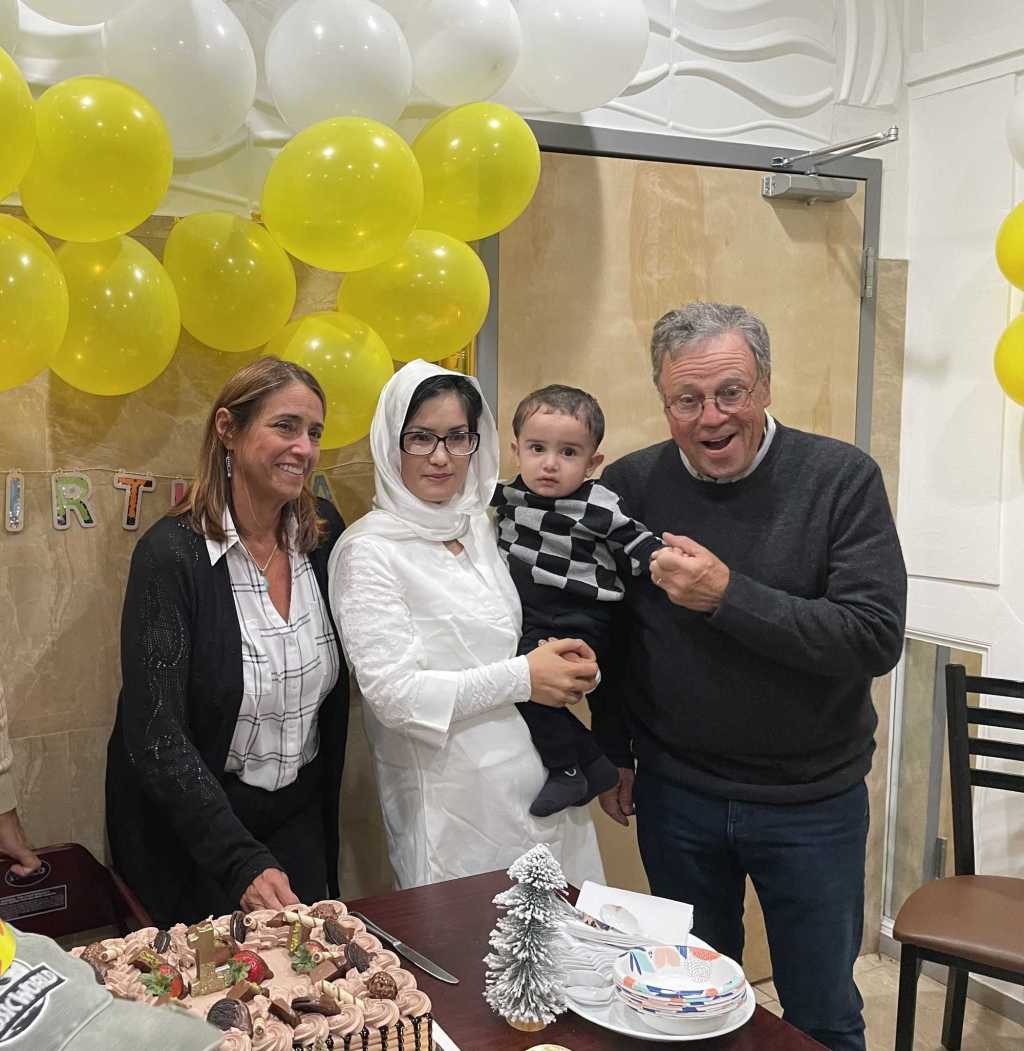
Dee and Omary's son, Osman
Anita Omary was receiving prenatal checkups at a woman’s health center in West Haven when she met Dee, a nurse.
“She immediately recognized that I was new, and that I was struggling,” Omary said. “From that moment on, she became my support system.”
Dee started checking in on Omary throughout her pregnancy, both inside the clinic and out.
“She would call me and ask am I okay, am I eating, am I healthy,” Omary said. “She helped me with things I didn’t even realize I needed, like getting an air conditioner for my small, hot room.”
Soon, Dee was helping Omary apply for jobs and taking her on driving lessons every weekend. With her help, Omary landed a job, passed her road test on the first attempt, and even enrolled at the University of New Haven to pursue her master’s degree. Dee and Omary became like family. After Omary’s son, Osman, was born, Dee spent five days in the hospital at her side, bringing her halal food and brushing her hair in the same way Omary’s mother used to. When Omary’s postpartum pain became too great for her to lift Osman’s car seat, Dee accompanied her to his doctor’s appointments and carried the baby for her.
“Her support truly changed my life,” Omary said. “Her motivation, compassion, and support gave me hope. It gave me a sense of stability and confidence. I didn’t feel alone, because of her.”
More than that, the experience gave Omary a new resolve to help other people.
“That experience has deeply shaped the way I give back,” she said. “I want to be that source of encouragement and support for others that my friend was for me.”
Extending the welcome
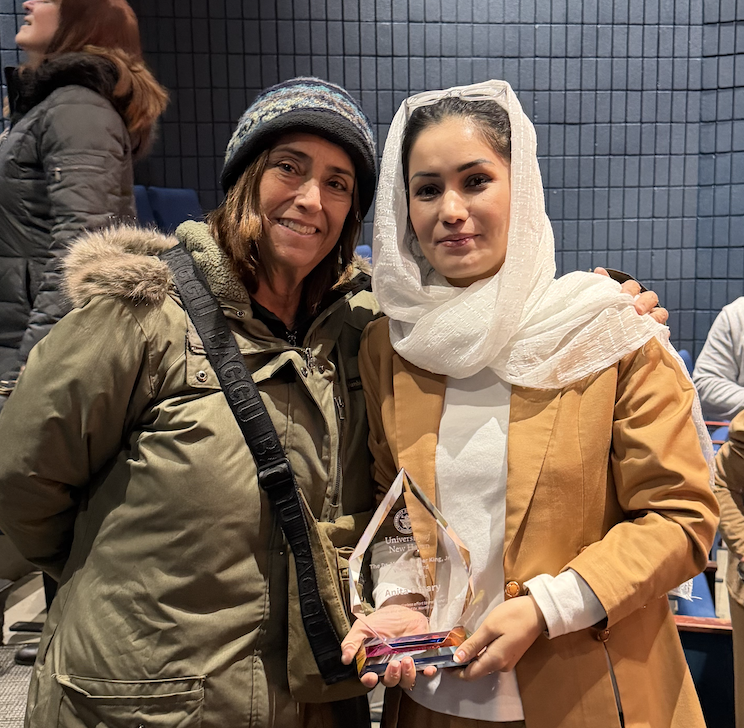
Omary and Dee at the Martin Luther King, Jr. Vision Awards ceremony at the University of New Haven.
Omary is now flourishing. She currently works as a career development specialist as she continues her Master’s degree. She also, as a member of the Refugee Storytellers Collective, helps advocate for refugee and immigrant families by connecting them with resources—and teaches local communities how to best welcome newcomers.
“Welcoming new families today has many challenges,” Omary said. “One major barrier is access to English classes. Many newcomers, especially those who have just arrived, often put their names on long wait lists and for months there are no available spots.” For women with children, the lack of available childcare makes attending English classes, or working outside the home, especially difficult.
Omary stresses that sometimes small, everyday acts of kindness can make the biggest difference to immigrant and refugee families.
“Welcome is not about big gestures, but about small, consistent acts of care that remind you that you belong,” Omary said. Receiving a compliment on her dress or her son from a stranger in the grocery store was incredibly uplifting during her early days as a newcomer, and Omary remembers how even the smallest gestures of kindness gave her hope that she could thrive and build a new life here.
“I built my new life, but I didn’t do it alone,” Omary said. “Community and kindness were my greatest strengths.”
Are you in? Click here to join the Refugee Advocacy Lab and sign the #WeWillWelcome pledge and complete one small act of welcome in your community. Together, with small, meaningful steps, we can build communities where everyone feels safe.
This article is part of Upworthy’s “The Threads Between U.S.” series that highlights what we have in common thanks to the generous support from the Levi Strauss Foundation, whose grantmaking is committed to creating a culture of belonging.
Land ice: We got a lot of it. Considering the two largest ice sheets on earth — the one on Antarctica and the one on Greenland — extend more than 6 million square miles combined … yeah, we’re talkin’ a lot of ice. But what if it was all just … gone? Not like gone gone, but melted?
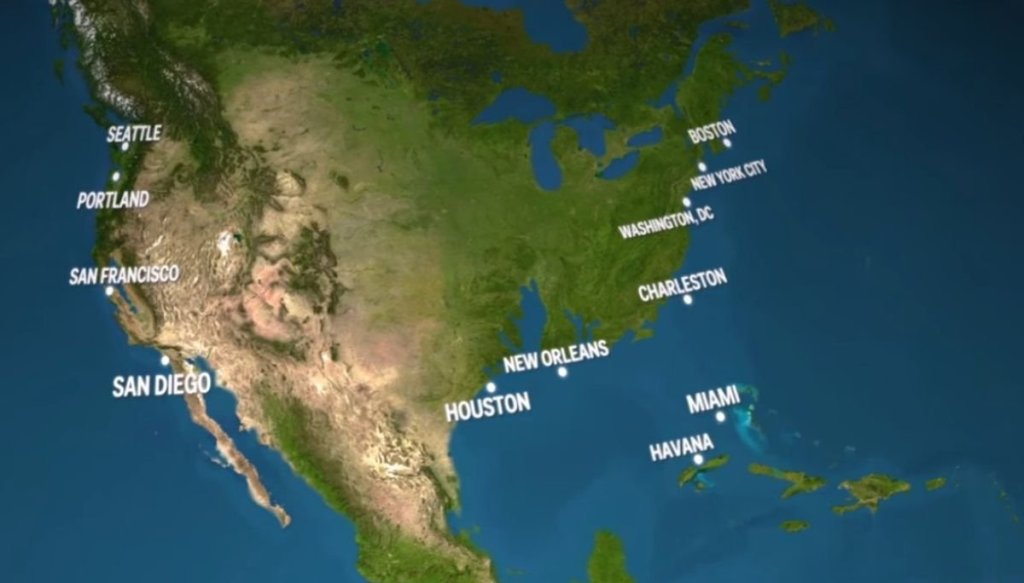
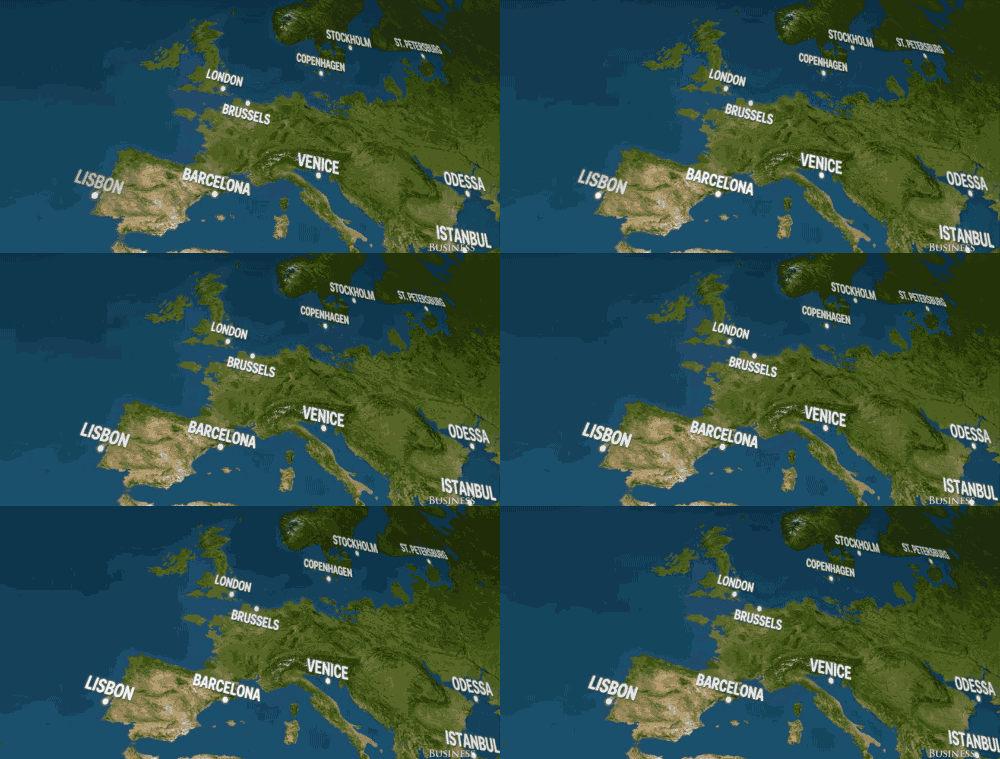
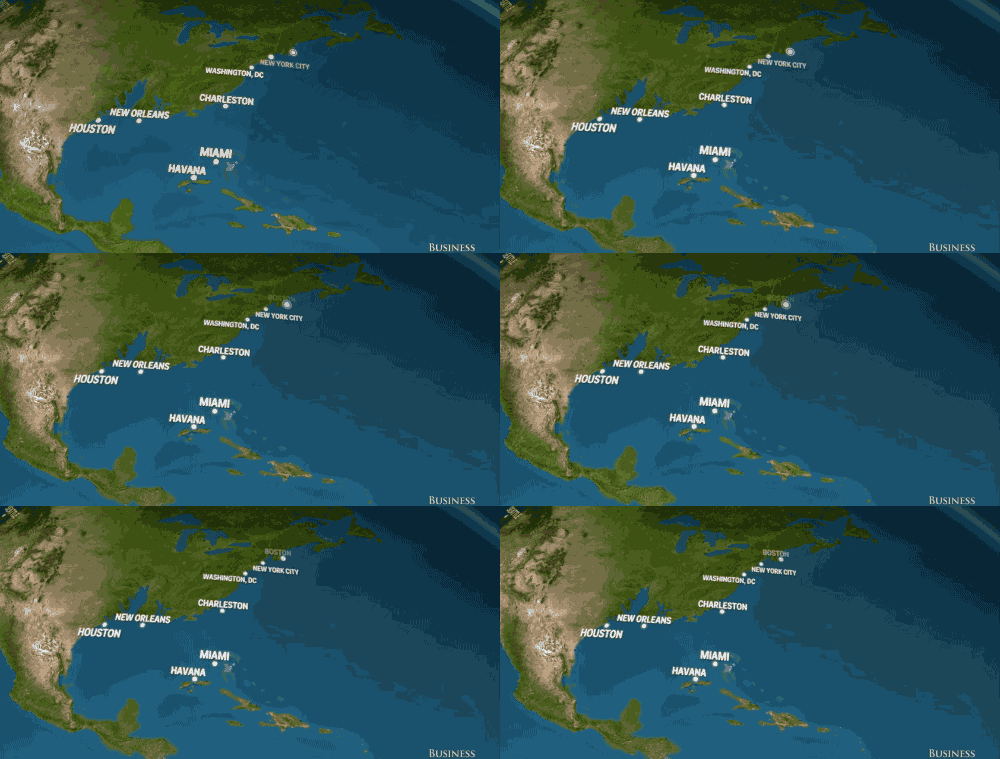
If all of earth’s land ice melted, it would be nothing short of disastrous. And that’s putting it lightly. This video by Business Insider Science (seen below) depicts exactly what our coastlines would look like if all the land ice melted. And spoiler alert: It isn’t great. Lots of European cities like, Brussels and Venice, would be basically underwater.
I bring up the topic not just for funsies, of course, but because the maps are real possibilities.
How? Climate change.
As we continue to burn fossil fuels for energy and emit carbon into our atmosphere, the planet gets warmer and warmer. And that, ladies and gentlemen, means melted ice.
A study published this past September by researchers in the U.S., U.K., and Germany found that if we don’t change our ways, there’s definitely enough fossil fuel resources available for us to completely melt the Antarctic ice sheet.
Basically, the self-inflicted disaster you see above is certainly within the realm of possibility.
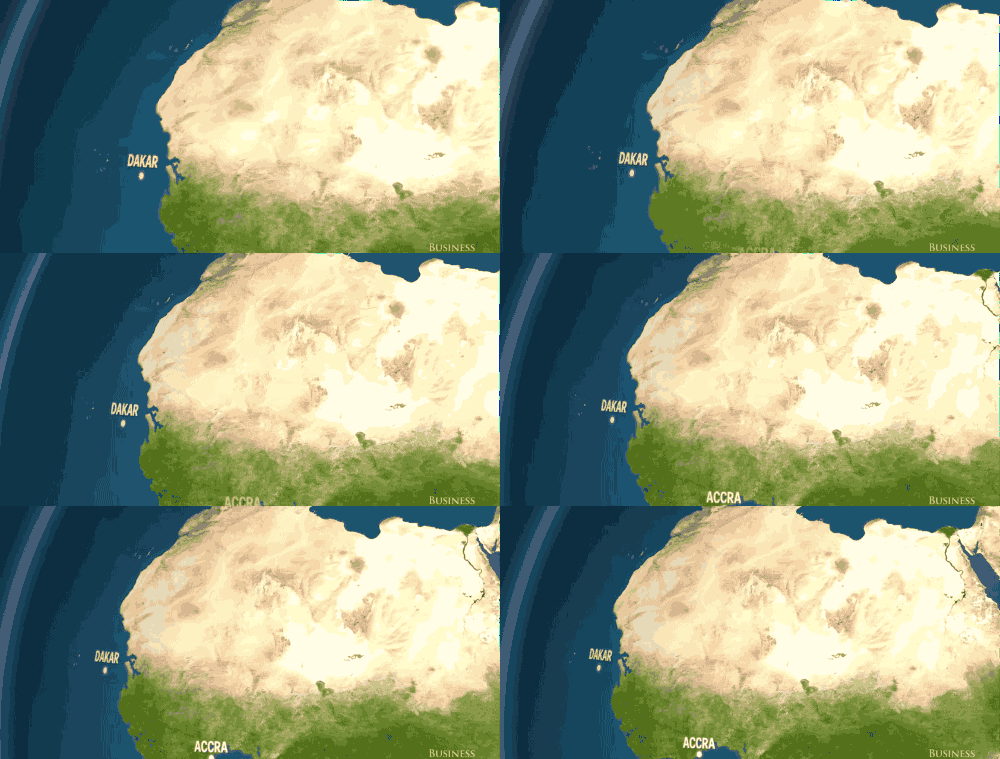
In Africa and the Middle East? Dakar, Accra, Jeddah — gone.
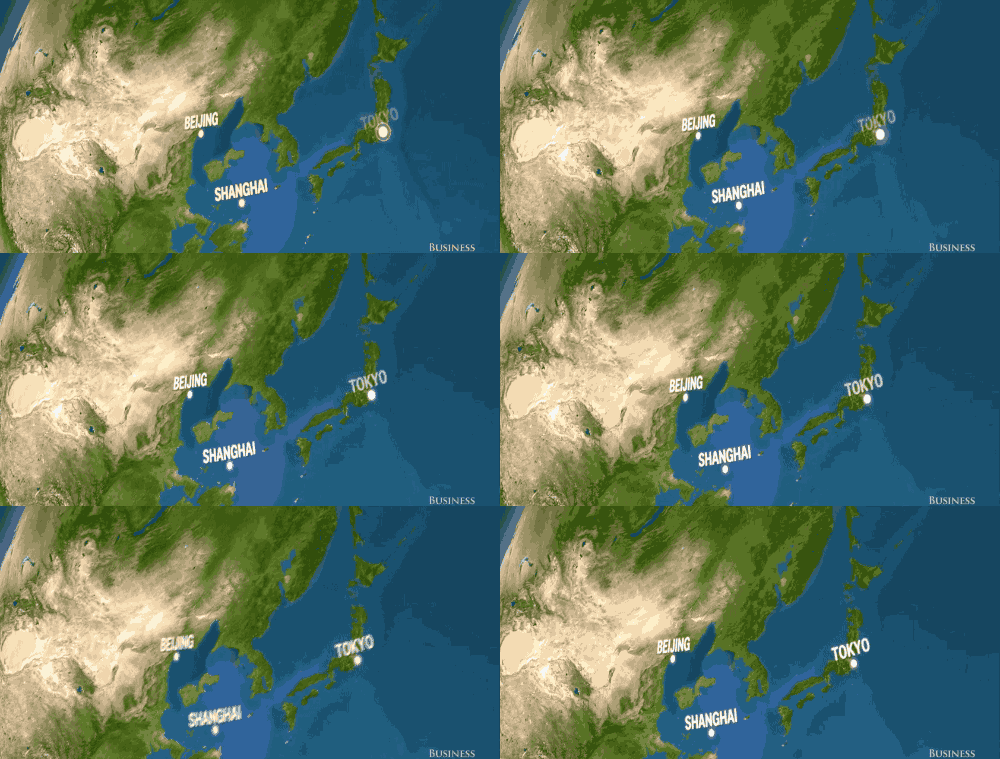
Millions of people in Asia, in cities like Mumbai, Beijing, and Tokyo, would be uprooted and have to move inland.
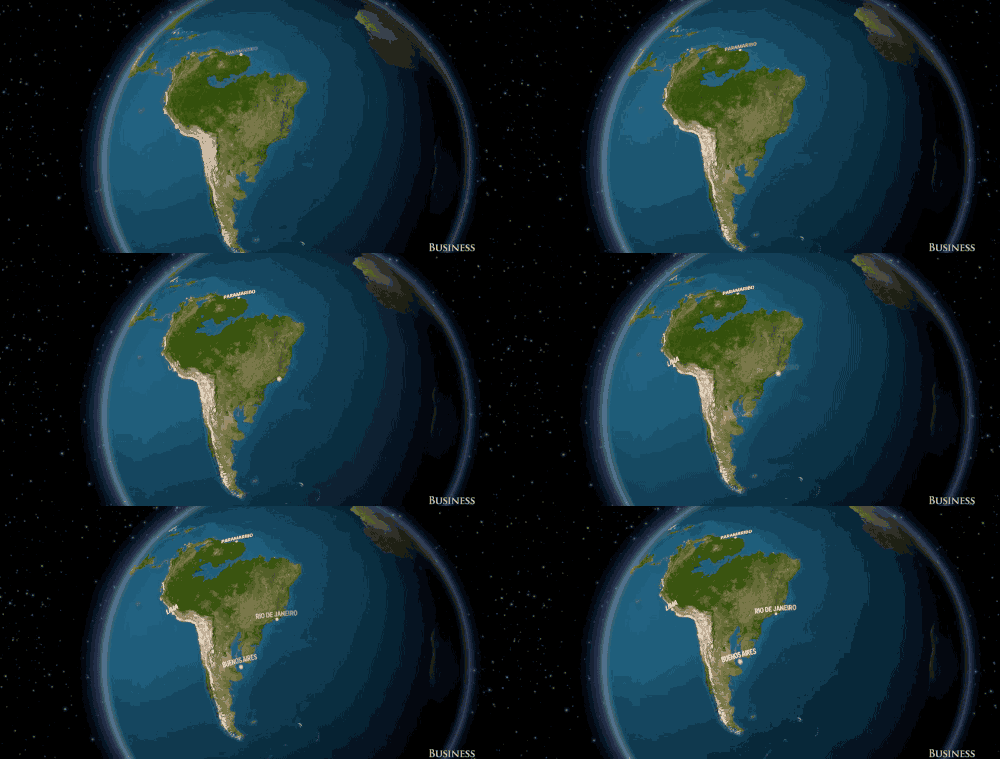
South America would say goodbye to cities like Rio de Janeiro and Buenos Aires.
And in the U.S., we’d watch places like Houston, San Francisco, and New York City — not to mention the entire state of Florida — slowly disappear into the sea.
Business Insider based these visuals off National Geographic’s estimation that sea levels will rise 216 feet (!) if all of earth’s land ice melted into our oceans.
There’s even a tool where you can take a detailed look at how your community could be affected by rising seas, for better or worse.
Although … looking at these maps, it’s hard to imagine “for better” is a likely outcome for many of us.
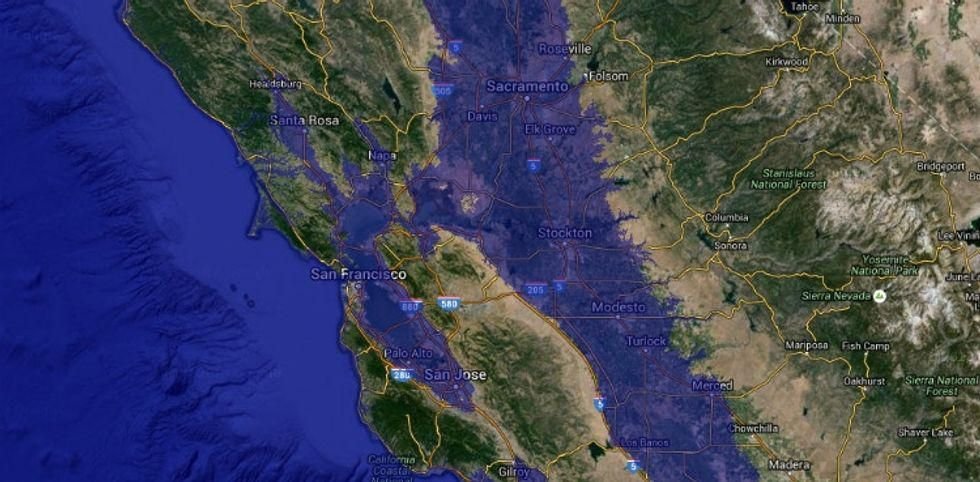
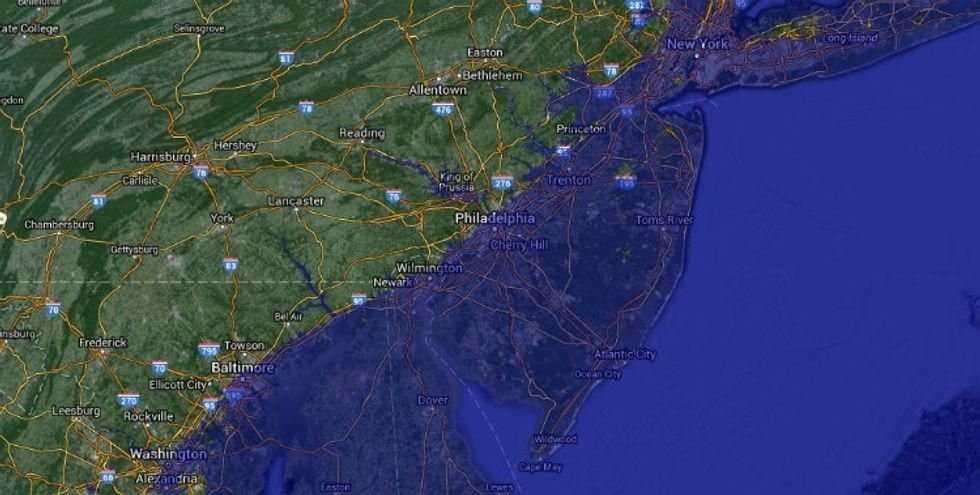
Much of America’s most populated regions would be severely affected by rising sea levels, as you’ll notice exploring the map, created by Alex Tingle using data provided by NASA.
Take, for instance, the West Coast. (Goodbye, San Fran!)
Or the East Coast. (See ya, Philly!)
And the Gulf Coast. (RIP, Bourbon Street!)
“This would not happen overnight, but the mind-boggling point is that our actions today are changing the face of planet Earth as we know it and will continue to do so for tens of thousands of years to come,” said lead author of the study Ricarda Winkelmann, of the Potsdam Institute for Climate Impact Research.
If we want to stop this from happening,” she says, “we need to keep coal, gas, and oil in the ground.”
The good news? Most of our coastlines are still intact! And they can stay that way, too — if we act now.