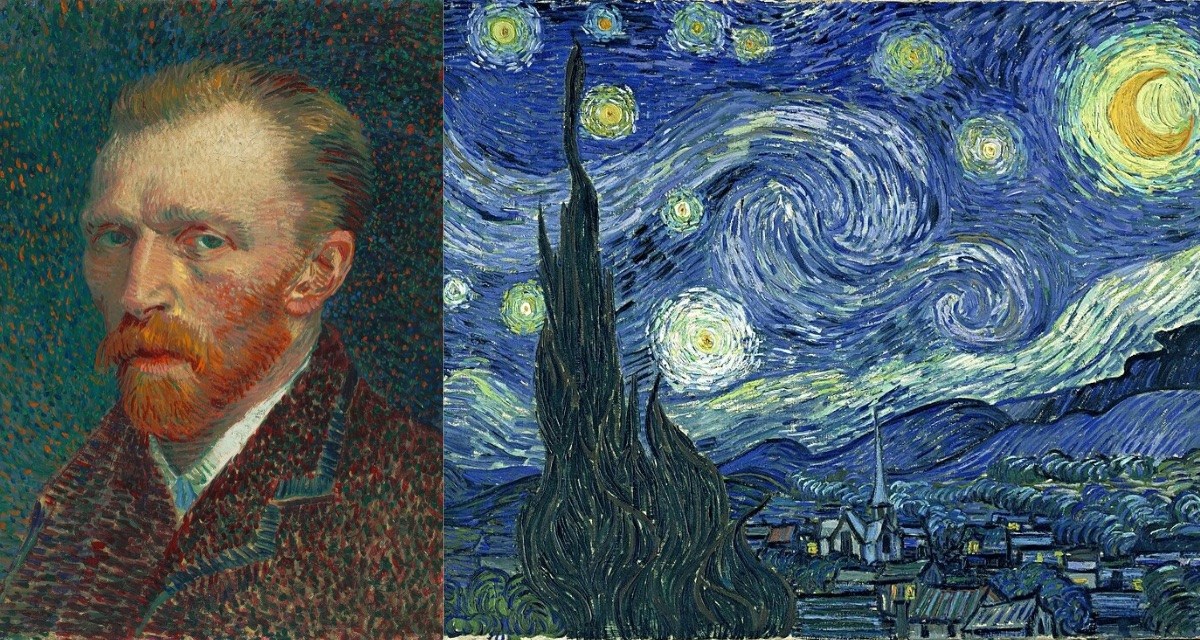
Vincent van Gogh’s Starry Night has been capturing the public’s imagination for over 100 years. From swirling deep blues to glowing yellow stars, the emotion behind every brushstroke leaps off the canvas. It is easily one of the most-discussed paintings in human history. Millions of people travel from around the world just to catch a glimpse of it hanging on the wall at the Museum of Modern Art in New York City.
Art historians assumed the iconic scene was purely a work of passionate creativity. Considering Van Gogh’s history of mental health issues, it’s easy to chalk up those swirling vortexes to reflections of his inner struggle. After all, the artist loved capturing a setting’s emotions, not its stark reality. But modern science keeps revealing deeper secrets hidden within the layers of paint.
South Korean researchers now suggest something that could rewrite our understanding of Starry Night. The swirling nocturnal sky might actually have been the start of a new day.
A century-old timeline gets a surprising update
Art historians long believed the masterpiece was painted in mid-June of 1889. Van Gogh was staying at an asylum in Saint-Rémy-de-Provence at the time. Letters he penned that summer stated he was working hard in his studio. So the mid-June timeline for the work held, until a group of South Korean researchers recently called it into question.
Their findings, outlined in Scientific Reports, test old assumptions against meteorological and astronomical data.
The group delved into star charts and local weather logs from late-19th-century France. Seeking data points that matched the scene in Starry Night, they systematically cross-referenced every detail. They even dug through Van Gogh’s personal family letters for any additional clues.
Van Gogh wrote as often as he could to his beloved brother, Theo. He treated his letters like a journal, detailing his daily life, painting progress, and his immediate natural surroundings.
In one crucial letter, he mentioned to Theo a specific detail about the local wildlife.
He wrote about cicadas singing loudly in the warm morning air. He noted how their loud buzzing filled the countryside. That small observation about the insect became a massive clue.
The buzz that unlocked the mystery
Cicadas do not sing at just any time of the year. Their noisy chorus heavily depends on warm weather and seasonal shifts. In Southern France, they only emerge and sing during specific summer temperature peaks. Mid-June was simply too early for that level of cicada activity in the region.
By combining the insect timing with precise celestial positioning, the research team made a huge breakthrough. They mapped out the exact alignment of the moon, planets, and stars above the asylum. This celestial map pointed away from June entirely. Instead, it matched a specific dawn sky that appeared around July 22, 1889.
This discovery completely shifts our understanding of the legendary artwork. It was not just a wild dream painted in total darkness. It was a precise, breathtaking observation of an actual early summer morning with cicadas buzzing in the background.
The research suggests that Van Gogh painted the night light fading into day. He combined elements of stars burning bright against the morning blue. He took that real moment in the sky and turned it into everlasting artistry.